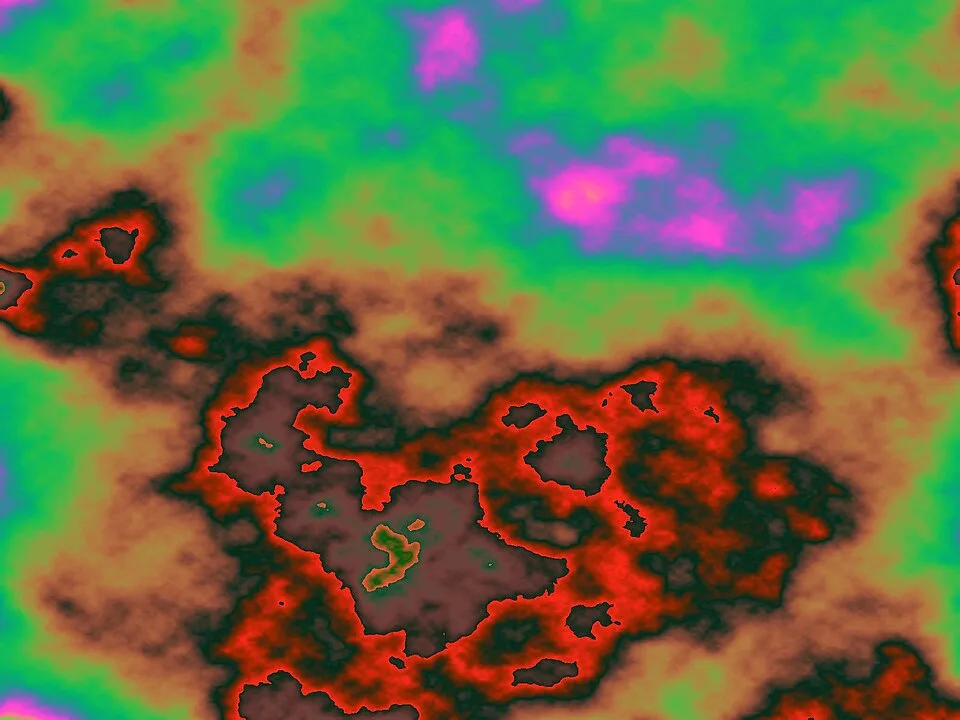
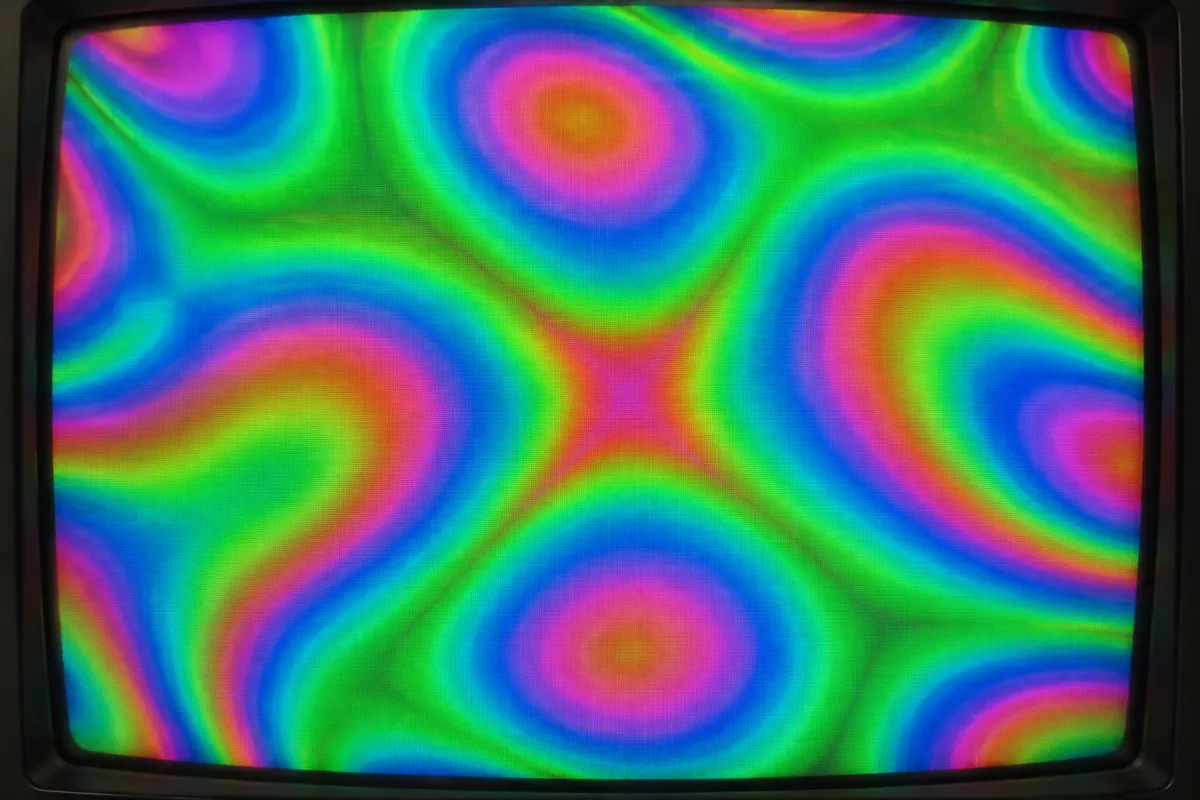
Multicolored Fractal Plasma. Green, violet, and orange color clouds surround dark pools edged in vivid red.Ben Taylor, who is the creator of TheArtProblem.com · CC BY-SA 3.0 · via Wikimedia CommonsView source ↗
Prompt
Apply a Plasma Effect using smoothly flowing psychedelic fields of magenta, cyan, violet, yellow, and electric blue. Form liquid blobs, nested color waves, and swirling gradients across existing shapes, with soft luminous transitions and no hard pattern boundaries, retaining recognizable underlying forms. Keep the original subject and composition.
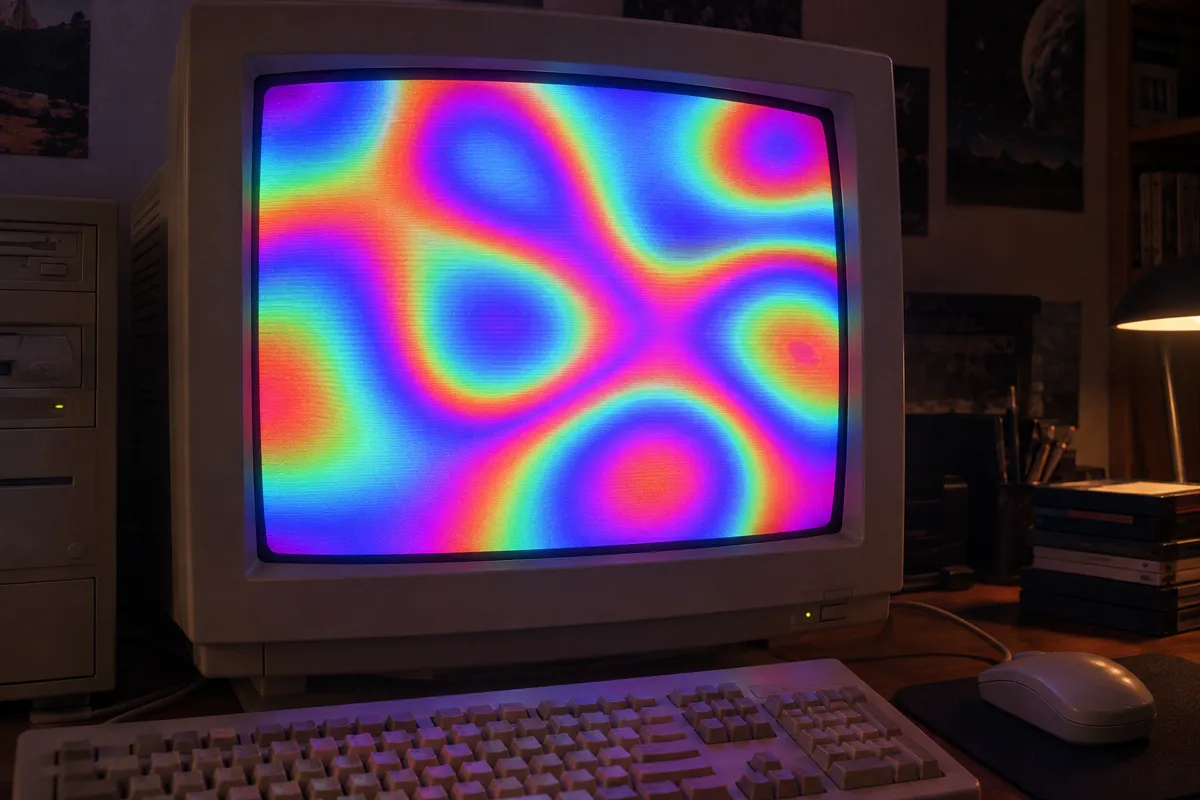
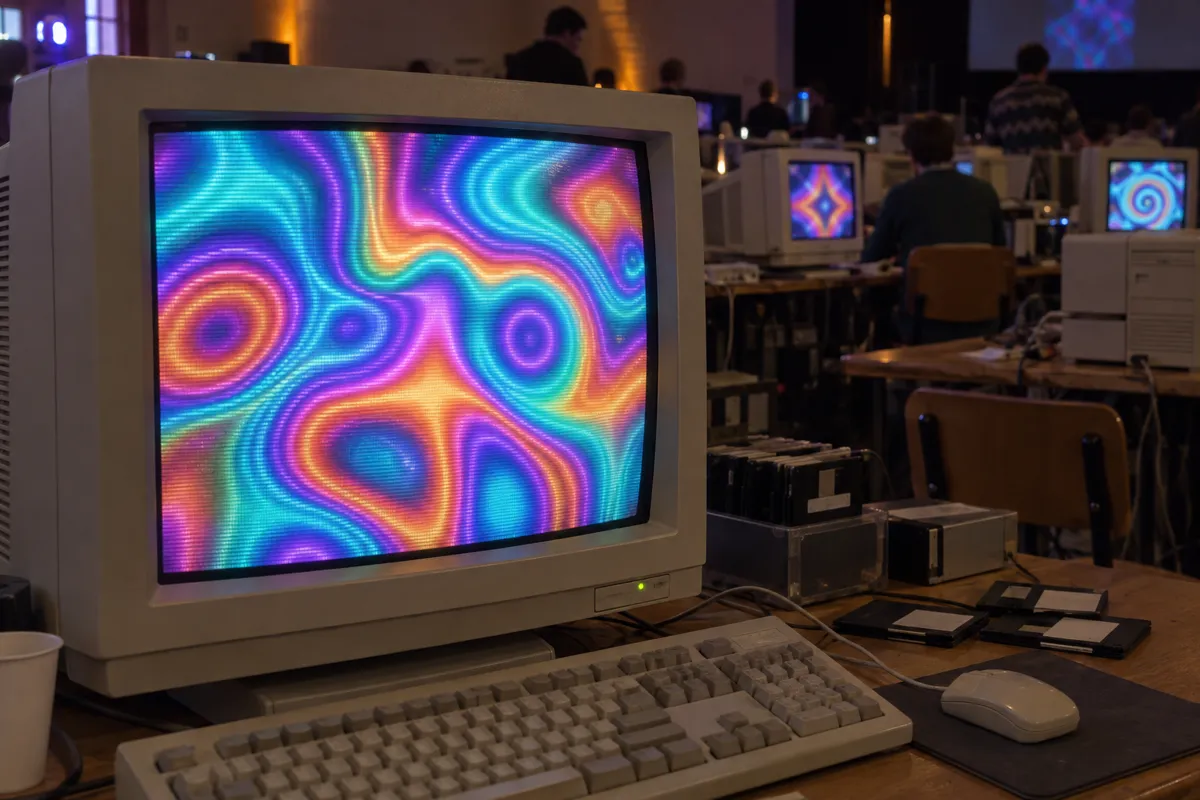
Flowing, psychedelic [patterns of shifting colors]. They look like [liquid color blobs]blending and swirling together.
Principle
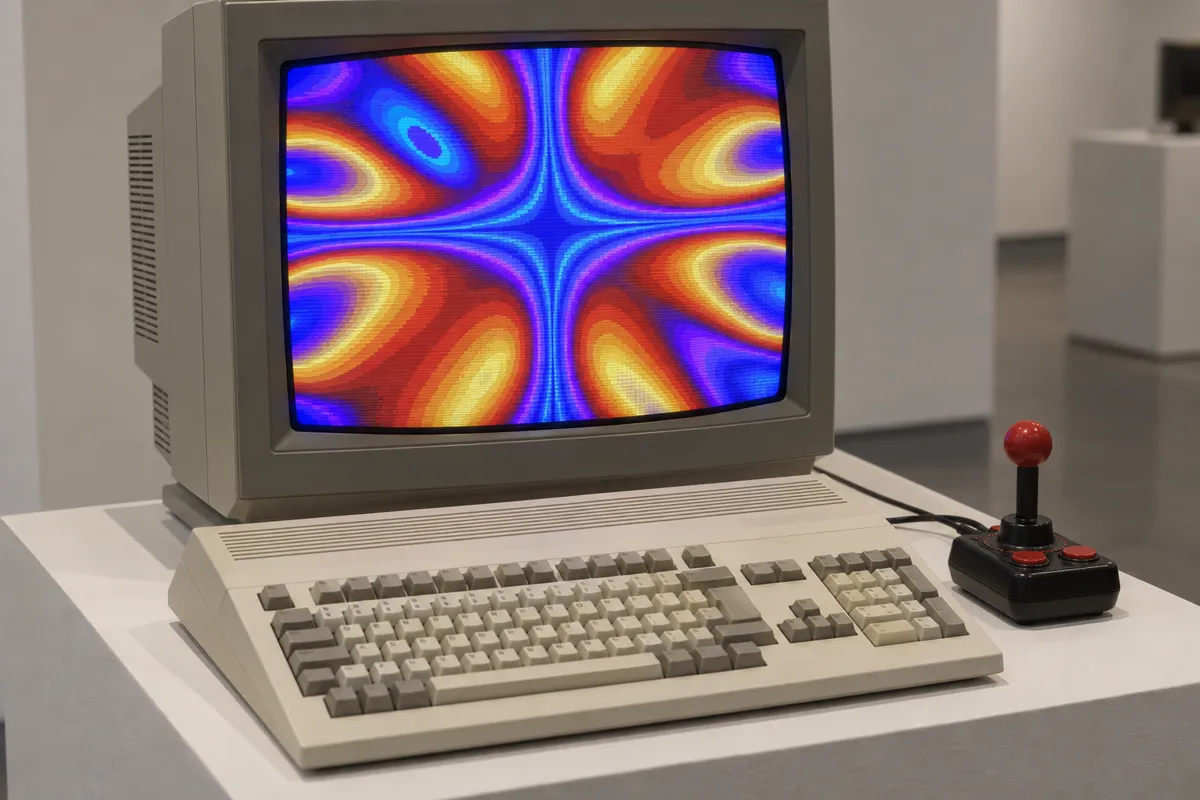
Mathematical sine and cosine functions1overlap to calculate color values. This creates smooth, [oscillating waves of color].
Example
Future Crew: Second Reality, 1993.
Try it out
Drop two pebbles into astill puddle of water. Watch how the overlapping circular ripples create complex, shifting interference patterns.
Background
In the 1990s, programmers in the "demoscene2" competed to create impressive visual art. Early computers lacked fast graphics chips. To overcome this, coders relied on clever math tricks. The plasma effect used simple sine wave equations combined with "color cycling3." Instead of redrawing the whole screen, the program just shifted colors in the hardware palette. This allowed slow computers to display fast, smooth, liquid-like animations. The overlapping mathematical waves created complex interference patterns. These rolling waves of bright colors became ahallmark of early digital underground art.
Distinction
Unlike fractal noise which looks like random organic clouds, sine plasma has apredictable, repeating geometric rhythm.
Aftermath
It shows how combining simple mathematical functions can produce complex, organic-looking visual phenomena.
Further examples · 7 images
02Blue and Yellow Plasma FieldsYellow-green clouds flow around deep blue channels and red-edged islands of color. These irregular, blended color fields form a clear fractal-style variation of the plasma effect.Ben Taylor, who is the creator of TheArtProblem.com · CC BY-SA 3.0 · Wikimedia Commons03Yellow and Burgundy Plasma CloudsLuminous yellow fields blend into smoky brown and burgundy patches across a softly mottled surface. The continuous transitions between liquid-like color clouds demonstrate a subdued fractal plasma effect.User:Bjtaylor01 · CC BY-SA 3.0 · Wikimedia Commons04AI illustration: Plasma effect rendered on a vintage computer monitorA vintage cathode-ray tube monitor displays vibrant, shifting blobs of neon color across its screen. This visualization demonstrates the classic technique of summing multiple sine waves to create organic, fluid color transitions.Illustration generated for the Atlas (AI)05AI illustration: Symmetrical plasma interference patterns on a retro PCA retro computing station shows a geometric variation of undulating color patterns on a square display. The image displays the distinct interference patterns and color cycling characteristic of mathematical plasma algorithms.Illustration generated for the Atlas (AI)06AI illustration: Real-time color cycling plasma effect in computer laboratoryIn a crowded computer lab, a foreground monitor shows complex, high-frequency waves of color swirling together. This illustrates the dynamic, psychedelic aesthetic achieved through real-time mathematical color value calculations.Illustration generated for the Atlas (AI)07AI illustration: Detailed view of overlapping sine wave color patternsThis close-up view reveals the smooth, oscillating waves of color generated by overlapping trigonometric functions. The seamless blending of vibrant hues perfectly captures the liquid-like motion inherent to this digital effect.Illustration generated for the Atlas (AI)
Question
Why did early plasma effects rely heavily on palette cycling?
Show possible answer +Hide answer −
Changing afew palette colors took much less processing power. Calculating new colors for every screen pixel was too slow.