Pixilation
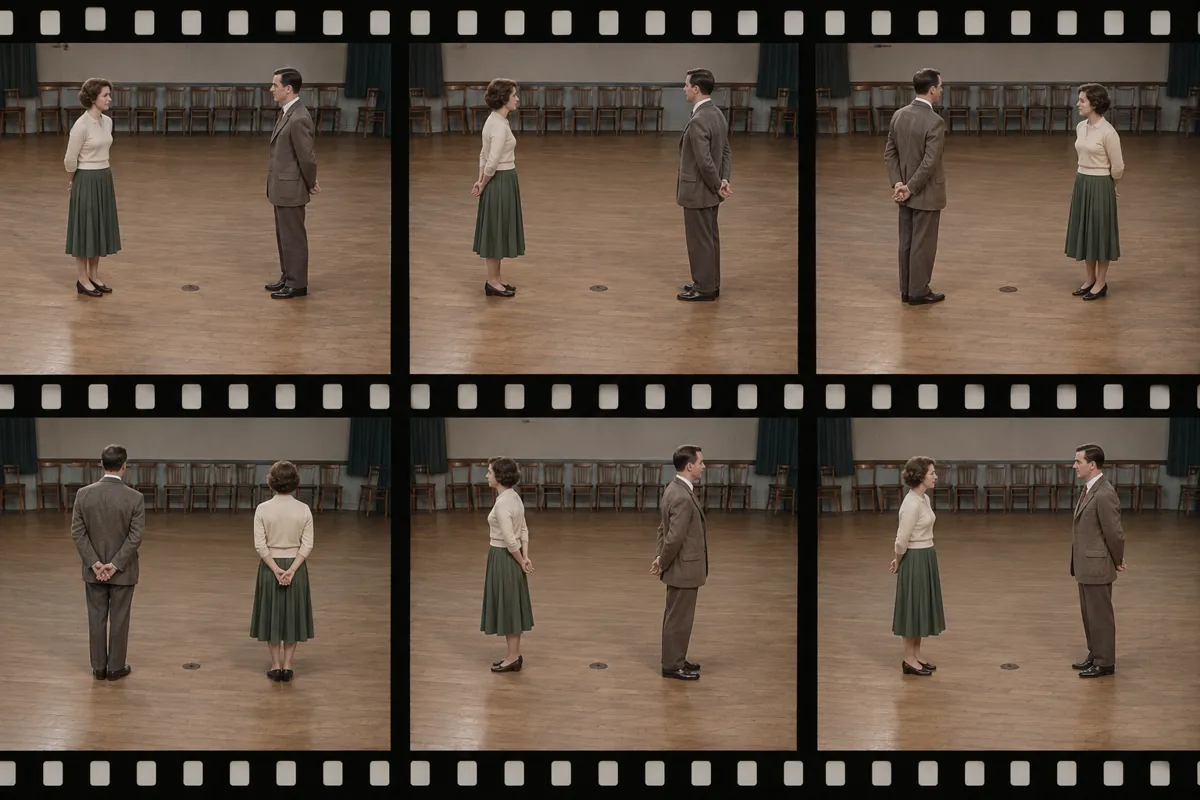
1950s landmark: Norman McLaren’s Neighbours, 1952; earlier examples exist
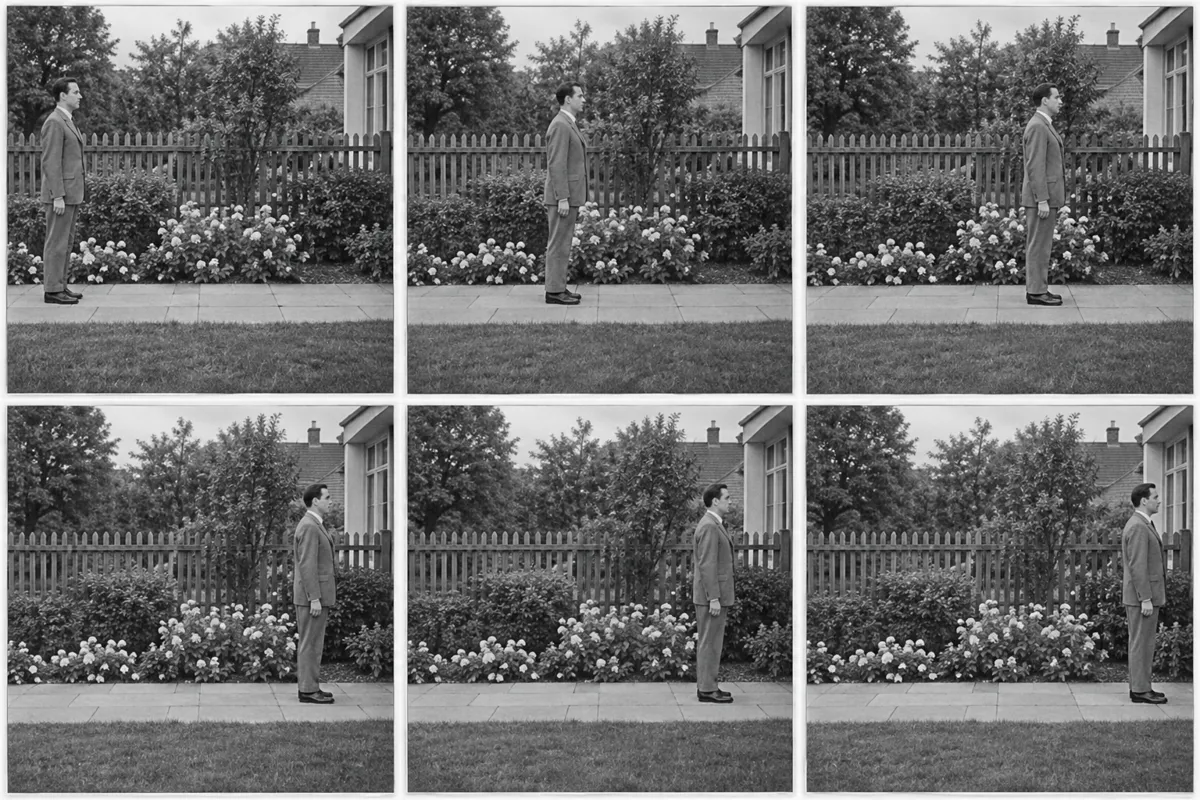
Prompt
Apply a Pixilation stop-motion look to this still, giving existing gestures a stiff, deliberately staged quality with crisp silhouettes and puppet-like articulation. Suggest discontinuous movement through a few faint, separated positional echoes rather than continuous blur, using natural textures and subtly uneven exposure. Keep the original subject and composition.
Identify
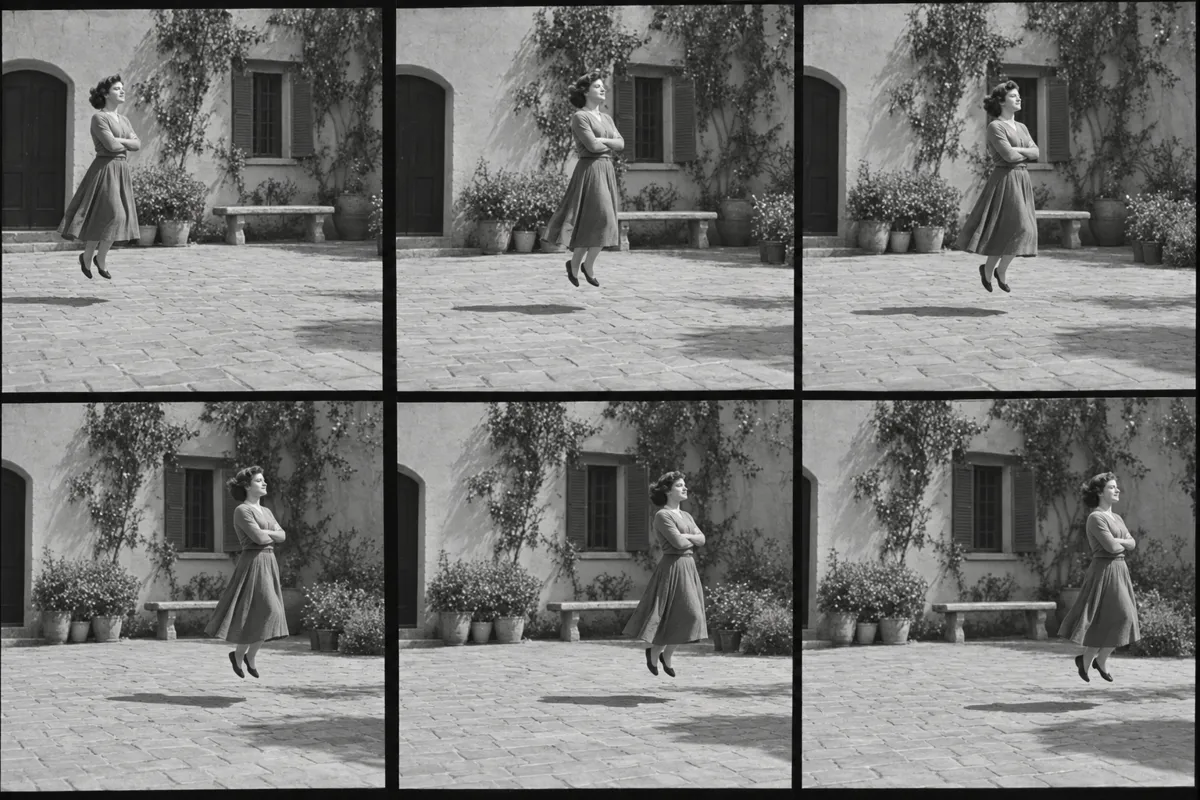
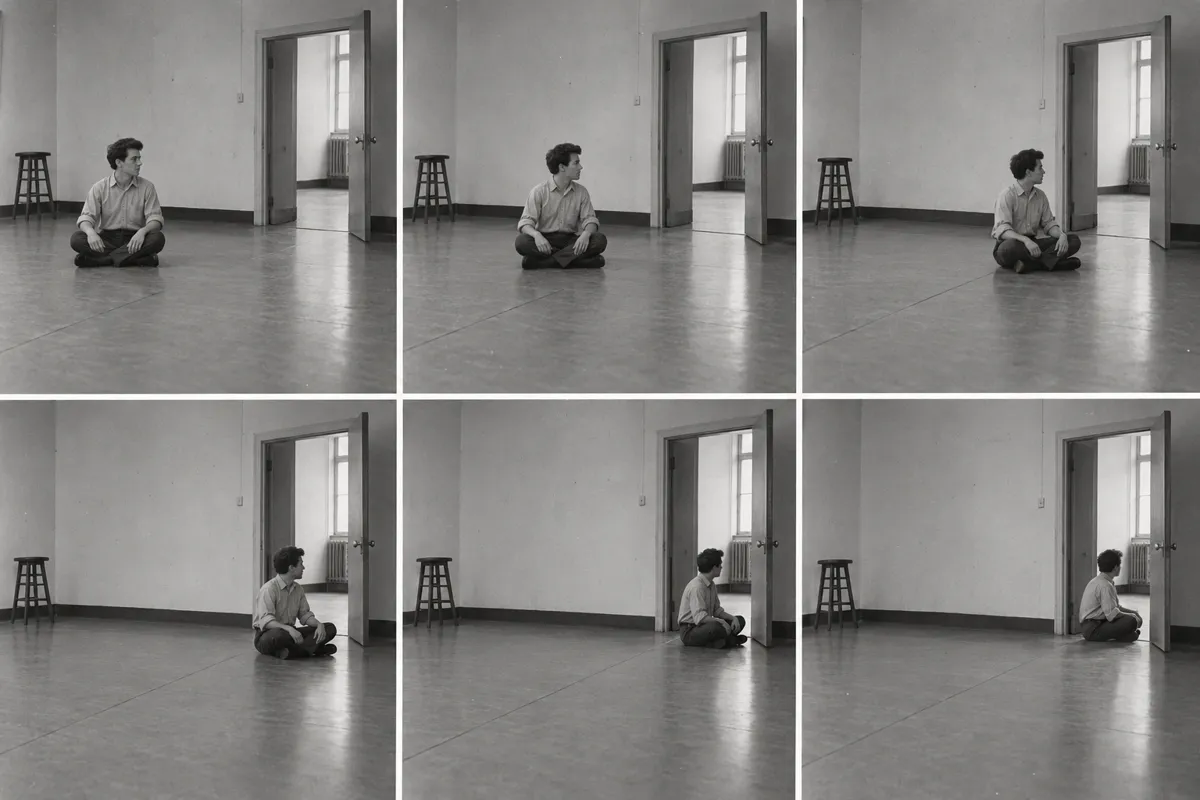
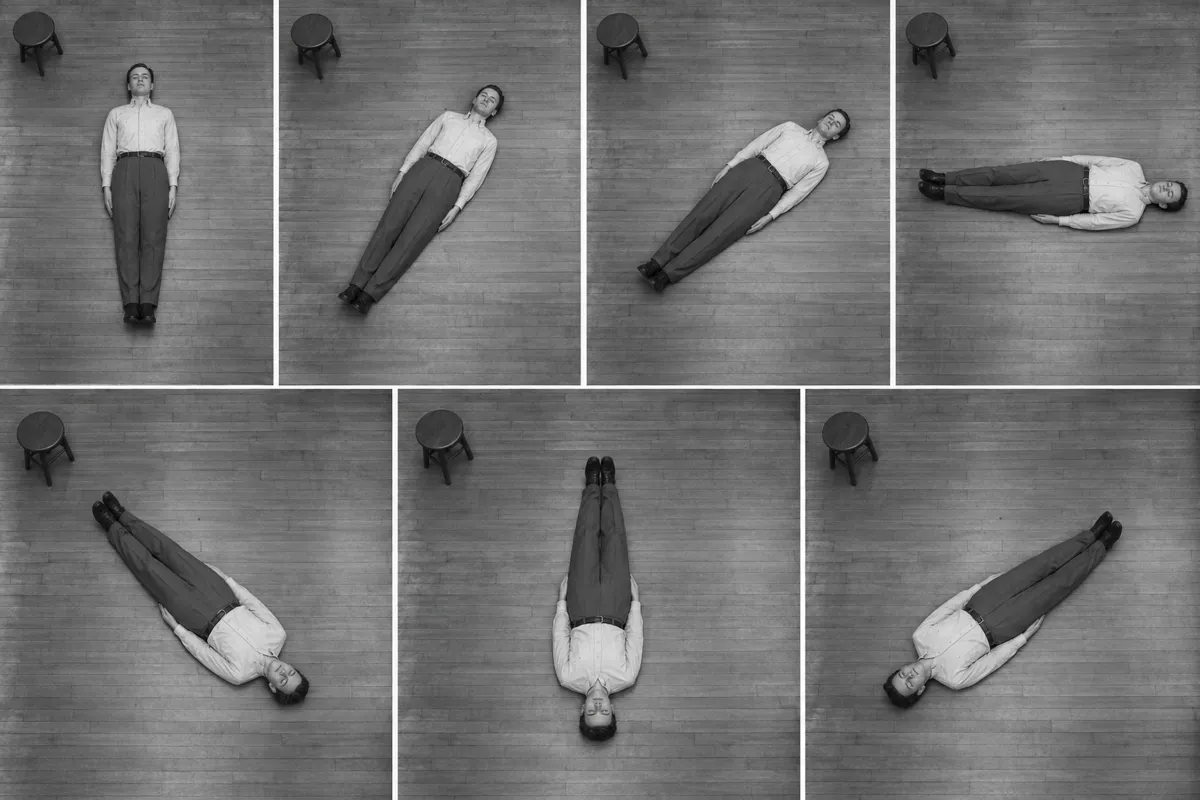
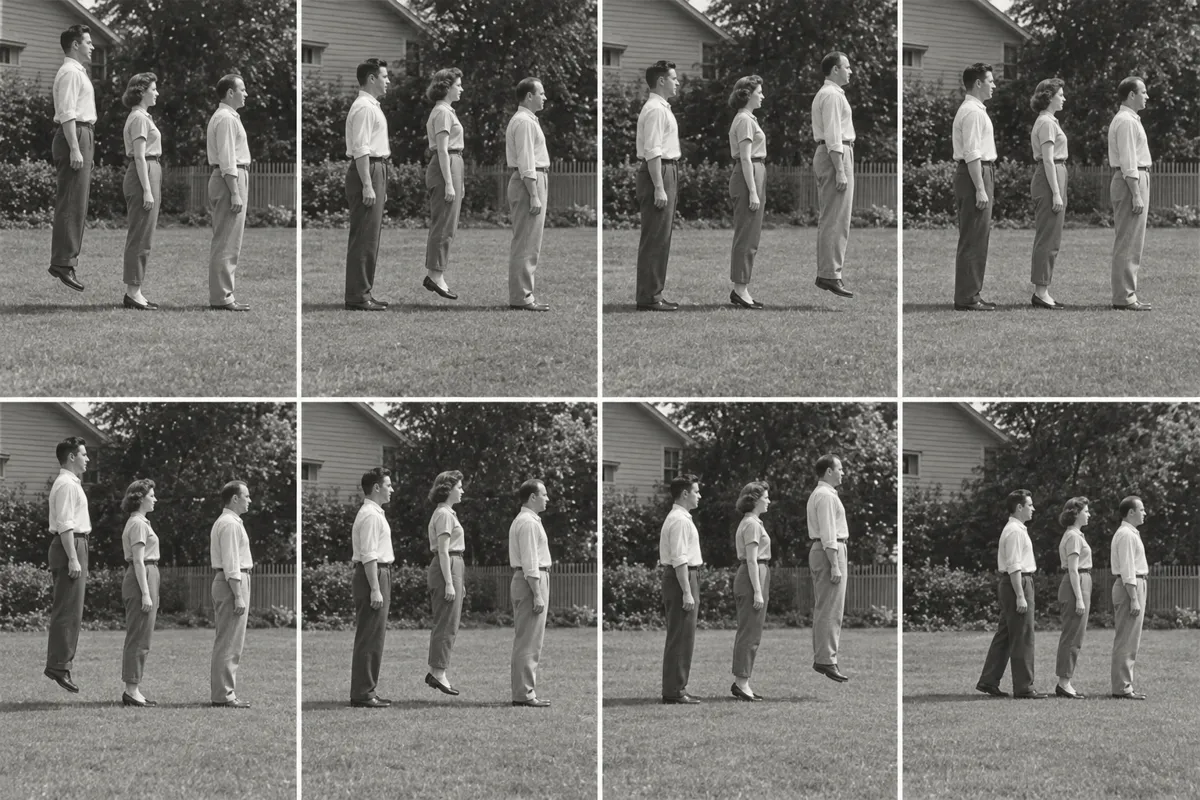
Live actors move in abrupt steps, slide without walking, or hover above the ground. Ordinary bodies acquire puppet-like movement and impossible rhythms.
Principle
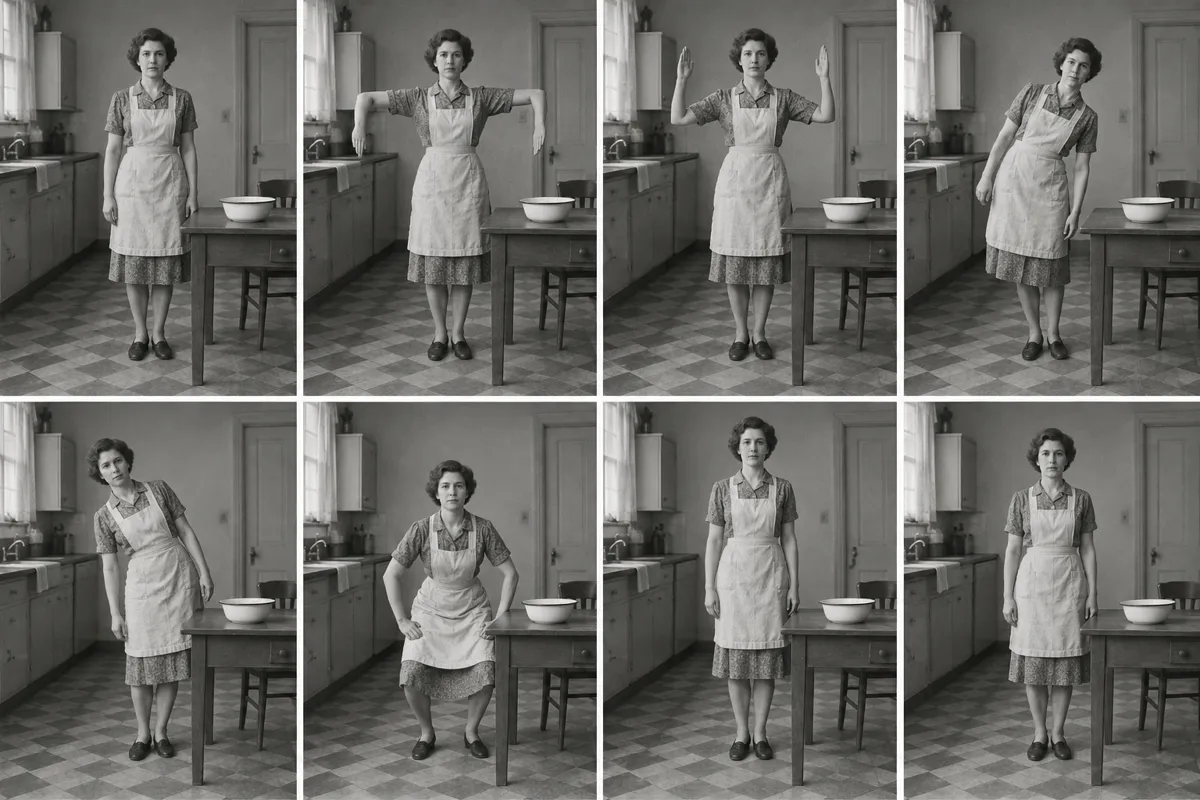
The camera records separate frames while performers change position between exposures1. Playback turns these staged poses into apparent motion2, without recording the movements connecting them.
Example
Norman McLaren: Neighbours, 1952.
Try it out
Keep a camera fixed and photograph someone standing still at successive floor marks; play the photographs in sequence to reveal sliding.
Background
Pixilation treats living performers as stop-motion3 subjects rather than continuously filmed actors. Earlier trick films explored this approach, including Segundo de Chomón’s El hotel eléctrico, released in 1908. Norman McLaren’s Neighbours brought it particular prominence in 1952 at the National Film Board of Canada. Its suburban conflict becomes physically strange through carefully staged movement. Performers hold poses or repeat actions while the camera records selected moments. For hovering, successive photographs can catch a performer airborne during separate jumps. The apparent continuity comes from playback, not from continuous action during filming.
Distinction
Unlike puppet stop-motion, pixilation animates living performers. It is unrelated to pixelation, which makes an image look blocky by exposing or enlarging its pixel structure.
Aftermath
Pixilation shows how selecting moments can construct movement that never happened continuously before the camera.
Further examples · 7 images
Question
Why can a performer appear to slide while keeping both feet still?
Show possible answer +Hide answer −
Each frame shows the same standing pose at a new position. The steps taken between positions are not recorded.