Photographic Joiners
1980s; David Hockney’s Polaroid and photographic print collages, beginning in 1982
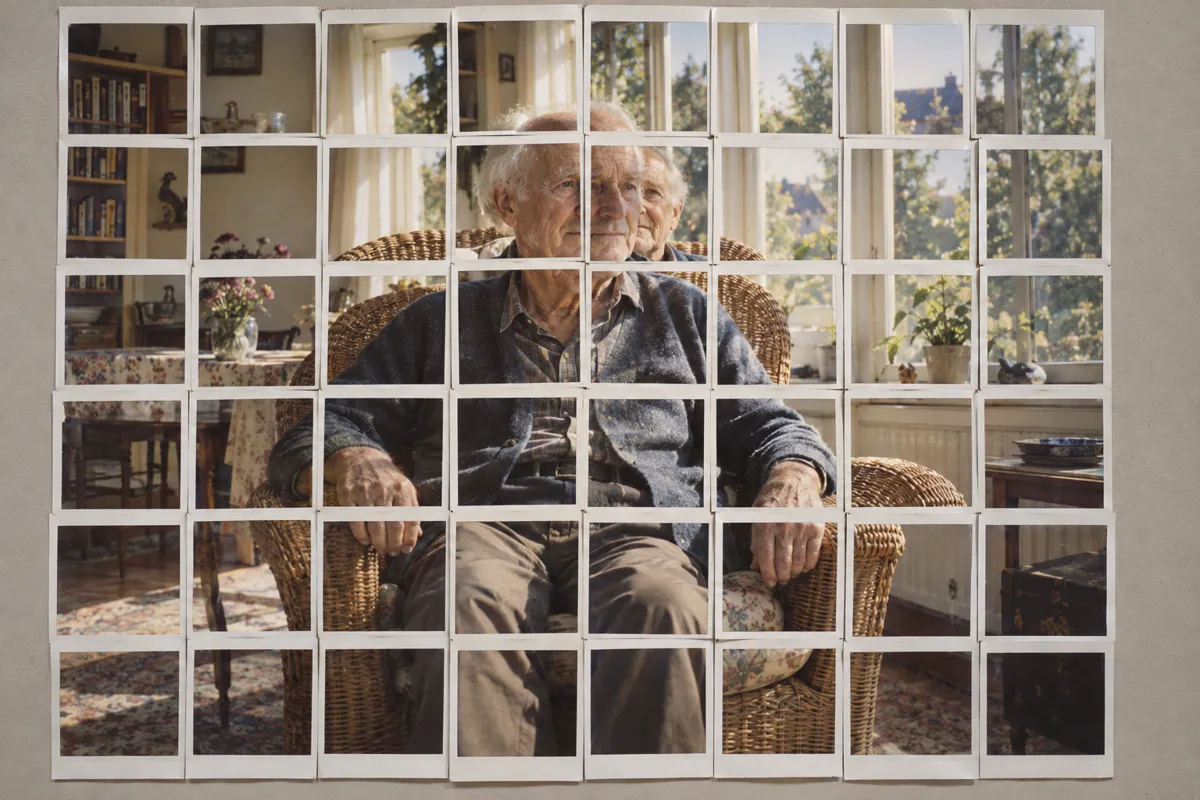
Prompt
Transform this image into Photographic Joiners: overlapping rectangular photographic prints with visible white borders, seams, slight rotations, and uneven exposure. Introduce small viewpoint offsets and repeated details across neighboring tiles, creating a fractured but readable reconstruction rather than a seamless panorama. Keep the original subject and composition.
Identify
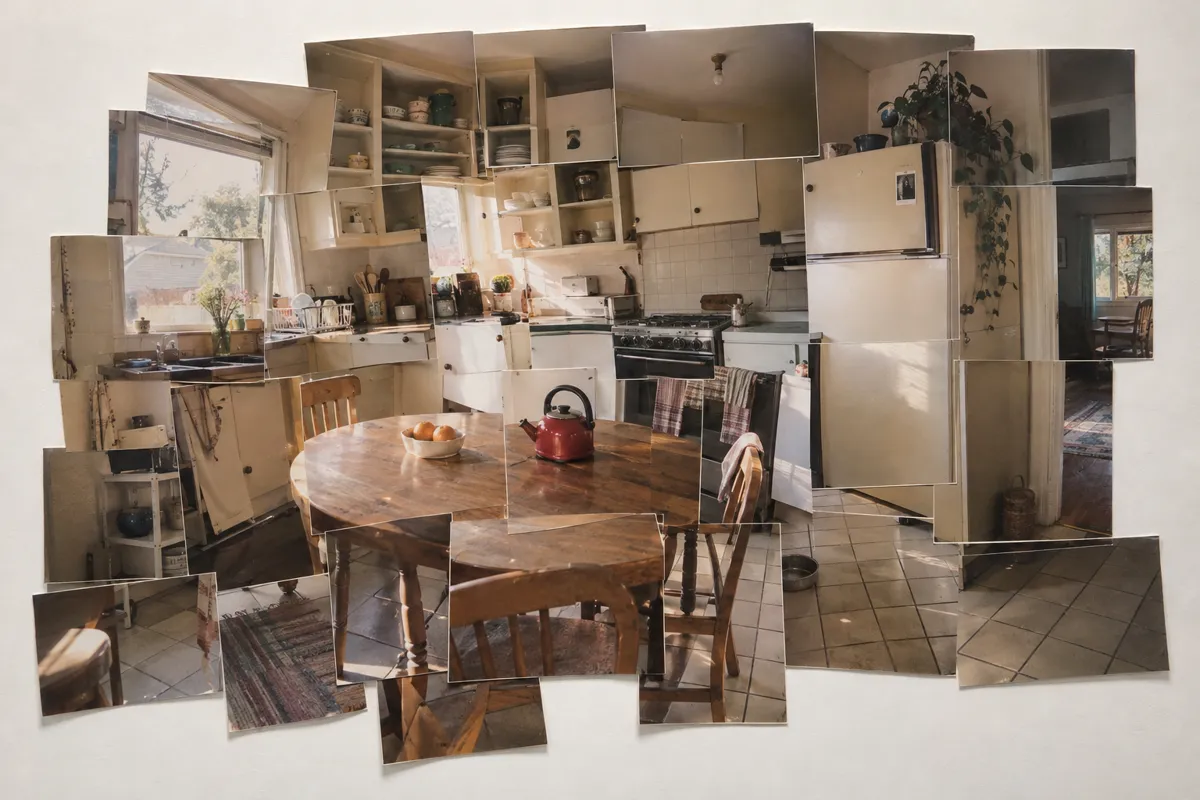
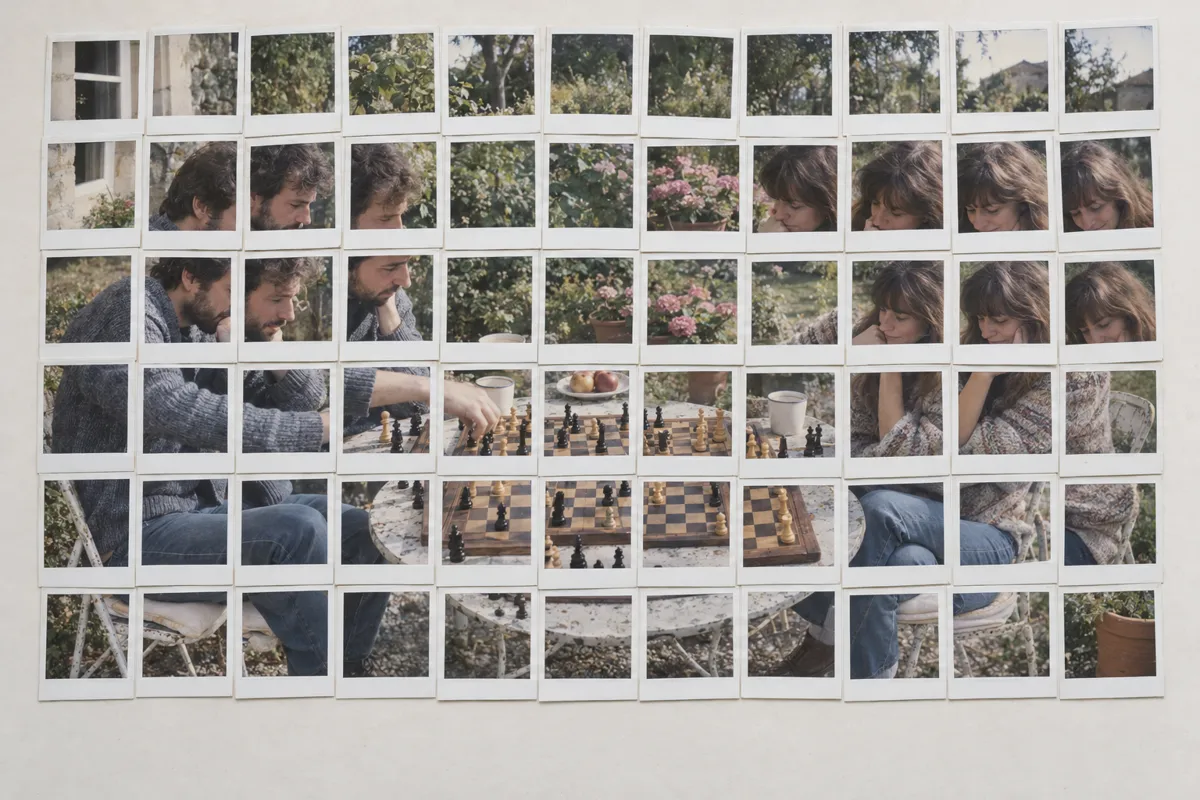
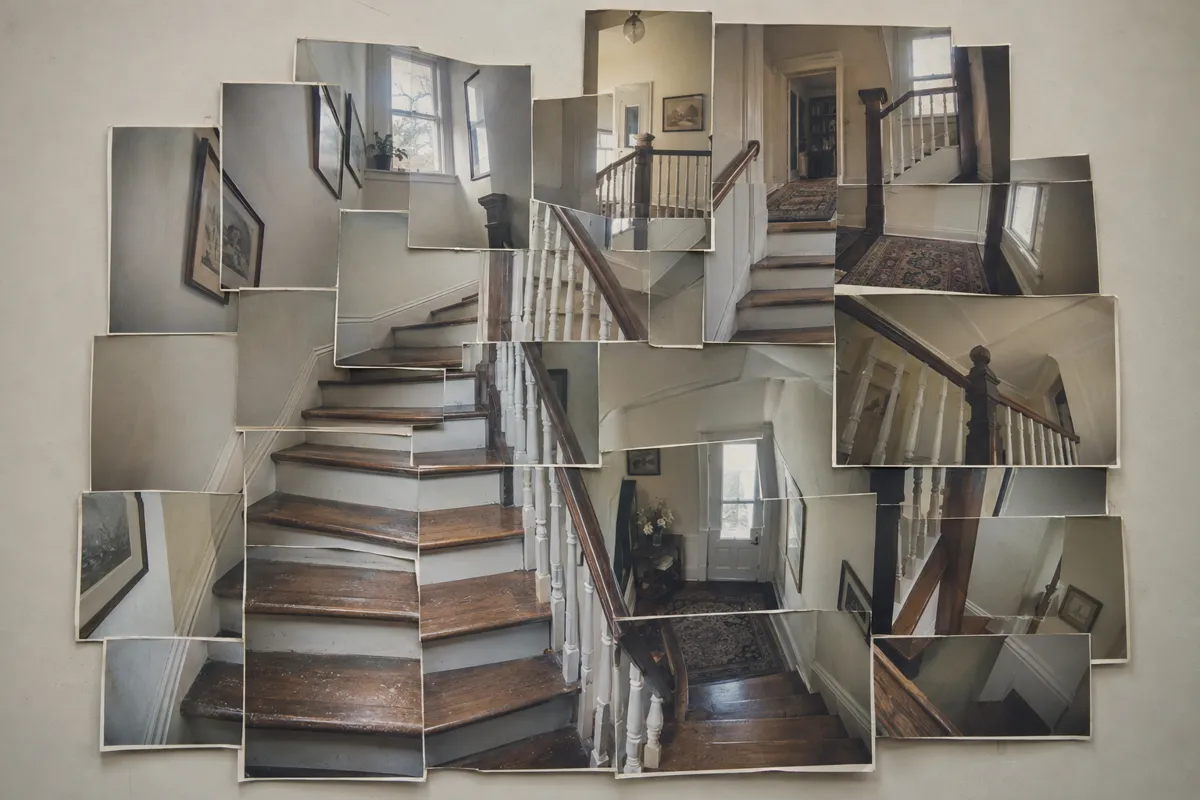
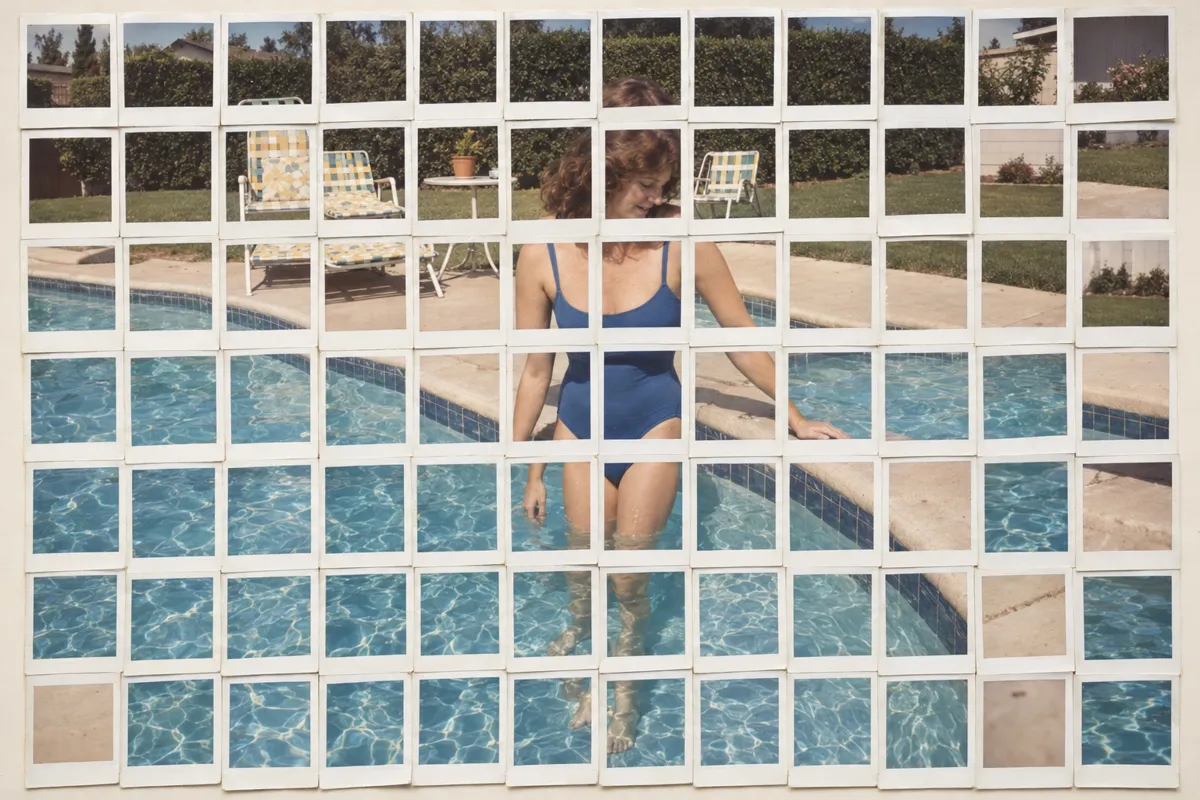
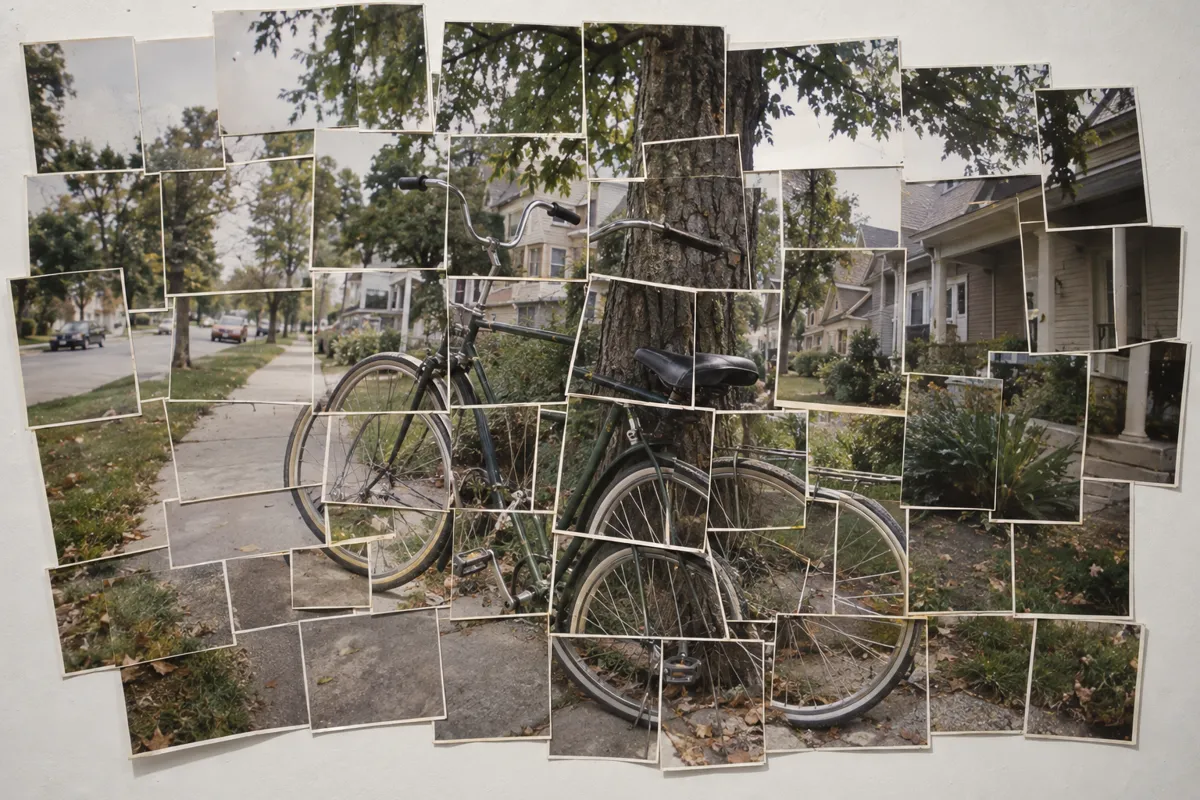
A scene breaks into overlapping photographs or a grid of bordered prints, with visible seams and repeated details. Shifting viewpoints make faces, rooms, or landscapes seem fractured yet connected.
Principle
Separate exposures1 record different parts of a scene from different positions or moments. Arranging the developed photographs together creates multiple perspectives2 rather than one continuous camera view.
Example
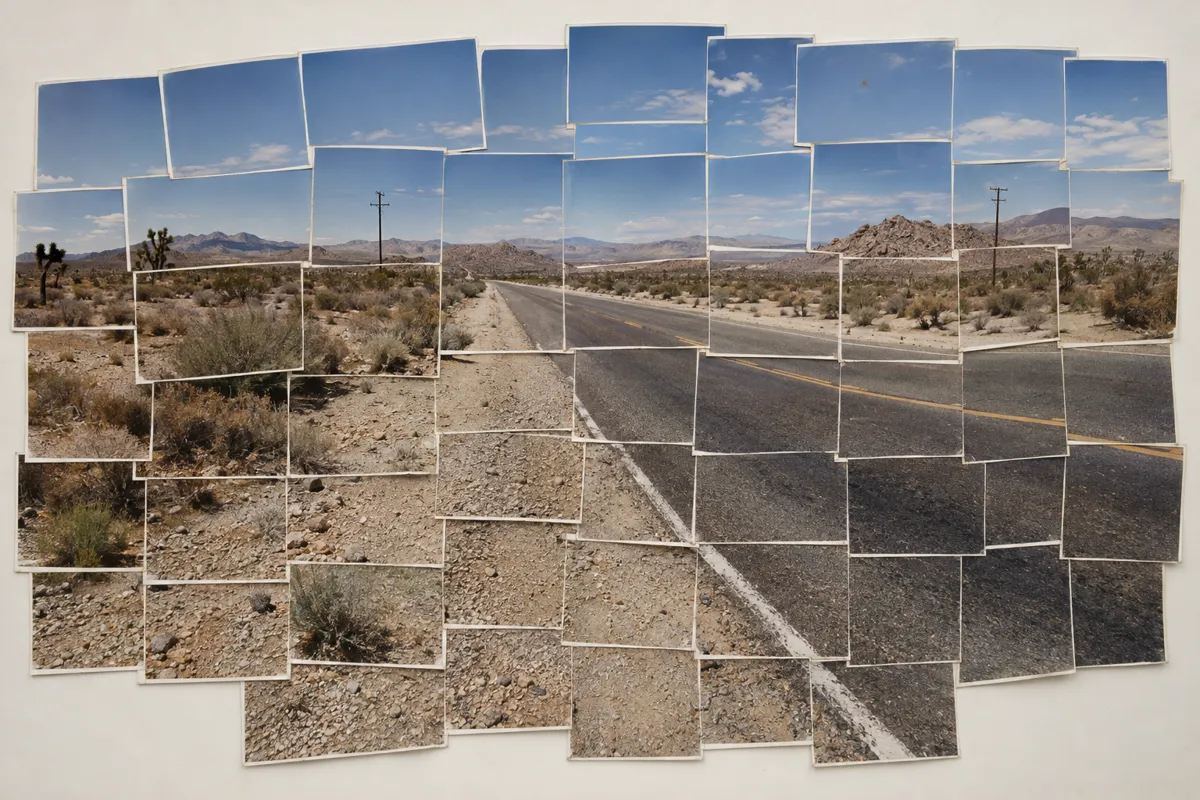
David Hockney: Pearblossom Hwy., 1986.
Try it out
Photograph a chair from nine slightly different positions, then arrange small prints so some edges connect and others visibly disagree.
Background
David Hockney began making his well-known photographic joiners in 1982, first using Polaroid pictures and then conventional photographic prints. Earlier artists had already explored photographic collage. His early Polaroid arrangements often retained a regular grid, while later print collages allowed freer overlaps and irregular outlines. Each photograph records its own viewpoint and moment, so the assembled scene can contain small contradictions. This recalls Cubism3’s challenge to a single fixed viewpoint. The visible joins encourage viewers to scan the picture, discovering space through successive details rather than one unified projection.
Distinction
Unlike a stitched panorama, a joiner preserves mismatches instead of hiding them. Unlike multiple exposure, it assembles separate photographs rather than recording several exposures on one frame.
Aftermath
Joiners show how a picture can combine separate moments and viewpoints without pretending they belong to one instantaneous view.
Further examples · 7 images
Question
Why might the same hand appear twice in a joiner?
Show possible answer +Hide answer −
Separate photographs may capture the hand at different moments or include it in overlapping views. Keeping both images makes that repetition visible.