H 213 / 3211980s

Paint-on-Glass Animation

1980s landmark: Aleksandr Petrov’s The Cow, 1989; the technique predates this film.
Typeface · Gabriela

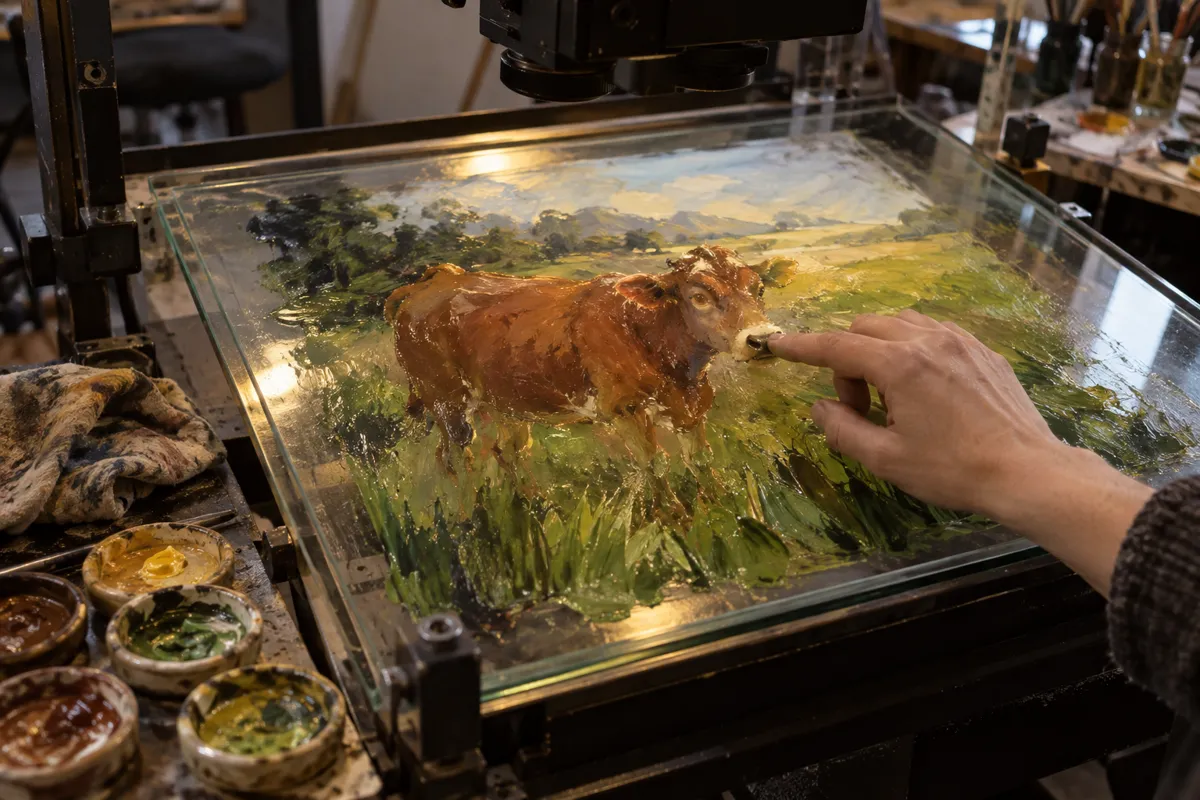
AI illustration: Animation stand with wet paint on glass.
AI illustration: Animation stand with wet paint on glass.Illustration generated for the Atlas (AI)View source ↗

Prompt

Transform this image into a Paint-on-Glass Animation frame with luminous translucent pigments, wet brush marks, smeared color transitions, and softly dissolving edges. Suggest hand-worked oil paint on backlit glass through scraped highlights, pooled color, and faint traces of earlier strokes. Keep the original subject and composition.

Identify

Soft brush marks and luminous colours shift continuously, as figures emerge from painterly textures. Blurred edges and flowing transformations can make scenes resemble moving memories.

Principle

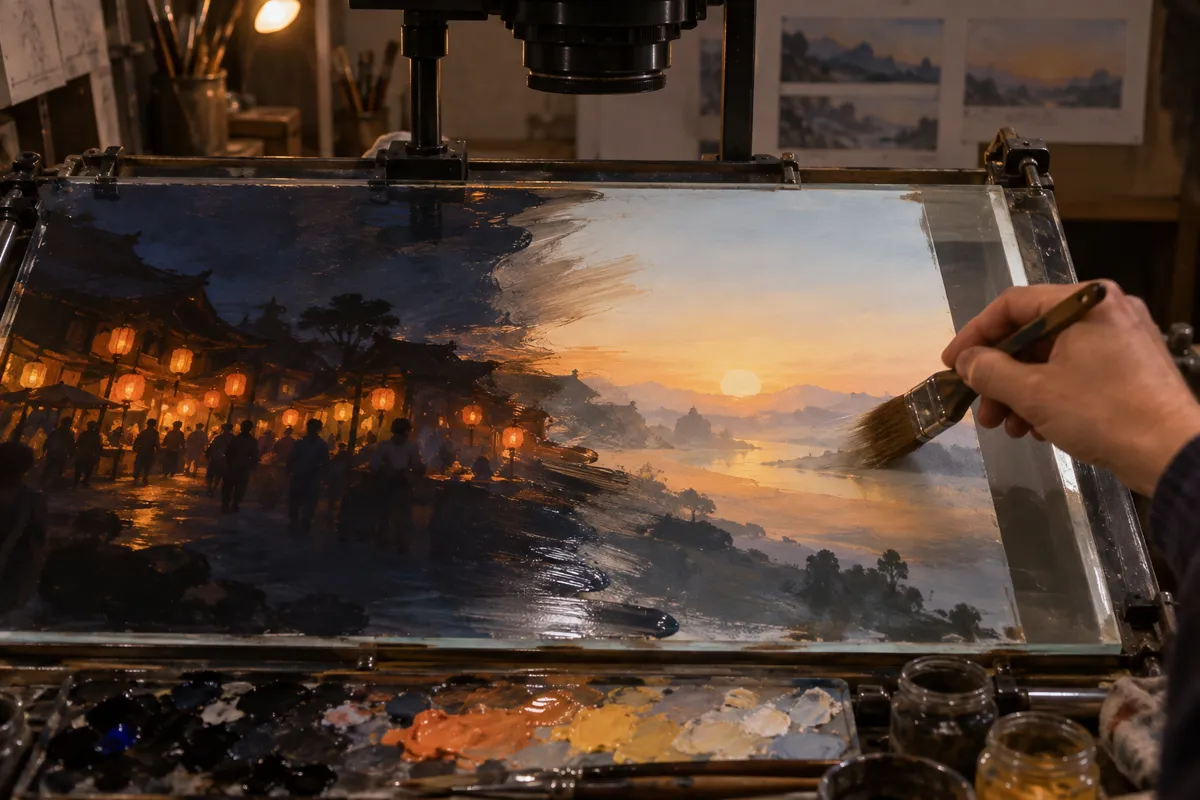
The animator alters wet paint on glass beneath a camera, photographing each stage as a separate frame1. Sequential playback2 turns these small changes into movement; slow-drying oil paint allows repeated reshaping.

Example

Aleksandr Petrov: The Cow, 1989.

Try it out

Spread washable paint on clear plastic, photograph it, then reshape and photograph it repeatedly; compare the images in sequence.

Background

Paint-on-glass animation existed before the 1980s, but Petrov’s The Cow became a celebrated example at the decade’s end. The film uses oil paint on glass to create a world of shifting, textured images. Rather than preparing a separate drawing for every frame, the animator repeatedly changes the painting beneath the camera. Paint can be added, pushed aside, blended, or wiped away. Each photograph preserves a stage that later alterations may destroy. Lighting, paint thickness, and the background influence whether colours appear opaque or translucent3.

Distinction

Unlike cel animation, which usually replaces separate drawings on transparent sheets, paint-on-glass animation often reworks the same painted surface. Its movement comes from successive photographs, not paint flowing during a continuous exposure.

Aftermath

It shows how changes to a material surface can create movement while preserving the visible traces of artistic gestures.

Further examples · 7 images
AI illustration: Sequential glass plates showing a metamorphic transition
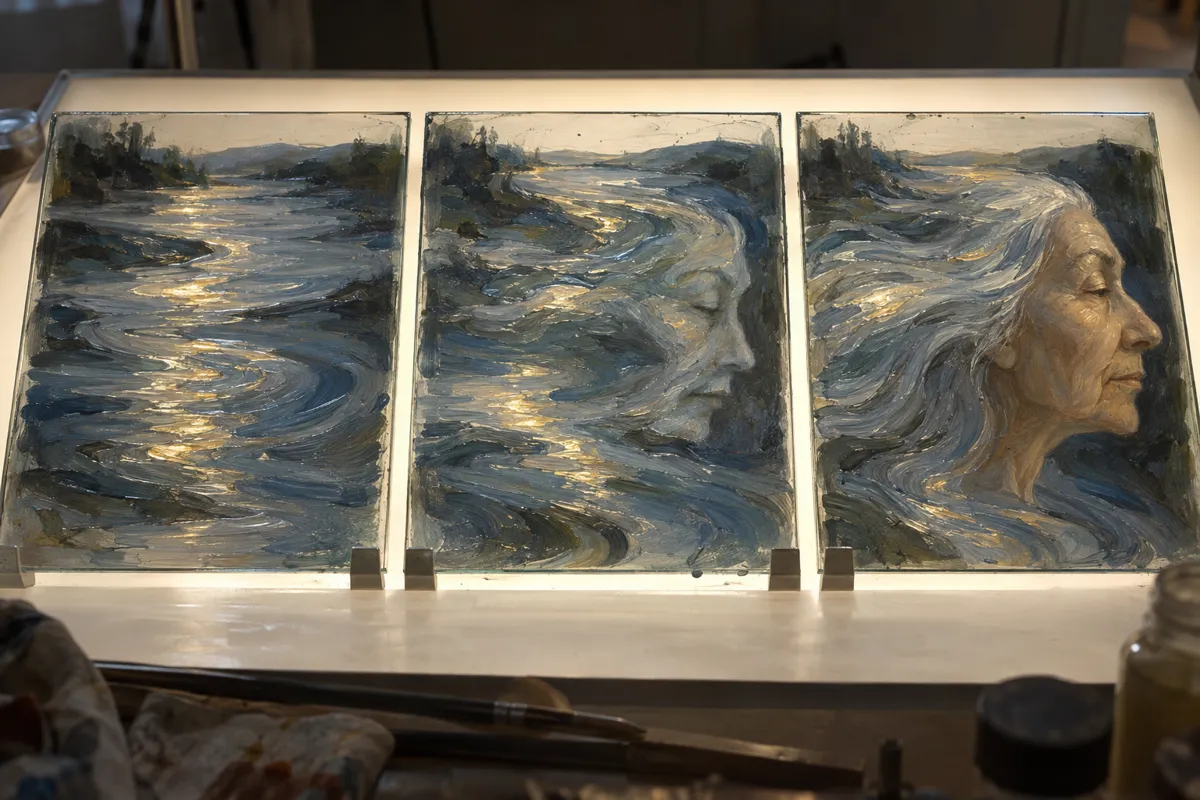
02 AI illustration: Sequential glass plates showing a metamorphic transitionThree glass panels show a sequential transformation of a river's current into the profile of a woman. This series illustrates the 'morphing' quality unique to the technique, where textures flow seamlessly from one form to another.Illustration generated for the Atlas (AI)
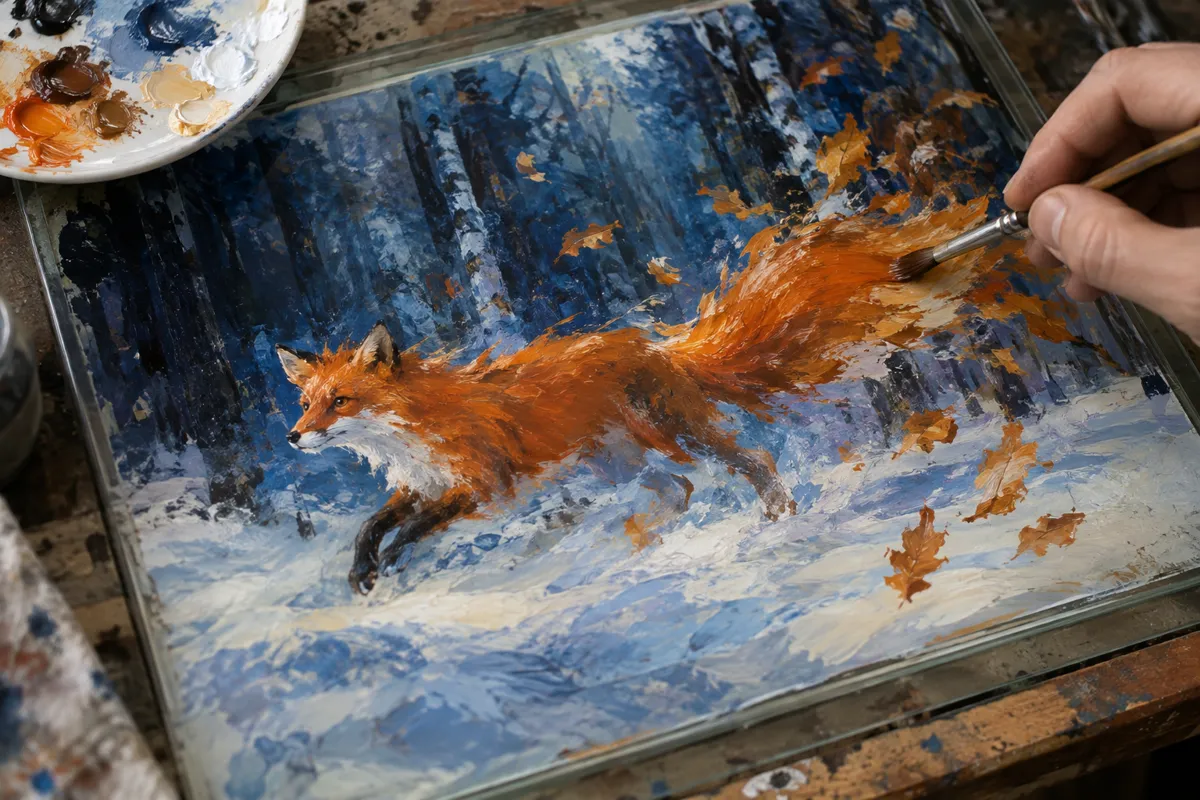
AI illustration: Creating movement through tactile paint manipulation
03 AI illustration: Creating movement through tactile paint manipulationAn artist uses a brush to drag thick, wet pigment across a glass surface to create a sense of motion for a running fox. The visible brushstrokes and impasto texture are characteristic of the painterly aesthetic found in this animation style.Illustration generated for the Atlas (AI)
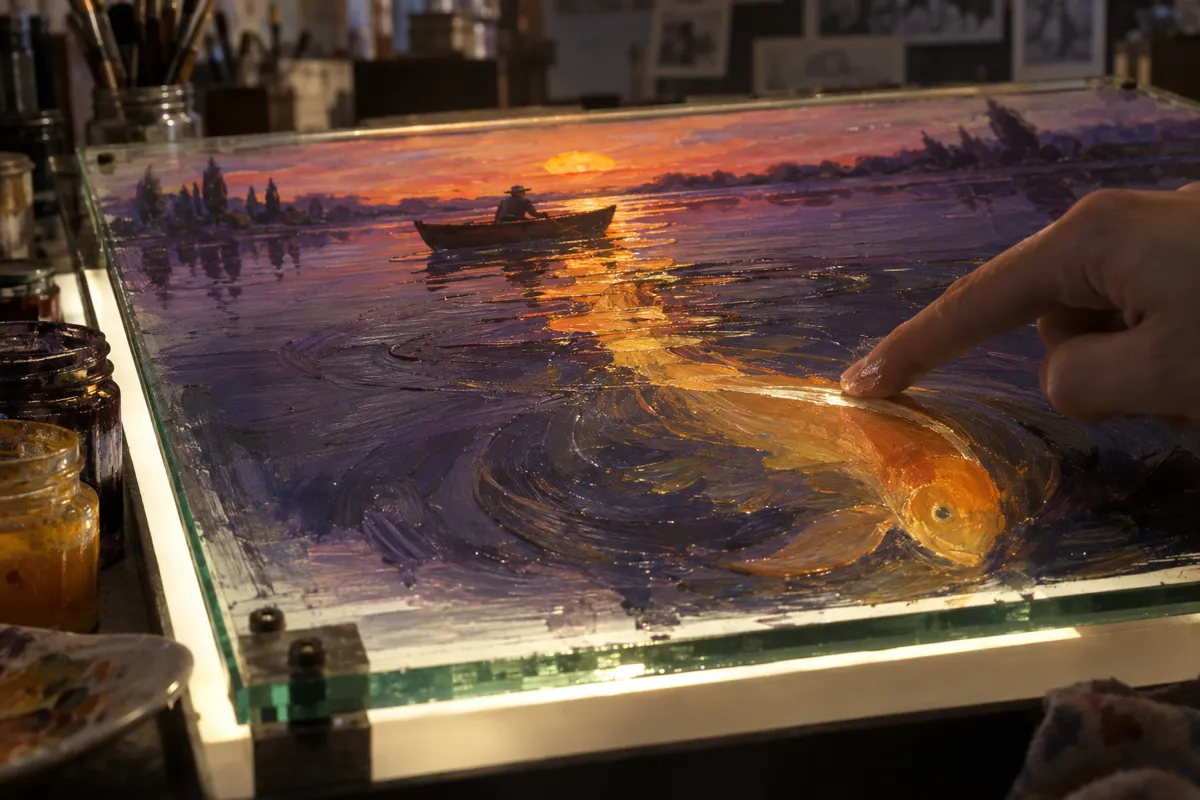
AI illustration: Finger painting techniques on a backlit animation glass
04 AI illustration: Finger painting techniques on a backlit animation glassA finger smudges a luminous trail behind a fish on a backlit glass pane, creating a glowing, blurred effect. The translucency of the oil paint on glass allows light to pass through, resulting in the signature radiant color palette.Illustration generated for the Atlas (AI)
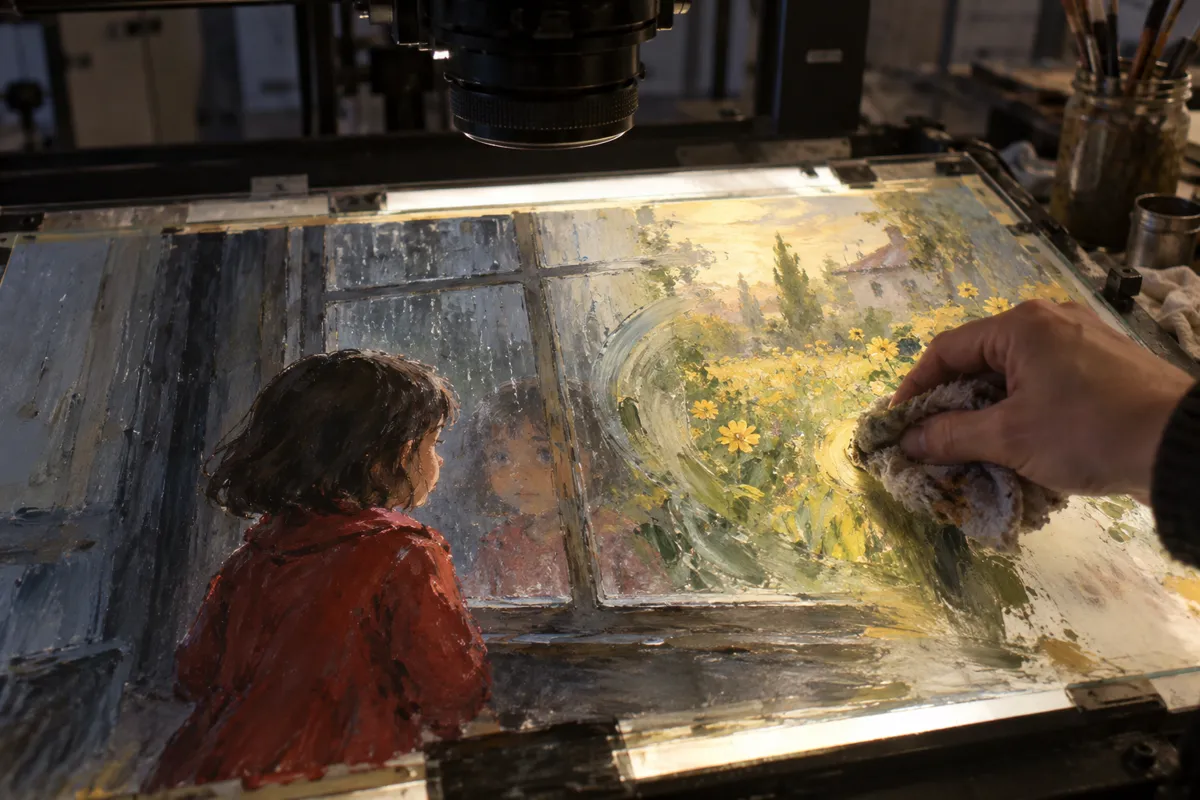
AI illustration: Reductive painting technique under the animation camera
05 AI illustration: Reductive painting technique under the animation cameraA cloth is used to wipe away dark paint to reveal a bright, flowery landscape underneath on the glass plate. This 'reductive' method is a standard practice in the medium for creating light and clearing scenes for new movements.Illustration generated for the Atlas (AI)
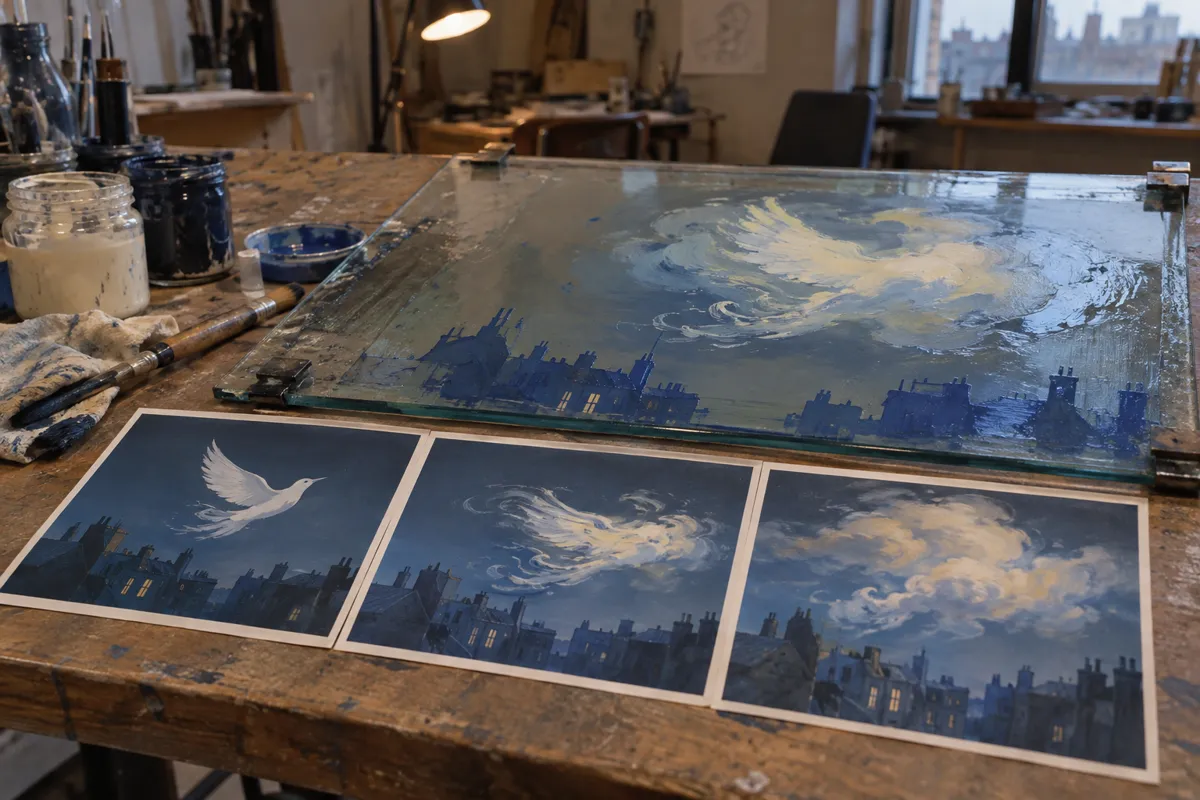
AI illustration: Reference prints and the master glass animation plate
06 AI illustration: Reference prints and the master glass animation platePrinted frames show a bird dissipating into a cloud, alongside the original large-scale glass plate used for the shoot. These prints serve as a record of the ephemeral process where each frame is destroyed to create the next.Illustration generated for the Atlas (AI)
AI illustration: Overpainting a scene to progress the animation sequence
07 AI illustration: Overpainting a scene to progress the animation sequenceA brush applies a fresh layer of sunset colors over a previously painted village scene on a thick glass sheet. This demonstrates the constant overpainting required to progress the narrative in a single-surface animation workflow.Illustration generated for the Atlas (AI)

Question

Why is slow-drying oil paint useful for this technique?

Show possible answer +

It stays workable while the animator reshapes forms between photographs. This supports gradual blending and transformations without repainting every frame from scratch.

Sources