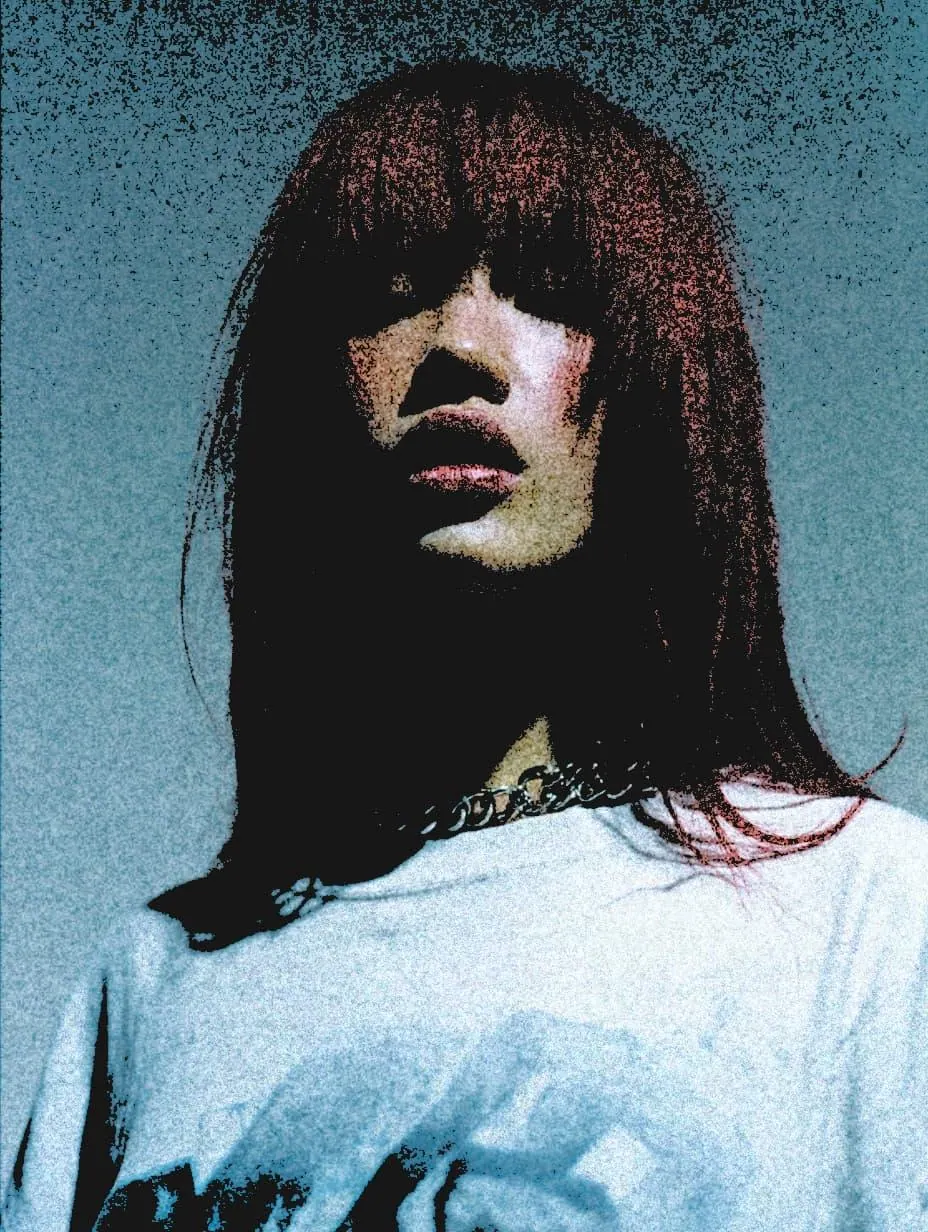
Colorized Xerox look: modern digital demonstration.Digital effect demonstration.View source ↗
Prompt
Transform this image into a Photocopy Aesthetic, using harsh black toner on slightly dirty off-white paper. Crush shadows into solid masses, erase delicate midtones, and introduce speckled deposits, broken edges, streaks, uneven density, and faint duplicate contours from repeated copying. Keep the original subject and composition.
[Harsh contrasts], [toner1spots], and [lost intermediate tones].
Principle
Copying or thresholding2plus noise reduces the image.
Example
Punk flyers and photocopied zines.
Try it out
Make five copies; document the loss of detail.
Background
Photocopying became ameans of production in art, self-published magazines, and musical subcultures. MoMA's zine documentation has documented this publishing practice since the 1970s. The copy was not merely acheaper reproduction: its contrast, blemishes, and deterioration upon recopying could be deliberately manipulated. Amodern digital Xerox filter builds this effect from threshold and several noise components. The example is acontemporary simulation, not ahistorical punk flyer. In the exercise, compare the first and fifth generations: Which contours merge, and which disappear? Copying errors can combine image elements, thereby altering their meaning, not merely their surface.
Aftermath
This look is particularly suitable for your zines if aclear silhouette is maintained. Faces with alot of detail require amore nuanced threshold.
Further examples · 7 images
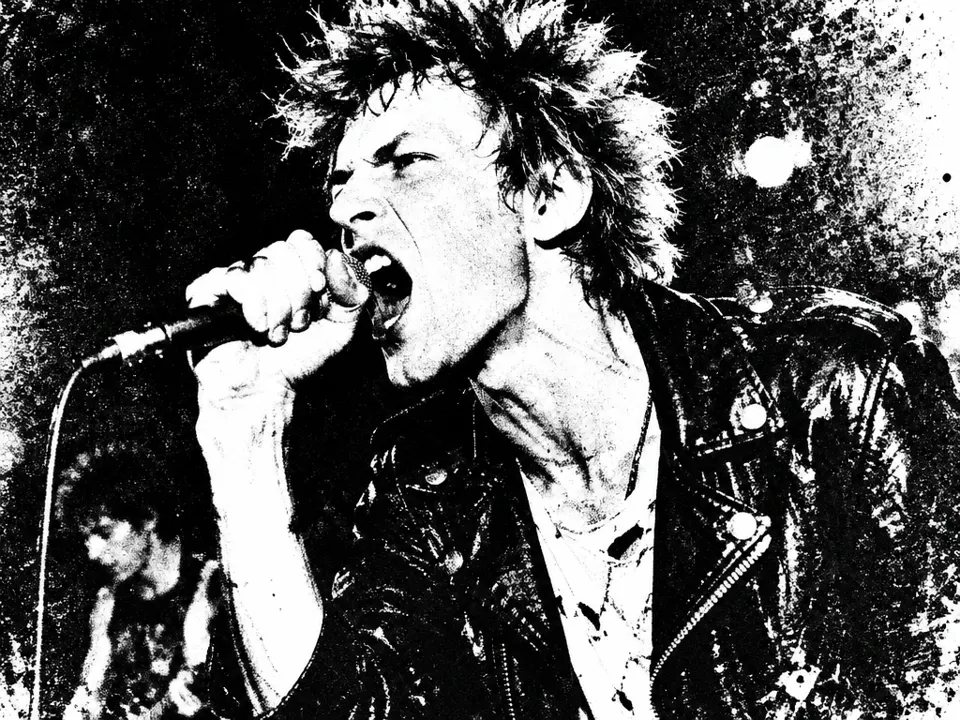
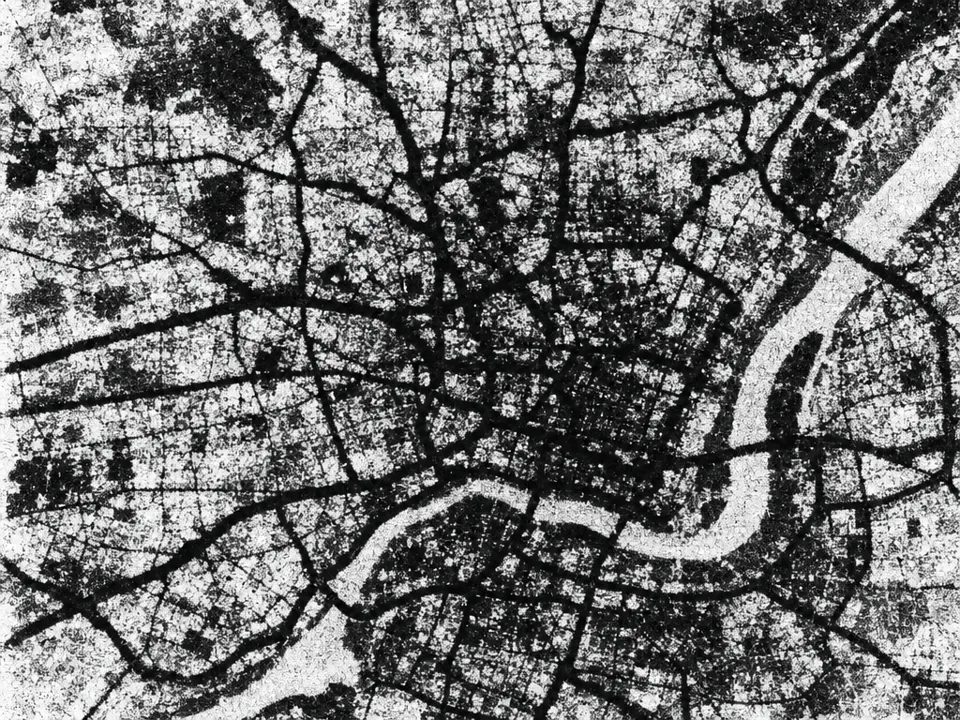
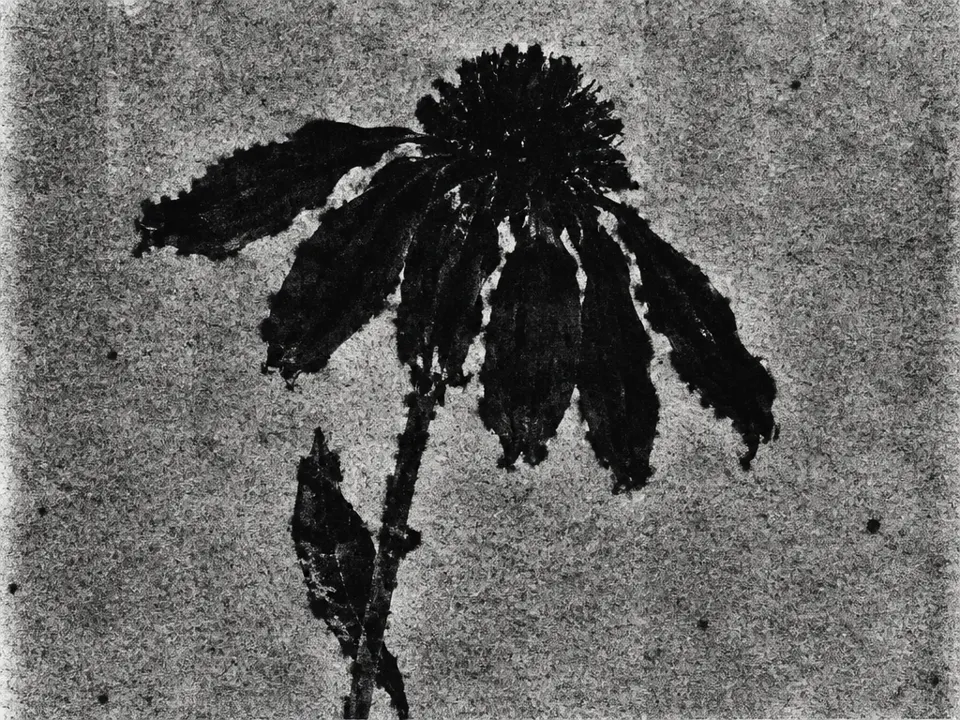
02Oběd, xerox, monotyp, 1984This monotype displays harsh contrast and heavy toner-like textures. The dark, grainy background and stark white plate demonstrate the loss of intermediate tones and the characteristic blemish-heavy surface of photocopying.Miloslav Požár · CC BY-SA 4.0 · Wikimedia Commons03"Choreography for Copy Machine (Photocopy Cha Cha)" theatrical movie posterThe poster uses high-contrast, multi-generational copy aesthetics. It shows distorted faces and objects with the flattened values and harsh thresholds typical of punk zine production and creative photocopy manipulation.Chel White · CC BY-SA 4.0 · Wikimedia Commons04Photocopy of a 1937 plan view drawing of the Basement, First Floor and Balcony of Building No. 701, the Chapel. The HABS film is a high-contThis architectural plan exhibits typical xerographic artifacts. Harsh black-and-white thresholds, visible toner grime in the margins, and degraded text demonstrate the loss of intermediate tones common in historical photocopying.Unknown · Public domain · Wikimedia Commons05AI illustration: A punk singer is shown with high contrast and heavy grainA punk singer is shown with high contrast and heavy grain. The blown-out highlights and dense black areas demonstrate the typical loss of intermediate tones in xerography.Illustration generated for the Atlas (AI)06AI illustration: A city map appears heavily degraded with dense black lines and noisy textA city map appears heavily degraded with dense black lines and noisy texture. The thresholding effect merges thin details into solid blocks, characteristic of low-quality reproduction.Illustration generated for the Atlas (AI)07AI illustration: A flower silhouette is rendered with high contrast and heavy grainA flower silhouette is rendered with high contrast and heavy grain. The loss of intermediate grey tones and the presence of toner-like spots reflect the deterioration common in multi-generational photocopying.Illustration generated for the Atlas (AI)
Question
Why does a black and white photo without toner structure often not look like a photocopy?
Show possible answer +Hide answer −
Grayscale alone does not produce the typical tonal banding, copy marks, or the change across multiple generations.