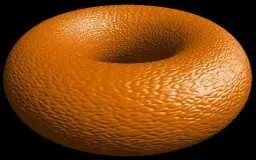
Bump mapping. Jim Blinn: Simulation of Wrinkled Surfaces, 1978.
Typeface · Teko
Jim Blinn: Leather Donut, 1978. Original illustration by the author.Jim Blinn, Author Archive.View source ↗
Prompt
Apply a Bump Mapping effect, giving existing surfaces finely pebbled, wrinkled, or engraved relief through directional highlights and tiny shaded depressions. Preserve smooth outer silhouettes, emphasizing apparent texture without protruding geometry; use restrained material colors and raking light to reveal the simulated roughness. Keep the original subject and composition.
Jim Blinn's own publication list explicitly identifies SIGGRAPH's 1978 "Simulation of Wrinkled Surfaces" as the introduction of bump mapping. His "Leather Donut" illustrates how roughness becomes visible without acorrespondingly fine model geometry. Modern shaders evaluate aheight function and translate its changes into amodified normal. Normal mapping, on the other hand, can read directions directly from an RGB map.
Distinction
Bump mapping alters the shading, not the actual geometry. It loses its illusion on silhouettes and at shallow viewing angles.
Aftermath
The impression of material complexity does not always require acomplex form.
Further examples · 7 images
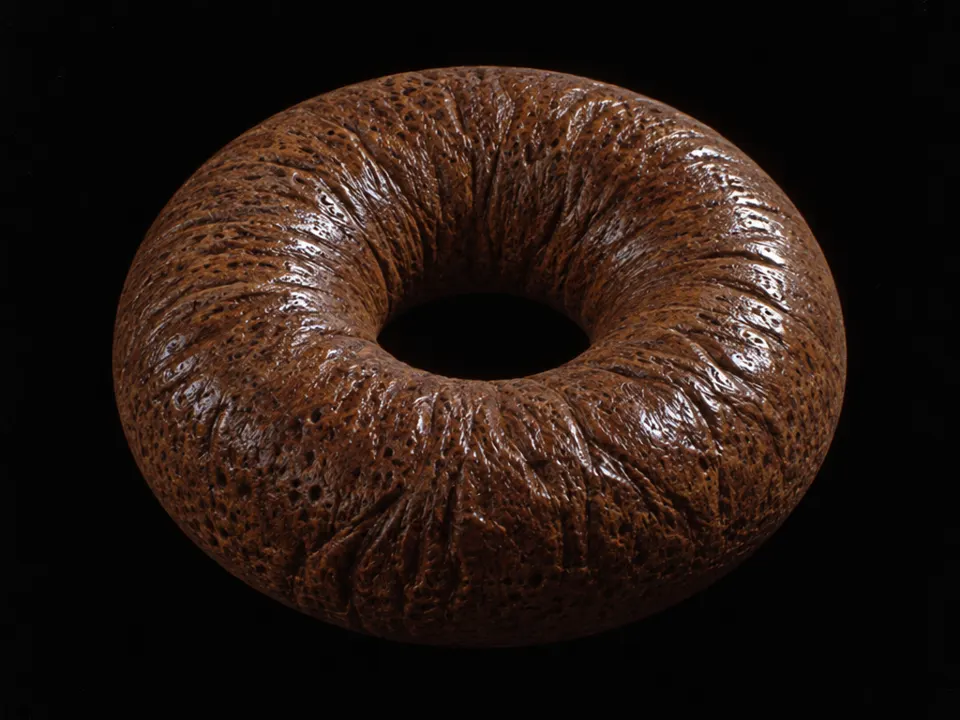
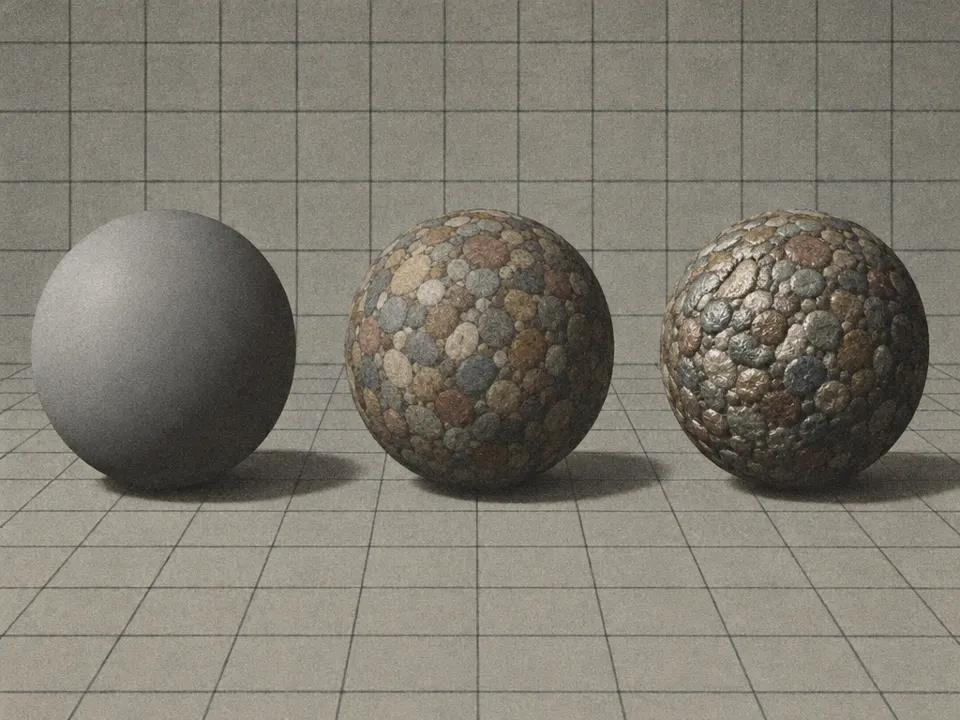
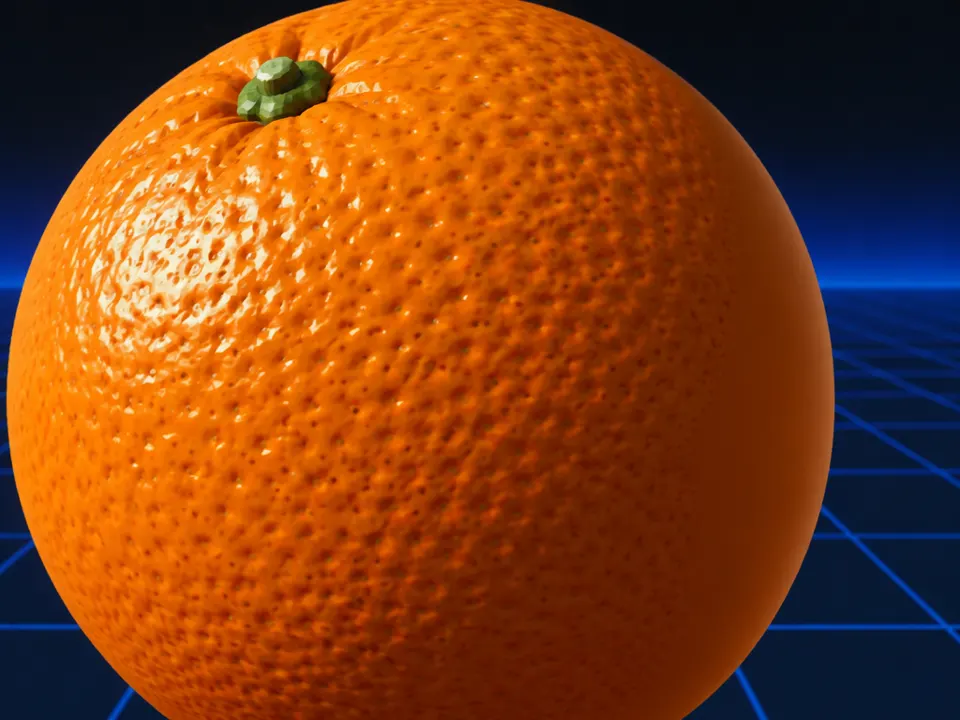
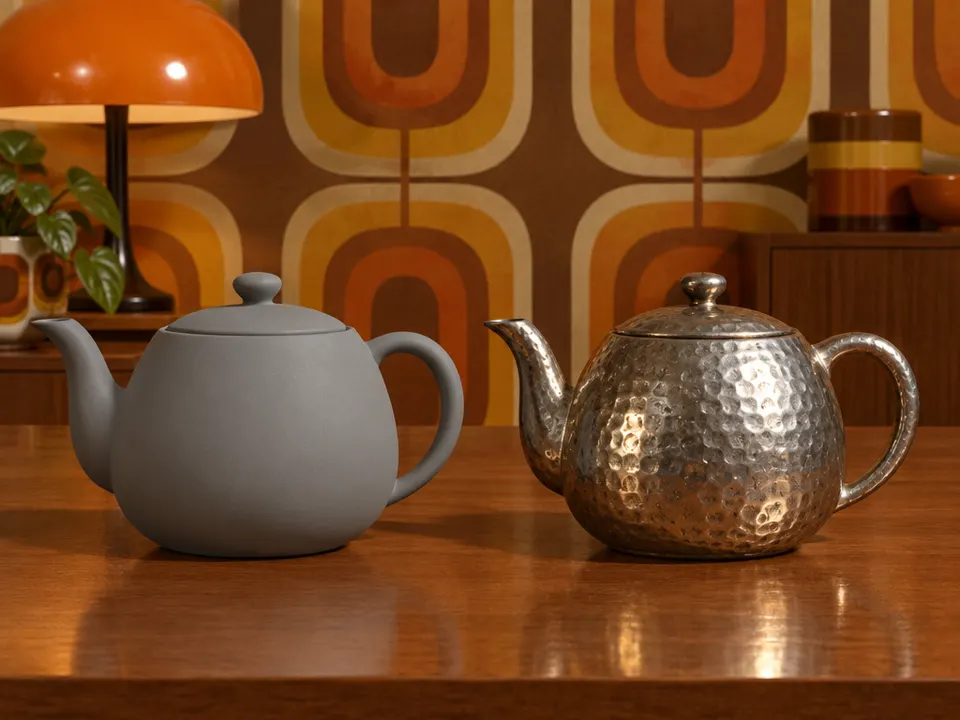
02Bump mappingA smooth orange sphere is combined with a grayscale noise map to create a textured result. It demonstrates how a 2D height function generates perceived surface roughness without changing the underlying spherical mesh.Brion VIBBER, McLoaf, Vierge Marie · CC BY-SA 3.0 · Wikimedia Commons03Bump map vs isosurface2A red bump-mapped sphere is compared side-by-side with a geometric isosurface. The left sphere uses bump mapping to simulate depth, while its smooth silhouette reveals that the actual geometry remains a perfect circle.GDallimore · Public domain · Wikimedia Commons04AI illustration: A brown torus displays simulated wrinkles and pitsA brown torus displays simulated wrinkles and pits. The lighting interactions on the surface suggest texture that is not present in the underlying smooth geometry.Illustration generated for the Atlas (AI)05AI illustration: Three spheres compare a plain model, a color map, and a bump mapThree spheres compare a plain model, a color map, and a bump map. The third sphere shows simulated depth through normal modification without changing the circular silhouette.Illustration generated for the Atlas (AI)06AI illustration: A sphere represents an orange with a pitted skin textureA sphere represents an orange with a pitted skin texture. The bumps are created by shading variations rather than geometric deformation, as evidenced by the perfectly smooth silhouette edge.Illustration generated for the Atlas (AI)07AI illustration: The image compares a smooth matte teapot to a hammered metal version withThe image compares a smooth matte teapot to a hammered metal version with identical silhouettes. The apparent surface dimples are created by normal perturbations, while the actual geometry remains perfectly circular and undistorted.Illustration generated for the Atlas (AI)
Question
Which test quickly distinguishes bump mapping from true displacement?
Show possible answer +Hide answer −
Check the silhouette or the shadow: True displacement can change the geometric shape and its shadows.