Photo Booth Strip
1925, Anatol Josepho's Photomaton in New York

Prompt
Transform this image into a Photo Booth Strip with four vertically stacked repetitions of the uploaded view, separated by pale borders on a narrow photographic paper strip. Use monochrome chemistry, direct frontal lighting, gentle grain, slightly uneven exposure, and worn paper edges. Within every frame, keep the original subject and composition.
Identify
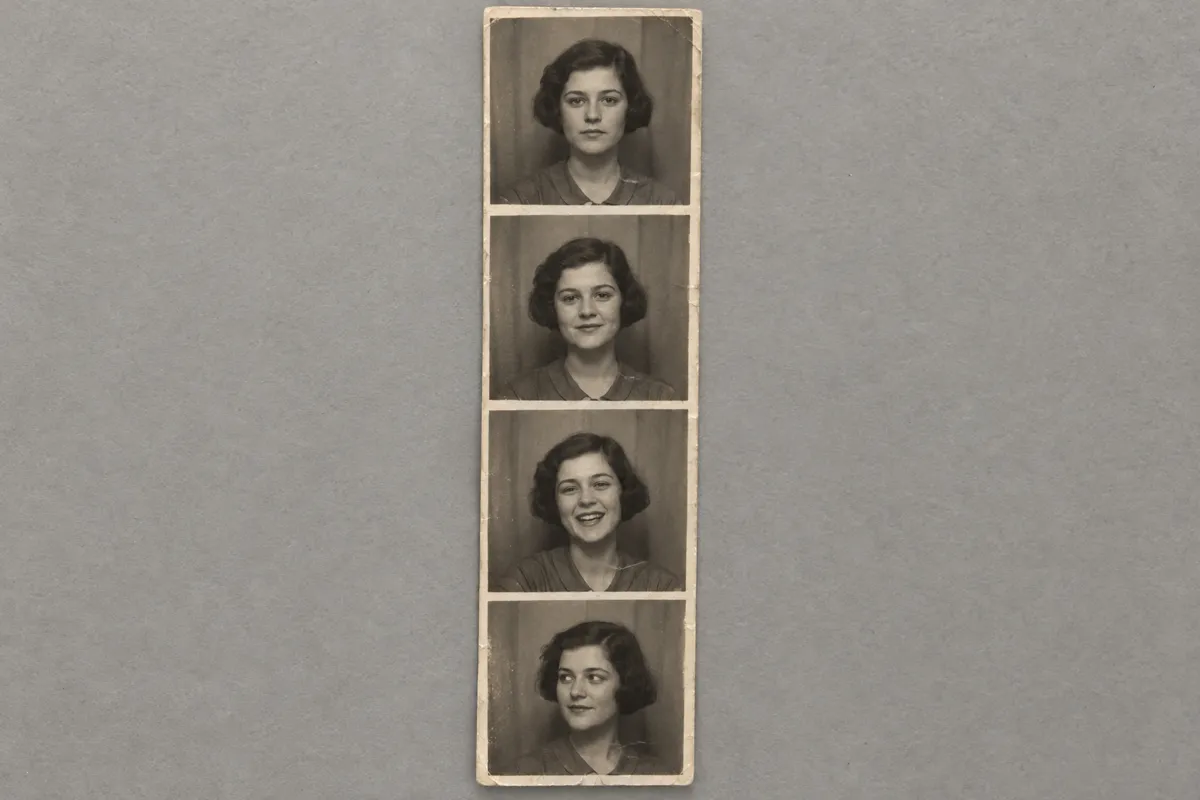
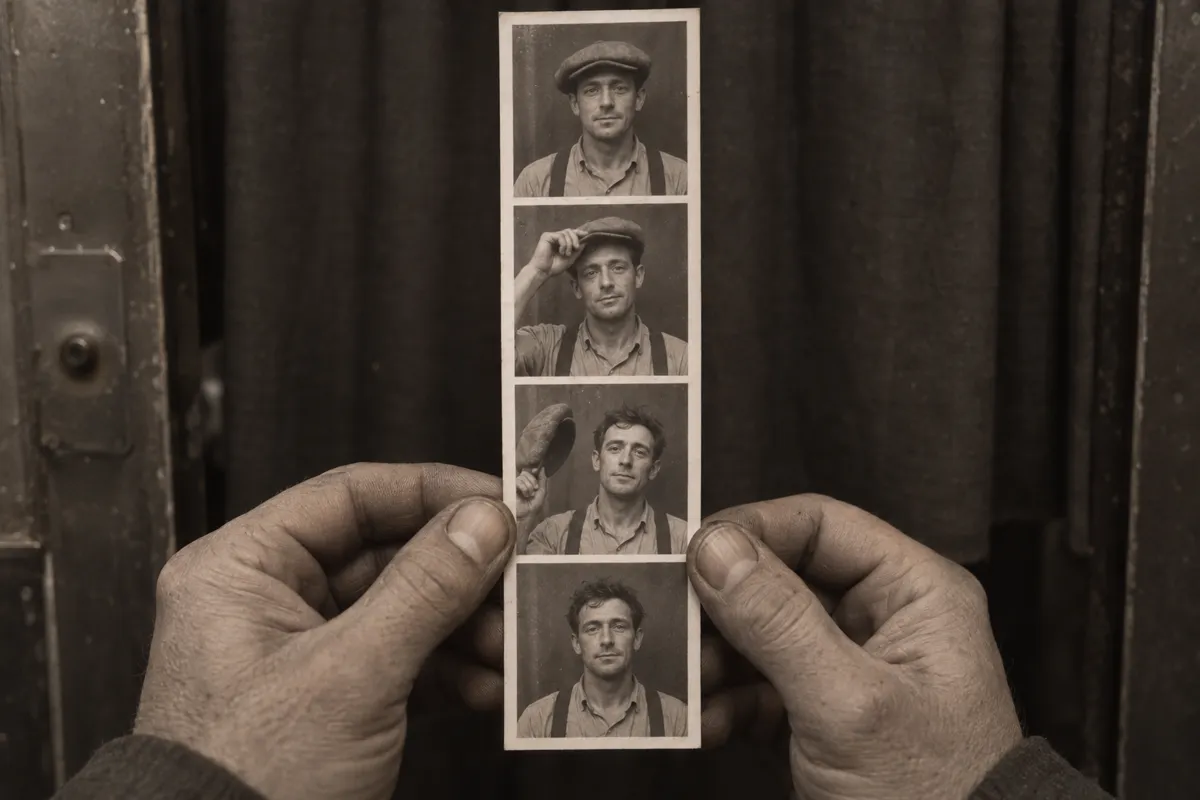
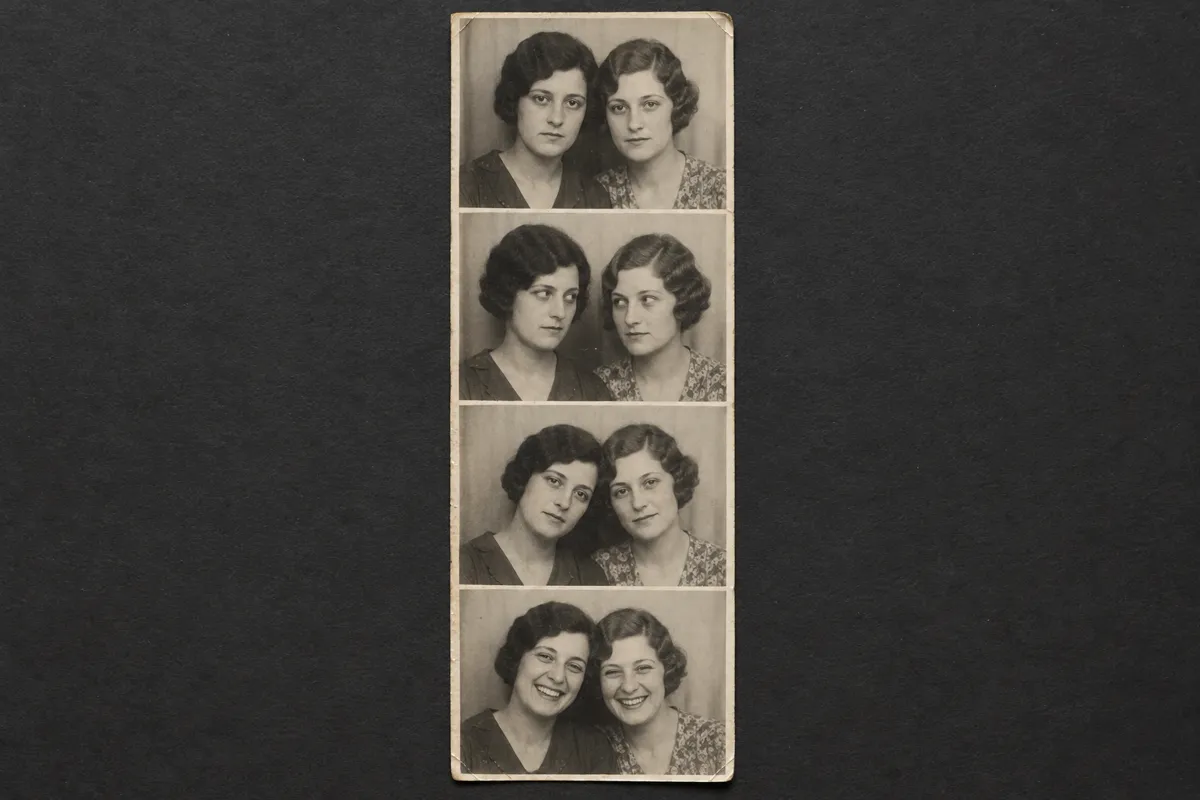
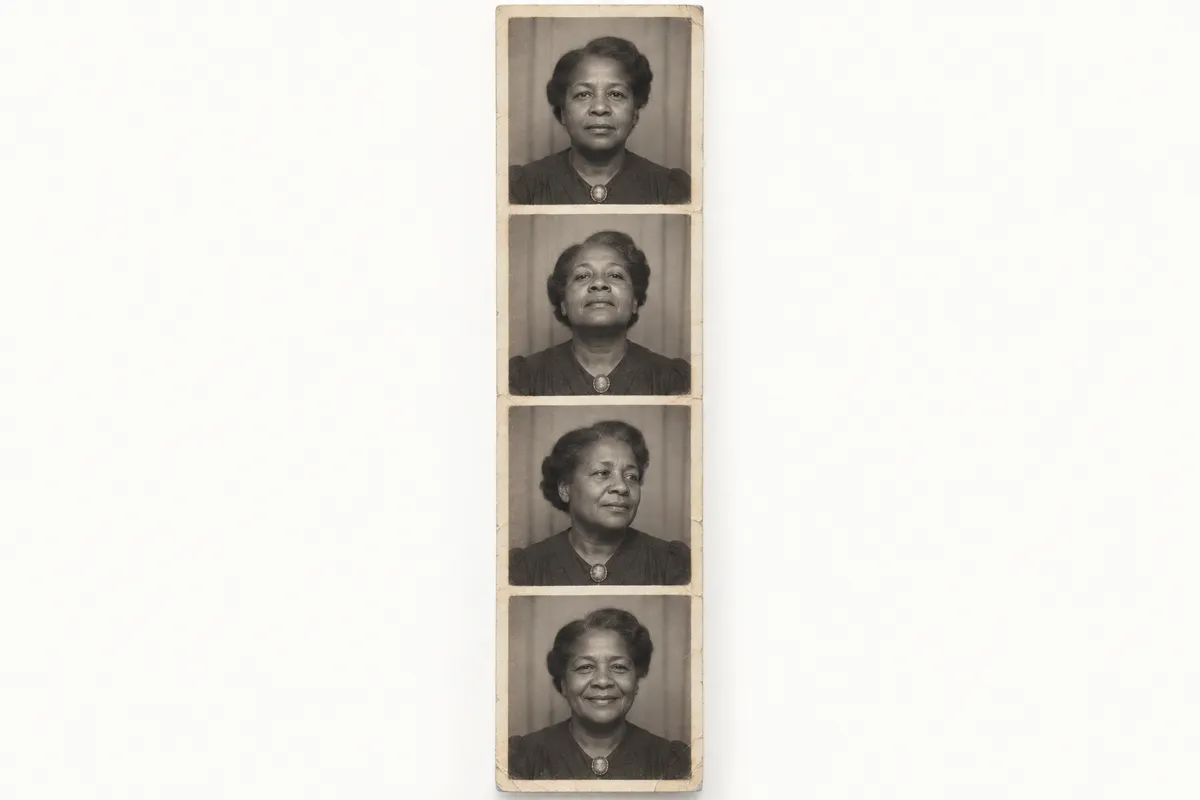
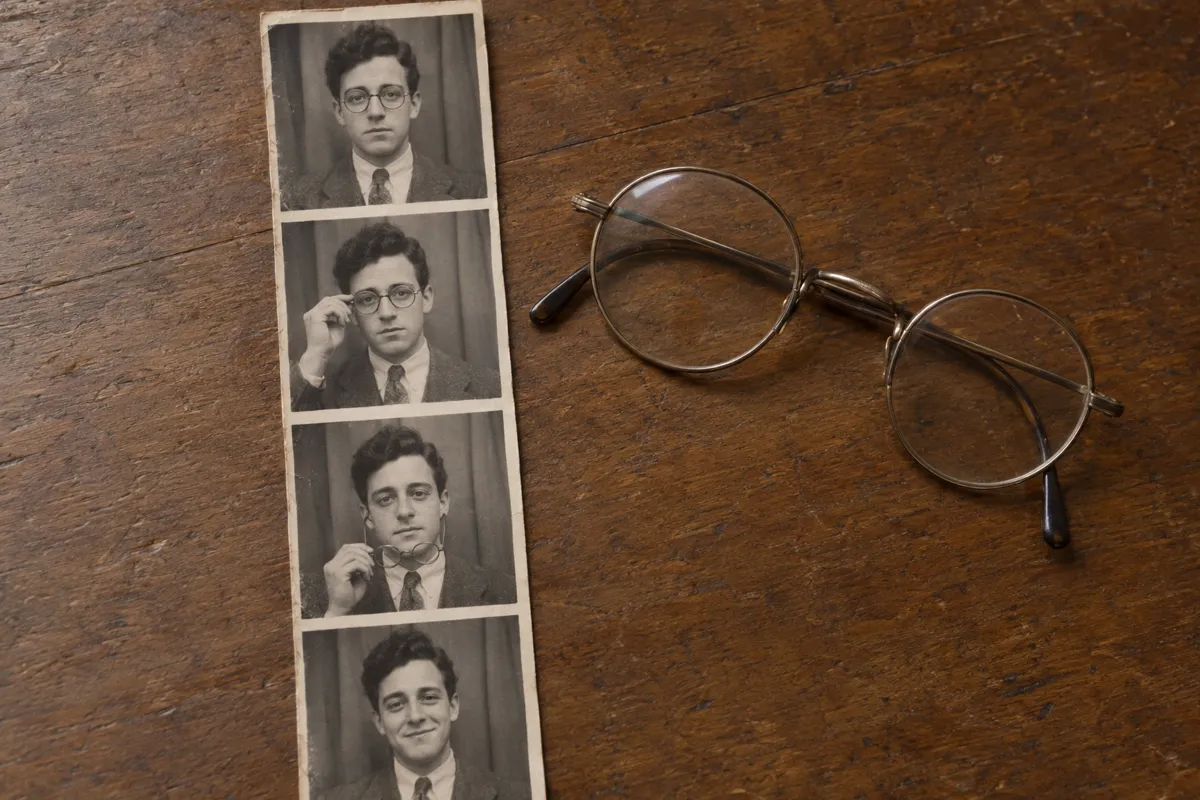
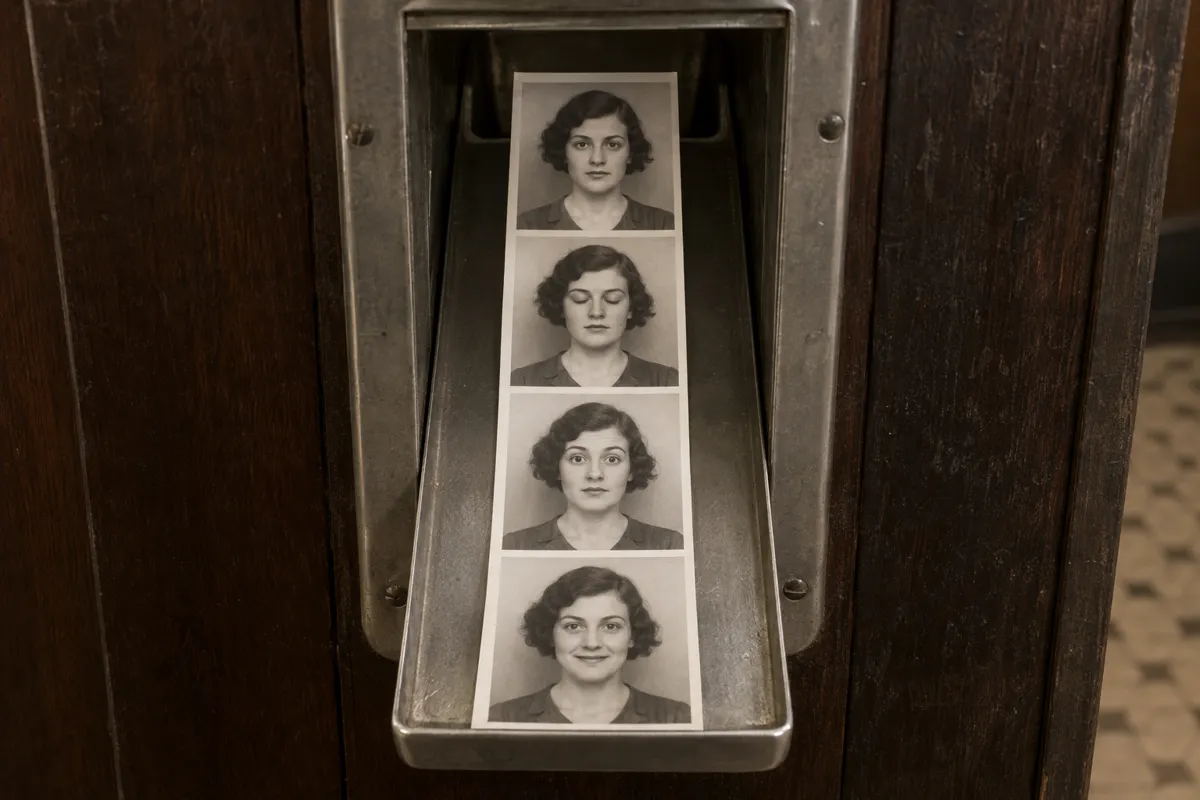
A narrow paper strip holds stacked portraits, commonly four frames, separated by pale borders. The fixed viewpoint makes changing expressions and small movements easy to compare.
Principle
Timed exposures1 record separate moments through one camera, while an automatic mechanism advances the photographic material2. Chemical processing3 then produces visible, lasting pictures; exposure alone does not create the finished strip.
Example
Andy Warhol: Ethel Scull 36 Times, 1963.
Try it out
Take four portraits from one fixed position, changing your expression each time; stack them vertically and compare the smallest differences.
Background
Anatol Josepho opened his Photomaton in New York in 1925, making automatic portrait photography available without a photographer operating each exposure. His early machine produced eight pictures, rather than the four now commonly associated with booth strips. Inside, a camera recorded successive exposures, and machinery carried photographic material through chemical processing. The sitter received finished pictures after waiting several minutes. Enclosed booths encouraged playful expressions as well as practical identification portraits. Artists later reused booth photographs; Warhol's Ethel Scull 36 Times arranged portraits derived from a booth session into a larger artwork.
Distinction
A contact sheet displays images from negatives placed directly against photographic paper. A booth strip comes from successive automatic portraits, not necessarily contact printing.
Aftermath
The strip shows how a fixed camera and repeated framing can turn tiny changes into a visual sequence.
Further examples · 7 images
Question
Why can four booth portraits show different expressions without showing blurred movement?
Show possible answer +Hide answer −
Each frame records a separate exposure, with time between pictures. Movement between exposures does not appear within those individual frames.