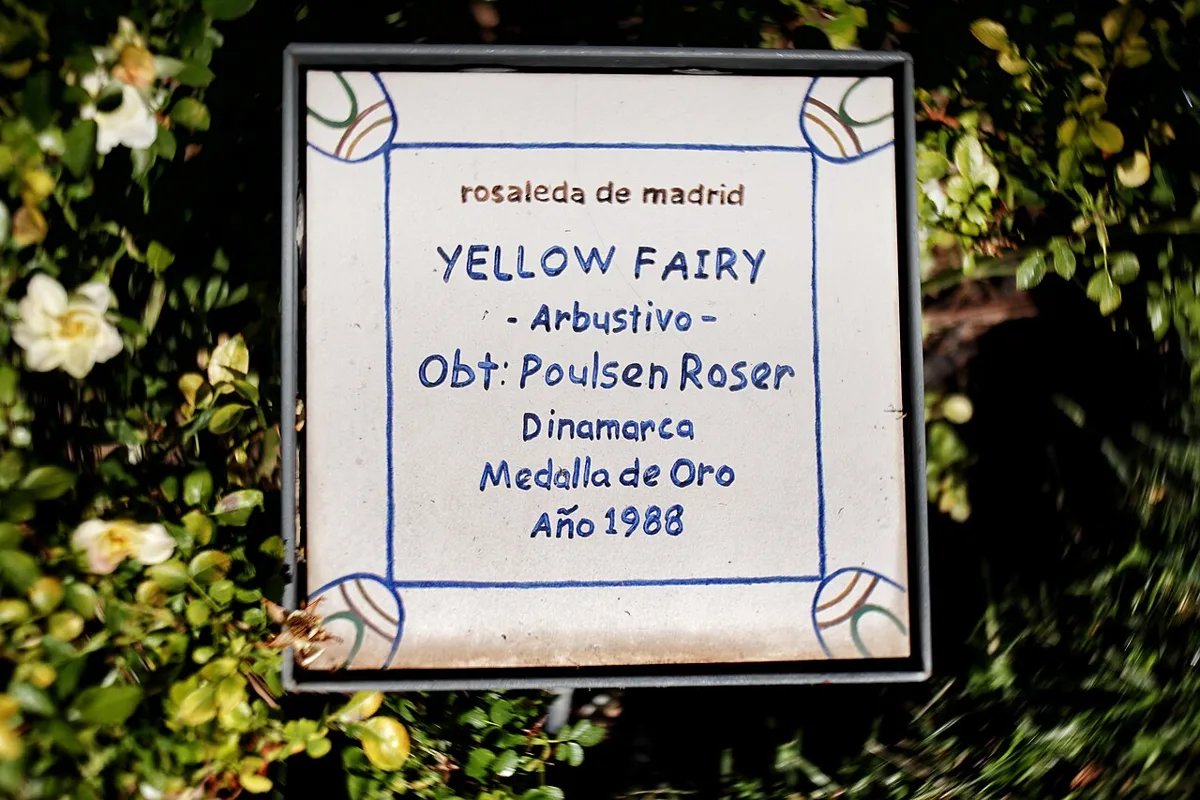
Garden Plaque Framed by Swirl Bokeh. A square rose-garden identification plaque sits sharply within a ring of blurred foliage.Javier Perez Montes · CC BY-SA 4.0 · via Wikimedia CommonsView source ↗
Prompt
Apply Petzval Swirl Bokeh with a sharply resolved main subject and progressively softer surroundings. Stretch peripheral background highlights into tangential cat-eye ovals that form a circular swirl, adding gentle corner darkening, mild edge softness, and warm natural light without blurring important subject details. Keep the original subject and composition.
You see asharp, central subject surrounded by ablurred background. The out-of-focus background highlights stretch into [circular, swirling shapes].
Principle
Optical vignetting1[blocks some light rays]at the edges of the lens. This physically shapes the background highlights into angled, [cat's-eye ovals2].
Example
Julia Margaret Cameron: Portrait of Sir John Herschel, 1867.
Try it out
Look at bright spots in ablurred photo background. Are they perfectly round, or do they look squashed near the edges?
Background
In 1840, mathematician Josef Petzval designed the first fast portrait lens. Daguerreotypes required incredibly long exposure times in bright sunlight. Petzval's new lens gathered about sixteen times more light than earlier optics. Photographers could suddenly capture human subjects in mere seconds. However, this early mathematical design had adistinct flaw called field curvature3. The focus plane was curved like abowl rather than perfectly flat. To keep the subject sharp, the edges fell rapidly out of focus. Combined with the long lens barrel blocking angled light, this generated astrong, swirling blur. People eventually loved this optical defect.
Distinction
Radial blur is adigital filter that smears pixels outward. Petzval swirl is an optical artifact affecting only out-of-focus background light.
Aftermath
Technical flaws in early photographic tools often become beloved artistic choices later on.
Further examples · 8 images
02Portrait Against Swirling Green FoliageA smiling woman is sharply focused against a green background that appears to rotate around her head and shoulders. Tangentially stretched peripheral highlights form a pronounced circular sweep characteristic of Petzval swirl bokeh.VGrigas (WMF) · CC BY-SA 3.0 · Wikimedia Commons03Golden Wheat in Swirling BokehA central golden wheat ear rises above softer stalks beneath a sweeping canopy of blurred highlights. The peripheral highlights stretch into curved, tangential ovals that visibly circulate around the sharper central subject.Paulius Malinovskis from Uppsala, Sweden · CC BY 2.0 · Wikimedia Commons04White Rose with Swirling Garden BackgroundA sharply rendered white rose stands against dark, blurred garden foliage. Peripheral highlights and foliage stretch tangentially around the flower, showing the characteristic rotating background of swirl bokeh.Javier Perez Montes · CC BY-SA 4.0 · Wikimedia Commons05Pink Rose Encircled by Swirling FoliageA vivid pink rose remains crisp amid streaked leaves and scattered bright reflections. The peripheral blur follows curved paths around the central bloom, visibly demonstrating the swirling background effect.Javier Perez Montes · CC BY-SA 4.0 · Wikimedia Commons06Monochrome Wheat with Swirling BackgroundA monochrome wheat study places a distinct upright ear against swirling foliage blur and a distressed surface texture. The background retains an evident tangential sweep around the central stalk, although the added texture partially obscures the highlight shapes.Paulius Malinovskis from Uppsala, Sweden · CC BY 2.0 · Wikimedia Commons07White Rose with Circling Garden BlurA sharply rendered white rose fills the center of a dark green garden scene. Peripheral foliage and bright patches stretch tangentially around the bloom, creating a visible circular sweep characteristic of swirl bokeh.Javier Perez Montes · CC BY-SA 4.0 · Wikimedia Commons08Purple Flower Cluster in Swirling BlurA central spray of tiny white and purple flowers stands out against scattered lavender and green blur. Elongated peripheral flower highlights sweep around the focused cluster, producing a recognizable swirl rather than uniform background softness.AH AP · CC BY 2.0 · Wikimedia Commons
Question
Why do the blurred background lights look like a circle instead of remaining scattered?
Show possible answer +Hide answer −
The lens barrel blocks the outer edges of light entering at an angle. This cuts the blurred light shapes into angled ovals.