Dissolving Views
1830s-1840s, Henry Langdon Childe's magic lantern shows
Prompt
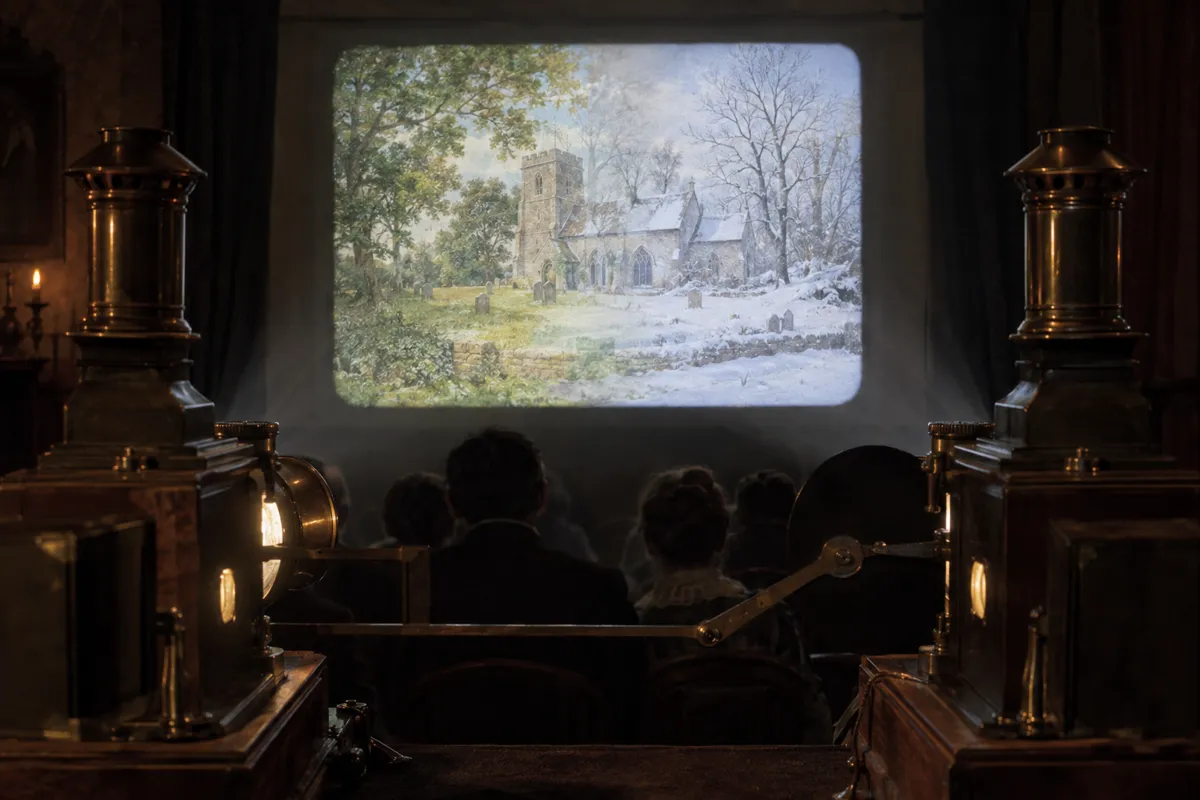
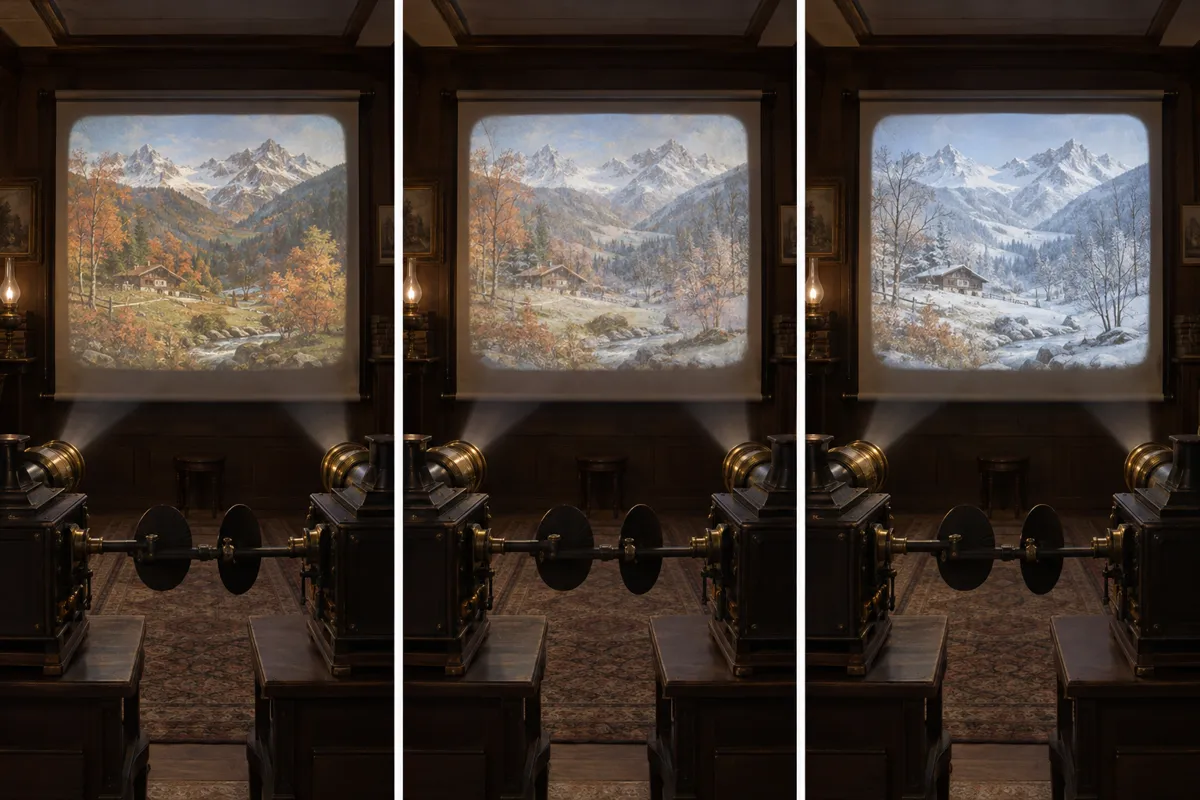
Apply a Dissolving Views effect showing a single frozen midpoint between two aligned painted versions of the scene. Blend warm daylight with cool twilight, translucent overlapping details, soft lantern-projector illumination, slight registration ghosts, and a gently darkened screen perimeter. Keep the original subject and composition.
Identify
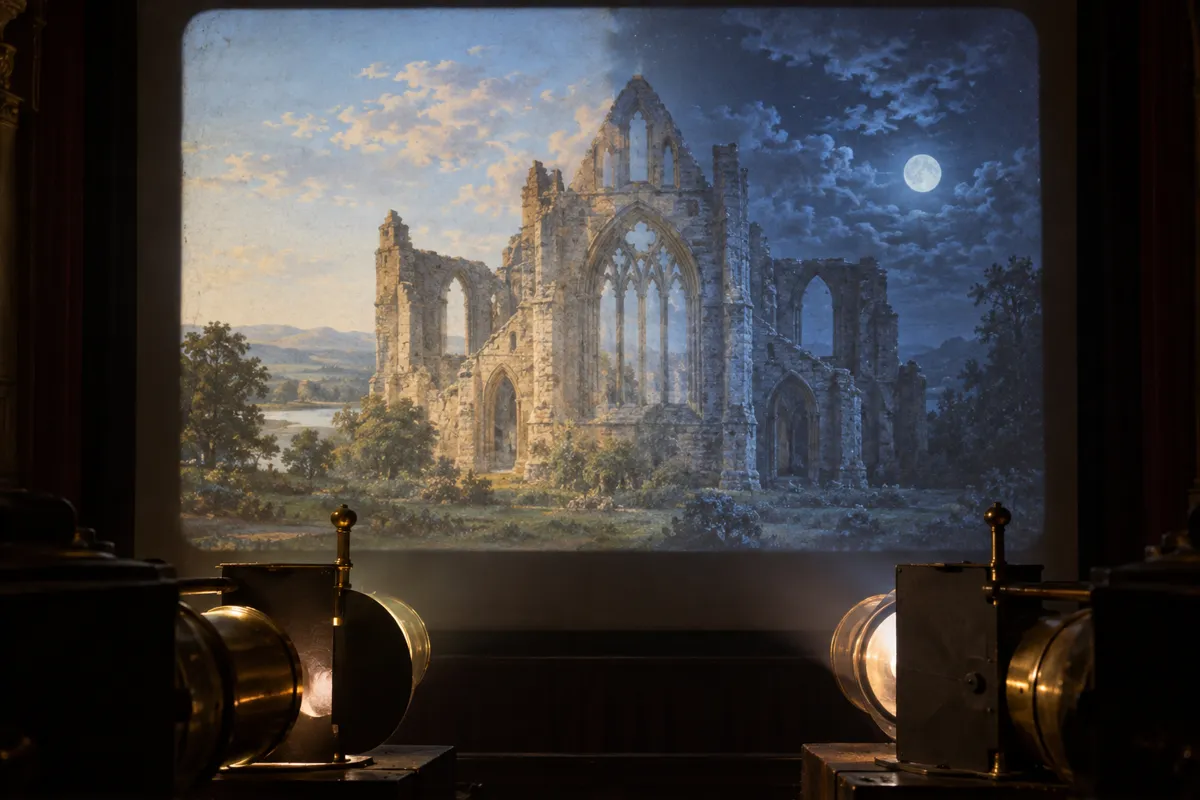
You see one painted image slowly fade away. At the exact same time, a new image slowly fades in.
Principle
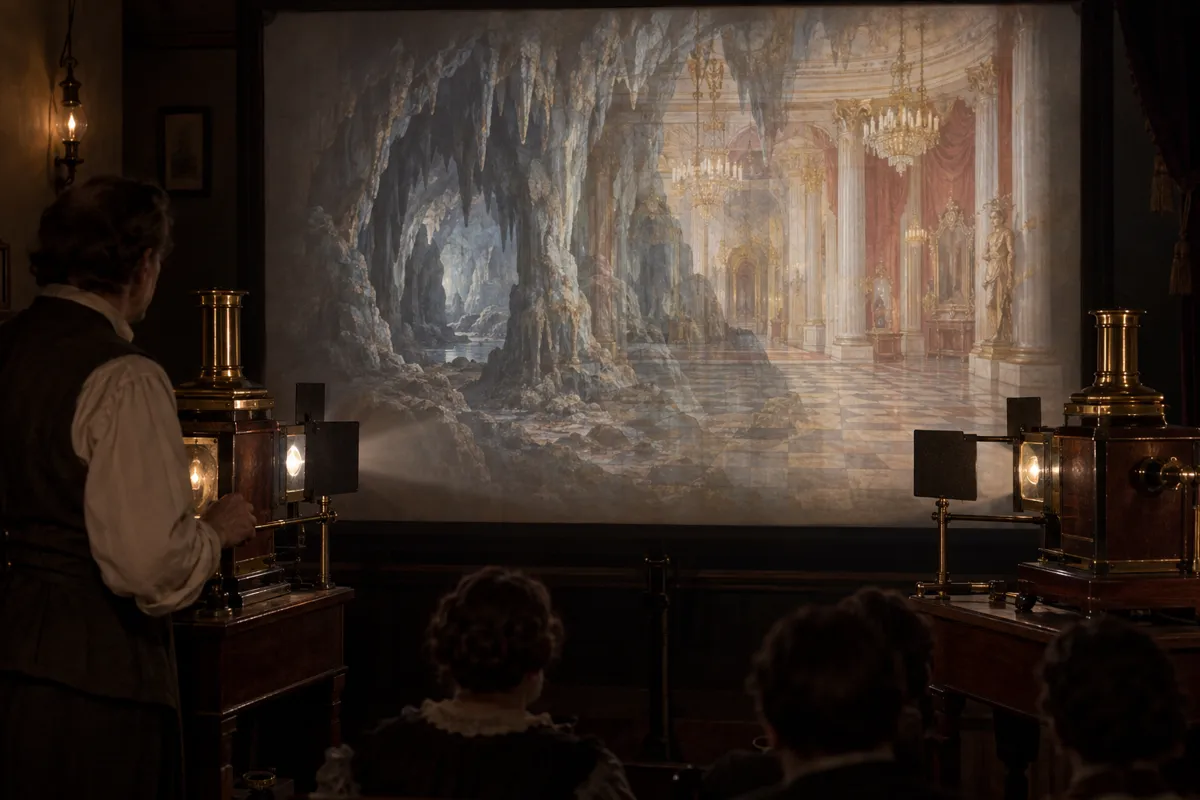
Two projectors overlap their light perfectly onto one screen. A mechanical shutter slowly blocks one lens while opening the other.
Example
Henry Langdon Childe: Various Royal Polytechnic Institution shows, 1840s.
Try it out
Use two phone flashlights in a dark room. Cover one slowly with your hand while uncovering the other.
Background
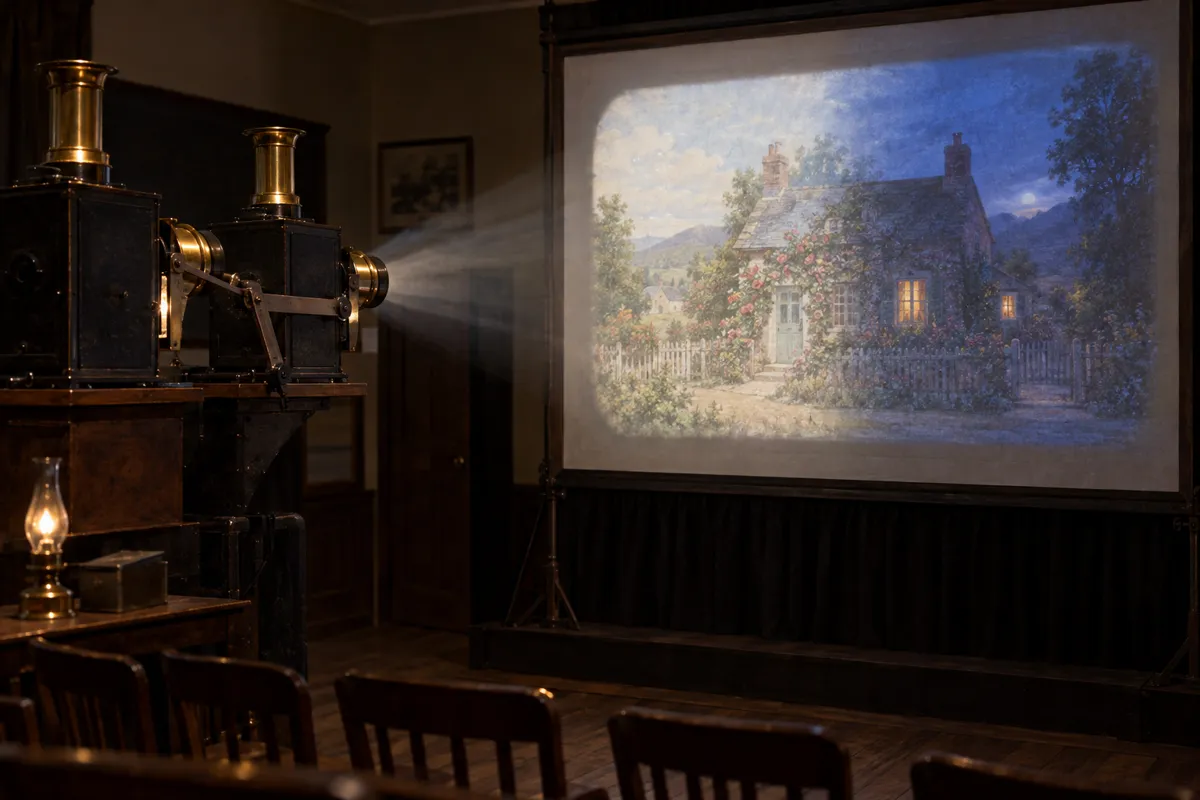
Dissolving views became highly popular in the 1840s. Showmen used a specialized magic lantern1 with two or three optical tubes. They called this a biunial2 or triunial lantern. The operator carefully aligned the lenses so the projected images overlapped completely. A special comb-like shutter, called a dissolver, moved in front of the lenses. It reduced the light from the first slide while revealing the second. This crossfade effect3 hid the clumsy changing of glass slides. It allowed smooth transitions between daytime and nighttime scenes or changing seasons. Audiences found the gentle blending of large, luminous paintings deeply magical.
Distinction
Unlike a standard slideshow where the screen goes black between slides, dissolving views never interrupt the picture. The screen remains constantly illuminated.
Aftermath
It introduced the crossfade, a transition technique that became foundational in modern film editing.
Further examples · 5 images
Question
Why did showmen need two separate lenses to create this effect?
Show possible answer +Hide answer −
One lens cannot project two glass slides at once. Overlapping two separate light beams was the only way to blend them.