Moiré Pattern
Moire pattern. 2010s: prominent topic of digital cameras without low-pass filters
Prompt
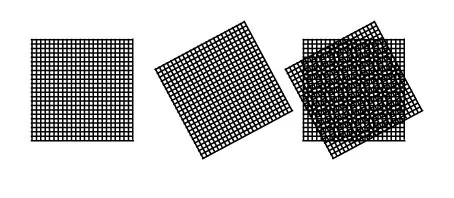
Apply a Moiré Pattern effect with broad interference waves and rippling color bands emerging over fine repeating textures. Overlay closely spaced grids at slightly different angles, producing alternating dark and light beats with subtle rainbow aliasing, while keeping unpatterned areas relatively clean. Keep the original subject and composition.
Identify
Large waves or bands of color over fine, regular patterns.
Principle
Similar grids overlap or meet the sensor grid1.
Example
Fabric samples, screen photography and Op Art2 graphics.
Try it out
Slowly rotate two transparent grid lines against each other.
Background
Moiré predates digital photography. Its association with the 2010s here marks its renewed visibility as a camera issue, not the phenomenon's origin. Nikon explains the relationship between fine subject structures and the regular sensor grid, discussing it using digital cameras as an example. Two similar patterns create a new, much coarser visible structure. With digital color sensors, incorrect color bands can also appear. For experimental use, subtle rotations are particularly revealing: The underlying grid moves little, while the apparent wave moves significantly. Then photograph both grids. This adds a third scanning structure, allowing you to distinguish optical superposition of shooting errors.
Distinction
Geometric moiré and digital color aliases are related but different phenomena.
Aftermath
In controlled graphics, a distracting artifact becomes an impression of movement. Size and viewing distance strongly determine what remains visible.
Further examples · 8 images


Question
Why does the moiré effect disappear when you move the camera just a little closer?
Show possible answer +Hide answer −
The scale of the motif grid to the sensor grid changes; this changes the scanning interference.