M 177 / 18308 AI Pipelinesschematic / technique preview

LoRA Style Adapter

Lora Style Adapter. ai pipelines & generative controls

Typeface · Aldrich

A flow diagram shows low-rank matrices A and B placed between a pre-trained model and a fine-tuned output. It illustrates the mechanical injection of specific stylistic data into a neural architecture.
A flow diagram shows low-rank matrices A and B placed between a pre-trained model and a fine-tuned output. It illustrates the mechanical injection of specific stylistic data into a neural architecture.Iamchriswalter · CC0View source ↗

Prompt

Apply a LoRA Style Adapter effect at moderate strength, giving the photograph a consistent watercolor-like finish with translucent color washes, fine paper grain, softly pooled pigment, and selective crisp contours. Let original photographic detail remain visible beneath the treatment, without adding interface graphics or text. Keep the original subject and composition.

Identify

A style guideline is displayed as a controllable level.

Principle

Low-rank adapters1 efficiently modify model weights2; the image is an analogy.

Try it out

Compare different adapter strengths.

Classification

Schematic visualization, not neural inference.

Further examples · 7 images

AI illustration: A slider interface transitions a plain cup into a stylized neon version
02 AI illustration: A slider interface transitions a plain cup into a stylized neon versionA slider interface transitions a plain cup into a stylized neon version. The sliding control acts as a direct analogy for adjusting LoRA adapter weight levels.Illustration generated for the Atlas (AI)
AI illustration: Four landscape variations are shown with corresponding slider controls
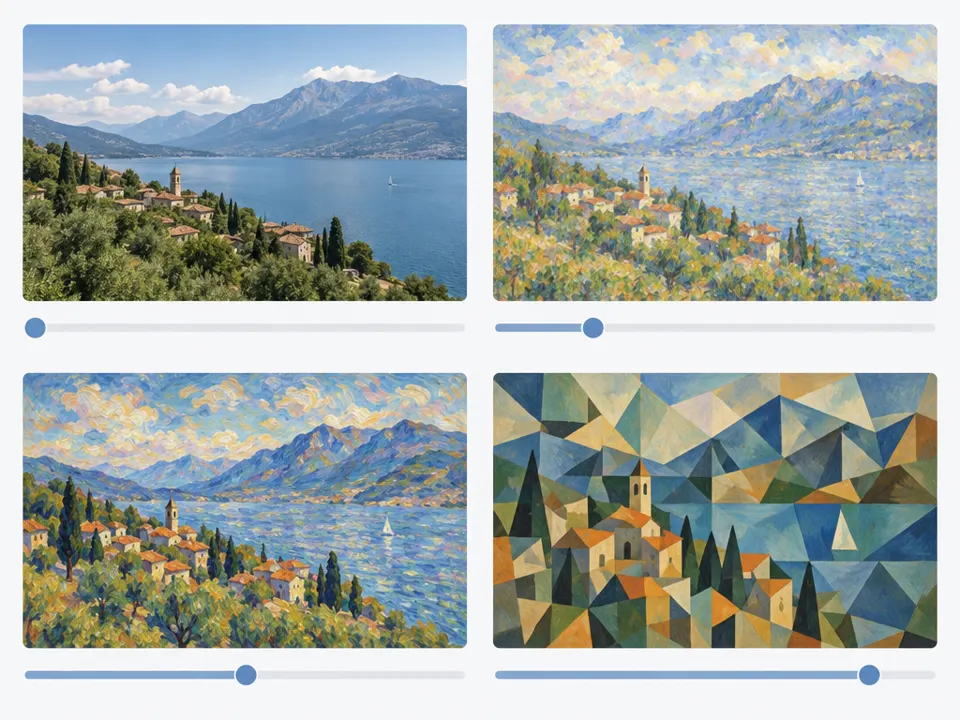
03 AI illustration: Four landscape variations are shown with corresponding slider controlsFour landscape variations are shown with corresponding slider controls. This illustrates how different adapter strengths or styles can be applied to the same base composition.Illustration generated for the Atlas (AI)
AI illustration: A small module is inserted into a larger neural network block to change a
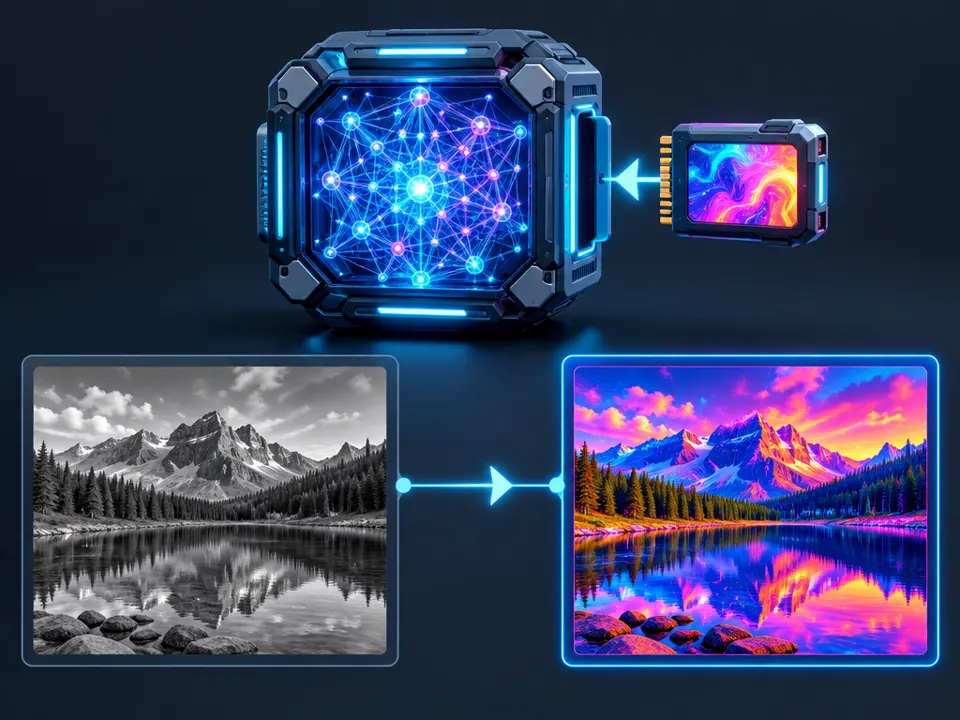
04 AI illustration: A small module is inserted into a larger neural network block to change aA small module is inserted into a larger neural network block to change a landscape's style. This visualizes the 'plug-in' nature of low-rank adapters.Illustration generated for the Atlas (AI)
AI illustration: A sequence of characters shows a gradual increase in detail and color acc
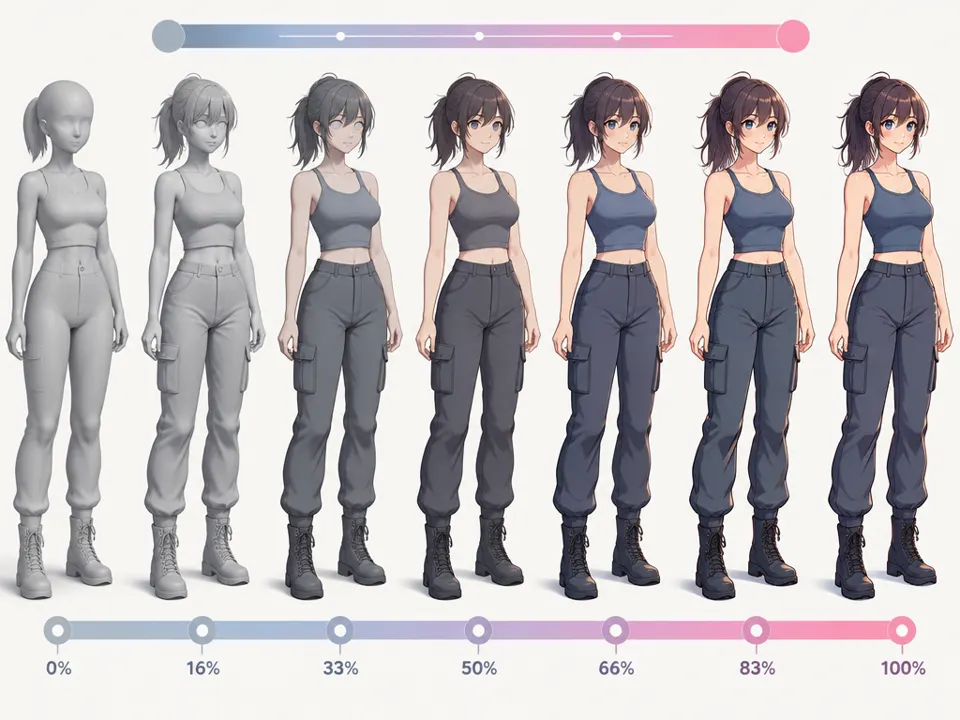
05 AI illustration: A sequence of characters shows a gradual increase in detail and color accA sequence of characters shows a gradual increase in detail and color according to percentage markers. This clearly compares different adapter strengths on a single model.Illustration generated for the Atlas (AI)
AI illustration: A hand inserts a specific layer into a stack to modify the output image s
06 AI illustration: A hand inserts a specific layer into a stack to modify the output image sA hand inserts a specific layer into a stack to modify the output image style. This schematizes how LoRA layers are added to a frozen base model.Illustration generated for the Atlas (AI)
AI illustration: A slider controls the transition from a wireframe base to a Van Gogh styl
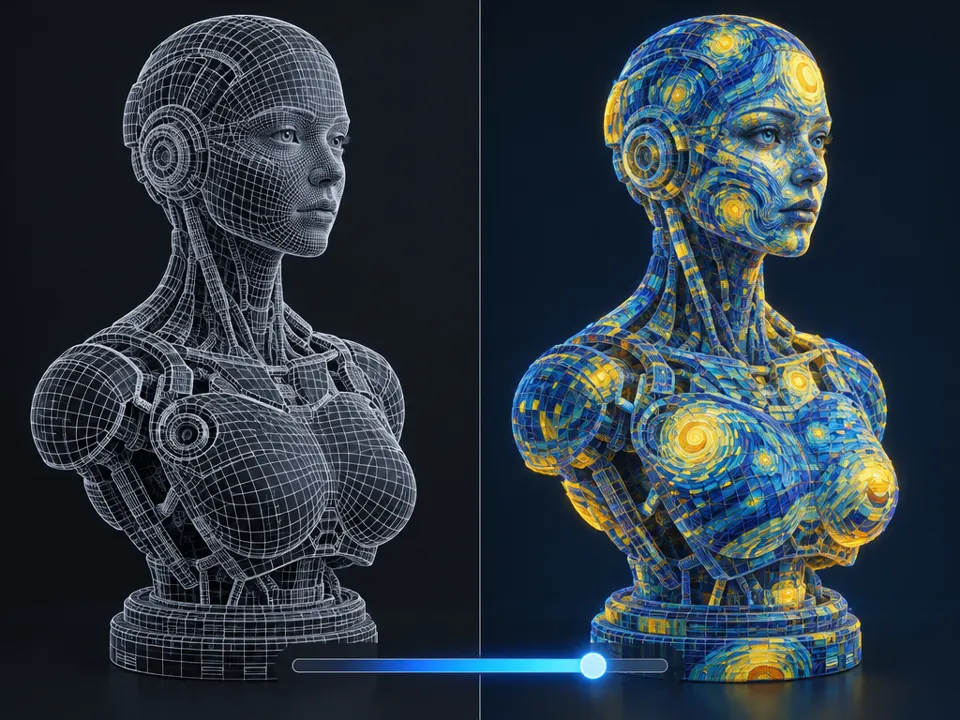
07 AI illustration: A slider controls the transition from a wireframe base to a Van Gogh stylA slider controls the transition from a wireframe base to a Van Gogh style overlay. This illustrates the controllable influence of a style adapter on a base model.Illustration generated for the Atlas (AI)