L-System Plants
1990 landmark publication; roots in Lindenmayer’s 1968 work
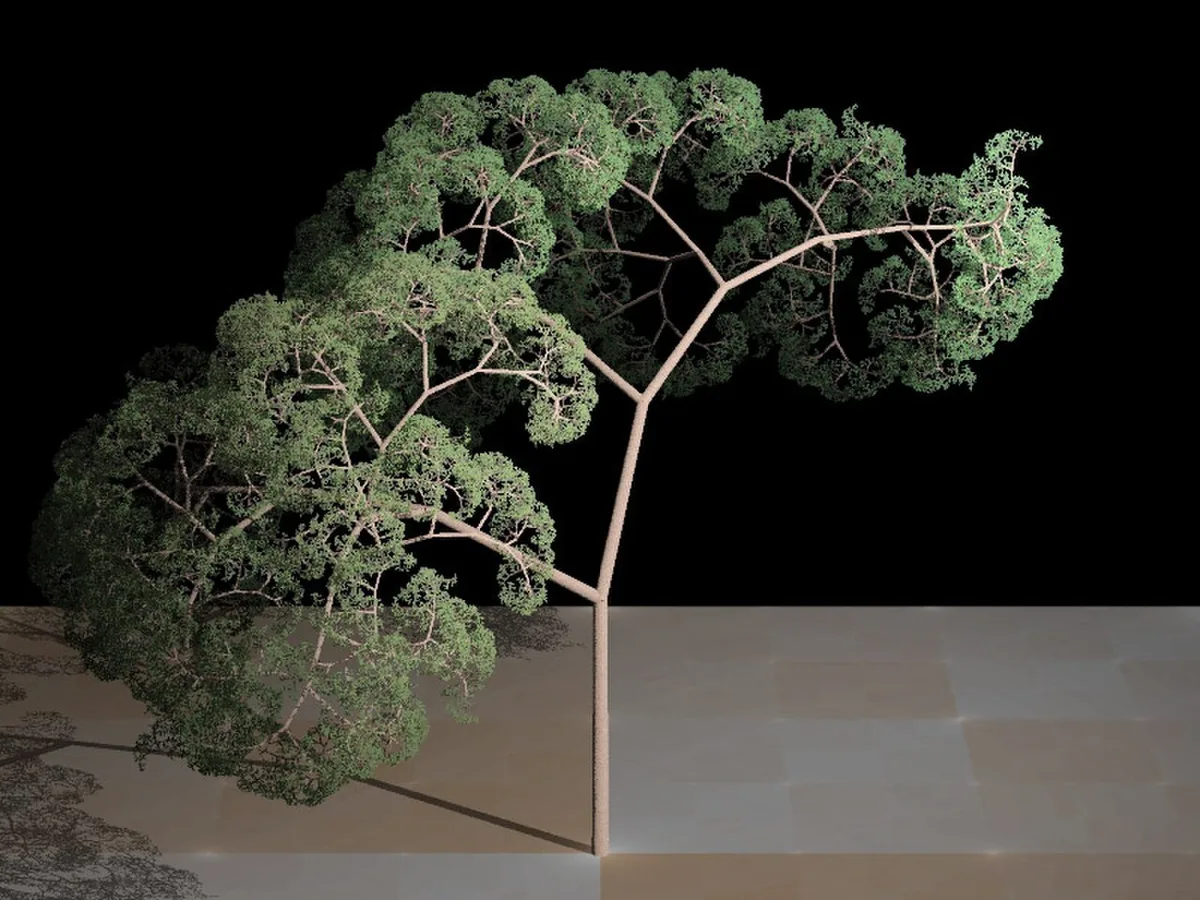
Prompt
Apply an L-System Plants effect, reconstructing visible forms from slender stems that repeatedly divide at consistent angles. Build nested leaf sprays, self-similar branching tiers, tapered brown twigs, and varied green foliage, using soft daylight and small overlapping shadows while preserving recognizable silhouettes. Keep the original subject and composition.
Identify
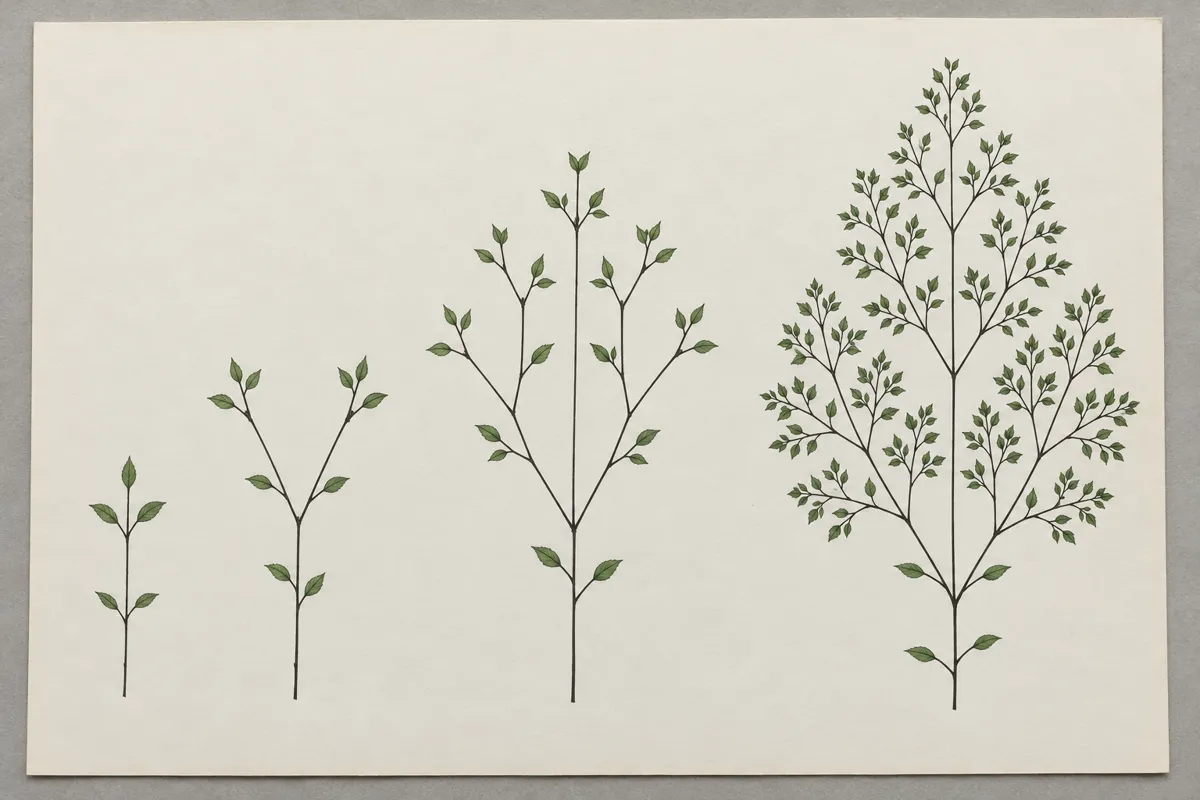
Plants display repeated branching patterns, nested sprays of leaves, and stems dividing at consistent angles. Some look diagrammatic; others resemble natural vegetation.
Principle
Parallel rewriting rules1 replace symbols across successive rounds, generating instructions for plant structure. A turtle interpretation2 converts those symbols into movements, turns, and branching paths.
Example
Przemyslaw Prusinkiewicz and Aristid Lindenmayer: The Algorithmic Beauty of Plants, 1990.
Try it out
Trace one small branch in an L-system plant image, then find similar arrangements elsewhere in the plant.
Background
Aristid Lindenmayer introduced L-systems in 1968 to describe biological development through formal rules. Their later use in computer graphics made plant structures visible as generated drawings and models. The Algorithmic Beauty of Plants brought this approach together in 1990. Symbols can represent plant components or drawing commands, depending on the model. Each rewriting round replaces symbols in parallel, rather than editing one branch at a time. Brackets can save and restore a drawing position and direction, allowing branches to emerge. Random choices and numerical parameters3 can introduce variation.
Distinction
Unlike a generic fractal tree, an L-system plant is defined by a symbol-rewriting process. Its branches need not repeat exactly at every scale.
Aftermath
L-system plants show how compact developmental rules can generate complex forms without specifying every twig separately.
Further examples · 7 images



Question
Why can a short set of rules produce a plant with many branches?
Show possible answer +Hide answer −
Each round applies the rules again across the current symbol string. Repeated replacements can expand a small starting pattern into many branching instructions.