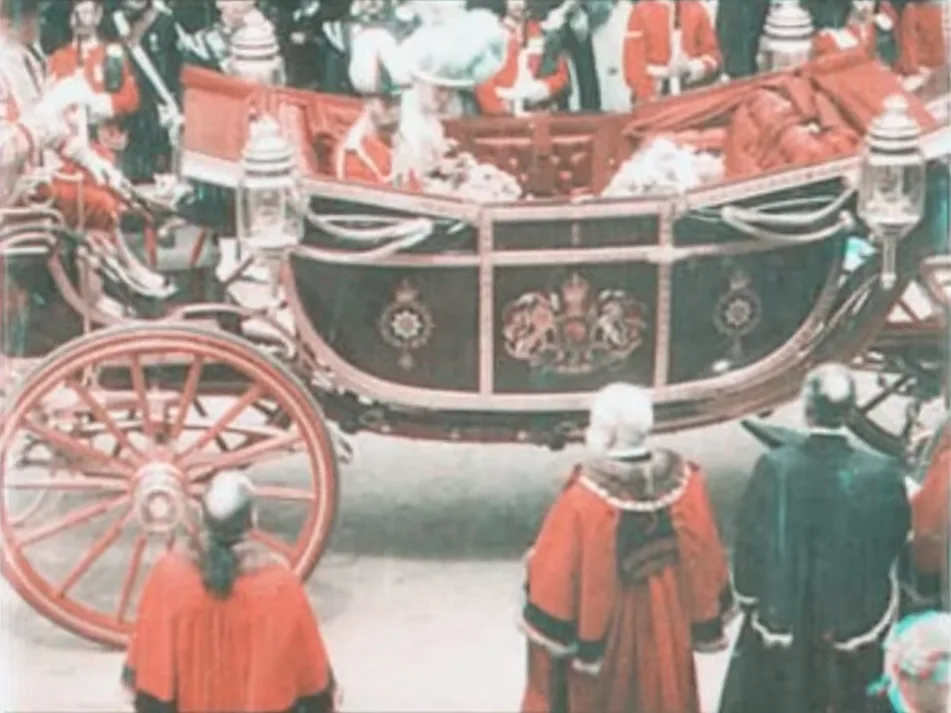
Kinemacolor Ceremonial Carriage Procession. A ceremonial carriage is surrounded by attendants in vivid red uniforms, with dark greenish shadows and pale highlights.Natural Color Kinematograph Company, Prod. by Charles Urban (1867 - 1942) · Public domain · via Wikimedia CommonsView source ↗
Prompt
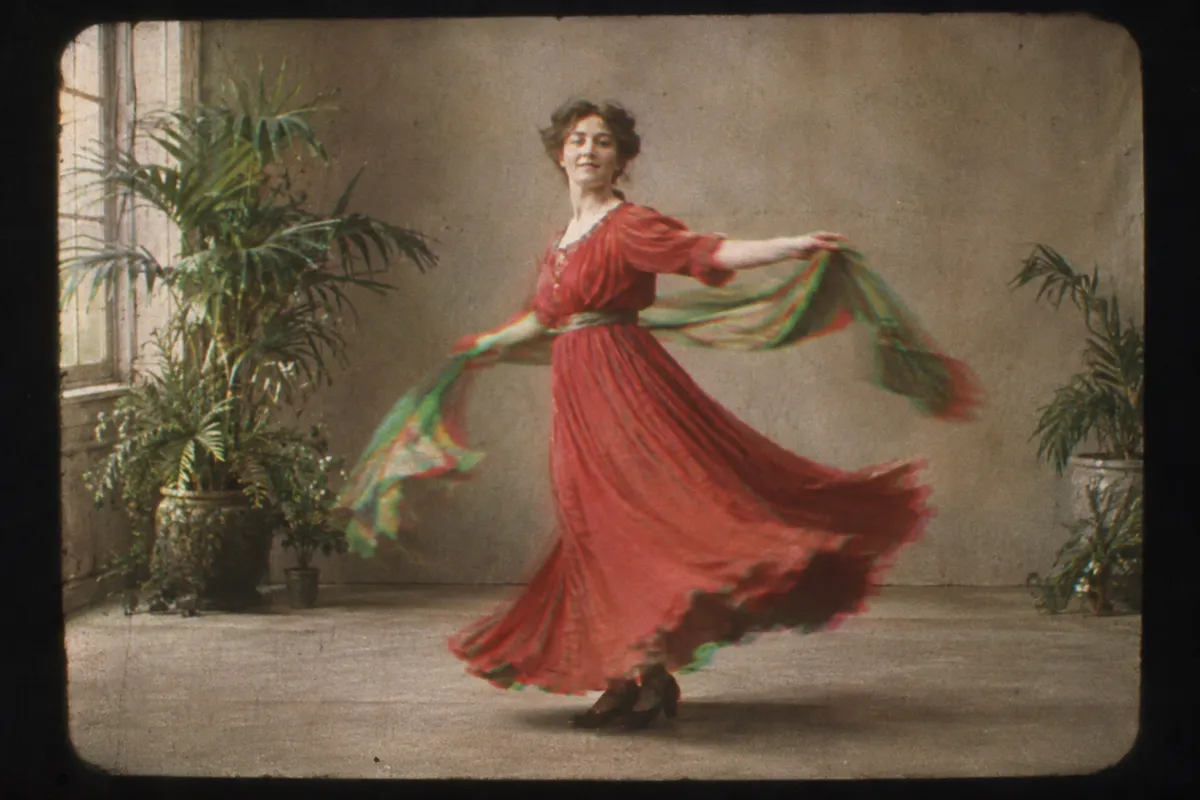
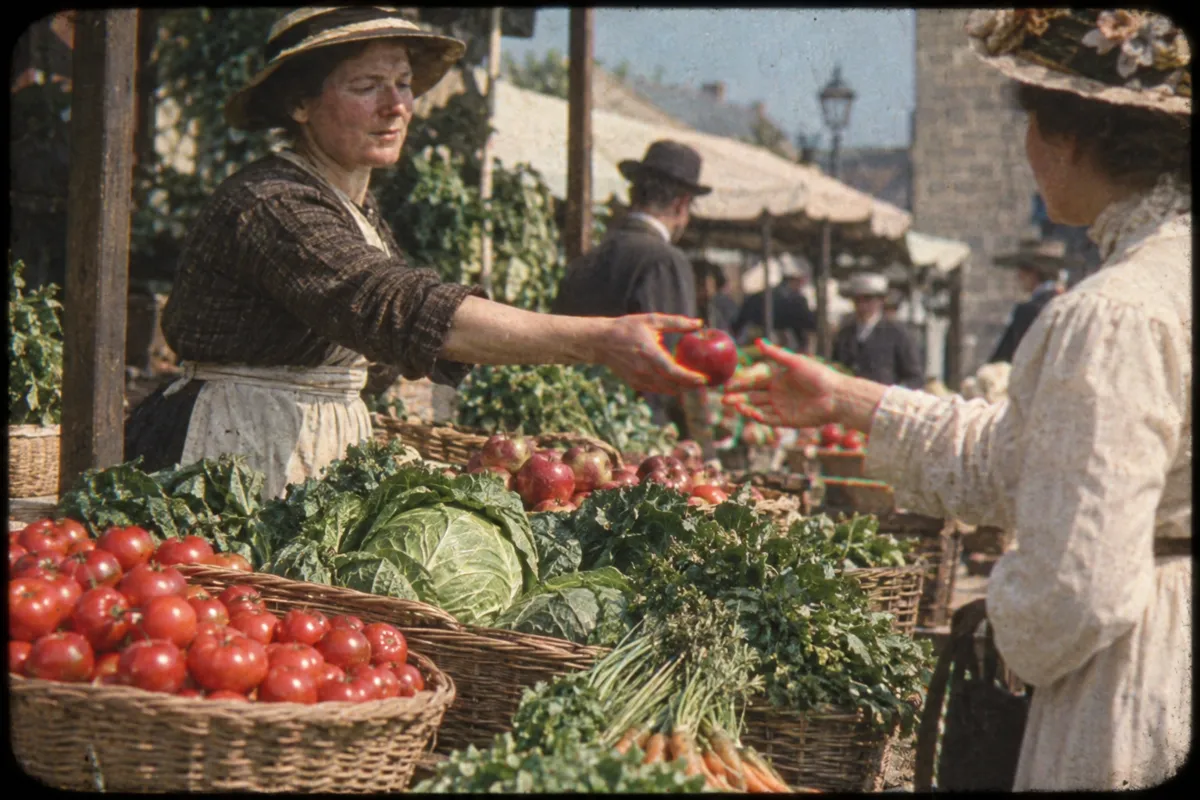
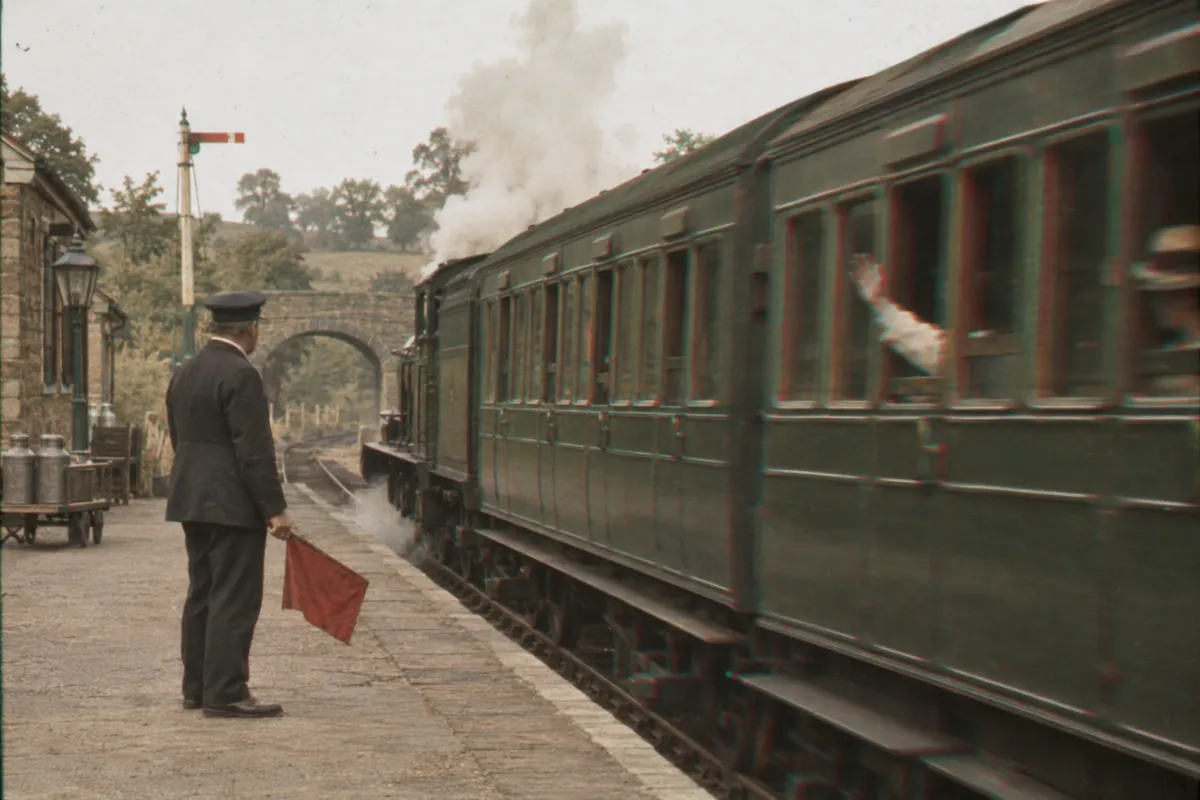
Apply a Two-Color Additive Cinema effect with restricted orange-red and green hues, weak blues, warm skin tones, and slightly muddy neutral areas. Add displaced red and green fringes along moving contours, soft projection contrast, fine film grain, and gentle exposure unevenness. Keep the original subject and composition.
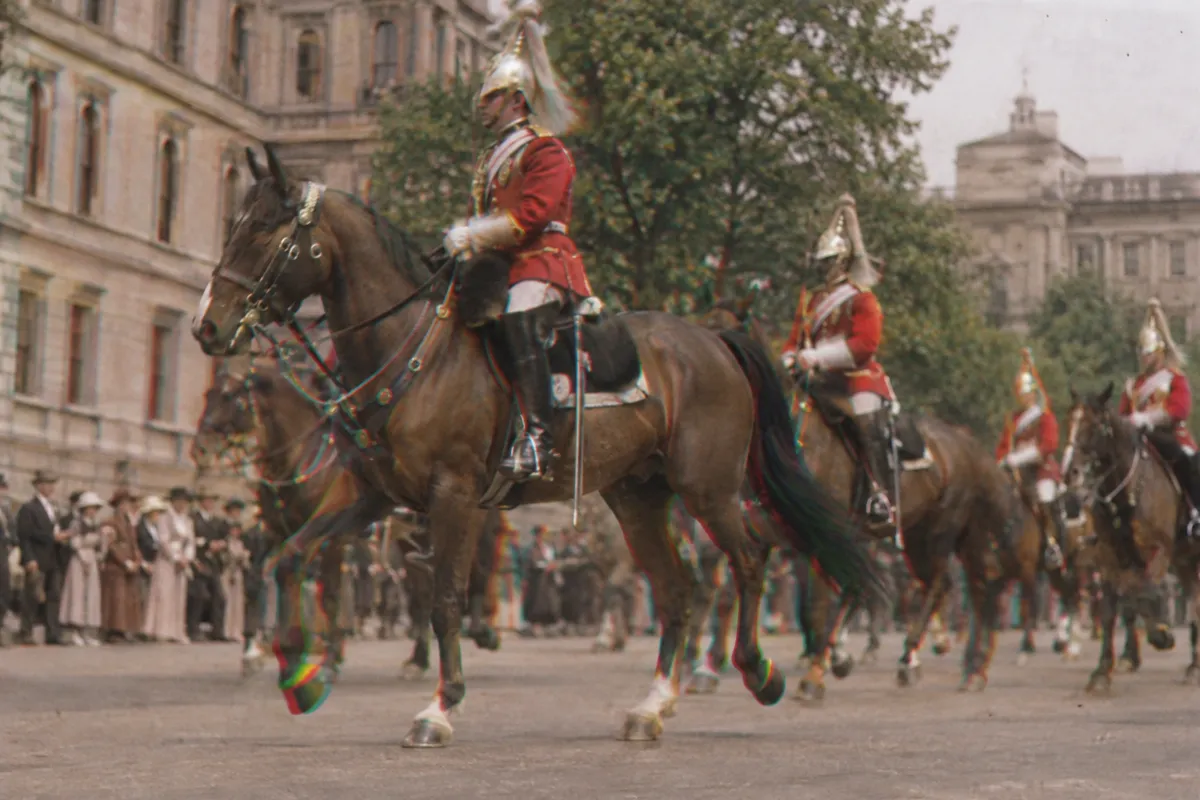
Early motion pictures showing limited but [striking natural colours], mostly reds and greens. Fast movement sometimes creates noticeable [red and green ghosting edges].
Principle
Black-and-white film frames are alternately photographed and projected through [rotating red and green filters]. The human eye blends these alternating frames into asingle coloured image.
Example
Charles Urban: With Our King and Queen Through India, 1912.
Try it out
Blink rapidly while watching aspinning multi-coloured object to see how alternating images blend together.
Background
Kinemacolor was the first successful natural colour motion picture process. George Albert Smith invented it in England in 1908. It was an additive process1relying on persistence of vision2. Aspecial camera exposed alternating frames of standard black-and-white film behind arotating wheel with red and green filters. To see the colours, theatres needed amatching projector. It ran at thirty-two frames per second, twice the usual speed, to reduce flickering. While the colours were mostly warm reds and earthy greens, lacking true blues, audiences found the effect astonishing.
Distinction
Unlike later Technicolor which printed colours directly onto the film strip, Kinemacolor film itself was entirely black-and-white. The colour only existed during projection when light passed through external filters.
Aftermath
It proved that audiences wanted colour cinema, sparking arace to develop better natural colour technologies.
Further examples · 7 images
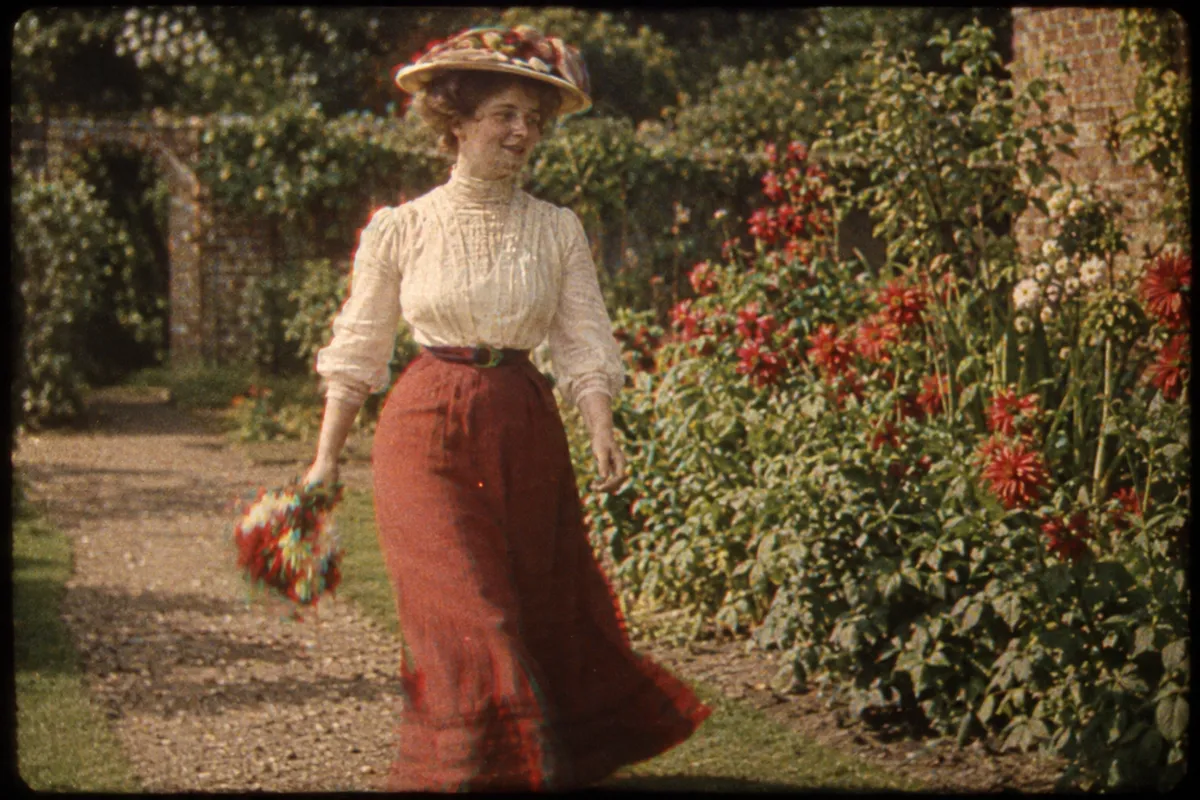
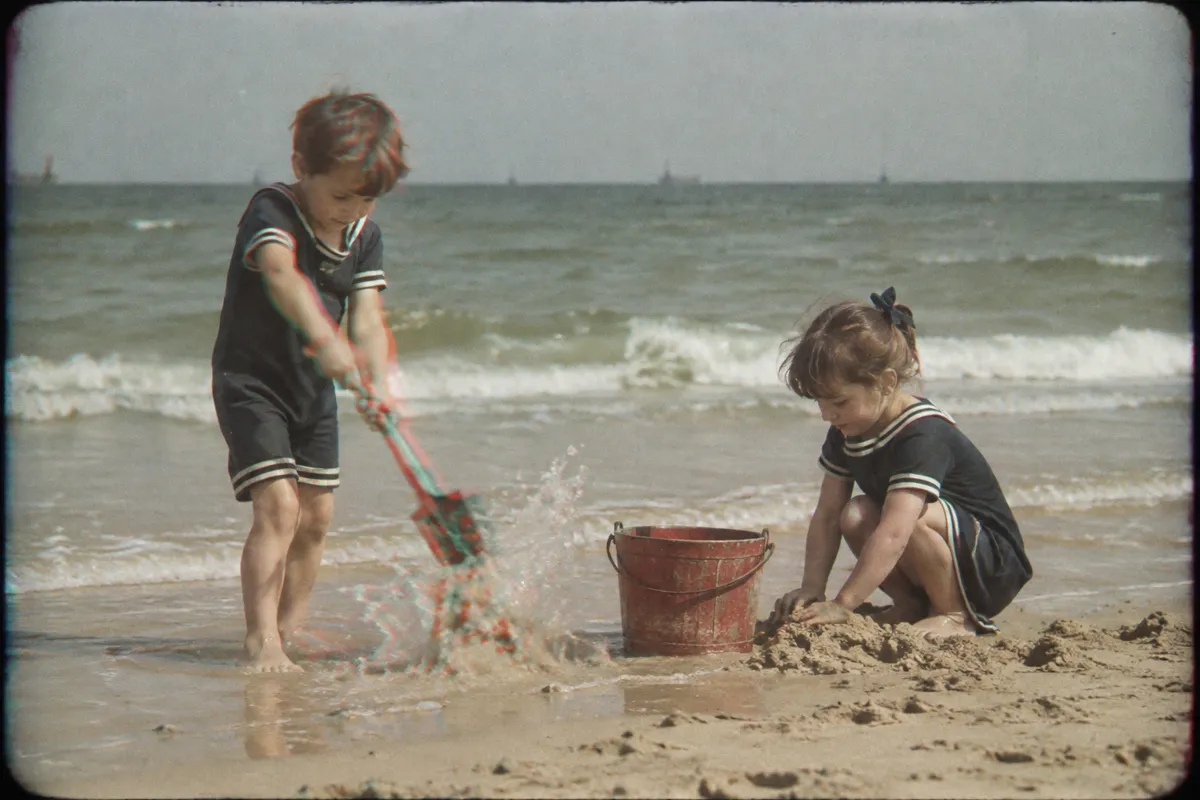
02AI illustration: Edwardian woman in garden showing two-color additive processA woman walks through a garden where the foliage and flowers exhibit a restricted red-green color gamut. The absence of blue tones is characteristic of the Kinemacolor additive process which relies on a dual-filter system.Illustration generated for the Atlas (AI)03AI illustration: Pronounced color fringing on moving horses in KinemacolorCavalry riders pass by a crowd with distinct red and green fringes appearing on the horses' legs. This color fringing is the definitive 'color relief' artifact caused by time-parallax between alternating filtered frames.Illustration generated for the Atlas (AI)04AI illustration: Successive frame temporal aliasing in beach sceneTwo children play at the seashore, where the splashing water and moving shovel display significant red-green ghosting. The phenomenon clearly demonstrates how fast motion prevents the two successive color records from aligning correctly.Illustration generated for the Atlas (AI)05AI illustration: Vibrant color relief effect on a spinning dancerA woman in a red dress twirls, causing the edges of her dress and scarf to break into separate red and green channels. This exemplifies the breakdown of the additive synthesis when the subject moves faster than the persistence of vision.Illustration generated for the Atlas (AI)06AI illustration: Fringing on moving hands at a produce marketA market stall shows a vendor passing an apple, with noticeable color fringing on the hands and the moving fruit. The static vegetables remain sharp, highlighting how the process only fails to merge colors during active movement.Illustration generated for the Atlas (AI)07AI illustration: Horizontal color fringing on a moving steam trainA steam train pulls away from a platform, with the horizontal motion creating repeating red and green vertical edges on the carriage windows. The distinct color shadows along the train's length are a hallmark of the alternating exposure technique.Illustration generated for the Atlas (AI)
Question
Why did fast-moving objects in Kinemacolor films look strange?
Show possible answer +Hide answer −
The camera captured the red and green frames at slightly different moments in time. Fast movement caused these colour records to separate, creating red and green fringes.