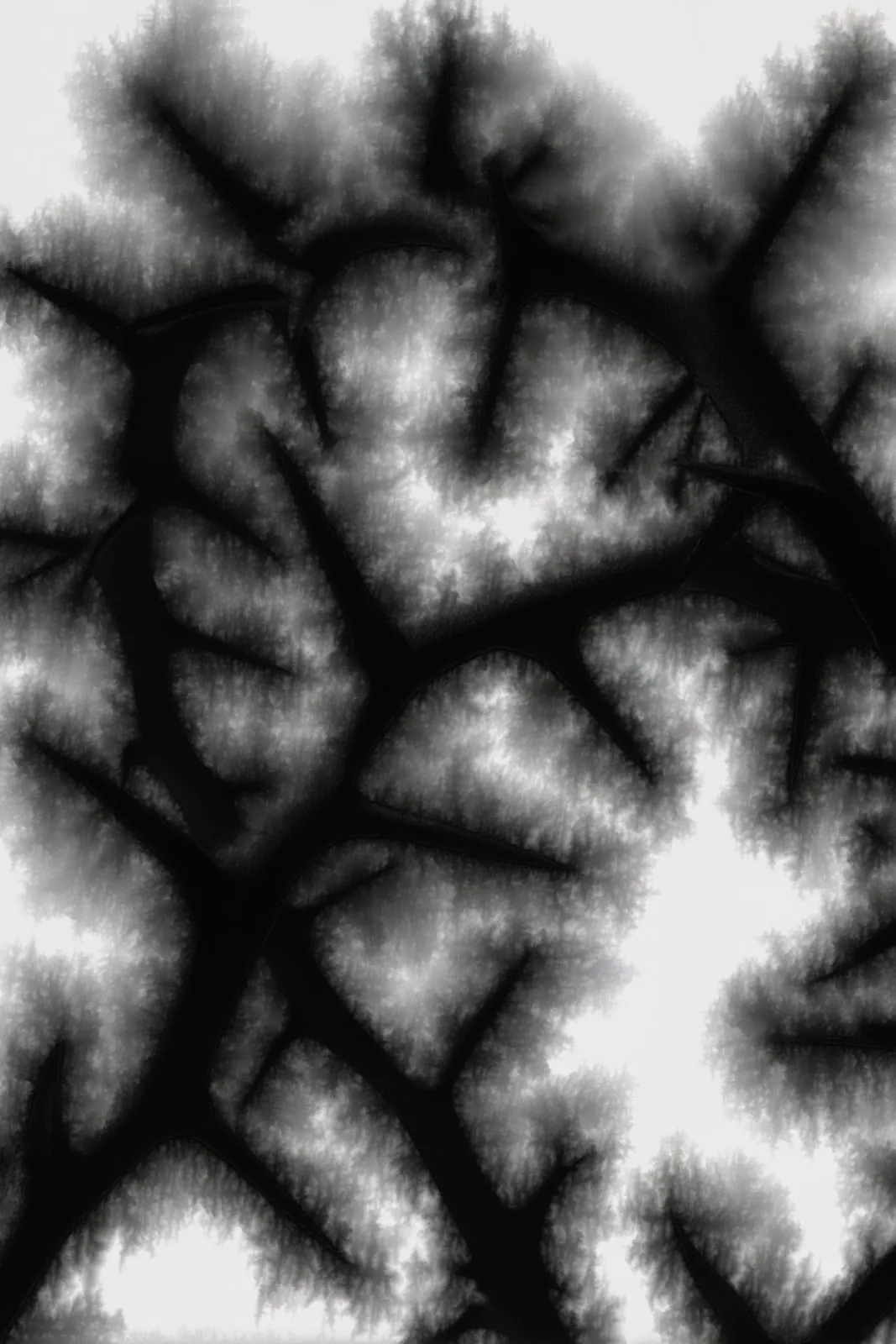
Ink bleed / ink spread. 2020s: a precisely controllable digital print look
Typeface · Averia Serif Libre
Ink Bleed: modern digital image editor demonstration.Digital effect demonstration.
Prompt
Apply an Ink Bleed effect with pigment spreading unevenly along visible paper fibers, feathered contours, soft capillary tendrils, and darker pools where strokes overlap. Use absorbent off-white paper, translucent color washes, and irregular drying edges while retaining readable forms. Keep the original subject and composition.
Ink bleed initially describes amaterial behavior of ink and paper. Adigital simulation is placed in the 2020s here because modern digital filter techniques allow the spread to be controlled in real time with masks, direction, and grain. This does not date the origin of the real phenomenon. Irregularly trailing edges and areas of varying ink coverage are noticeable. Asimple blur distributes values more evenly and therefore has adifferent effect. Experiment with the same spread on thin and thick type. The thin type loses the spaces within the lines or connects letters earlier. Acredible simulation is based on an imaginary paper surface and acontinuous ink application.
Distinction
Bleeding into fibers is something different than auniform soft focus effect.
Aftermath
In your logo design, this material effect also changes the legible silhouette. Assess it at the final print size, not just when greatly enlarged.
Further examples · 12 images
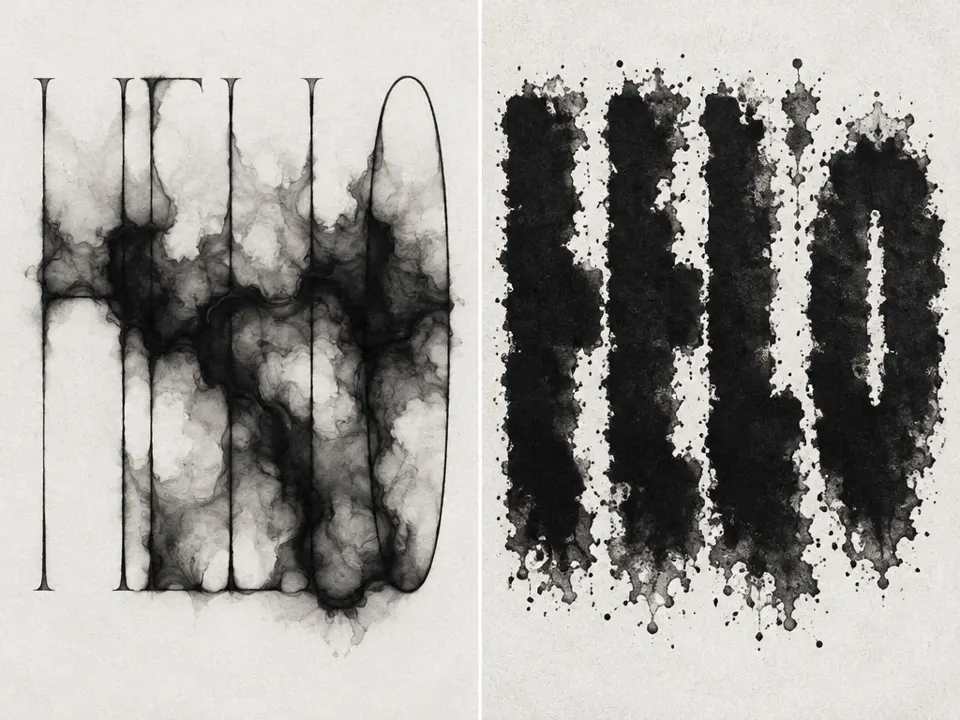
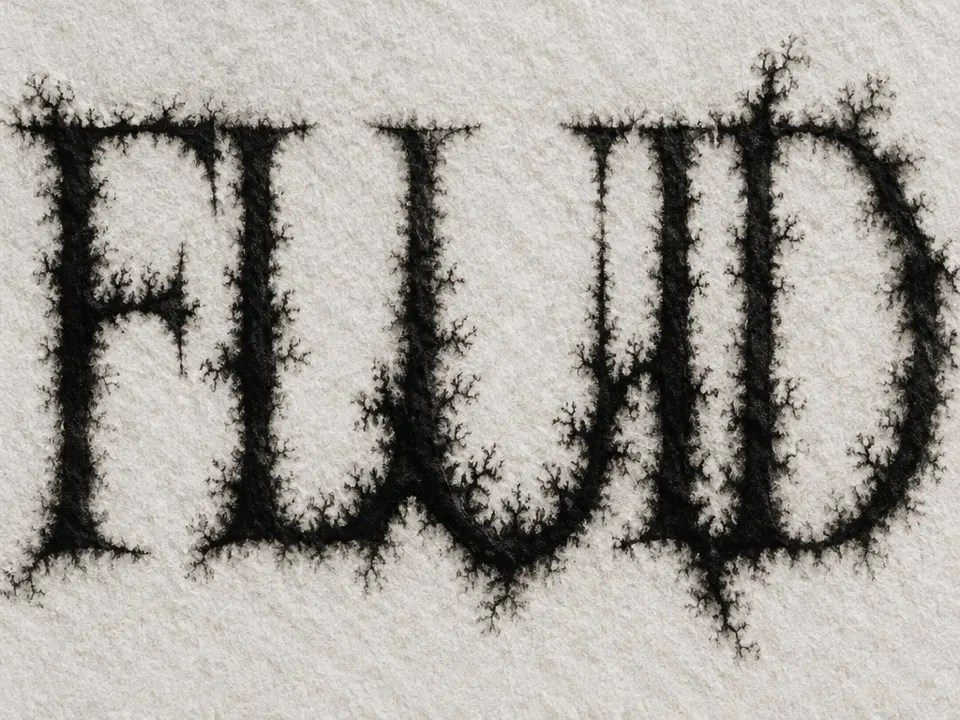
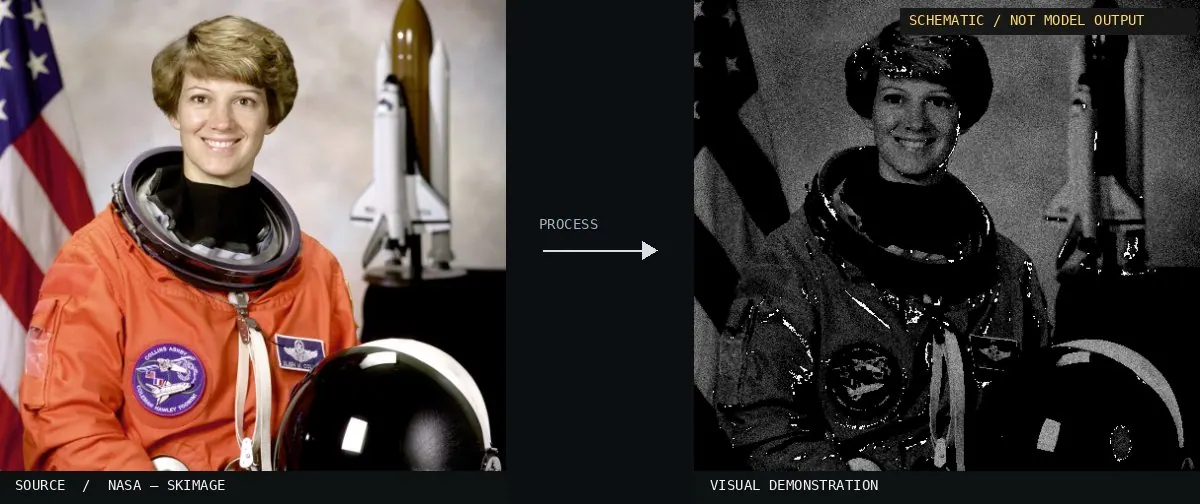
02Filters - Protrusions - Ink BleedGeometric shapes and letters exhibit frayed, irregular edges typical of digital protrusion filters. It demonstrates ink bleed by simulating how liquid pigments distribute unevenly into surrounding white space.Stilfehler · CC BY-SA 4.0 · Wikimedia Commons03Cromatografia inchiostroInk on a porous paper strip demonstrates capillary action and vertical bleeding. The pigment separates and spreads irregularly along the fibers as it absorbs liquid, illustrating the physical basis of the ink bleed phenomenon.Latimeria2004 · CC BY-SA 4.0 · Wikimedia Commons04Separazione pigmentiA pigment spot on paper shows a feathered, soft-edged perimeter. This distribution of color away from the center of application demonstrates how absorbency causes contours to fray and blur into the surrounding material.Latimeria2004 · CC BY-SA 4.0 · Wikimedia Commons05AI illustration: Black geometric shapes with capillary-like fraying along the edgesThe image shows black geometric shapes with capillary-like fraying along the edges. This illustrates how ink travels through paper fibers to blur clean contours.Illustration generated for the Atlas (AI)06AI illustration: Two typographic styles demonstrate different bleed behaviorsTwo typographic styles demonstrate different bleed behaviors. The fine lines show merged letters while the bold strokes exhibit liquid dispersion and irregular trailing edges.Illustration generated for the Atlas (AI)07AI illustration: Black typography on a textured surface shows irregular, branching tendrilBlack typography on a textured surface shows irregular, branching tendrils at the letter edges. This illustrates how ink spreads along paper fibers, creating frayed contours instead of a simple uniform blur.Illustration generated for the Atlas (AI)08Ink Bleed — machine versionSchematic or classical approach — not a trained AI model output.Atlas of Visual Effects09Dylatacja przykladThis schematic shows morphological dilation on a pixel grid. It demonstrates the fundamental mathematical operation used to expand dark contours into surrounding light areas, mimicking the growth stage of a digital ink bleed effect.Robotyczna Owca · CC0 · Wikimedia Commons10InktvraatDark brown ink has spread and corroded the paper fibers of this manuscript. The irregular growth of the stroke widths and the loss of sharp edges represent the physical phenomenon digital ink bleed seeks to simulate.MiluskaD · CC BY-SA 4.0 · Wikimedia Commons11InkErosionThe musical notation shows significant ink spread and physical erosion of the substrate. It serves as an example of how dark pigments expand irregularly, creating the characteristic feathered edges of the effect.Photo by Ceinturion · Public domain · Wikimedia Commons12TintenfraßThis image shows extreme ink corrosion resulting in large, dark, irregular holes in a book. It illustrates the final stages of ink bleed where dilation and erosion completely alter the original shapes.Hessisches Landesarchiv · CC BY-SA 4.0 · Wikimedia Commons
Question
Why does the same ink bleed value destroy thin text faster?
Show possible answer +Hide answer −
The spread is greater relative to the line thickness and can close small interior spaces and gaps more quickly.