Image Morphing
Image morphing. Cinema milestone Willow (1988). Pop wave of the early 1990s.
Prompt
Apply an early digital image-morphing effect as a frozen intermediate frame, blending the subject with a gently reshaped version of itself. Show smoothly stretched contours, aligned landmarks, translucent doubled edges, and rubbery transitional surfaces, avoiding random smearing or unrelated added figures. Keep the original subject and composition.
Identify
Eyes, mouth, and outlines flow continuously from one figure into another.
Principle
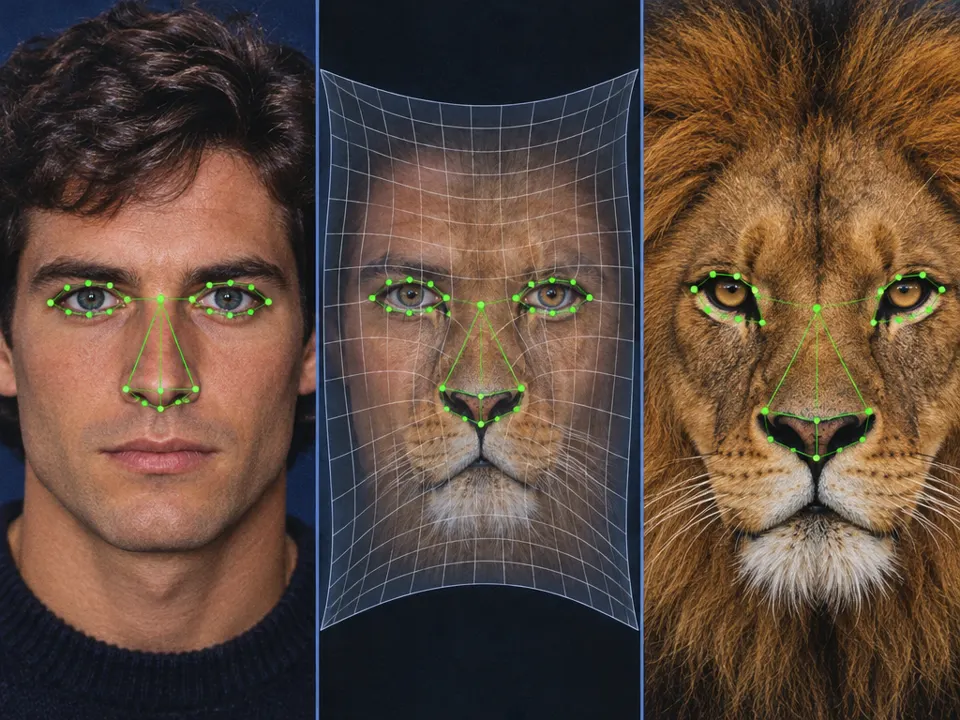
Corresponding image features1 are assigned. Geometric distortion2 and simultaneous blending create a controlled transition between the shapes.
Example
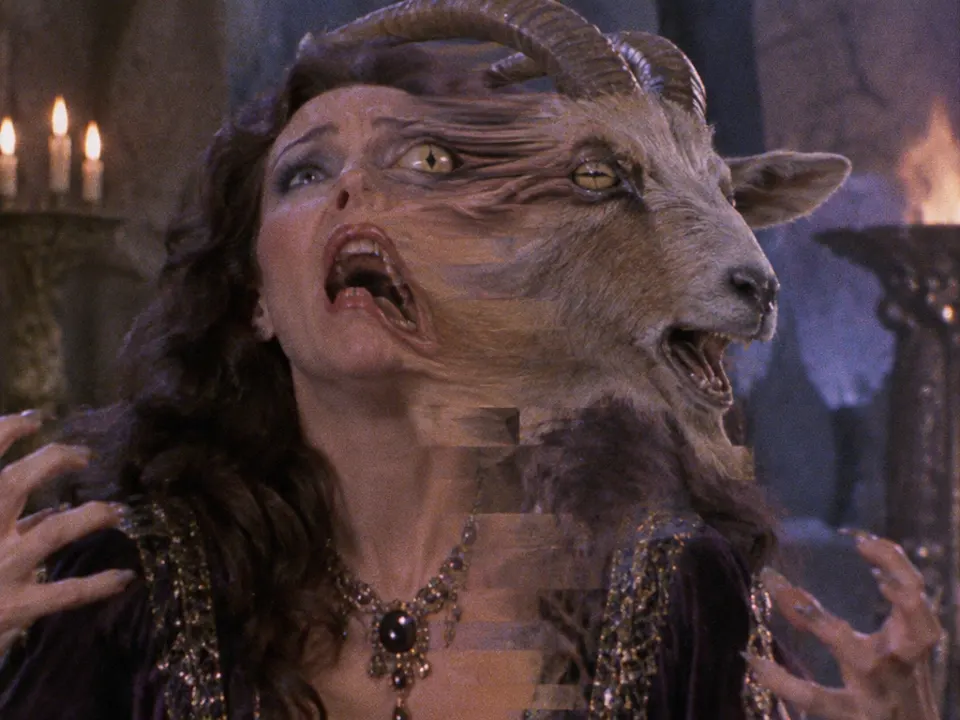
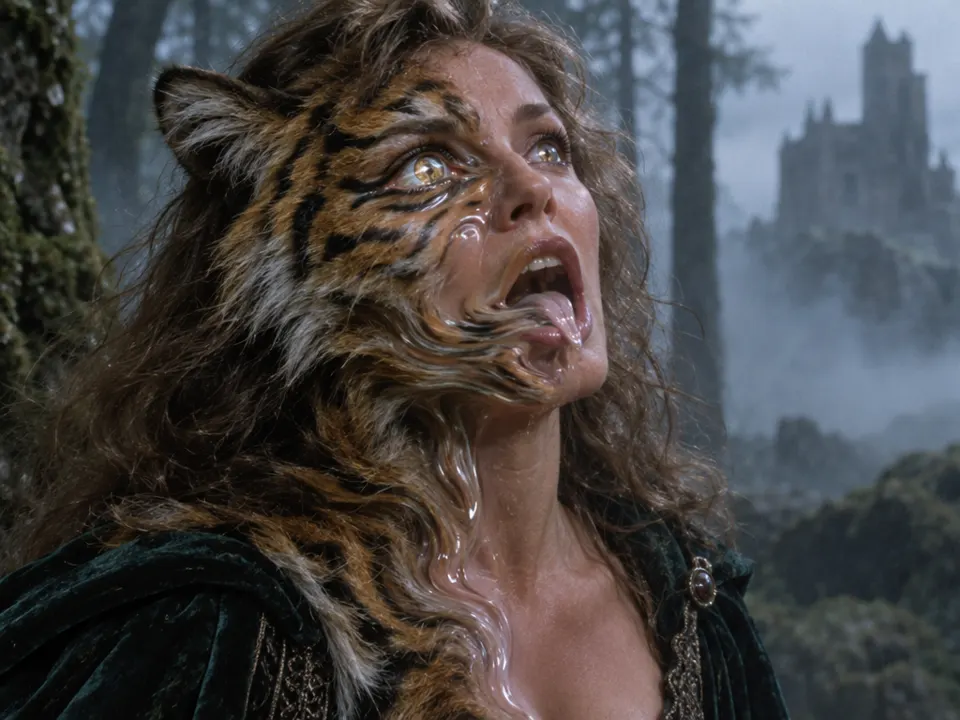
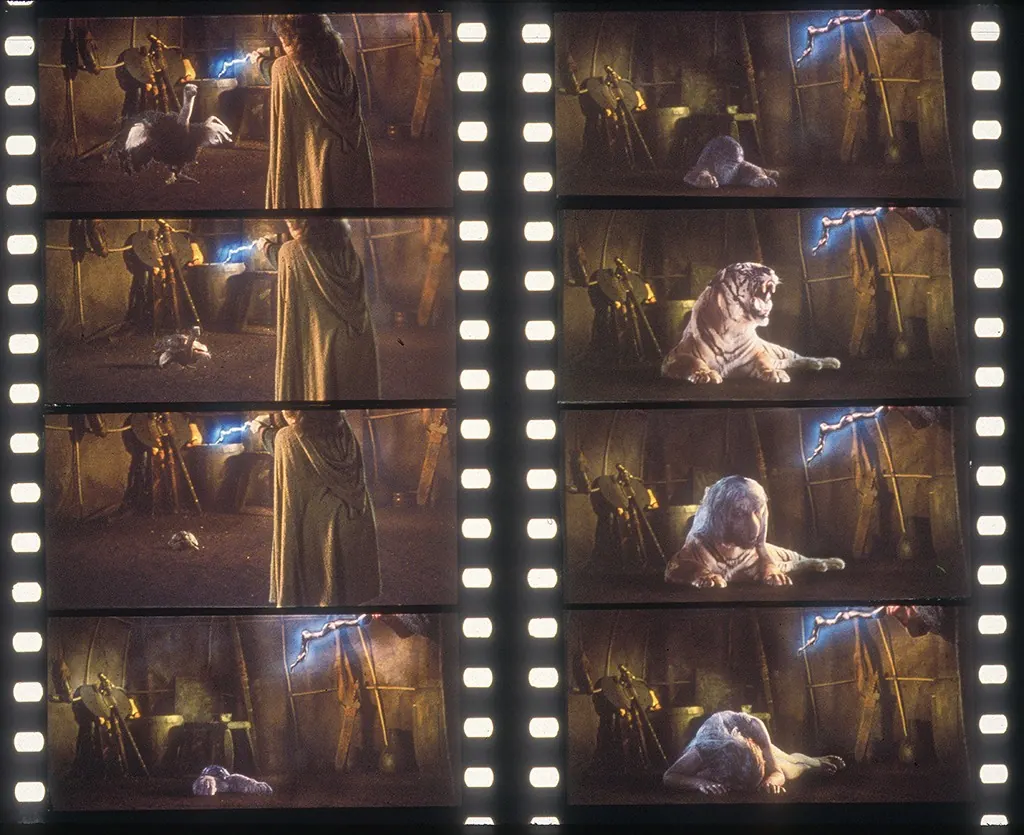
Willow (1988): Fin Raziel transforms back into a human via animal forms.
Try it out
Highlight identical features in two portraits. Compare the blending and morphing effects. Observe shifting contours.
Background
cinematic milestone 1988; particularly visible pop wave in the early 1990s.
Matching features of two images are assigned to each other. Both images are geometrically distorted and simultaneously blended. In this way, the shape shifts, instead of simply replacing one image with the other.
Willow (1988): Fin Raziel transforms through several animal forms back into a human. Later pop reference: Michael Jackson, Black or White (1991).
Regarding the illustration: Historical original / source image. Eight successive image states show how animals transition into one another through fluid changes in form; reproduced original image sequence.
Distinction
Dissolve = change in transparency. Morph = change in shape plus transition. Generative AI morphs do not need to use explicit point correspondences. Form interpolation already existed. Willow is a breakthrough for convincing digital morphing in popular film, not an invention of every type of transformation.
Aftermath
The digital transformation itself became an attraction and later the familiar effect of music videos, advertising and apps.
Further examples · 7 images