Time-lapse. 1983: Koyaanisqatsi as a significant milestone; procedures considerably older
Typeface · Dosis
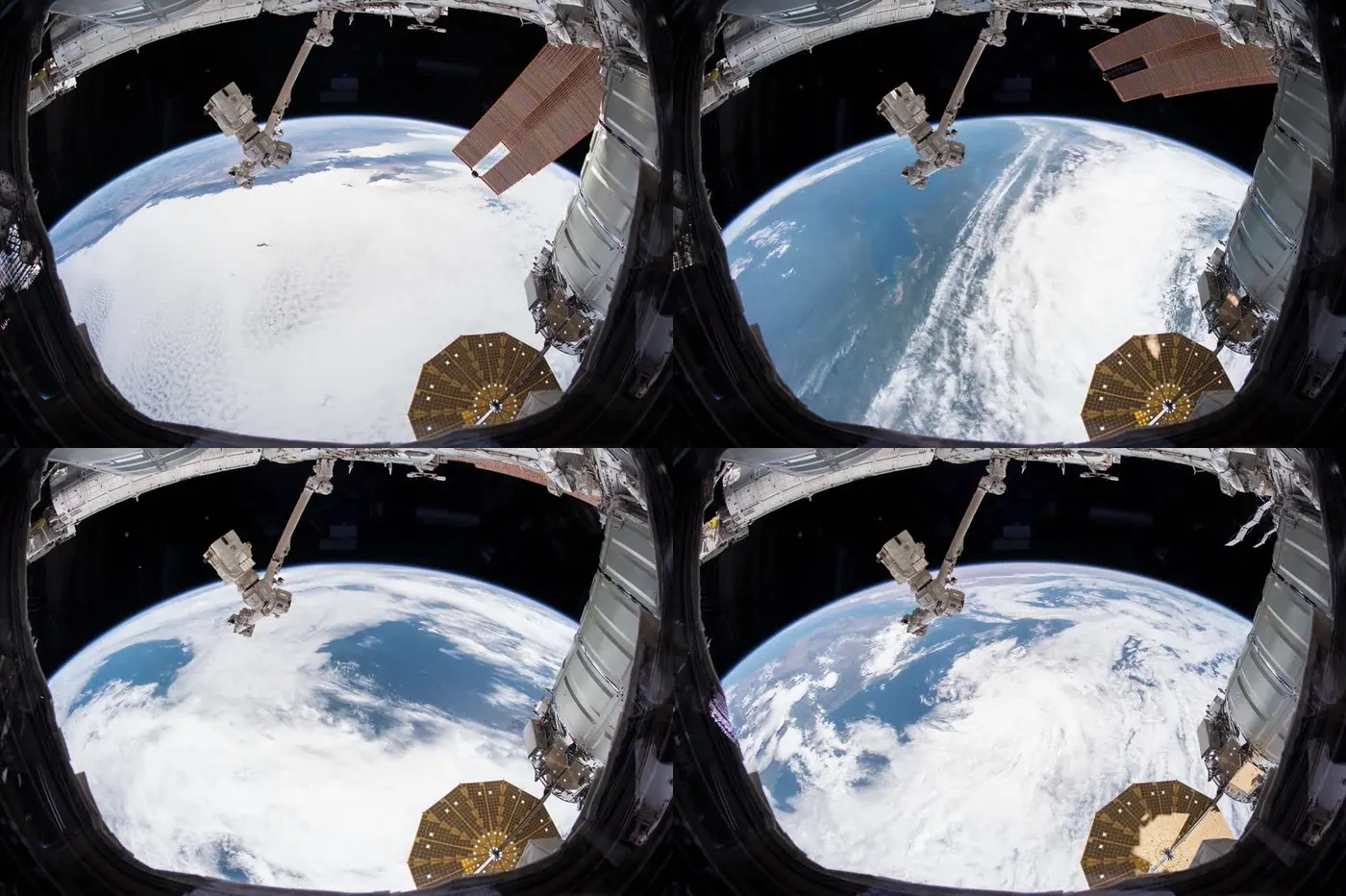
ISS: Clouds and Continents, June 21, 2018. Four frames; time compression in the linked NASA video.
Temporal effect: still image or image sequence.NASA / ISS Expedition 56; image sequence from the original time-lapse.View source ↗
Prompt
Transform this image into a time-lapse composite, keeping stable structures crisp while showing successive translucent positions of existing moving elements. Stretch clouds into soft streaks where present, trace existing lights into luminous paths, and blend subtle changes in illumination across the scene. Keep the original subject and composition.
Time-lapse condenses long processes through interval shooting. In 1983, Koyaanisqatsi made the relationship between nature, the city, and accelerated life the subject of an entire film. Modern interval functions automate the shooting process but do not change the principle. With one frame per second and playback at 25 frames per second, 25 real seconds become one second of film. The subject requires visible change.
Distinction
The effect is astrong compression of time. Asingle image does not show the playback speed; the sequence of images or the video must be viewed for evaluation.
Aftermath
Time-lapse counts time intervals; undercranking usually alters acontinuous recording.
Further examples · 7 images
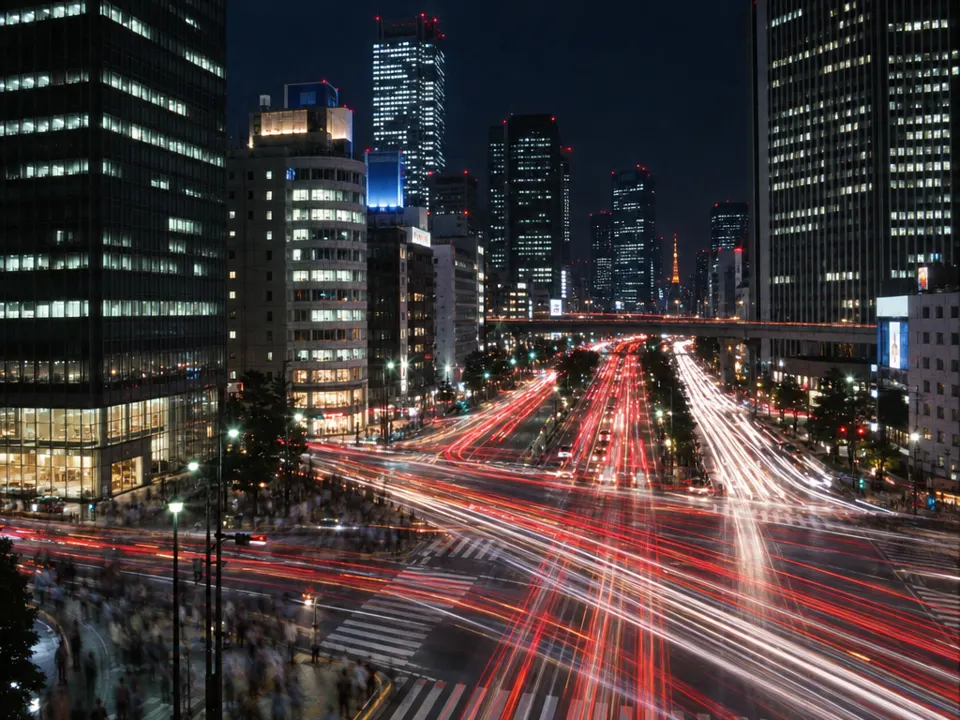
02Time lapse temps modificatThis diagram displays a film strip where only every fourth frame is recorded. It demonstrates how interval shooting captures long periods using fewer frames for later acceleration.Cburnett · CC BY-SA 3.0 · Wikimedia Commons03Northern Lights timelapseAn animated sequence shows the shifting colors of the Aurora Borealis over a dark horizon. The movement of the lights is condensed to make slow atmospheric changes visible.KristianPikner · CC BY-SA 4.0 · Wikimedia Commons04GeraniumFlowerUnfurl2A blooming geranium flower is shown opening its petals in a rapid animation. The technique makes the slow biological process of plant growth observable in seconds.Andrew Dunn · CC BY-SA 2.0 · Wikimedia Commons05AcropoclipseA composite image shows the progression of a solar eclipse over the Acropolis. It illustrates how interval shooting captures a slow astronomical process as a sequence of discrete temporal changes.Elias Politis ( http://www.auhopu.com/ ) · CC BY-SA 3.0 · Wikimedia Commons06Time-lapse exposure timeThe graphic illustrates different shutter speeds within a time-lapse interval. It shows how the duration of light exposure per frame affects the motion blur in the resulting accelerated film sequence.en:User:Cburnett · CC BY-SA 3.0 · Wikimedia Commons07AI illustration: Light trails of cars at a city intersection represent compressed timeLight trails of cars at a city intersection represent compressed time. This demonstrates how a long-duration scene becomes a single motion-filled frame when using long intervals or exposure.Illustration generated for the Atlas (AI)
Question
How long does one hour last at one photo per second and 25 fps?
Show possible answer +Hide answer −
3600 images divided by 25 equals 144 seconds of film.