H 123 / 3211940s

Hollywood Glamour Lighting

1940s studio glamour, developed during the preceding decades
Typeface · Yeseva One

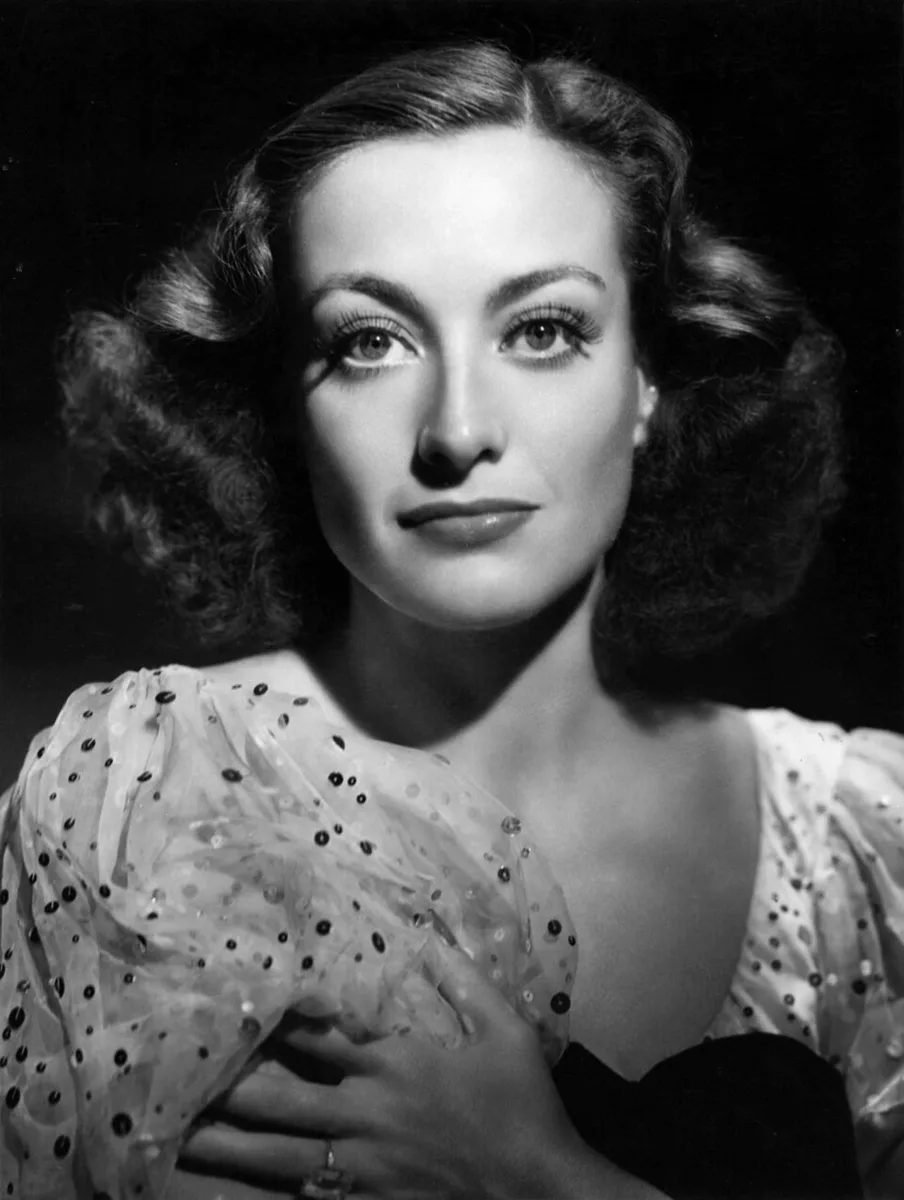
Butterfly Shadow and Sculpted Cheekbones. A monochrome portrait presents a woman with waved hair, bright cheekbones, and a compact shadow beneath her nose.
Butterfly Shadow and Sculpted Cheekbones. A monochrome portrait presents a woman with waved hair, bright cheekbones, and a compact shadow beneath her nose.George Hurrell · Public domain · via Wikimedia CommonsView source ↗

Prompt

Apply Hollywood Glamour Lighting with luminous monochrome skin tones, sculpted contours, and a high frontal key light producing a butterfly-shaped nose shadow where applicable. Add brilliant hair highlights, deep background shadows, delicate highlight diffusion, and fine photographic grain without erasing natural features. Keep the original subject and composition.

Identify

Sculpted cheekbones, luminous skin, and a butterfly-shaped shadow beneath the nose define a common version of this look. Bright hair highlights and deep backgrounds often accompany a soft glow around facial highlights.

Principle

A key light1 placed above the camera and aimed downward creates the central nose shadow; separate lights can outline the hair. Optical diffusion2 spreads bright light into neighboring image areas, while negative retouching3 can smooth skin without changing the lighting pattern.

Example

George Hurrell: Portrait of Jane Russell, 1941.

Try it out

Aim a desk lamp downward from above your phone camera, then move it sideways and watch the nose shadow shift.

Background

Hollywood studios used carefully lit portraits to shape stars’ public identities during the 1930s and 1940s. George Hurrell became closely associated with this dramatic portrait style. Butterfly lighting, also called Paramount lighting, was one arrangement within a broader vocabulary, not a requirement for every glamour portrait. A high frontal lamp emphasized cheekbones and placed a small shadow beneath the nose. Fill light controlled shadow depth, while additional lamps separated hair from the background. Optical diffusion and negative retouching could soften the result, even when the original lighting produced crisp shadows.

Distinction

Rembrandt lighting places the main light farther to one side, producing a small illuminated triangle on the shadowed cheek. Butterfly lighting instead centers the nose shadow; neither arrangement automatically creates a soft glow.

Aftermath

This style shows how light placement shapes facial form, while diffusion and retouching separately shape the appearance of skin.

Further examples · 7 images

Glamour Lighting on a Straw Set
02 Glamour Lighting on a Straw SetA reclining woman rests on straw, her luminous face and blouse contrasting with a dark studio background. Sculpted facial shadows and carefully separated highlights show Hollywood glamour lighting in a staged full-length portrait.George Hurrell · Public domain · Wikimedia Commons
Colorized Hollywood Glamour Portrait
03 Colorized Hollywood Glamour PortraitA colorized portrait shows luminous skin, red lips, and waved brown hair against black. The underlying photographic lighting retains a distinct butterfly-shaped nose shadow, sculpted cheeks, and bright hair highlights characteristic of Hollywood glamour.George Hurrell · Public domain · Wikimedia Commons
Soft Glamour with Butterfly Lighting
04 Soft Glamour with Butterfly LightingA softly rendered monochrome portrait shows a woman in a tailored jacket and striped scarf, with radiant cheeks and a dark shadow beneath her nose. High frontal lighting and softened facial highlights demonstrate the sculpted yet luminous treatment associated with Hollywood glamour.Paramount Pictures · Public domain · Wikimedia Commons
AI illustration: Textbook butterfly lighting with optical diffusion and highlights
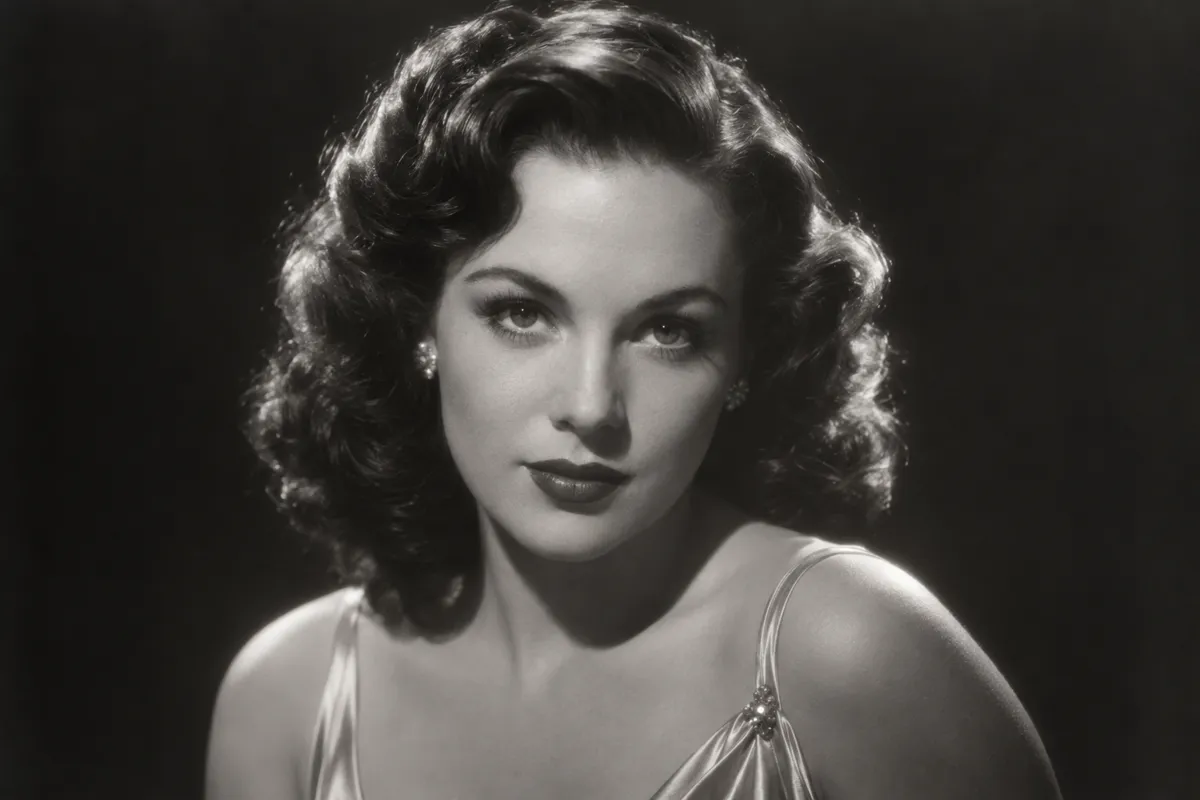
05 AI illustration: Textbook butterfly lighting with optical diffusion and highlightsA woman’s face is illuminated with a high-angle key light that casts a distinct butterfly-shaped shadow beneath her nose. This lighting arrangement emphasizes sculpted cheekbones and uses optical diffusion to create a soft, ethereal glow against the dark background.Illustration generated for the Atlas (AI)
AI illustration: Classic male glamour portrait with high-contrast studio lighting
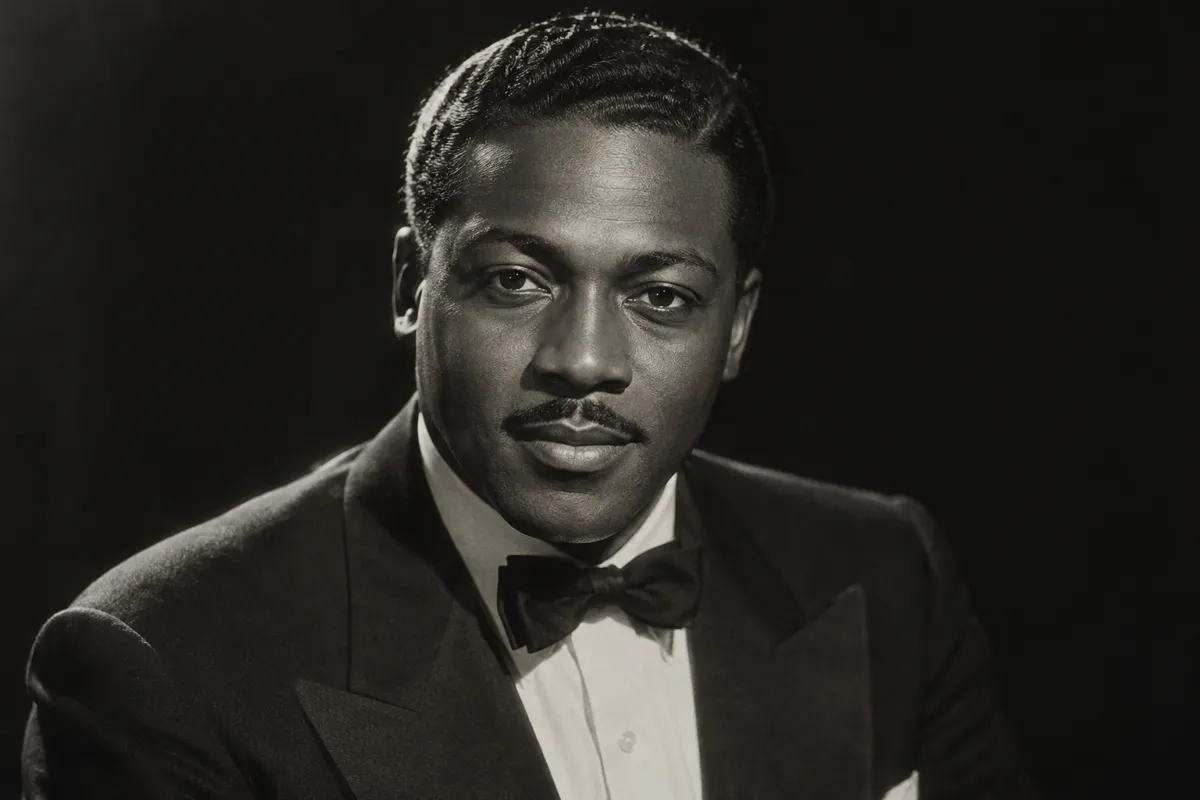
06 AI illustration: Classic male glamour portrait with high-contrast studio lightingA man in formal wear is captured with high-contrast lighting that produces a symmetrical shadow under the nose and bright highlights on the forehead. The use of rim lighting to separate the subject from the dark backdrop is a characteristic feature of this studio technique.Illustration generated for the Atlas (AI)
AI illustration: Studio setup demonstrating Hollywood rim and key lighting
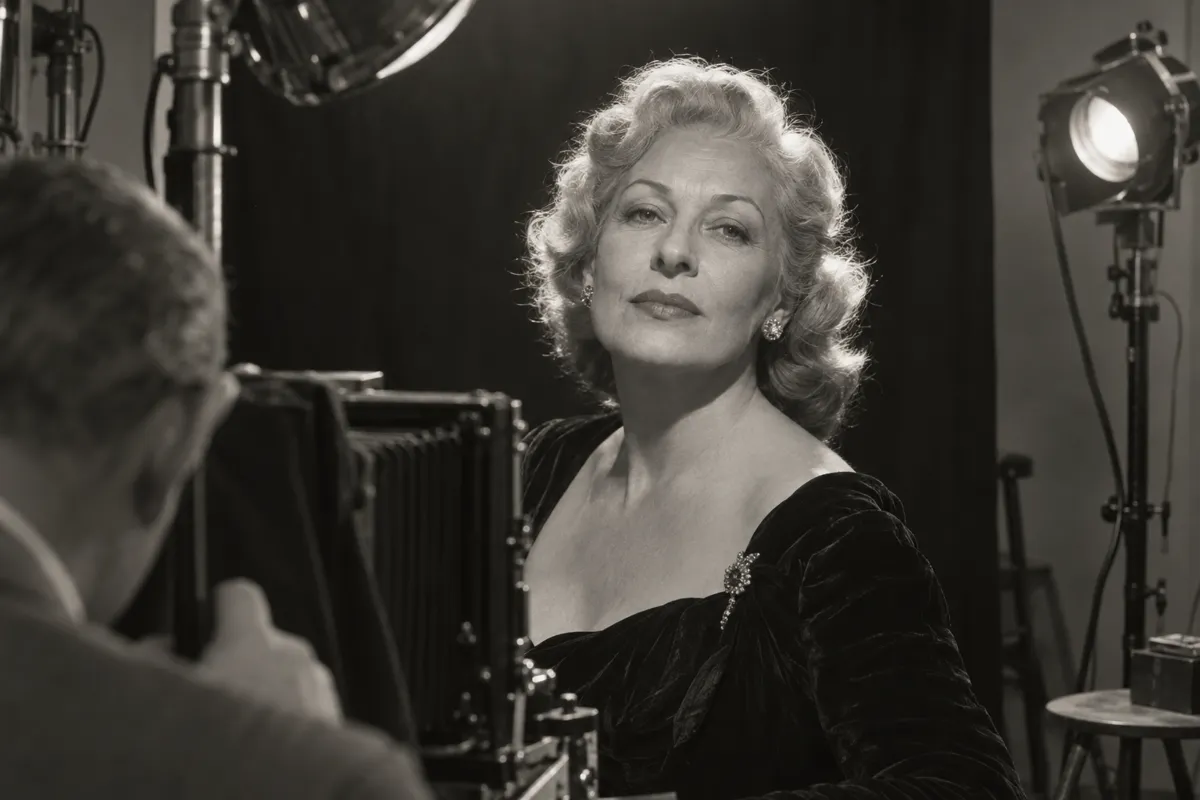
07 AI illustration: Studio setup demonstrating Hollywood rim and key lightingThis behind-the-scenes view shows a subject positioned between a large-format camera and a Fresnel spotlight aimed at the hair. The resulting facial shadows demonstrate the high-key overhead placement used to achieve the signature glamorous aesthetic of early cinema.Illustration generated for the Atlas (AI)

Question

Can a glamour portrait have both crisp shadows and smooth-looking skin?

Show possible answer +

Yes. Directional lighting can produce crisp shadows, while retouching reduces skin texture and controlled diffusion softens bright details.

Sources