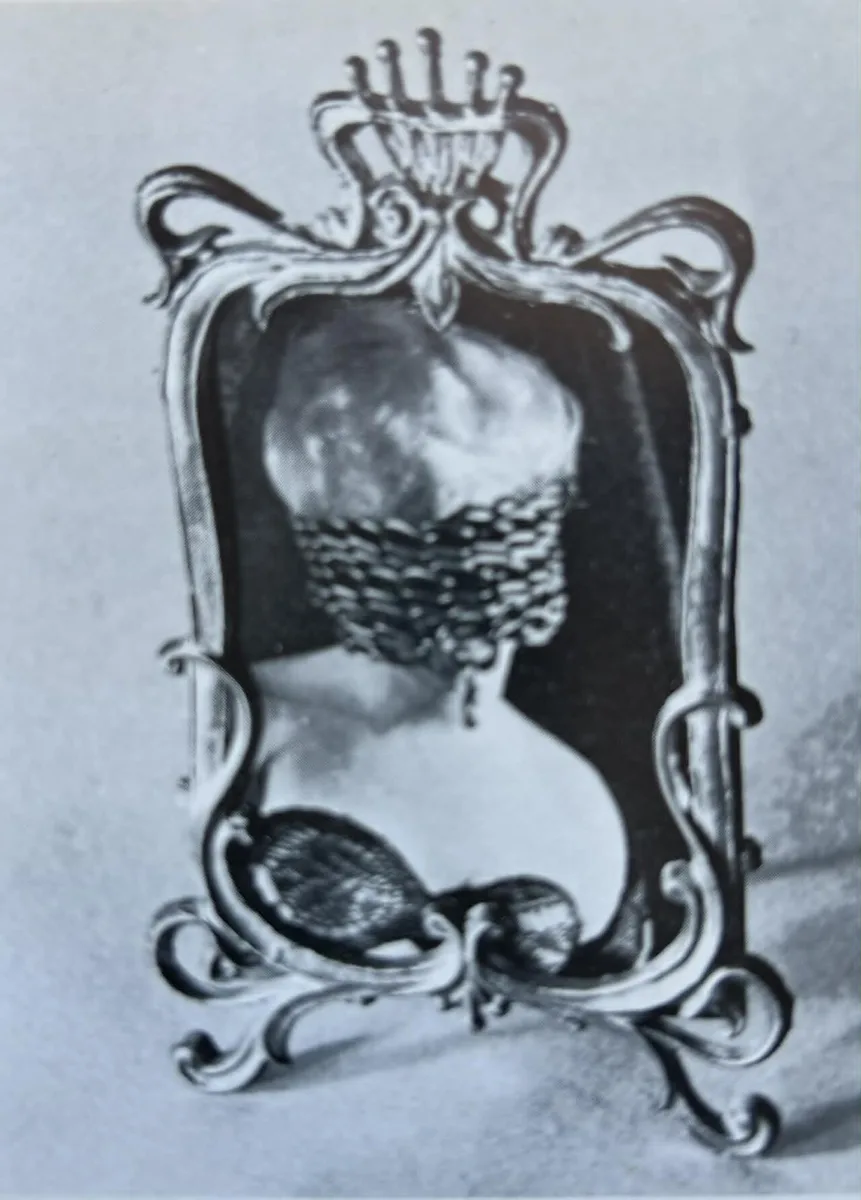
Blistered Portrait in an Ornate Frame. An ornate frame surrounds a monochrome portrait whose head dissolves into swollen, flowing forms and a band of blister-like cells.Jindřich Heisler (1914-1953) · Public domain · via Wikimedia CommonsView source ↗
Prompt
Apply Brûlage as a heat-damaged photographic print, with flowing emulsion distortions, blistered bubbles, rippled contours, and scorched tonal patches. Use silvery blacks, smoky grays, pale translucent voids, and irregular melted edges. Concentrate severe damage around peripheral details while retaining recognizable features. Keep the original subject and composition.
You see distorted, flowing, and [blistered photographic images]. The subjects appear to melt, warp, or dissolve into chaotic bubbles and ripples.
Principle
Heat is carefully applied directly to aphotographic negative before printing. This physically [melts the gelatin emulsion1], [shifting the silver particles2]inside.
Example
Raoul Ubac: La Nébuleuse, 1939.
Try it out
Look at amelting ice cube or candle wax and imagine aface stretched across its shifting, bubbling surface.
Background
Brûlage emerged as asurrealist3technique to disrupt the reliable reality of aphotograph. Artists like Raoul Ubac sought to introduce chance and destruction into their creative process. By exposing aglass or film negative to controlled heat, they altered the image physically. The gelatin emulsion layer would soften, bubble, and warp. This shifted the light-sensitive silver particles, destroying the original likeness. When this ruined negative was finally printed onto paper, the resulting photograph showed ahaunting, fluid distortion. It merged the original captured scene with the physical marks of heat.
Distinction
Unlike solarization, which uses light to reverse tones during development, brûlage uses physical heat to distort the actual negative.
Aftermath
It reveals that aphotograph is afragile physical object, not just aclear window into reality.
Further examples · 7 images
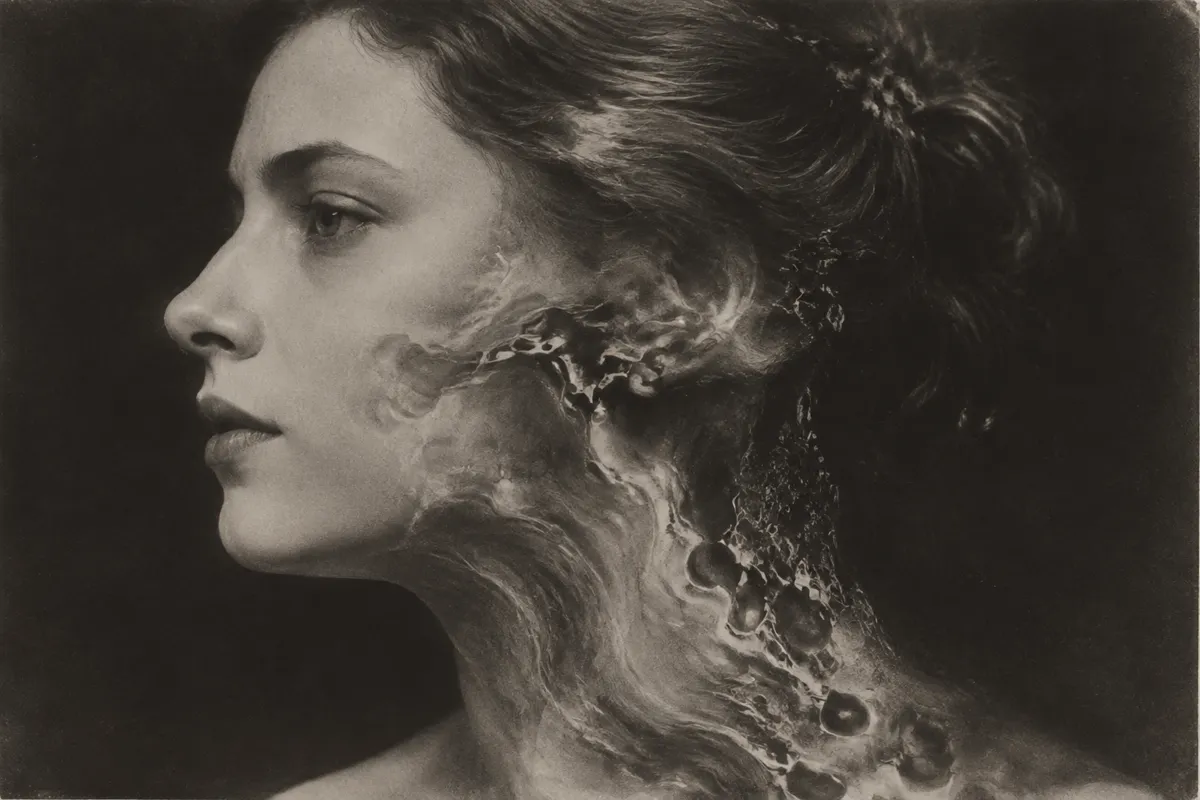
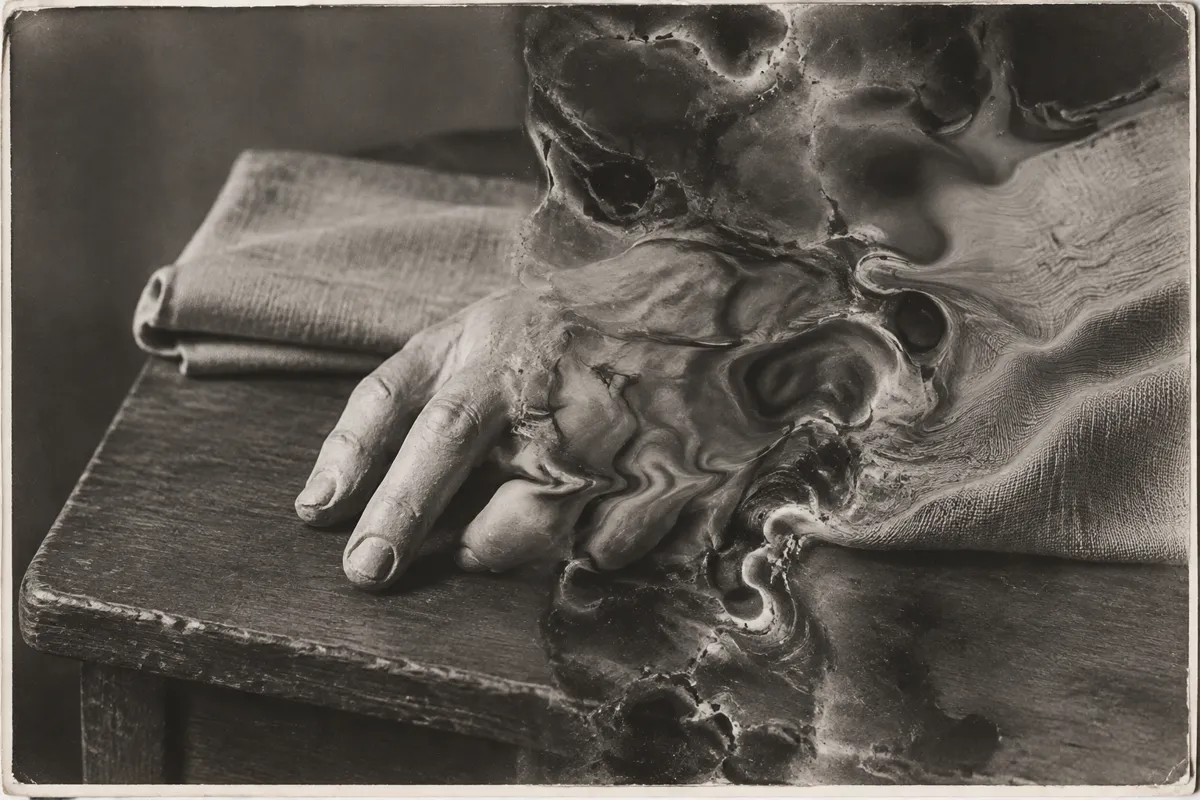
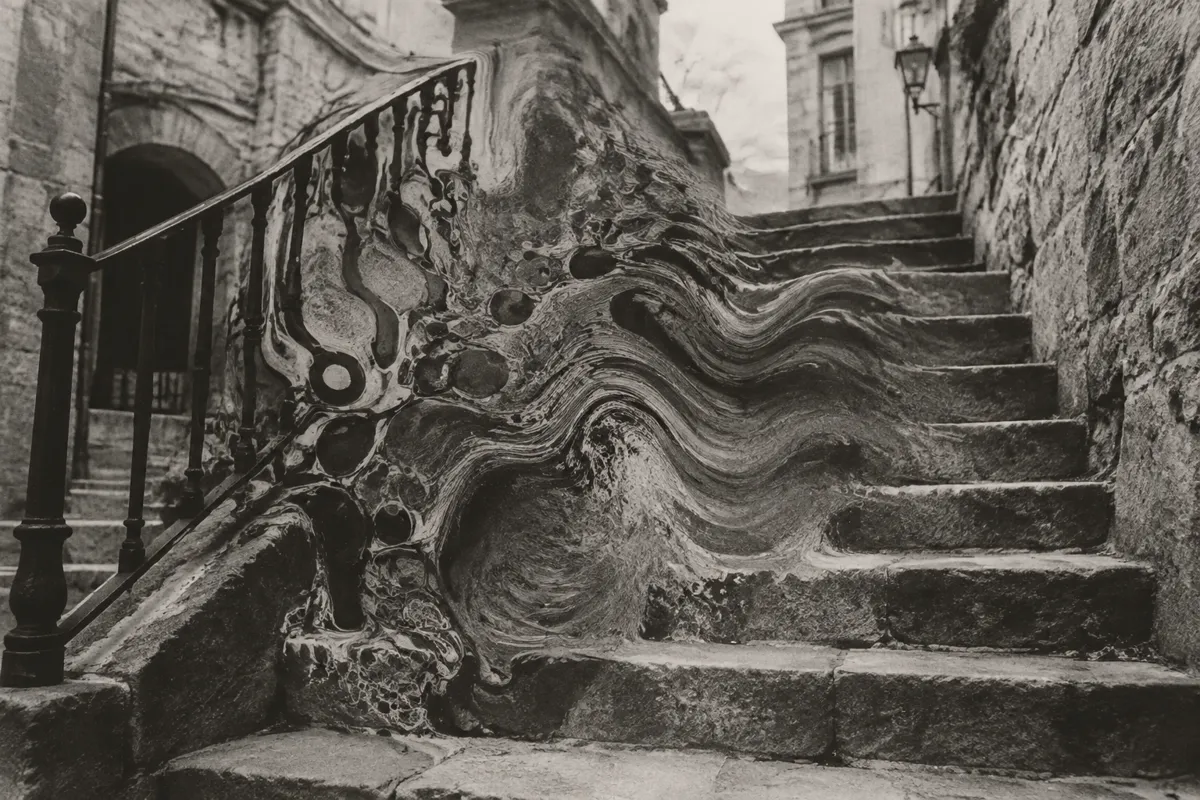
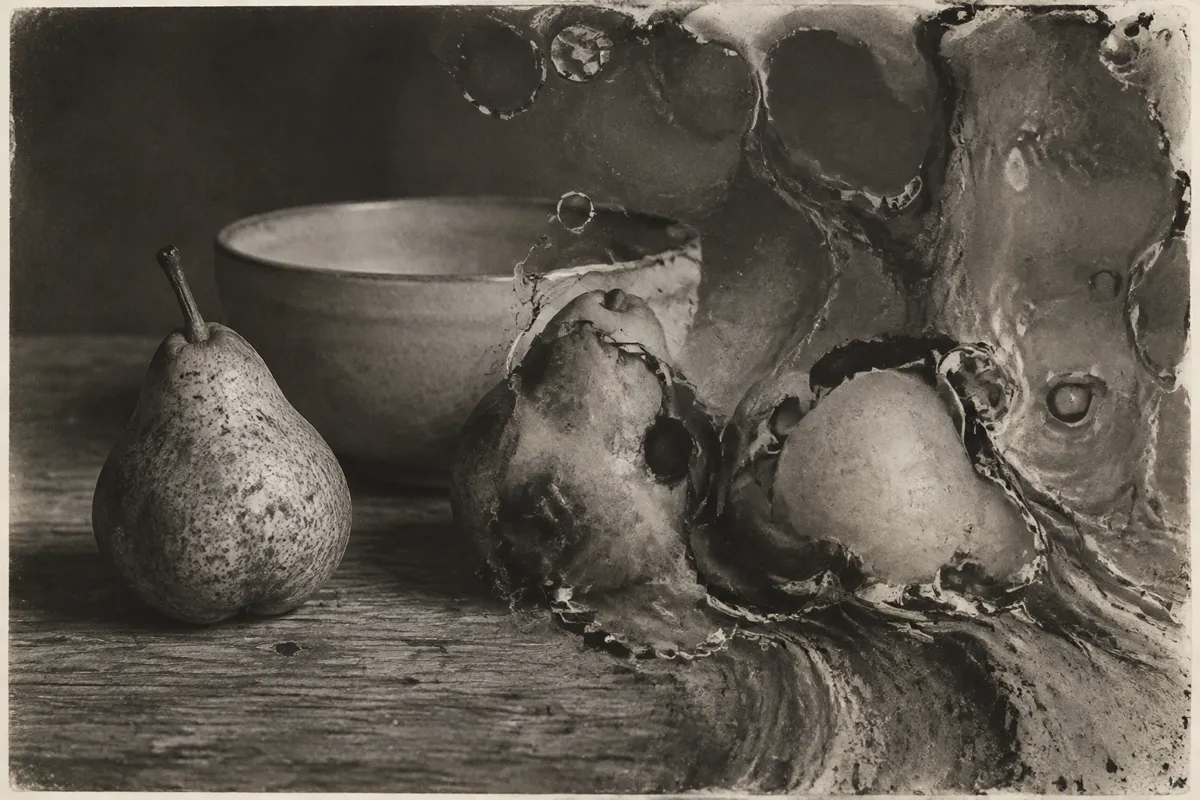
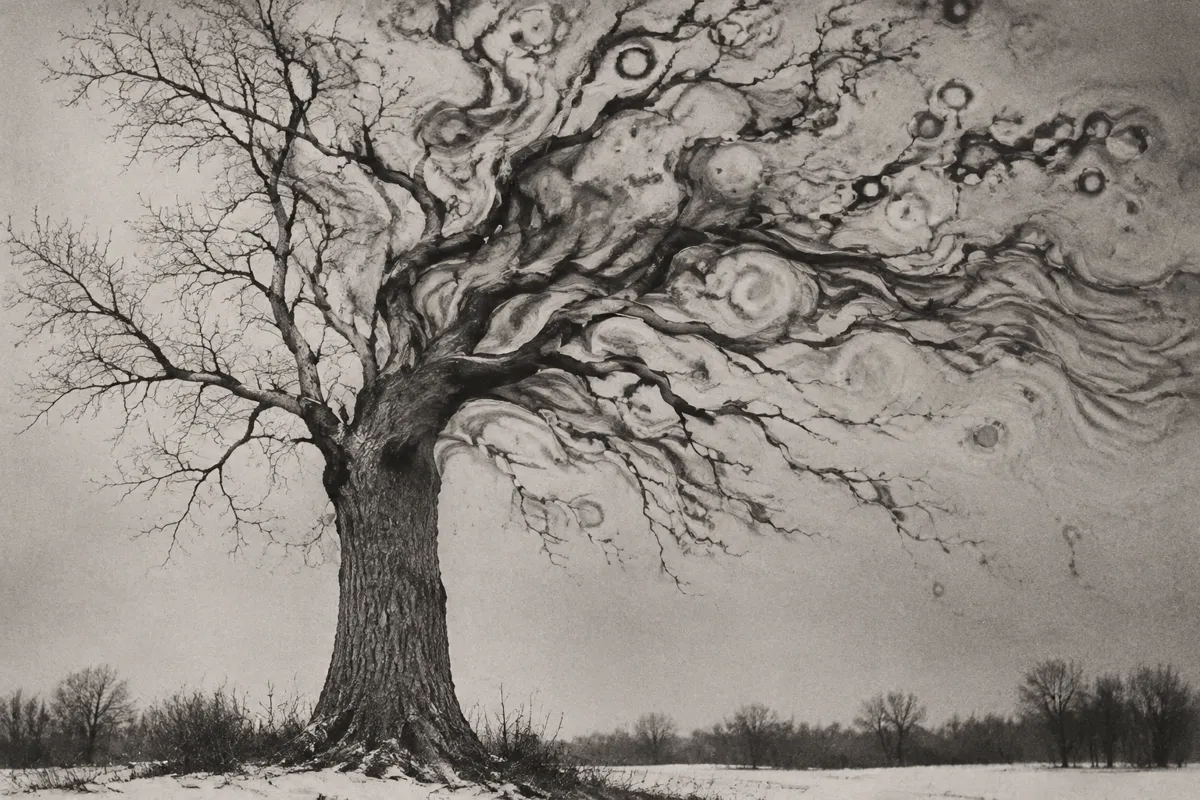
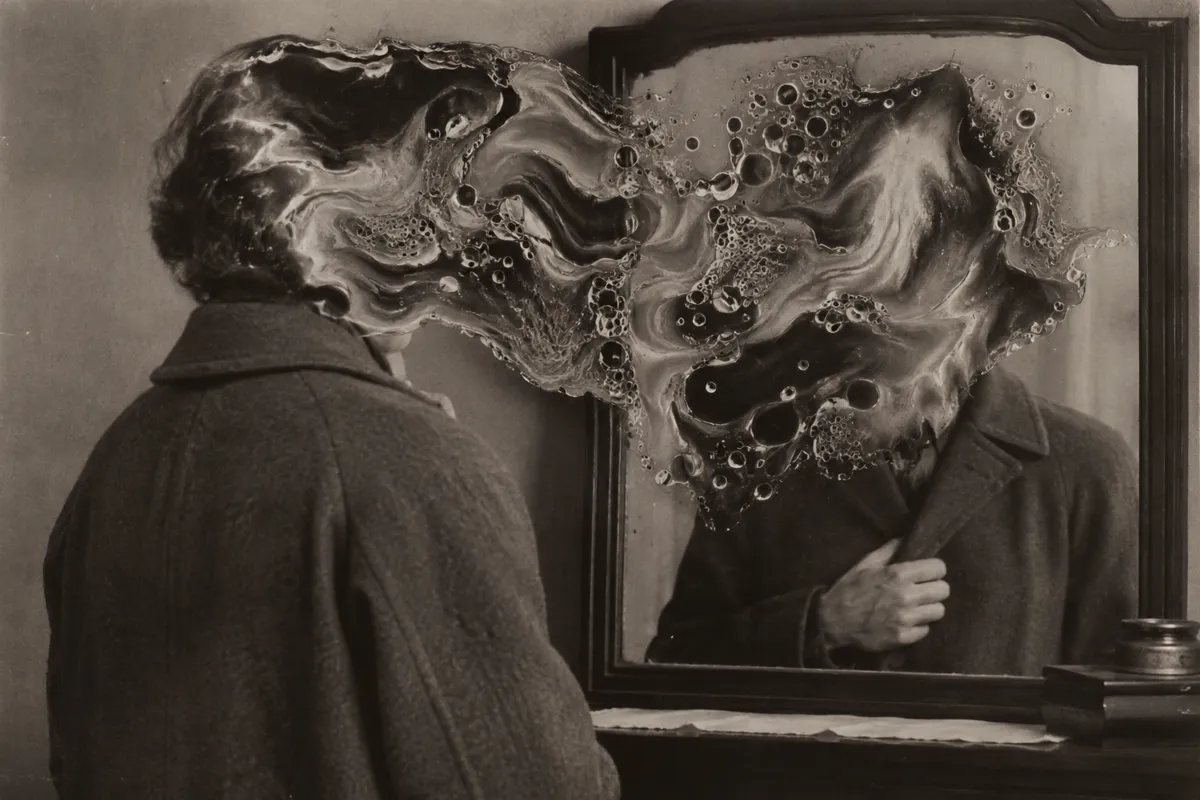
02AI illustration: Melting portrait through emulsion distortionA profile portrait of a woman is partially consumed by fluid, bubbling textures along the neck and jawline. This represents the melting of the gelatin emulsion which physically displaces silver particles to create organic, charred patterns.Illustration generated for the Atlas (AI)03AI illustration: Thermal distortion of a still life subjectA hand resting on a wooden surface appears to liquify into swirling, dark pools of chemistry. The application of heat to the negative has caused the image to blister and flow into chaotic abstract forms.Illustration generated for the Atlas (AI)04AI illustration: Architectural elements transformed by heatA stone staircase is depicted with a portion of the architecture warping into liquid, marble-like ripples. The visual transition from solid stone to molten emulsion exemplifies the destructive beauty of the brûlage process.Illustration generated for the Atlas (AI)05AI illustration: Dissolving still life with blistered texturesPears and a bowl are shown with large portions of the image field dissolving into bubbly, translucent voids. These circular distortions are the result of the negative's surface reaching a melting point during exposure to a flame.Illustration generated for the Atlas (AI)06AI illustration: Organic tree forms distorted by emulsion meltThe branches of a winter tree transition from crisp detail into a chaotic swirl of smoke and bubbles. This effect captures the movement of heated gelatin as it begins to crawl across the film base.Illustration generated for the Atlas (AI)07AI illustration: Surrealist mirror reflection with molten distortionA man looking into a mirror sees his reflection and head merge into a complex web of dark bubbles and flowing silver. This illustrates the total physical transformation of the photographic medium through direct thermal intervention.Illustration generated for the Atlas (AI)
Question
Why does the image warp when heated?
Show possible answer +Hide answer −
The image exists inside athin, jelly-like layer of gelatin. Heating the negative makes this gelatin melt and drag the details.