1878, Francis Galton's published composite portraits
Typeface · Libre Caslon Display
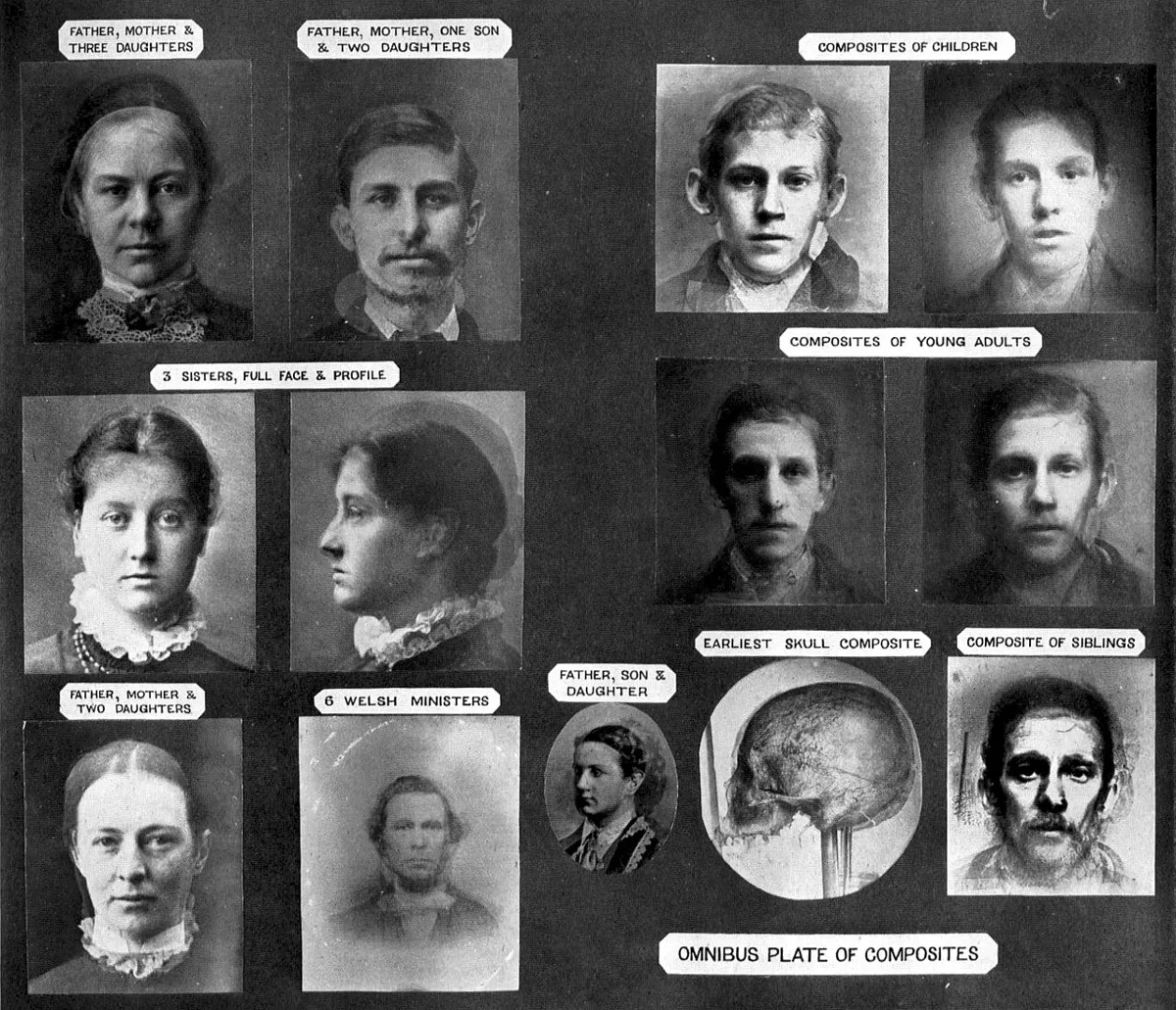
Collected Family and Group Composite Portraits. A photographic display brings together family, sibling, and group composites, with several faces surrounded by hazy hair and jaw contours.Francis Galton · Public domain · via Wikimedia CommonsView source ↗
Prompt
Apply a Composite Portraiture effect using subtly offset, translucent exposures of the same subject. Align central features so they remain comparatively sharp while hair, ears, jawlines, and outer contours accumulate soft ghost outlines. Use muted monochrome, delicate plate grain, and diffuse historical studio lighting. Keep the original subject and composition.
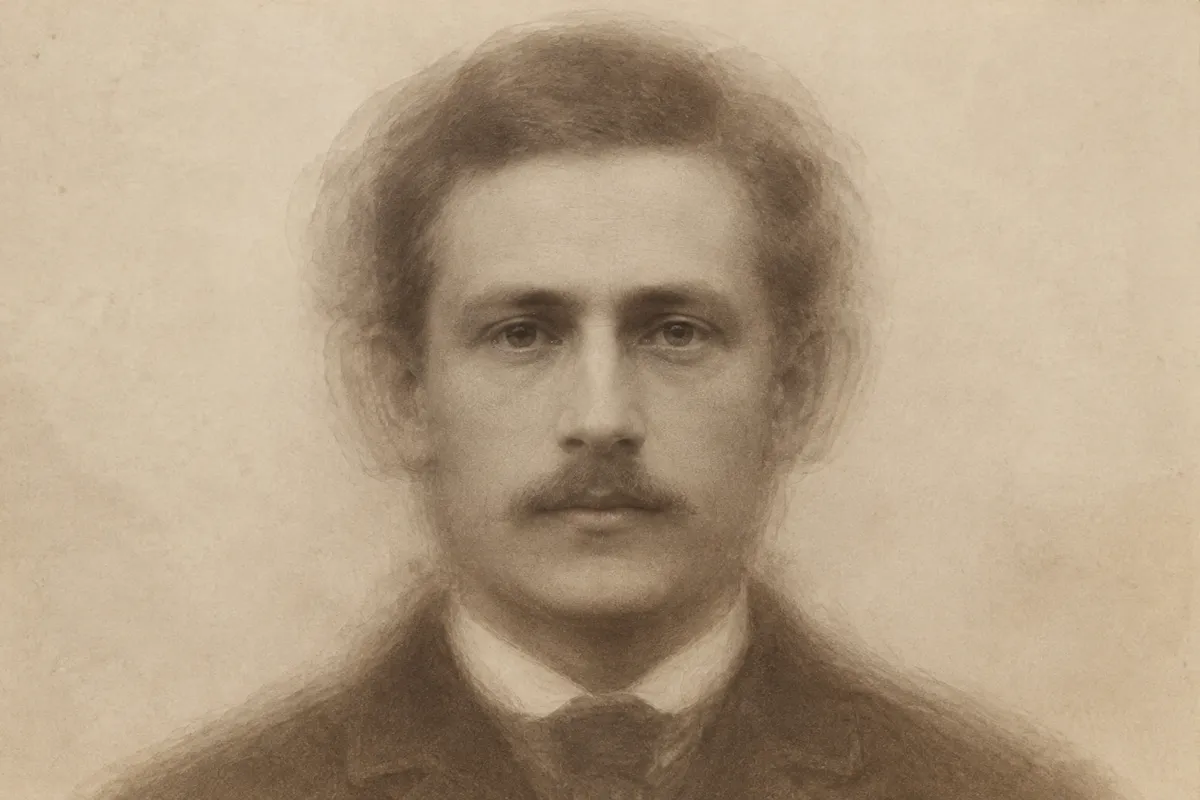
Asingle face has [softly blurred contours], while shared features appear comparatively sharp. Faint [overlapping outlines]can surround the hair, ears, and jaw.
Principle
Aligned source portraits receive [successive partial exposures1]on one photographic plate2, which is then developed. Accumulated exposure reinforces matching features, while differences spread into ghostly edges.
Example
Francis Galton: Composite Portraits, 1878.
Try it out
Align three consented portrait photographs by their eyes in transparent layers; compare the stable eyes with the blurred outer contours.
Background
Galton presented composite portraiture in 1878 as away to investigate shared facial characteristics. He aligned existing portraits at acommon scale, using the eyes as reference points. Each portrait contributed only part of the total exposure on the same plate. Development then revealed their combined image. Galton hoped these pictures would reveal group types, including supposed criminal types. Such claims were entangled with his eugenic thinking3and did not establish reliable links between appearance and character. The result depended strongly on selection, alignment, and exposure.
Distinction
Unlike ordinary double exposure, composite portraiture deliberately aligns comparable faces to suggest an average rather than juxtaposing separate subjects. It is not acut-and-paste photomontage.
Aftermath
It shows how photographic combination can make aconstructed average look like evidence of anatural human category.
Further examples · 7 images
02Frontal and Profile Group CompositesEight frontal and profile portraits show layered hair, softened silhouettes, and labels distinguishing component groups from further combined composites. Their reinforced facial features and ghostly outer contours clearly demonstrate successive superposition, here used in a historical attempt at ethnic typology.Francis Galton · Public domain · Wikimedia Commons03Three Sisters and Their Composite PortraitsIndividual frontal and profile photographs of three sisters surround two larger composite portraits at the center. The comparison reveals how aligned exposures combine their shared features while producing softened hair, clothing, and facial boundaries.Francis Galton · Public domain · Wikimedia Commons04Historical Composite Portraiture Specimen ChartA historical specimen chart contains composite faces arranged under family, health, and criminality headings, several with pale, diffuse outlines. The visible portraits demonstrate aligned photographic superposition, although the chart’s historical classifications do not establish the validity of its claims.Francis Galton · CC BY 4.0 · Wikimedia Commons05Sepia Chart of Composite Portrait SpecimensA sepia specimen chart presents blended faces alongside labels identifying the groups and numbers of contributing portraits. The faces show comparatively stable central features within softened peripheral contours, illustrating composite exposure rather than validating the chart’s historical classifications.Francis Galton · Public domain · Wikimedia Commons06Composite Faces Beside Their Component PortraitsFour larger oval composite faces appear beside ten smaller component portraits in a grainy historical reproduction. Despite the coarse printing, the blended contours of the composites and their comparison with individual sources visibly demonstrate portrait superposition.Unknown author · CC BY 4.0 · Wikimedia Commons07AI illustration: Composite Portrait showing superimposed facial features and ethereal edgesA sepia-toned male portrait displays sharp central features like the eyes and mustache, surrounded by a hazy, multi-layered halo of hair and ears. This illustrates the result of multiple aligned exposures where common traits reinforce each other while unique variations create a soft, ghostly blur.Illustration generated for the Atlas (AI)
Question
Why do the eyes often look sharper than the jawline?
Show possible answer +Hide answer −
The source portraits are aligned around the eyes, so those details overlap closely. Differences in face shape leave the jawlines less precisely matched.