H 064 / 3211900s

Glass Shot

Glass shot / matte painting. Originating in the 1900s. Established from the 1920s onwards, continuing into classic Hollywood.
Typeface · Marcellus

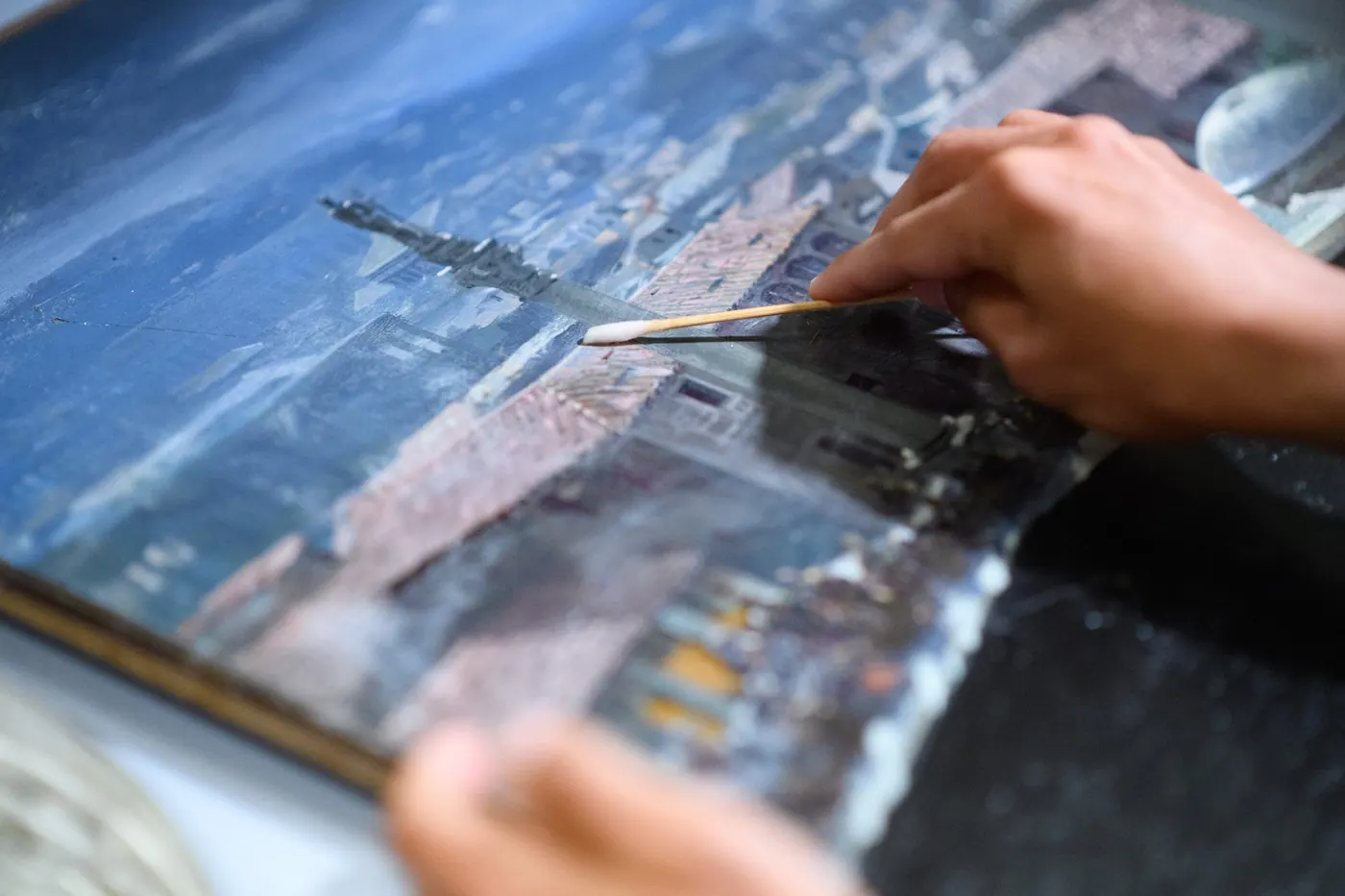
Later example: Peter Ellenshaw's Matte Painting for Spartacus (1960).
Later example: Peter Ellenshaw's Matte Painting for Spartacus (1960).Photo Joshua White / JW Pictures;Academy Museum of Motion Pictures;painting Peter Ellenshaw; © Academy Museum Foundation;museum web image, no open license stated.View source ↗

Prompt

Apply the Glass Shot effect by rendering existing background areas as an expansive painted environment seamlessly aligned with the photographed foreground. Match perspective and illumination, adding subtle brushwork, atmospheric distance, slight glass softness, and barely perceptible joins between painted and real surfaces. Keep the original subject and composition.

Identify

Painted environment and real set merge into a seemingly huge backdrop.

Principle

Painted glass1 complements the scene in front of the camera. Later matte techniques2 combine separate shots.

Example

Norman Dawn: Missions of California, 1907. Peter Ellenshaw: Spartacus, 1960.

Try it out

Look for transitions on roofs and horizons. Which areas might be painted?

Background

Norman Dawn: early documented glass shot, 1907. Originating in the 1900s; established from the 1920s onward, reaching classic Hollywood. Glass shot is an early execution; matte painting refers to a larger family of processes. Priority of invention is not entirely undisputed. The image shows a later material demonstration.

recognize: A seemingly huge environment, even though only a part of it was built as a set. Mechanism: Painted architecture or landscape complements a real scene. In glass shots, painted glass is placed in front of the camera; later matte techniques combine separate shots. example: Norman Dawn: Missions of California, 1907; later Peter Ellenshaw, Spartacus, 1960. Practice: On a film set, mark which areas could be constructed and which could be painted. Pay particular attention to the transitions at the horizon, roofs, and building edges.

Painted architecture or landscape complements a real scene. In glass shots, painted glass is placed in front of the camera; later matte techniques combine separate shots. A seemingly vast environment, even though only a part of it was built as a set. In a film set, mark which areas could be built and which could be painted. Glass shot is an early example; matte painting refers to a larger family of processes. The invention's priority is not entirely undisputed. The image shows a later material demonstration.

Distinction

Glass shot is an early implementation; matte painting refers to a larger family of processes. Priority of invention is not entirely undisputed. The image shows a later material demonstration.

Aftermath

Digital matte painting and set extensions continue the same idea.

Further examples · 7 images
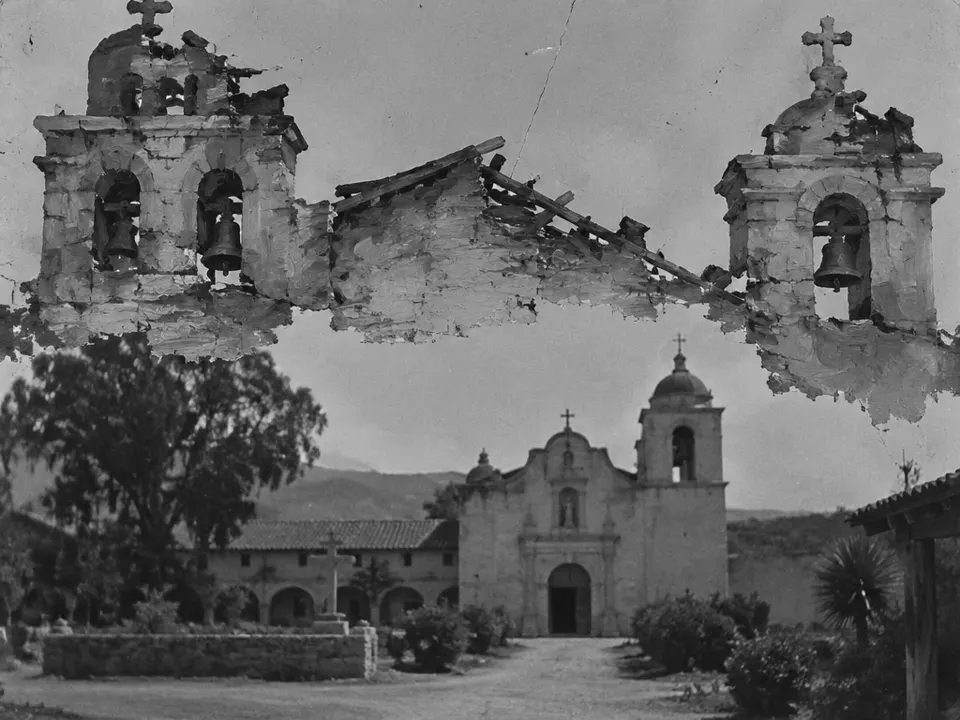
AI illustration: A painted addition of church towers is superimposed over a real building
02 AI illustration: A painted addition of church towers is superimposed over a real buildingA painted addition of church towers is superimposed over a real building. It demonstrates how a glass shot restores missing architectural elements through a painted overlay.Illustration generated for the Atlas (AI)
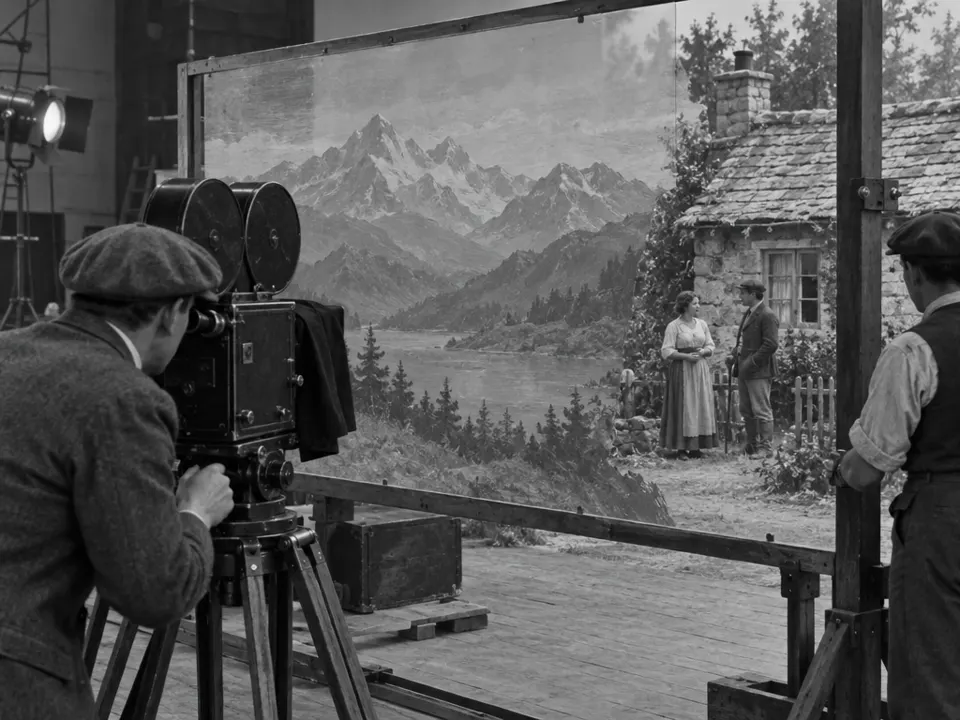
AI illustration: A camera films actors through a large glass pane with a painted mountain
03 AI illustration: A camera films actors through a large glass pane with a painted mountain A camera films actors through a large glass pane with a painted mountain landscape. This shows the setup where live action and painting merge in-camera.Illustration generated for the Atlas (AI)
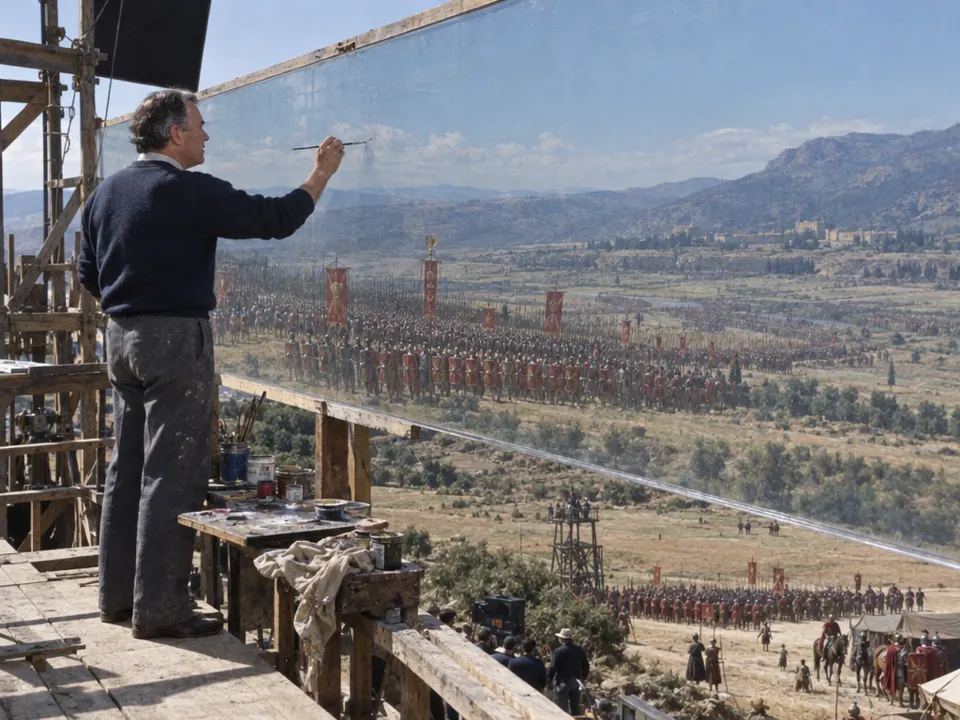
AI illustration: An artist paints details onto a glass sheet placed between the camera and
04 AI illustration: An artist paints details onto a glass sheet placed between the camera andAn artist paints details onto a glass sheet placed between the camera and a real army on location. This illustrates the traditional production of a glass shot.Illustration generated for the Atlas (AI)
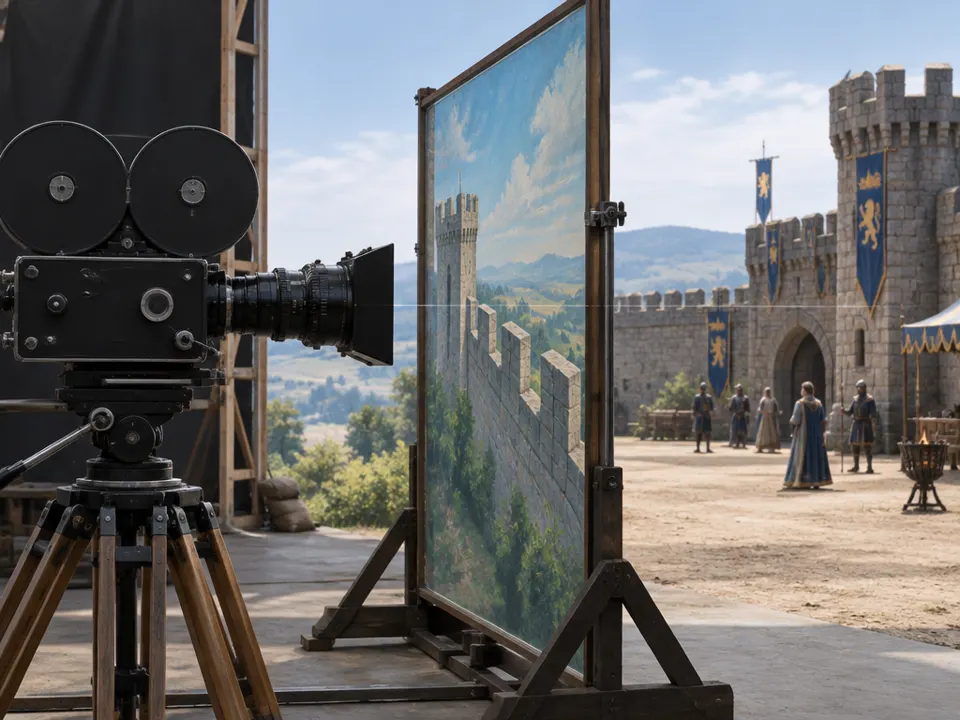
AI illustration: A large painting on glass is positioned in front of a camera to extend a
05 AI illustration: A large painting on glass is positioned in front of a camera to extend a A large painting on glass is positioned in front of a camera to extend a castle set. It clearly depicts the spatial relationship required for a glass shot.Illustration generated for the Atlas (AI)
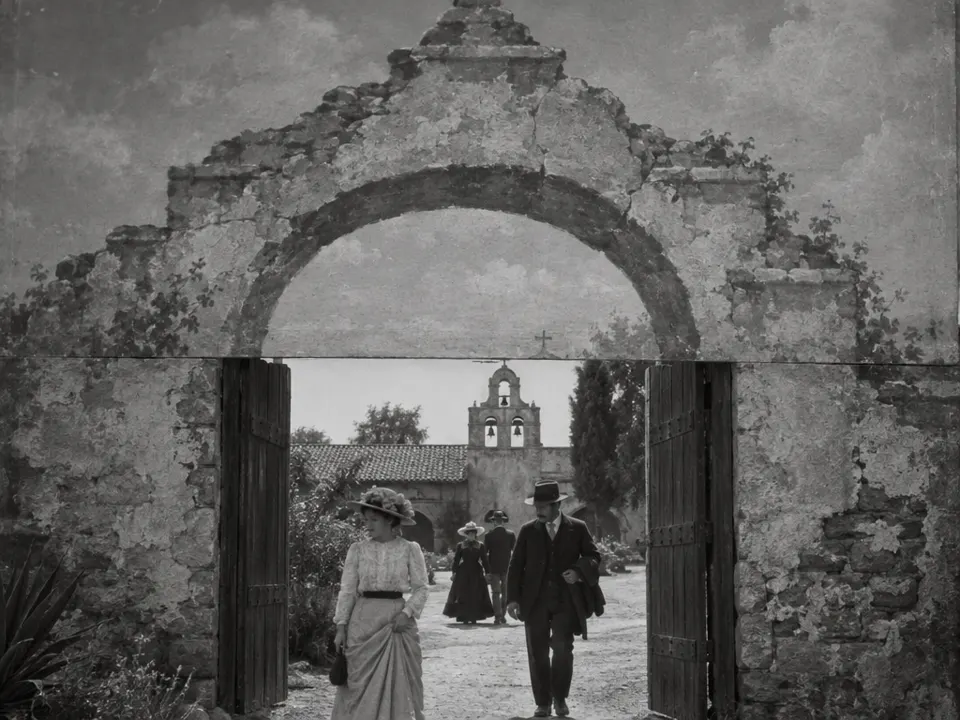
AI illustration: A painted archway on glass is aligned with a real mission set
06 AI illustration: A painted archway on glass is aligned with a real mission setA painted archway on glass is aligned with a real mission set. It illustrates the technique by merging a detailed matte foreground with live-action actors in the distance.Illustration generated for the Atlas (AI)
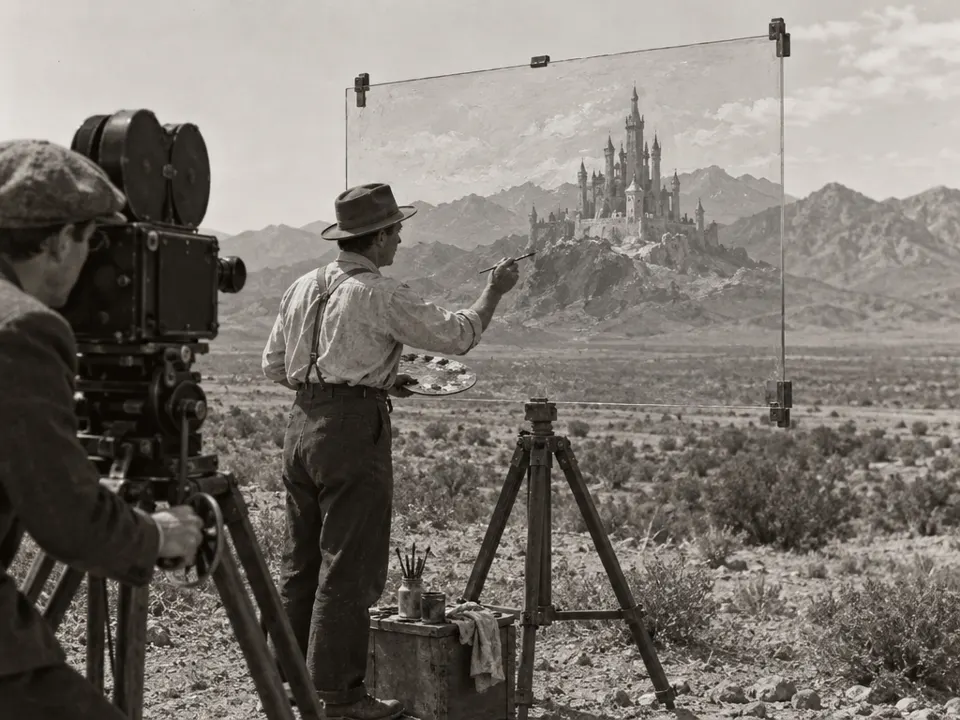
AI illustration: A glass pane held in front of the camera features a painted castle
07 AI illustration: A glass pane held in front of the camera features a painted castleA glass pane held in front of the camera features a painted castle. This demonstrates the production setup where artists paint directly on glass to augment a real desert landscape.Illustration generated for the Atlas (AI)

Sources