H 052 / 3211880s

Flash Powder Photography

1887, invention of Blitzlicht; 1888, Jacob Riis's tenement photos
Typeface · Zilla Slab

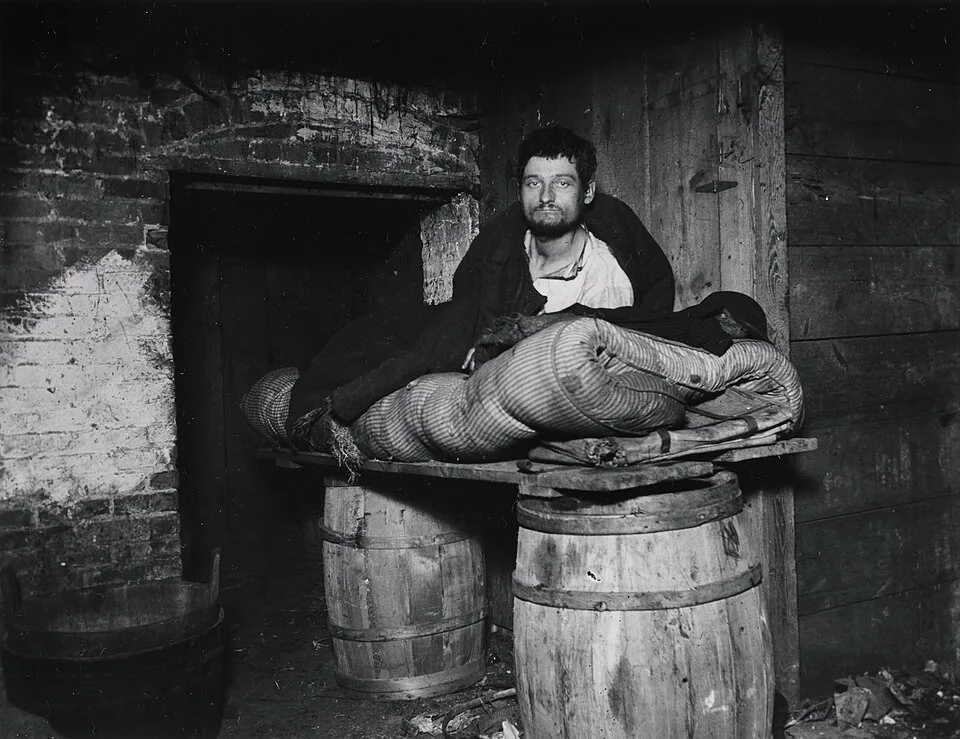
Flash-Lit Lodging in a Cellar. A man rests on bedding laid across barrels in a rough brick cellar, his face and clothing sharply illuminated against dark recesses.
Flash-Lit Lodging in a Cellar. A man rests on bedding laid across barrels in a rough brick cellar, his face and clothing sharply illuminated against dark recesses.Jacob Riis · Public domain · via Wikimedia CommonsView source ↗

Prompt

Apply a Flash Powder Photography effect with an intense frontal burst of white light, stark monochrome contrast, bright foreground highlights, and abrupt black shadows behind the subject. Freeze fine details with harsh outlines, rapid background light falloff, slight highlight bloom, and coarse historical plate grain. Keep the original subject and composition.

Identify

You see stark, high-contrast scenes with harsh, frontal lighting. Backgrounds often fall into deep black shadows. Subjects may look startled, frozen, or have harsh outlines.

Principle

Igniting a mix of magnesium powder1 and potassium chlorate2 creates a sudden, intense burst of artificial light. This brief flash exposes the photographic plate before subjects can move.

Example

Jacob Riis: Lodgers in a Crowded Bayard Street Tenement, 1889.

Try it out

Shine a harsh, unshaded flashlight directly into someone's face in a dark room and notice the flat, stark shadows.

Background

Before the 1880s, photographers relied entirely on sunlight or very long exposures. Dark interiors and night scenes were nearly impossible to capture. In 1887, German scientists invented a reliable flash powder using magnesium and an oxidizing agent3. This powder burned in a fraction of a second, producing a blinding white light. Social reformers like Jacob Riis quickly adopted this dangerous technique. He carried a frying pan of powder into dark New York tenements. The sudden explosion captured poverty in places sunlight never reached. This harsh, artificial illumination revolutionized documentary photography, exposing hidden social realities to the public.

Distinction

Unlike modern electronic flash, flash powder was an open, explosive chemical reaction. It produced a massive cloud of thick white smoke and posed a serious fire hazard.

Aftermath

It proves that portable, instant artificial light fundamentally changed what kind of stories photography could tell.

Further examples · 7 images

Harshly Illuminated Kitchen Tableau
02 Harshly Illuminated Kitchen TableauA seated woman holding a bowl faces a man leaning toward her in a furnished kitchen. Strong frontal light casts conspicuous silhouettes onto the curtains and wall, displaying the hard-edged illumination characteristic of historical flash-powder interiors.Alfred Naumann · Public domain · Wikimedia Commons
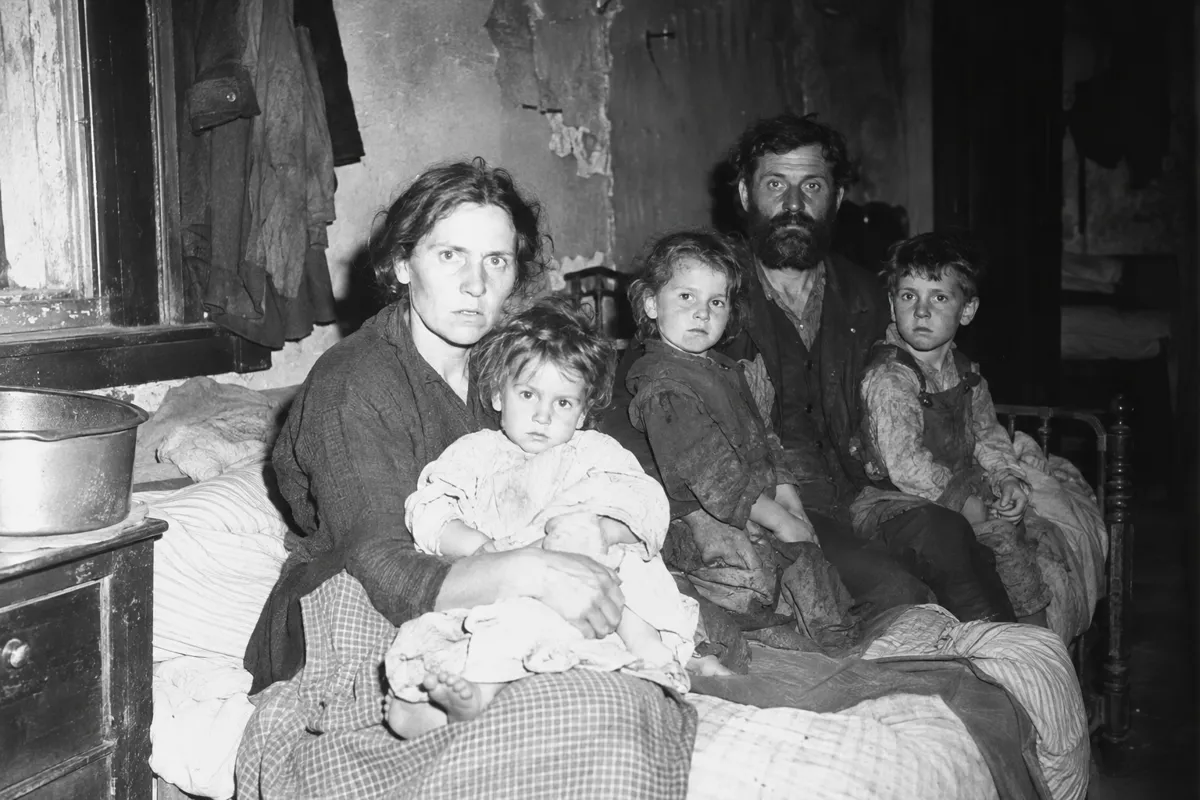
AI illustration: Frontal flash illumination of a tenement family
03 AI illustration: Frontal flash illumination of a tenement familyA family sits on a bed in a dark room, illuminated by a harsh, sudden light source from the front. The intense brightness on their faces creates deep, flat shadows against the peeling wall behind them.Illustration generated for the Atlas (AI)
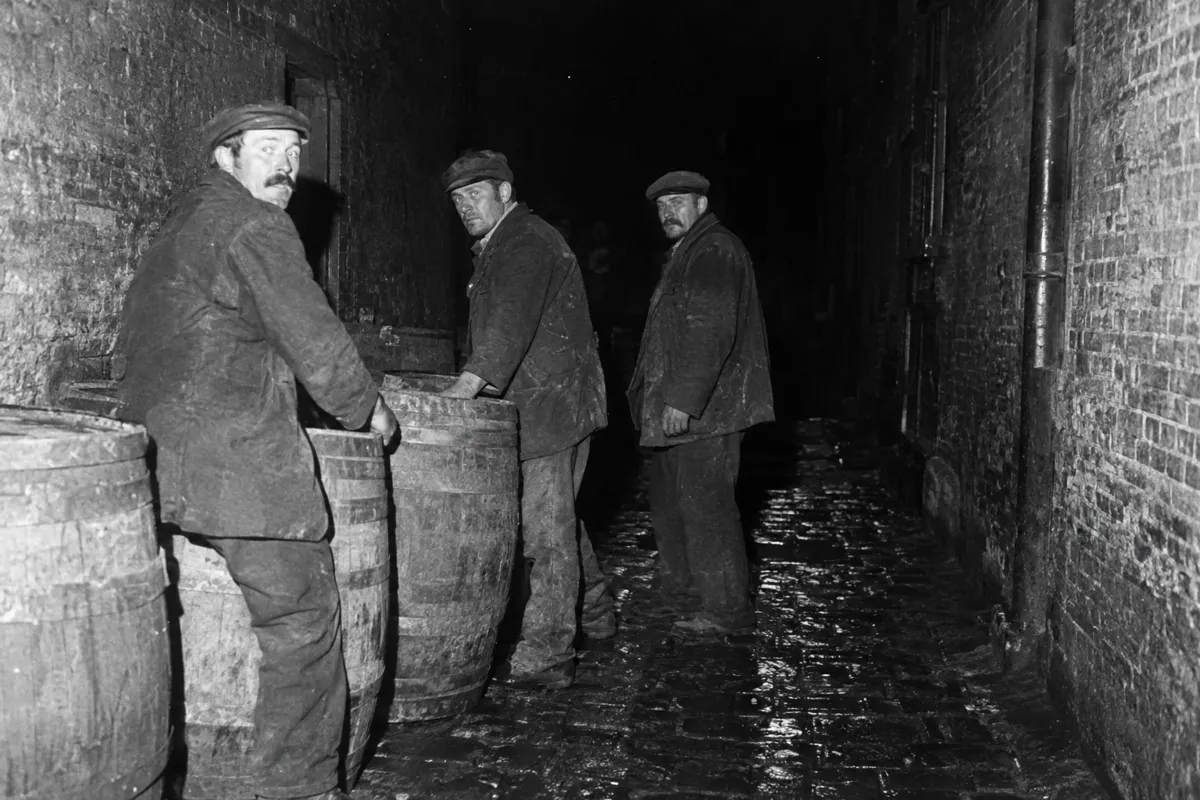
AI illustration: High-contrast night scene in an industrial alley
04 AI illustration: High-contrast night scene in an industrial alleyThree men are captured in a dark alleyway, their forms brightly lit against a background that vanishes into pitch black. The wet cobblestones reflect the intense, singular burst of artificial light used to capture the scene.Illustration generated for the Atlas (AI)
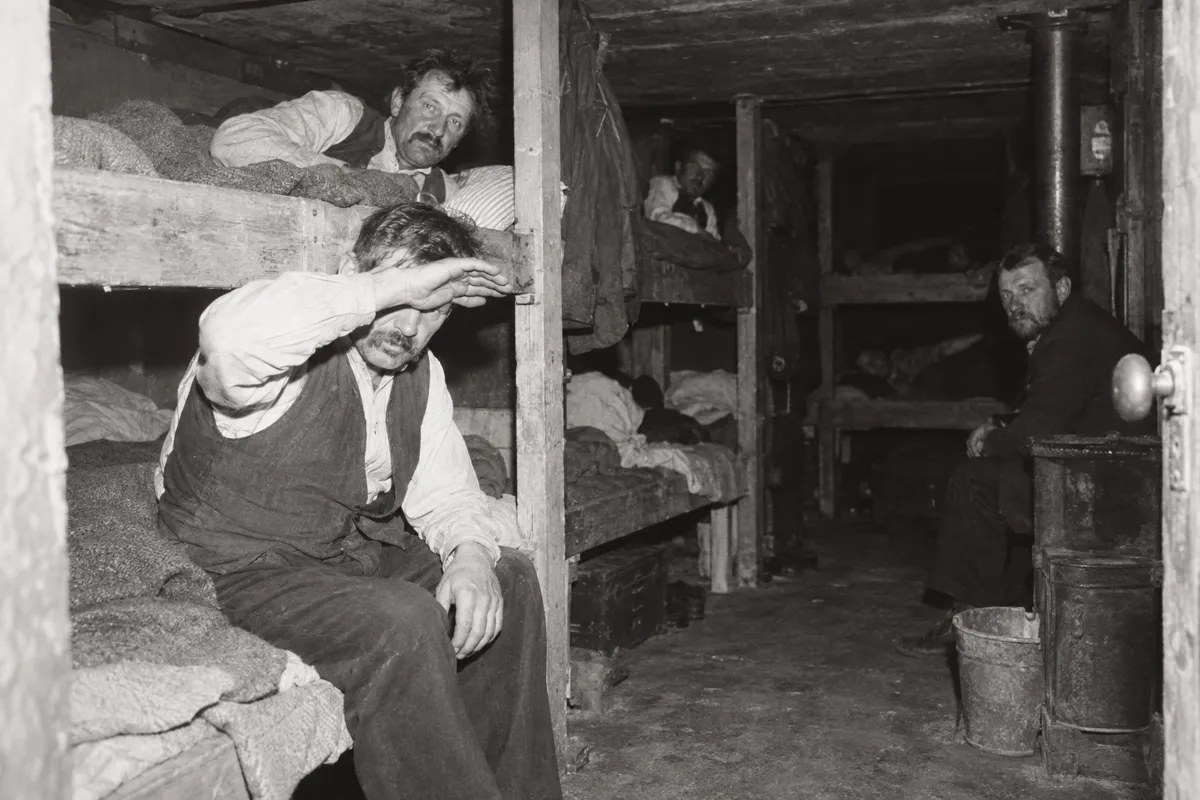
AI illustration: Subject reacting to a sudden magnesium flash
05 AI illustration: Subject reacting to a sudden magnesium flashA man in a crowded bunkhouse shields his eyes from the camera's sudden, blinding burst of light. This involuntary reaction is a hallmark of the magnesium flash technique used in dark interior documentary work.Illustration generated for the Atlas (AI)
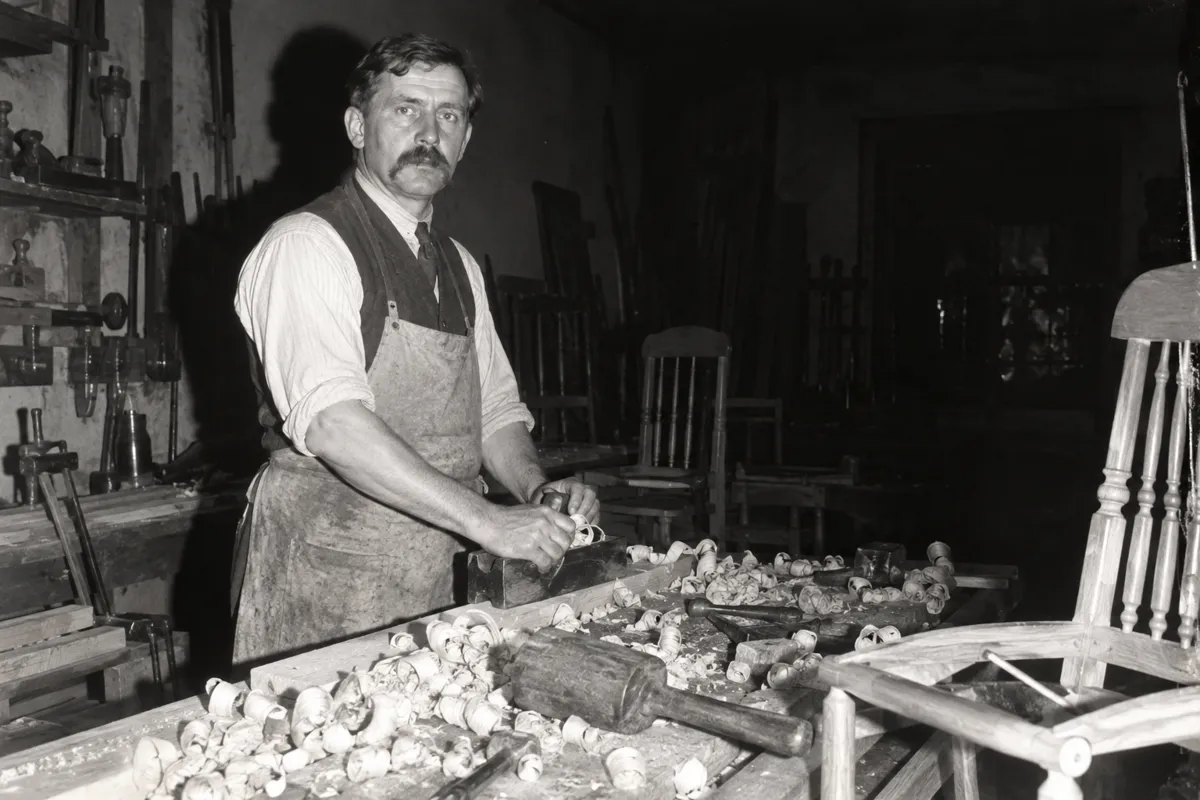
AI illustration: Workshop portrait with harsh artificial lighting
06 AI illustration: Workshop portrait with harsh artificial lightingA woodworker is frozen at his bench, with the shavings and tools in the foreground sharply defined by a frontal light. The background fall-off into total darkness demonstrates the limited reach of early artificial flash powders.Illustration generated for the Atlas (AI)
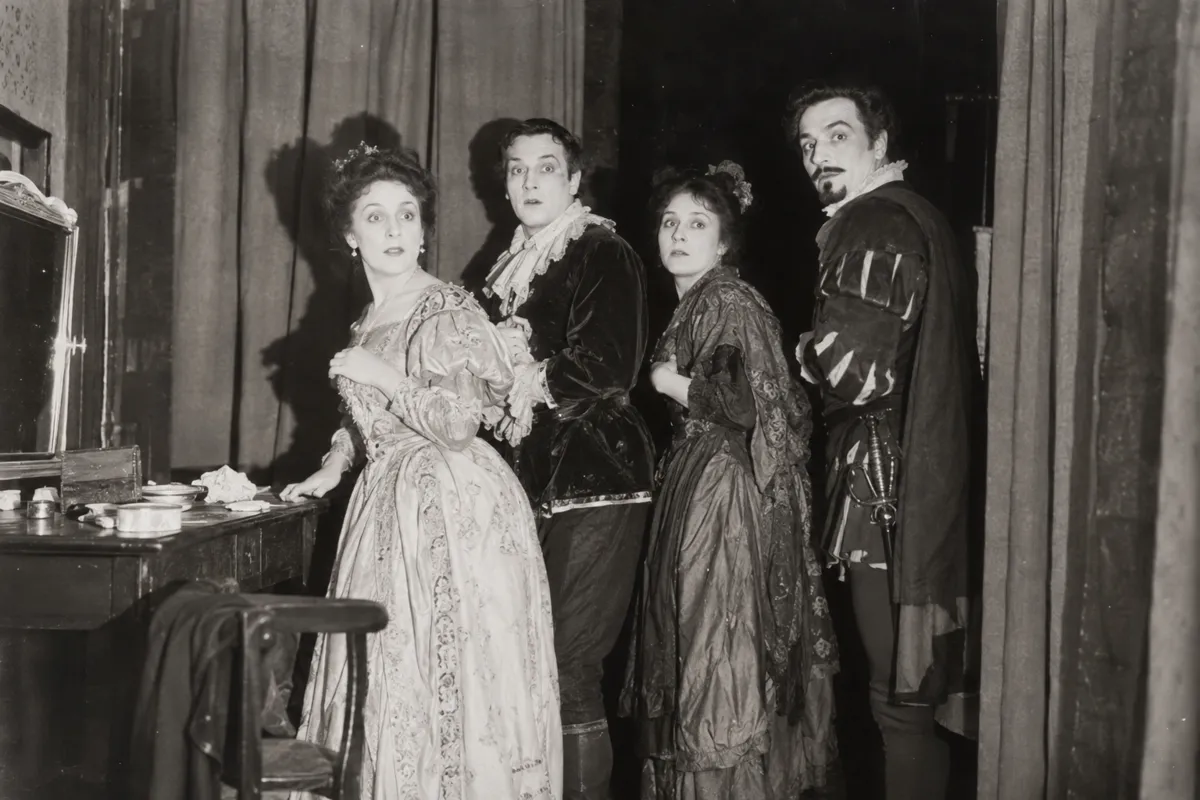
AI illustration: Startled theater troupe illuminated by flash powder
07 AI illustration: Startled theater troupe illuminated by flash powderActors in costume are startled by a sudden light, their expressions fixed in a moment of surprise. The lighting is flat and intense, casting sharp silhouettes and causing the distant stage rear to fall into darkness.Illustration generated for the Atlas (AI)

Question

Why did subjects in early flash photographs often look startled or have wide eyes?

Show possible answer +

The flash was a sudden, loud explosion that caught people off guard. The light peaked faster than the human blink reflex, freezing their surprised expressions.

Sources