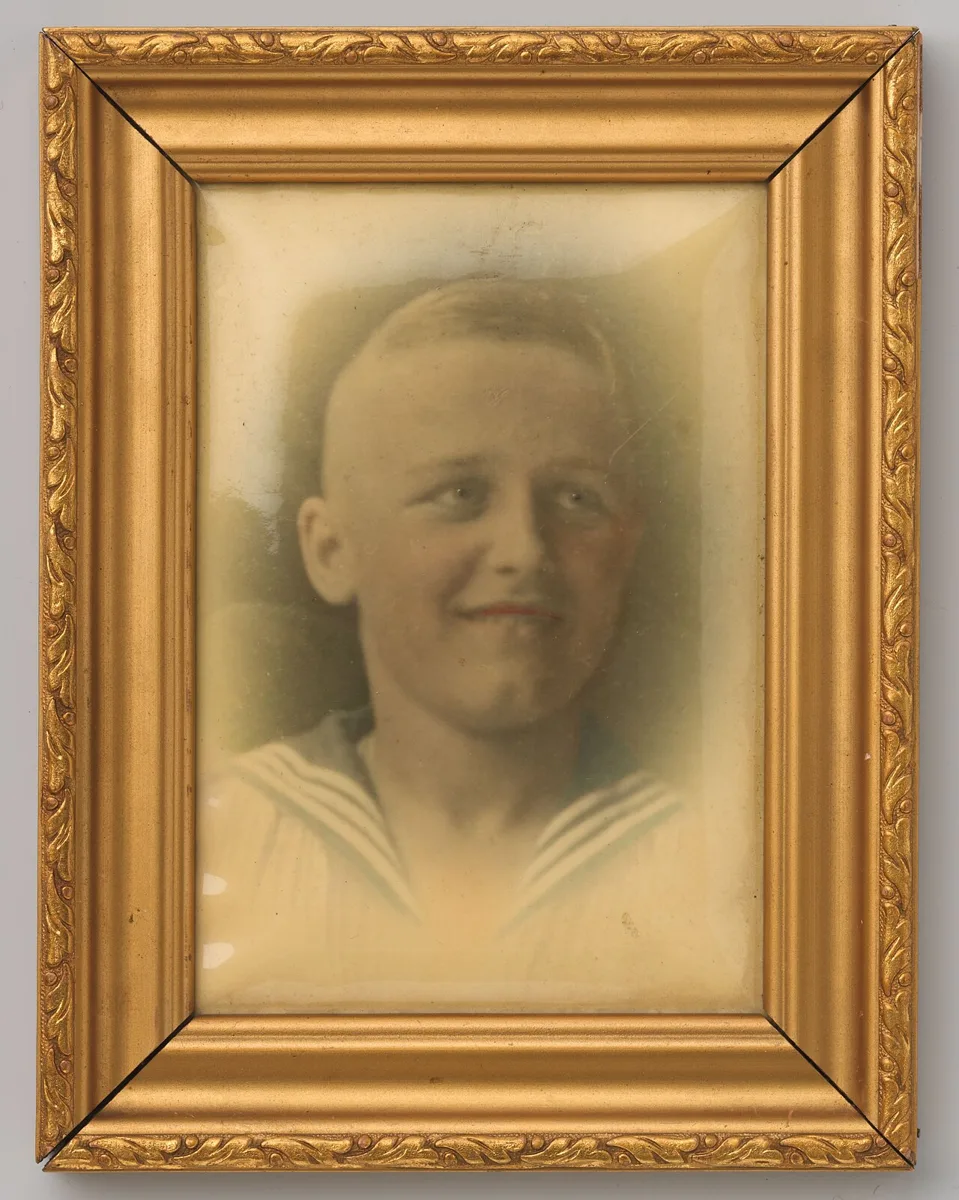
Boy in a Sailor Collar. A boy wearing a sailor collar appears beneath reflective glass, with gently coloured cheeks and a softly fading background.Rijksmuseum · CC0 · via Wikimedia CommonsView source ↗
Prompt
Apply a Crystoleum effect, placing fine photographic detail beneath gently convex glass with soft hand-painted color visible from behind. Combine delicate rosy, blue, and cream pigments with photographic shading, glossy curved reflections, subtle edge refraction, and a luminous sense of suspended color. Keep the original subject and composition.
Asoftly coloured photograph appears beneath [convex glass], with [fine photographic detail]and aglossy, painting-like finish. Colours can seem suspended behind the surface.
Principle
An albumen print1is pasted image-side against the glass’s concave2inner surface; its paper backing is rubbed thin and made translucent3. [Colour applied from behind]shows through the photographic image, combining painted colour with photographic shading.
Example
No famous individual example can be named here with confidence.
Try it out
Place amonochrome image printed on transparent film over coloured paper, then under glass; observe how shading and colour combine.
Background
Crystoleum became apopular decorative photographic technique during the late nineteenth century, including the 1880s. Makers used an existing albumen print, rather than exposing aphotographic image directly on the curved glass. After attaching the image face-down, they carefully removed much of the paper backing. Oil or wax could make the remaining paper more translucent. Fine colour was applied behind this image. Asecond glass could carry broader areas of background colour. The assembled picture combined photographic detail with hand painting and was commonly displayed in adecorative frame.
Distinction
Unlike ordinary hand-colouring, crystoleum places colour behind athinned photograph viewed through glass. Unlike an ambrotype, it uses apaper print attached to glass.
Aftermath
Crystoleum shows how aphotograph’s support and added colour can change its appearance without changing its original exposure.
Further examples · 10 images
02Separated Crystoleum Portrait LayersTwo separated portrait components show a girl's photographic likeness beside broad patches of blue, pink, and brown paint on glass. The exposed layers demonstrate how backing colours combine with photographic detail in a crystoleum.Unknown authorUnknown author · CC0 · Wikimedia Commons03Girl in Blue Crystoleum PortraitA girl's finely detailed portrait appears beneath glass, with a vivid blue dress, patterned collar, and softly tinted face. The marriage of photographic shading and painted colour clearly illustrates the crystoleum effect.Unknown authorUnknown author · CC0 · Wikimedia Commons04Coloured Portrait of a Seated ManA seated man's studio portrait appears in subdued colours within a deeply moulded gilt frame. Fine photographic modelling beneath the glass combines with painted colour in a manner characteristic of crystoleum portraits.Rijksmuseum · CC0 · Wikimedia Commons05Coloured Portrait of a Seated WomanA woman in a dark dress sits beside a table in an elaborately framed photographic portrait. The softly applied colour preserves the photograph's detailed shading, giving the glazed image the painting-like appearance associated with crystoleum.Rijksmuseum · CC0 · Wikimedia Commons06Five Women Among Flowering ShrubsFive women pose before flowering foliage in a softly coloured photograph surrounded by a gilt frame. The combination of delicate photographic detail and muted painted colour beneath glass presents a clear example of the crystoleum appearance.Rijksmuseum · CC0 · Wikimedia Commons07Crystoleum Portrait with Dog and FoliageA seated man appears against green foliage, with softly coloured clothing and a dog resting at his feet. Visible glass edges and painted hues layered over photographic modelling clearly show the crystoleum's combination of colour and photographic shading.Unknown authorUnknown author · CC0 · Wikimedia Commons08Framed Crystoleum Portrait of a ChildAn ornate gilt frame surrounds a softly coloured portrait of a child standing beside studio furniture. The warm translucent colouring and photographic detail beneath the glass present the painting-like appearance of a crystoleum.Rijksmuseum · CC0 · Wikimedia Commons09Woman in Dark Dress on GlassAn unframed glass portrait shows a seated woman in a dark dress, with delicate lace and gently tinted skin. The exposed glass support and softly coloured photographic image demonstrate the restrained finish of a crystoleum.Unknown authorUnknown author · CC0 · Wikimedia Commons10Oval Crystoleum in Red Velvet MountA woman's softly tinted photographic portrait sits within an oval metal surround and a red velvet mount. The detailed likeness and muted colour beneath the glossy glass show the finished presentation of a crystoleum.Unknown authorUnknown author · CC0 · Wikimedia Commons
Question
Why did makers thin the paper before painting behind it?
Show possible answer +Hide answer −
Opaque paper would hide the paint. Thinning and transparentizing the backing allowed colour to show through while preserving the photographic image.