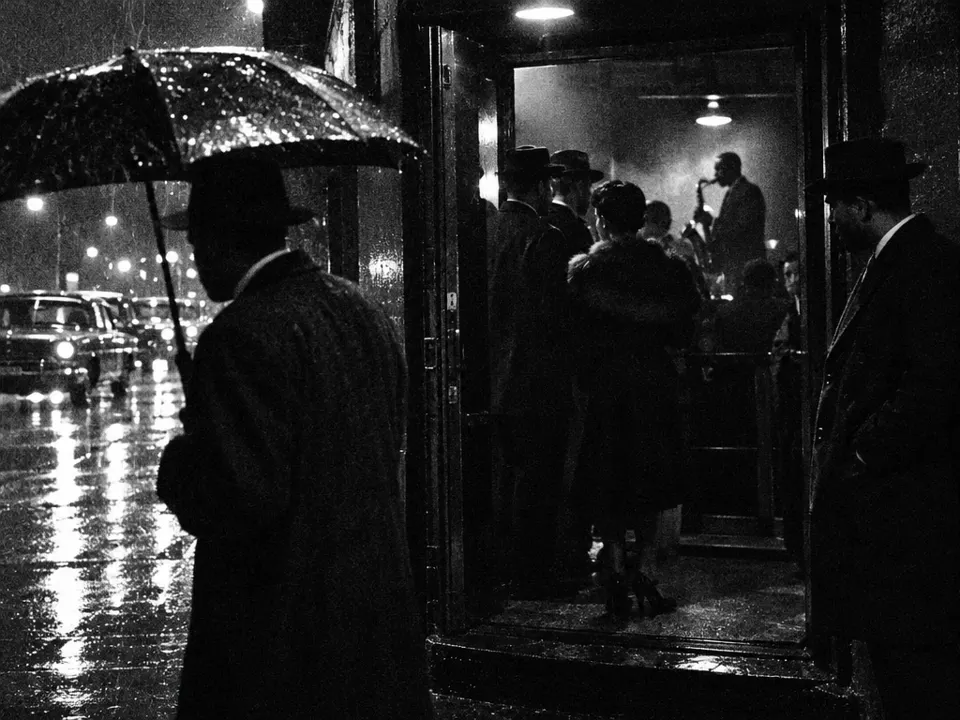
Film grain. 1960s reportage aesthetics; film grain has existed since earlier emulsions.
Typeface · Special Elite
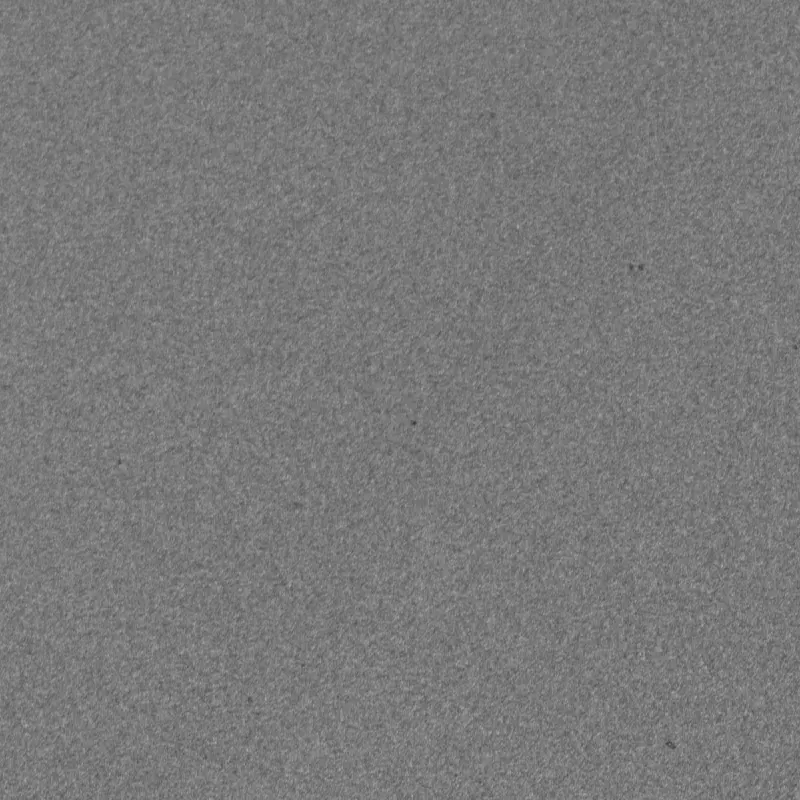
Kodak Tri-X 400: Section of a real negative scan to show the grain. Evenly exposed test area.Wiley.andrew.r / CC0; Wikimedia CommonsView source ↗
Prompt
Apply a Film Grain effect with irregular, finely clustered silverlike particles across the photograph, most noticeable in midtones and smooth surfaces. Use gently muted colors, soft highlight rolloff, slightly softened edges, and organic density variations rather than uniform digital noise. Keep the original subject and composition.
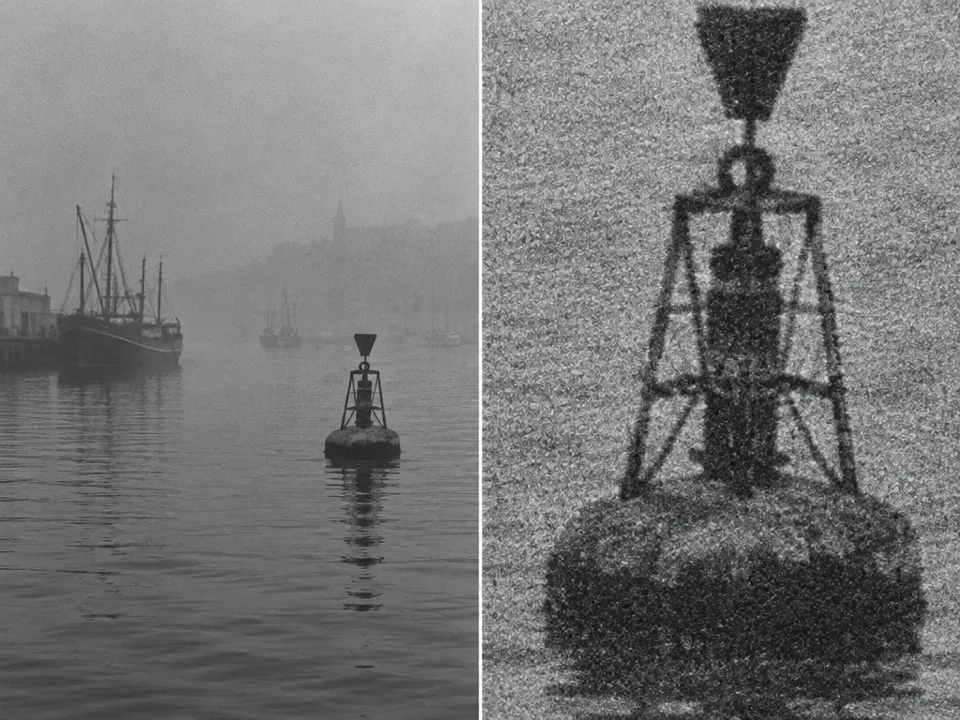
Compare the grain at 100 percent and as asmall overall picture.
Background
Visible graininess depends on factors such as film type, format, development, and enlargement. Highly sensitive 35mm film combined mobility and low-light capabilities with aclearly visible texture. Later digital image processing adopted grain as amarker of material, reportage, and memory. Agood reproduction takes image size and brightness into account, rather than simply applying the same fixed layer of noise.
Distinction
Film grain is not the same as digital sensor noise or JPEG blockiness. Scan sharpening and compression can alter its appearance. The decade chosen here describes an aesthetic use, not an invention of the emulsion.
Aftermath
Texture should match the image size and exposure.
Further examples · 7 images
02Tmax100 GrainThis monochrome image shows the uniform gray surface of a T-Max 100 film scan. The fine, irregular micro-structure demonstrates the subtle texture characteristic of low-sensitivity black and white emulsions.Wiley.andrew.r · CC0 · Wikimedia Commons03Film GrainHigh-magnification photomicrographs reveal the clumped silver particles of various historic photographic plates. The comparison illustrates how different chemical sensitivities and intensification processes alter the size and distribution of grain.Robert James Wallace · Public domain · Wikimedia Commons04AI illustration: A black-and-white image of a jazz musician shows a fine, irregular structA black-and-white image of a jazz musician shows a fine, irregular structure across all tonal areas. The visible texture emulates the silver halide particles characteristic of pushed 35mm film in low light.Illustration generated for the Atlas (AI)05AI illustration: A monochrome night scene is shownA monochrome night scene is shown. The fine, irregular structure across shadows and highlights illustrates the texture of high-speed 35mm film.Illustration generated for the Atlas (AI)06AI illustration: A press photography scene is shownA press photography scene is shown. The grainy texture evident in the dark background and highlight areas reflects the material qualities of 1960s reportage film.Illustration generated for the Atlas (AI)07AI illustration: A harbor scene is displayed next to a magnificationA harbor scene is displayed next to a magnification. The side-by-side comparison demonstrates how fine granular structures become visible under significant enlargement.Illustration generated for the Atlas (AI)
Question
Is film grain the same as a JPEG compression block?
Show possible answer +Hide answer −
No. Film grain originates from the photographic emulsion; JPEG blocks are digital compression artifacts.