Dolly Zoom
Dolly zoom / contra-zoom. 1958: Dramatization of vertigo. Later a frequent device for shock and realization.
Prompt
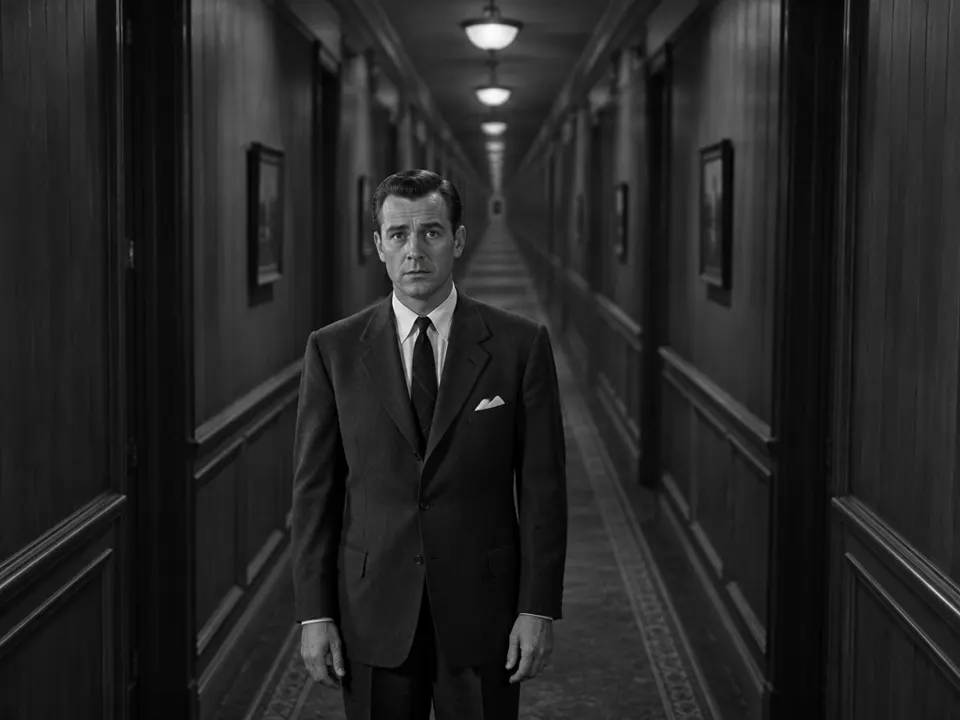
Apply a Dolly Zoom effect as a single cinematic still, keeping the main subject sharp and unchanged in size while stretching background depth along the existing perspective lines. Add restrained radial streaking, exaggerated near-to-far separation, and subtle optical softness toward the edges. Keep the original subject and composition.
Identify
The background appears to expand or compress. The space seems unstable.
Principle
The camera pans while the zoom1 is adjusted in the opposite direction. The central subject remains a similar size, while its spatial surroundings2 change.
Example
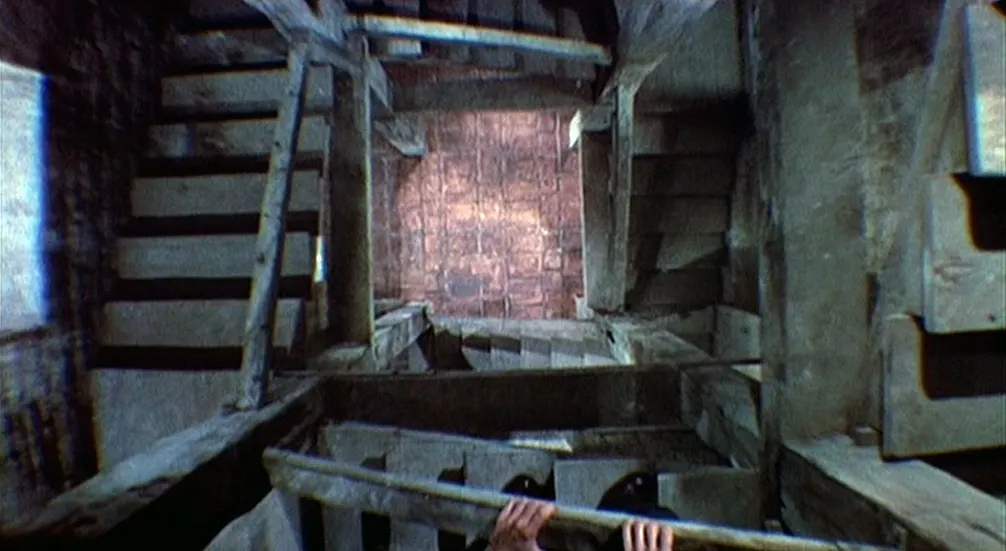
Alfred Hitchcock: Vertigo, 1958. Steven Spielberg: Jaws, 1975.
Try it out
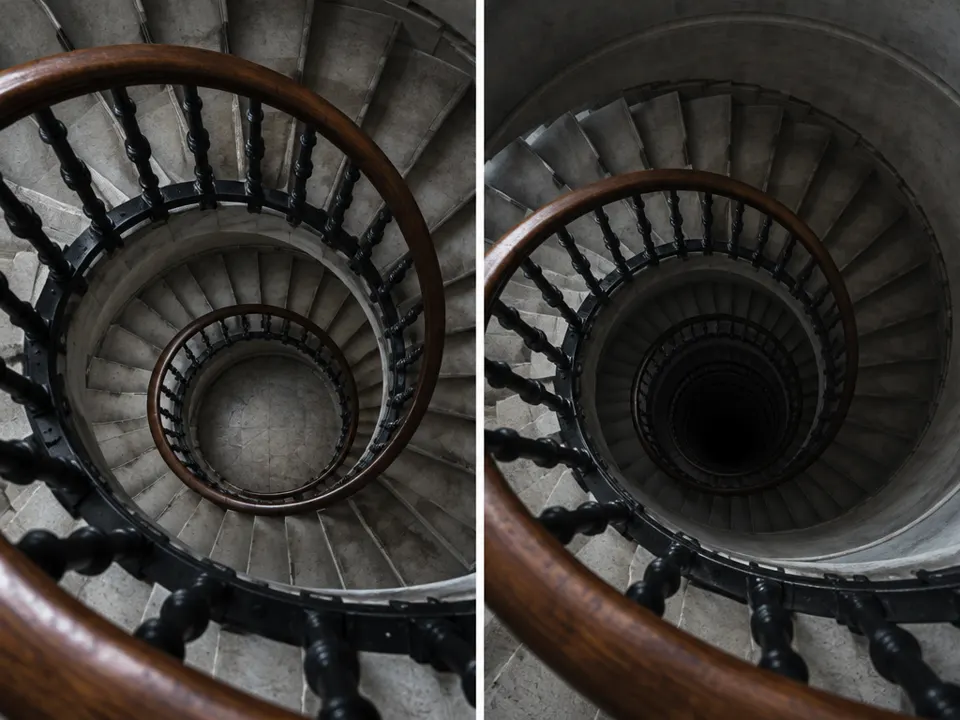
Compare two stairwell frames. Which distances shift despite a similarly sized center image?
Background
Camera movement + zoom. The decade refers to the historical spread, visibility, or breakthrough explained here, and not automatically the invention itself.
Associated with Vertigo (1958) as a famous milestone. 1958: Dramatization of vertigo; later a frequent device for shock and revelation. A normal zoom does not change the perspective; the camera movement is crucial. Vertigo's staircase effect was filmed with a model lying on their side.
recognize: The background appears to expand or compress; a physical feeling of instability arises. Mechanism: The camera moves forward or backward while the zoom adjusts in the opposite direction. The central subject remains roughly the same size, but the perspective of the space changes. Example: Alfred Hitchcock: Vertigo, 1958, staircase view; Steven Spielberg: Jaws, 1975. Practice: Compare two stairwell frames: What distances change, despite a similar center point? Pay particular attention to the spatial relationship between foreground and background.
The camera moves forward or backward while the zoom adjusts in the opposite direction. The central subject remains roughly the same size, but the perspective of the space changes. The background appears to expand or compress; a physical feeling of instability arises. Compare two stairwell frames: What distances change, despite a similar image center? A normal zoom doesn't change the perspective; the camera movement is crucial. Vertigo's staircase effect was filmed with a model lying on its side.
Distinction
A normal zoom does not change the perspective; the camera movement is crucial. Vertigo's staircase effect was filmed with a model lying on its side.
Further examples · 7 images