Distance Fog
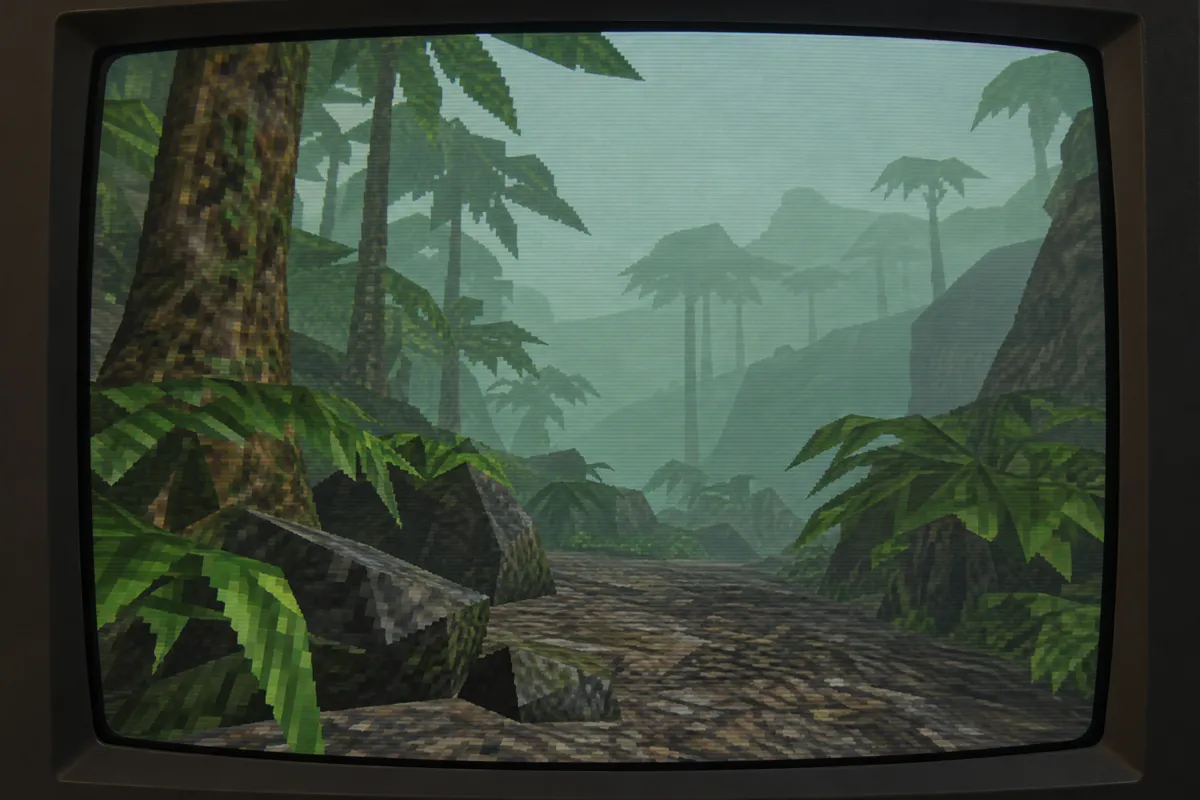
1990s real-time 3D games; Turok: Dinosaur Hunter, 1997
Prompt
Apply a Distance Fog effect that progressively blends scenery into a uniform muted blue-gray according to depth. Keep nearby details crisp and saturated, reduce contrast and color in middle distances, and merge far silhouettes into smooth haze without visible smoke curls or particles. Keep the original subject and composition.
Identify
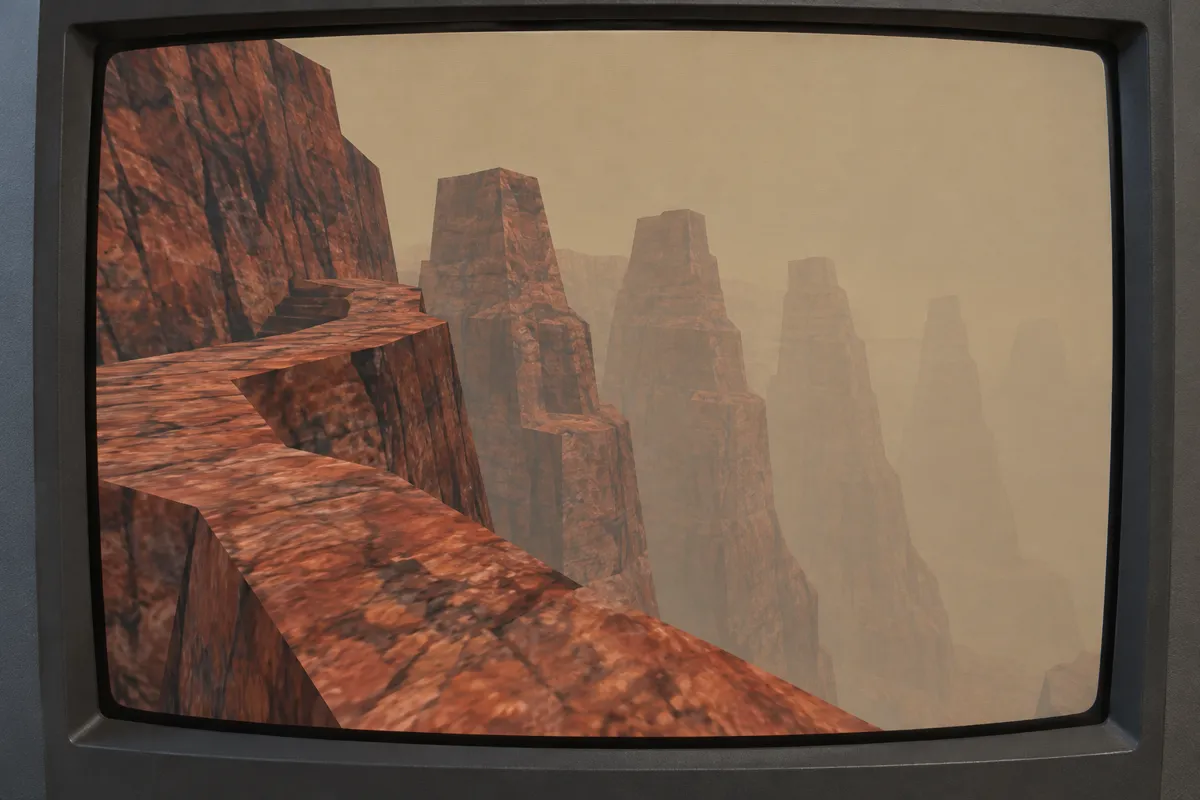
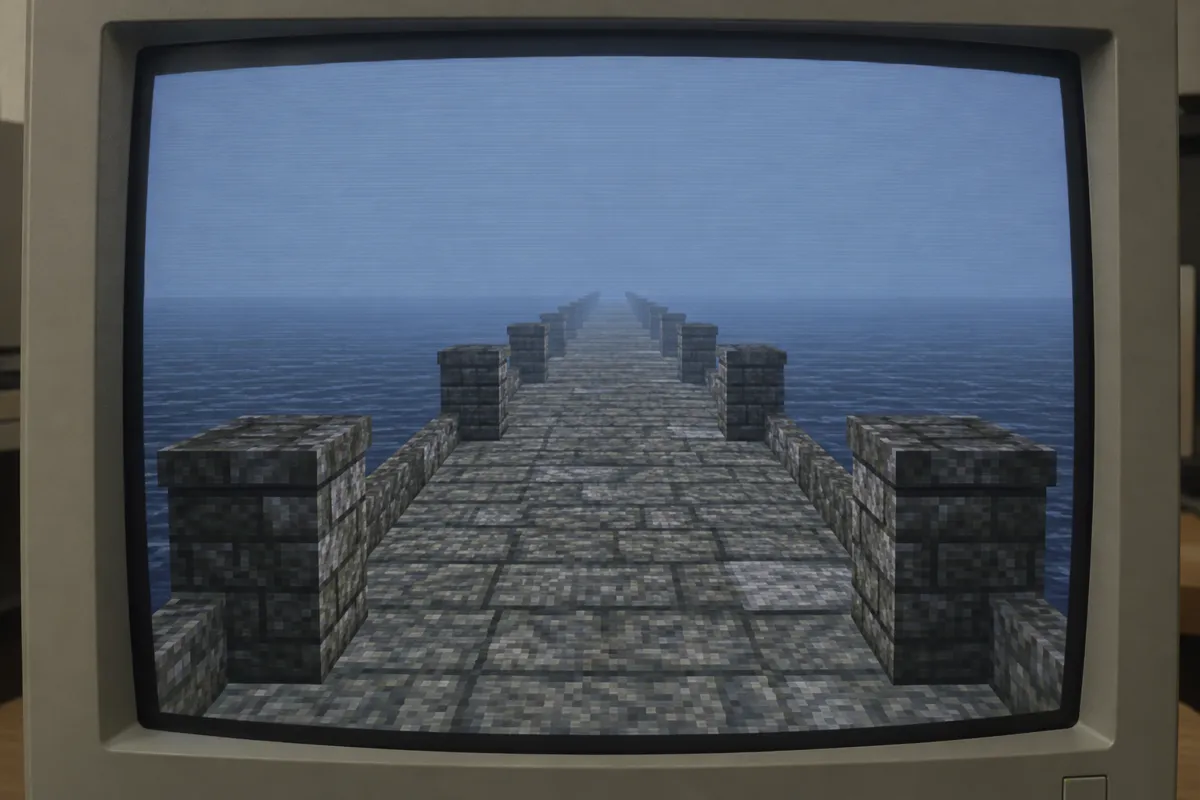
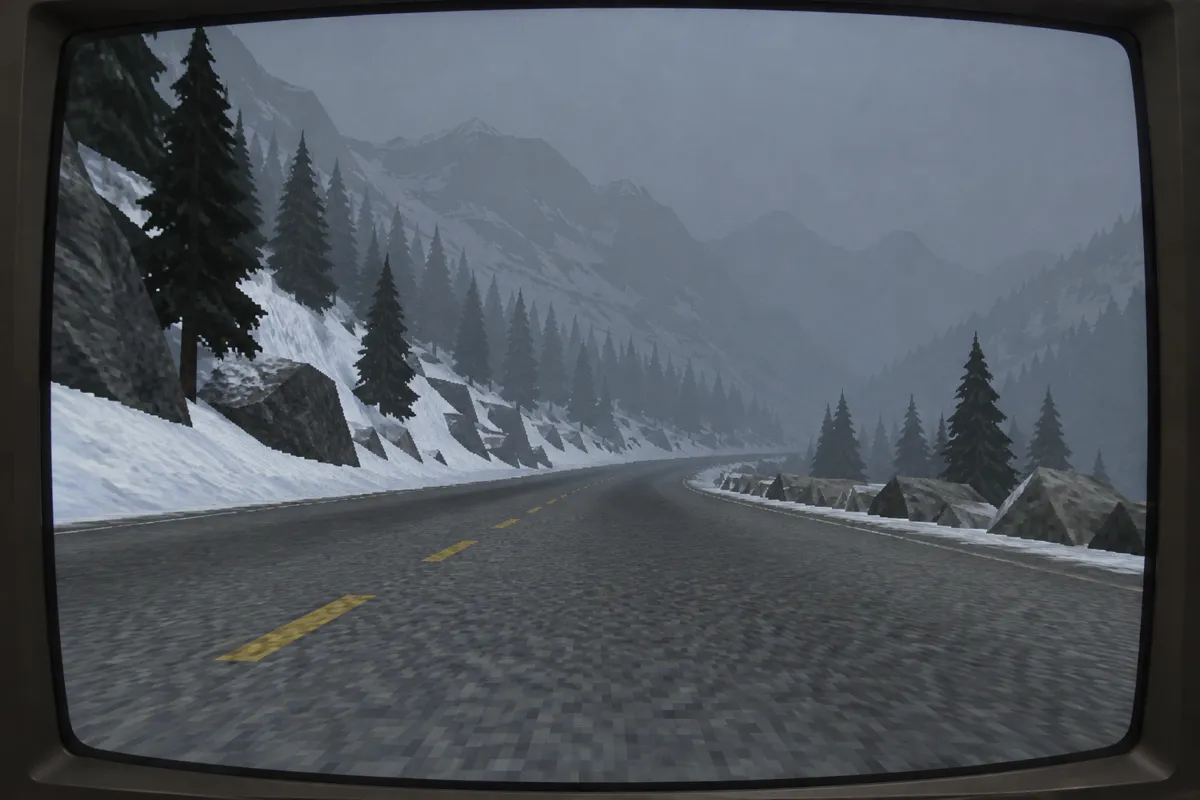
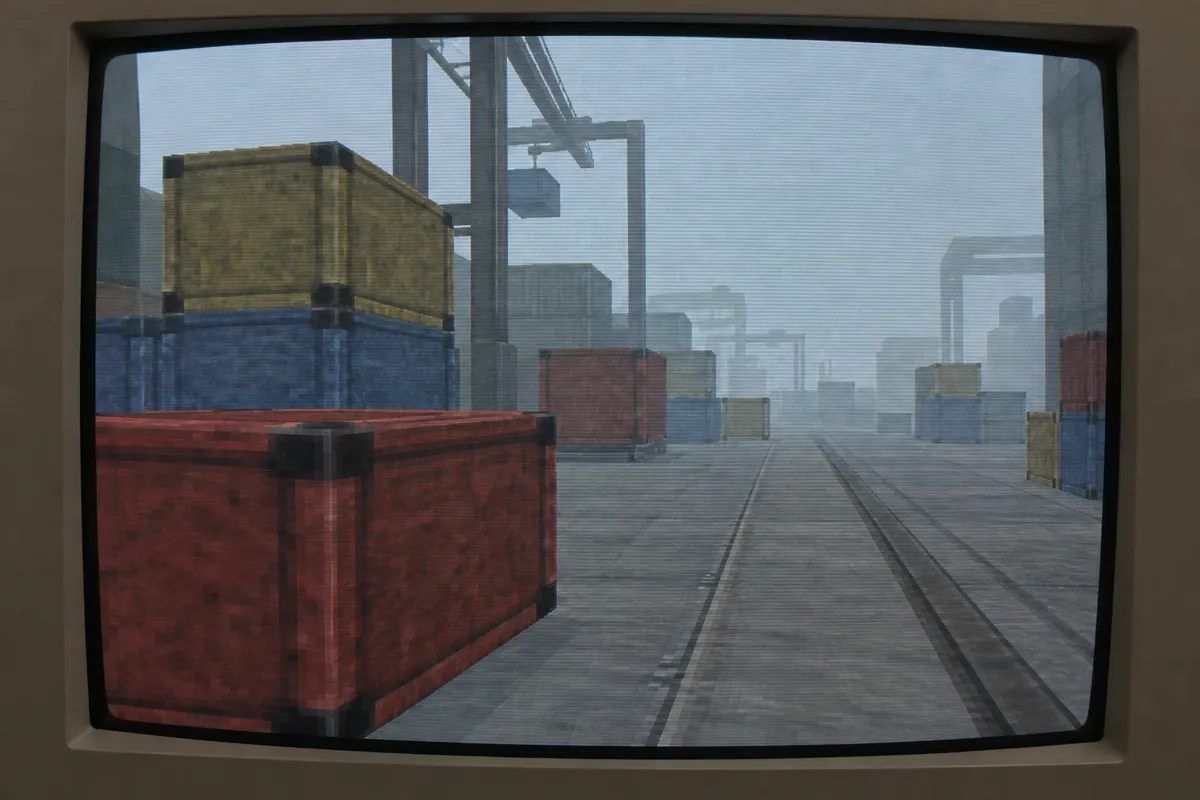
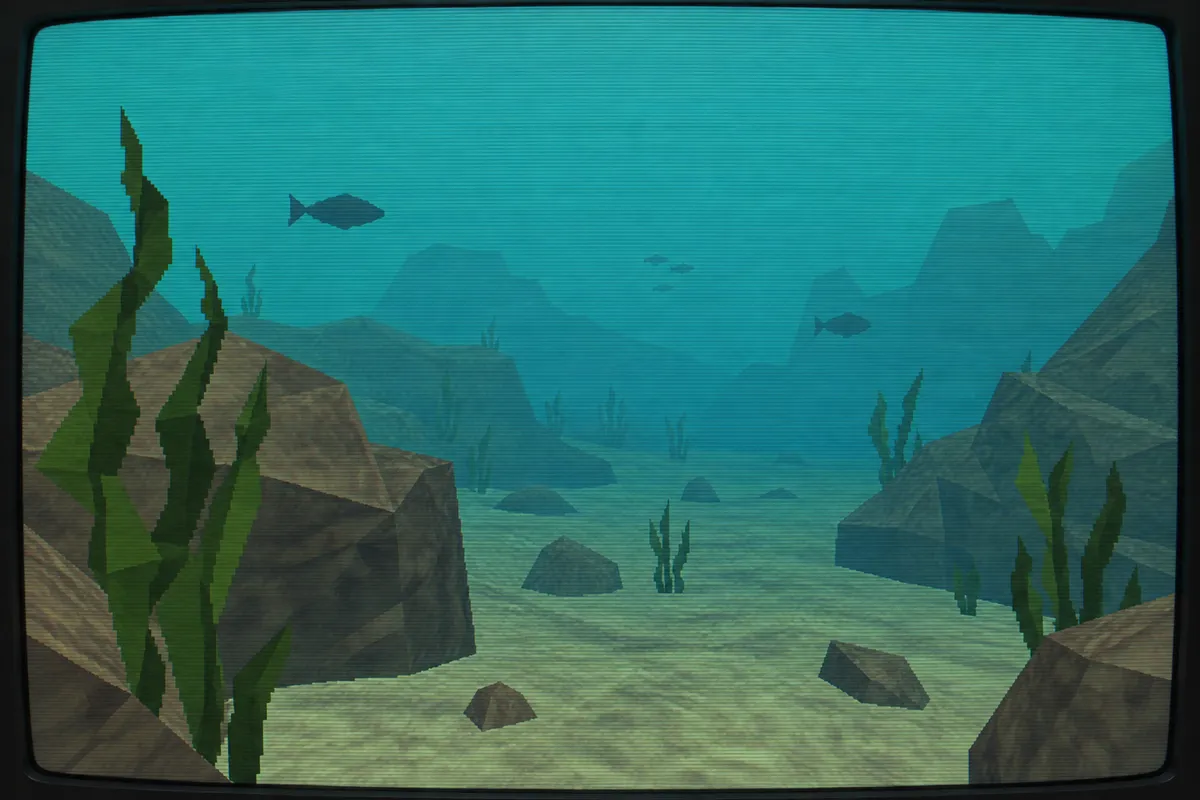
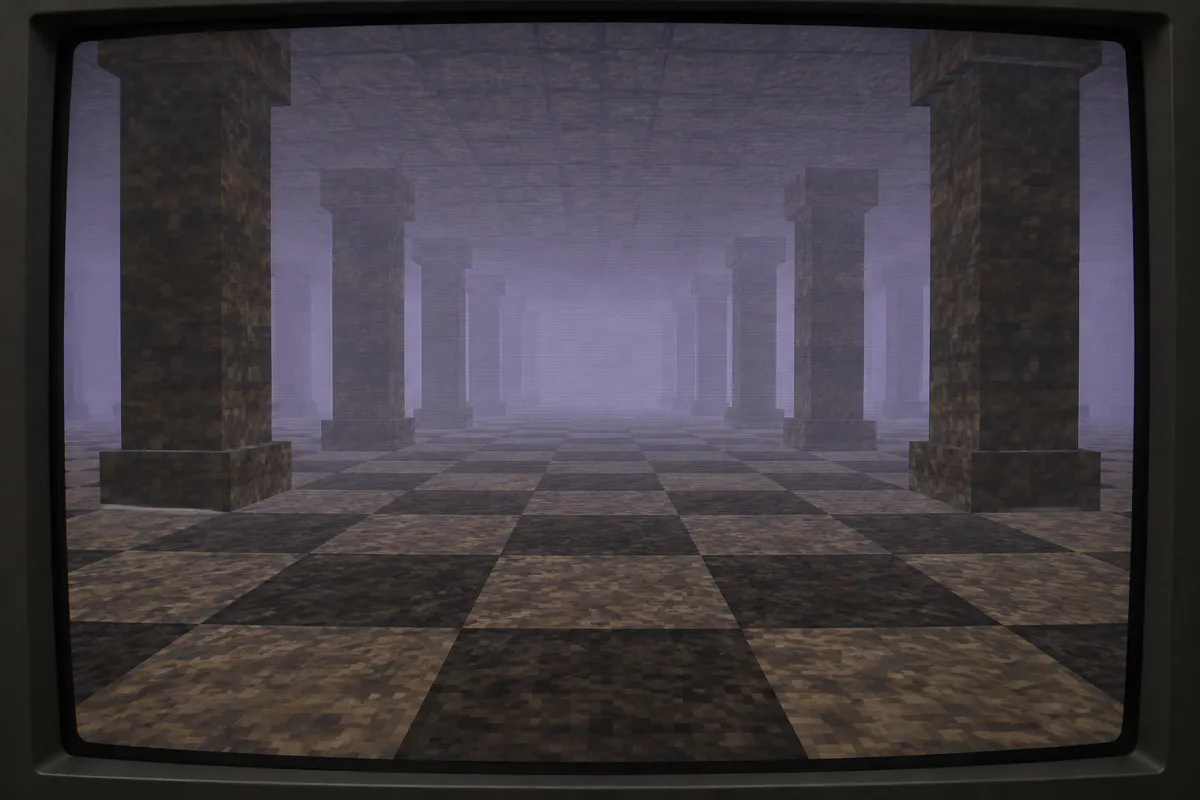
Distant scenery loses contrast and fades toward a uniform fog color. Nearby objects stay clear, while faraway silhouettes merge into a hazy background.
Principle
The renderer blends surface colors with a fog color, using camera depth1 to control the blend. This approximates atmospheric scattering2 without simulating light traveling through actual mist.
Example
Iguana Entertainment: Turok: Dinosaur Hunter, 1997.
Try it out
Watch outdoor gameplay from Turok: Dinosaur Hunter, and track how one distant rock gains contrast as the player approaches.
Background
Distance fog became familiar in 1990s games as developers balanced outdoor scenery against limited rendering power. The Nintendo 64 supported fog blending, and Turok: Dinosaur Hunter used conspicuous haze around its environments. A short draw distance3 meant distant geometry could be omitted. Fog helped conceal that boundary by making approaching scenery blend into the background before its disappearance became obvious. Fog itself did not remove geometry or automatically improve performance. Its practical value came from disguising a restricted visible range while also suggesting humid air, depth, and isolation.
Distinction
Unlike depth of field, distance fog changes color and contrast rather than blurring edges. Unlike volumetric fog, basic depth fog cannot represent localized shafts or pockets of mist.
Aftermath
Distance fog shows how a visible hardware compromise can also become an expressive part of a game's atmosphere.
Further examples · 7 images
Question
Why does fog help hide a short draw distance?
Show possible answer +Hide answer −
Objects near the cutoff already resemble the fog-colored background. Their appearance or disappearance is therefore less noticeable, though not necessarily invisible.