Affine Texture Warping
1990s; strongly associated with Sony’s PlayStation, launched in Japan in 1994.
Prompt
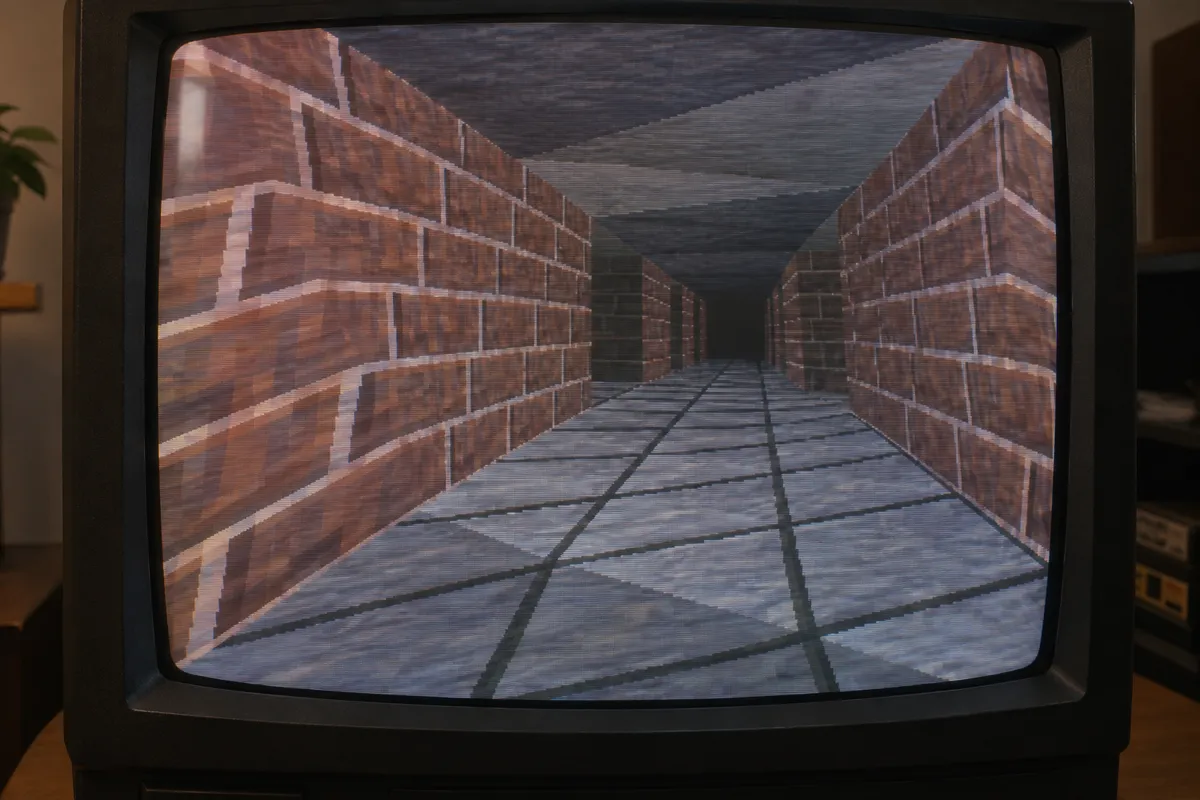
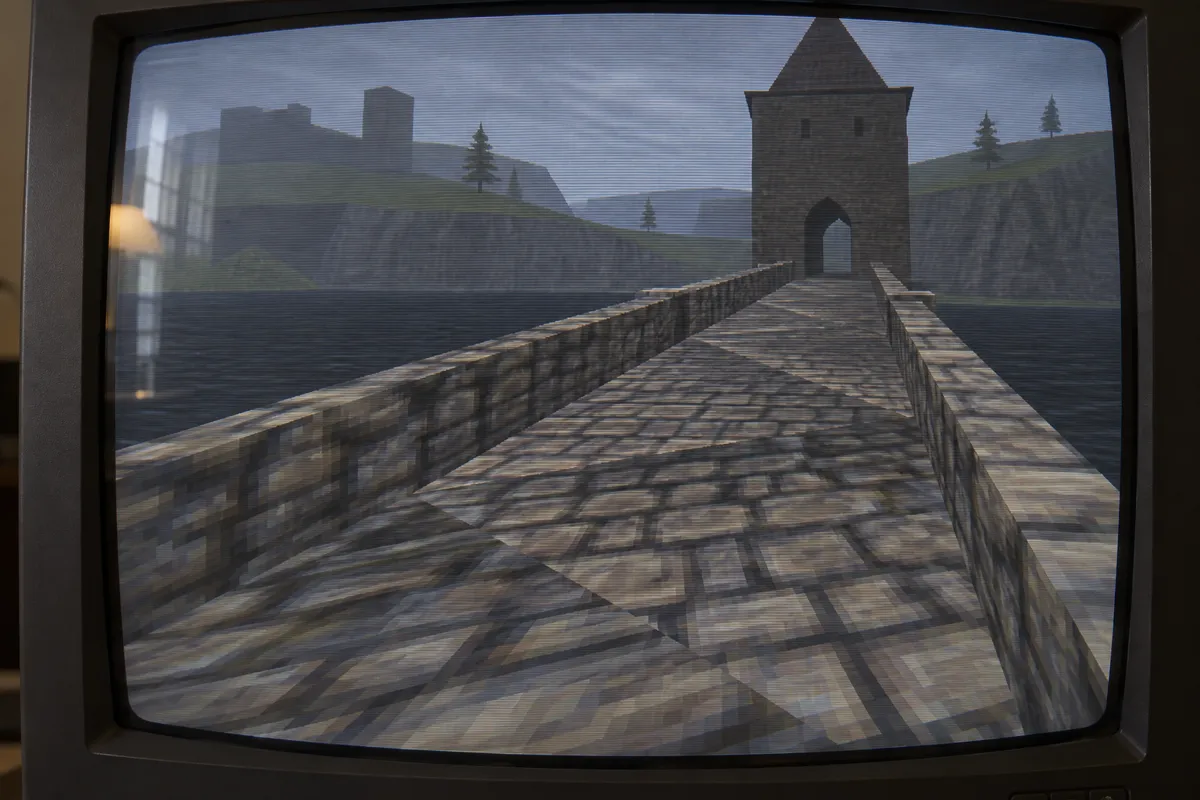
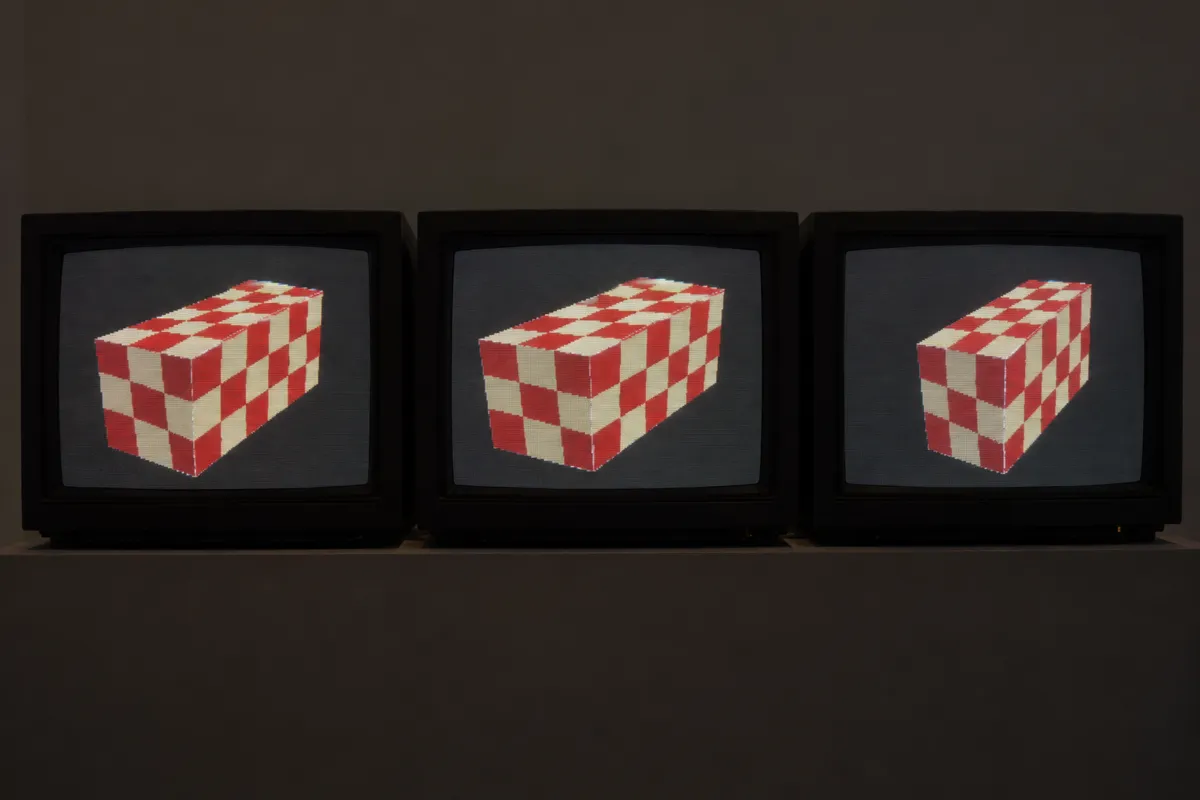
Apply an Affine Texture Warping effect to receding surfaces, stretching and skewing their textures unevenly across visible triangular sections. Add mismatched texture scale, kinked pattern lines, coarse texels, and slight whole-pixel vertex offsets to suggest unstable early polygon rendering without global motion blur. Keep the original subject and composition.
Identify
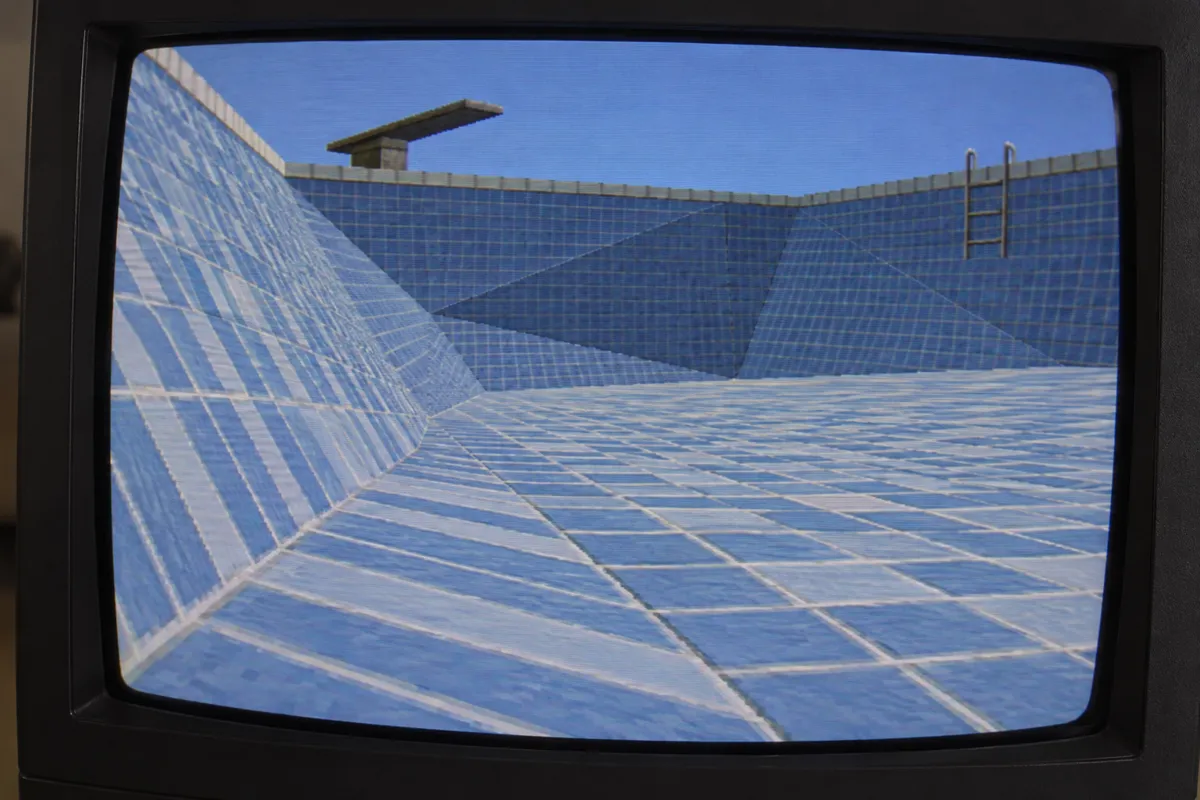
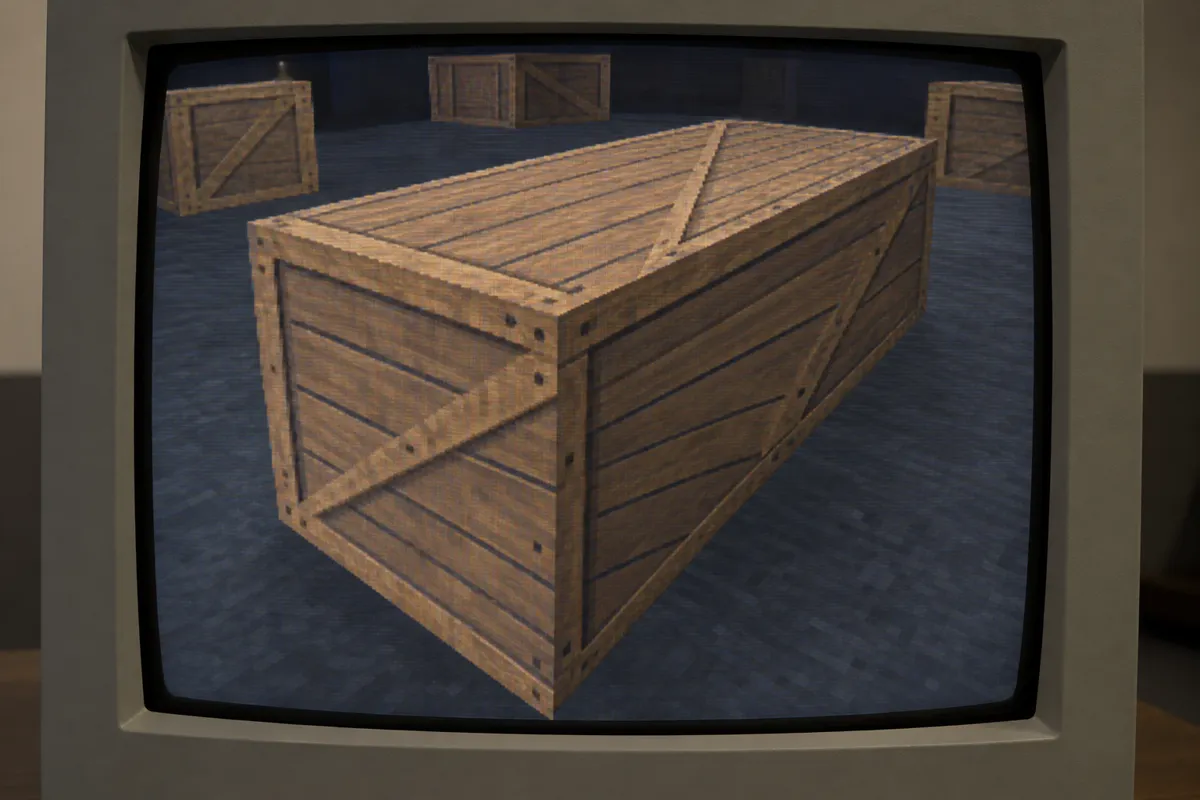
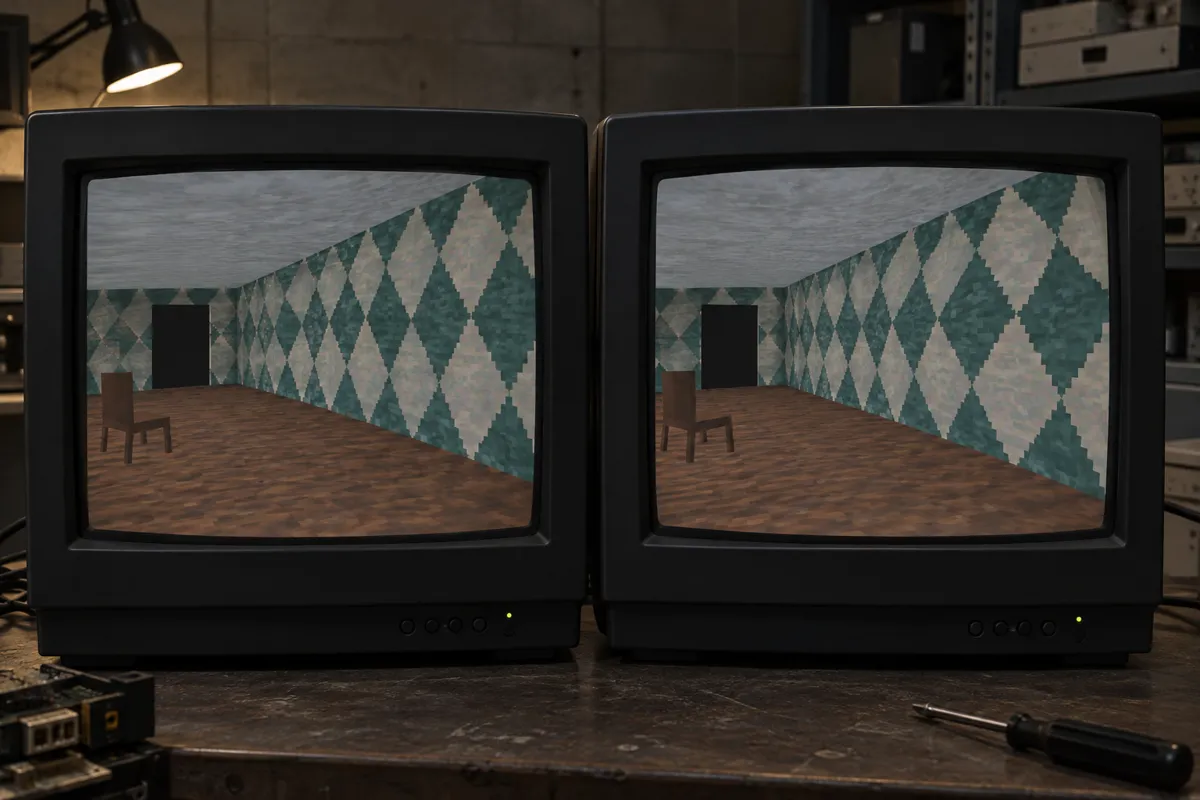
Surface patterns stretch and skew as the camera moves, producing wobbly textures on walls and floors. Nearby polygon edges may show vertex jitter, a separate but often accompanying artifact.
Principle
Affine texture mapping interpolates texture coordinates1 across screen-space triangles without perspective correction2, distorting patterns on surfaces that recede into depth. Vertex jitter instead comes from limited coordinate precision, including snapping projected vertices to whole-pixel positions.
Example
Core Design: Tomb Raider, 1996.
Try it out
Watch original PlayStation Tomb Raider footage during a slow camera turn; compare sliding floor patterns with stepping polygon edges.
Background
Affine mapping predates the PlayStation, but its artifacts became familiar through 1990s real-time 3D games. The console’s graphics hardware mapped textures without perspective correction. This reduced calculation demands, but textures could distort across tilted polygons. Developers could divide large surfaces into smaller polygons to make the error less noticeable. Separately, whole-pixel vertex positions3 made geometry jump slightly during motion. Together, these limitations produced the characteristic unstable appearance. Modern renderers usually correct perspective and retain finer coordinate precision, while retro graphics sometimes deliberately recreate both artifacts.
Distinction
Perspective-correct texture mapping accounts for depth, keeping a surface pattern consistent under projection. Vertex jitter moves polygon boundaries; affine warping distorts the texture within them.
Aftermath
It shows how shortcuts in rendering can become recognizable visual styles, even when they began as unwanted errors.
Further examples · 6 images
Question
Why can smaller polygons reduce affine texture warping?
Show possible answer +Hide answer −
Smaller polygons generally span less depth variation, so linear screen-space interpolation more closely approximates perspective-correct mapping. Subdivision reduces the error without changing the mapping method.