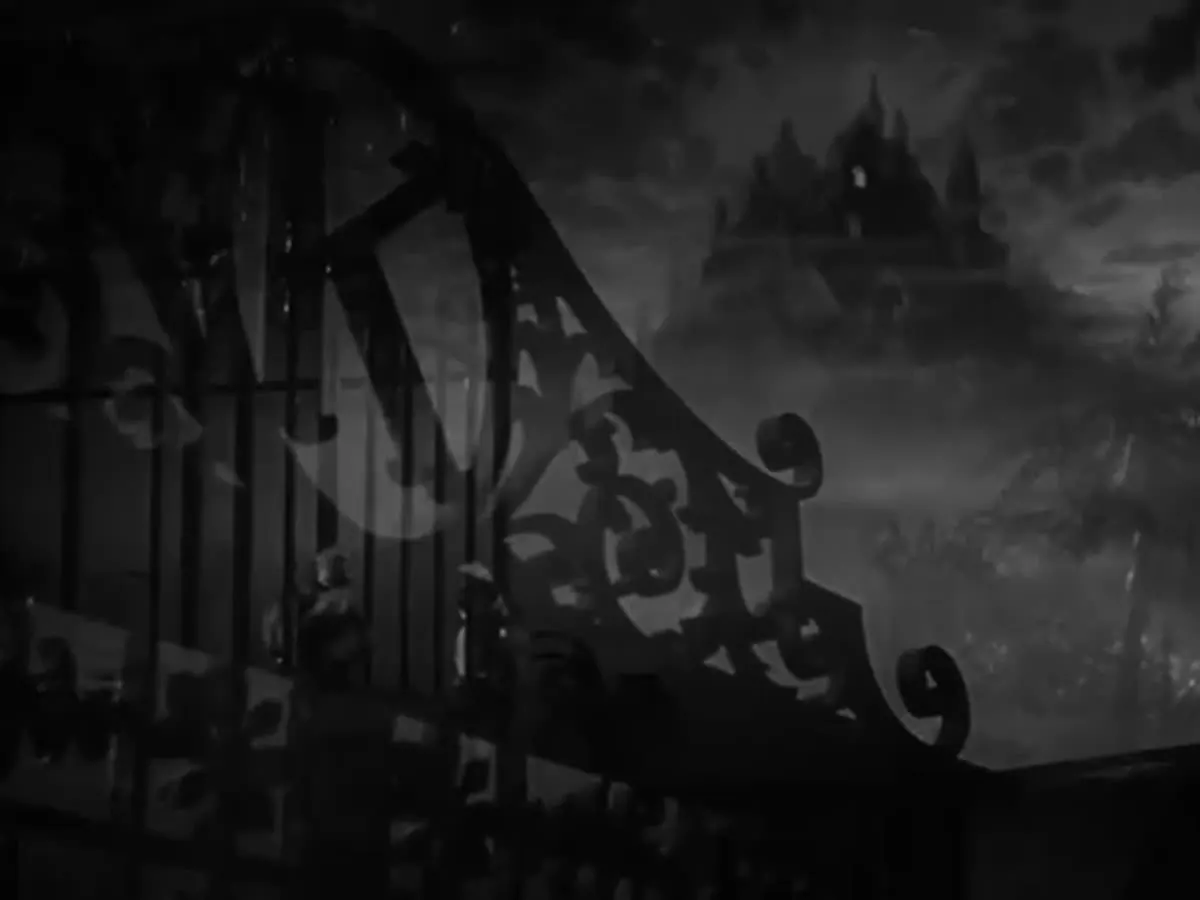
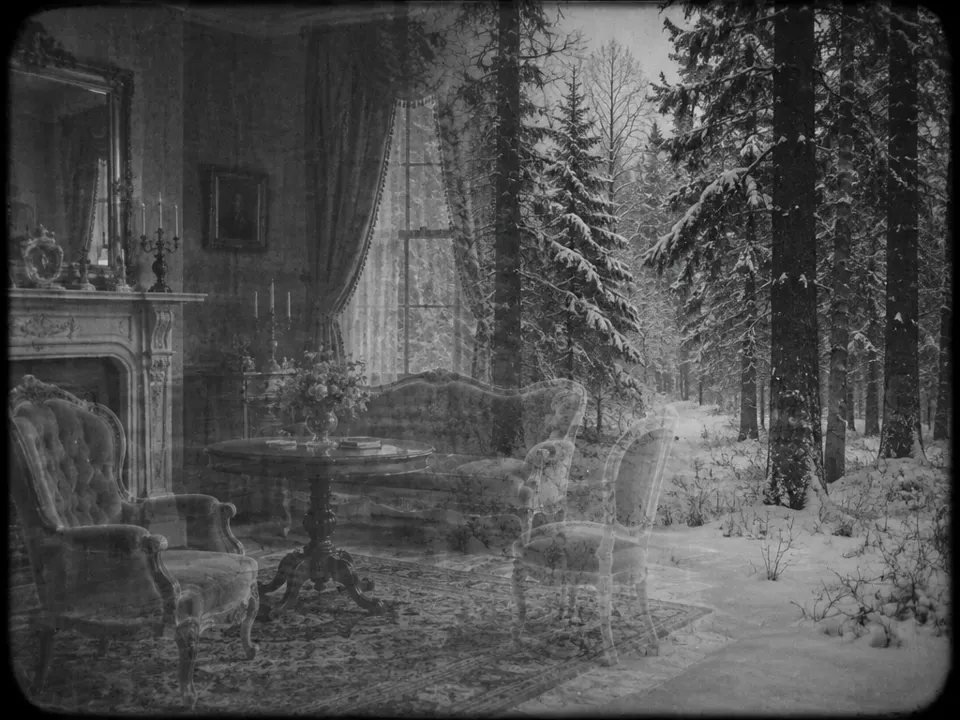
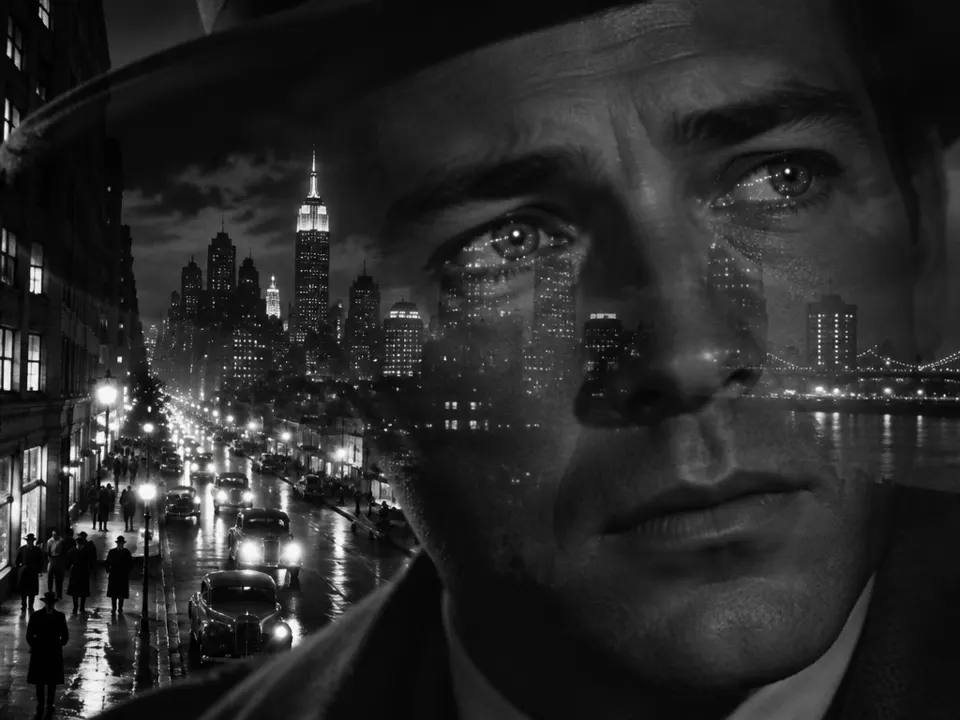
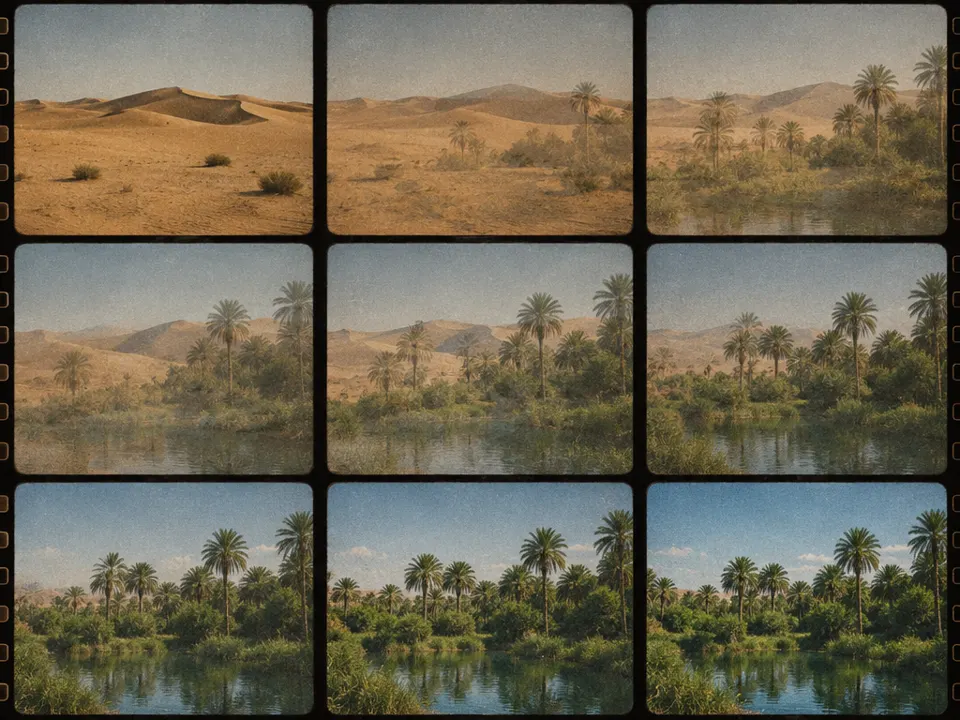
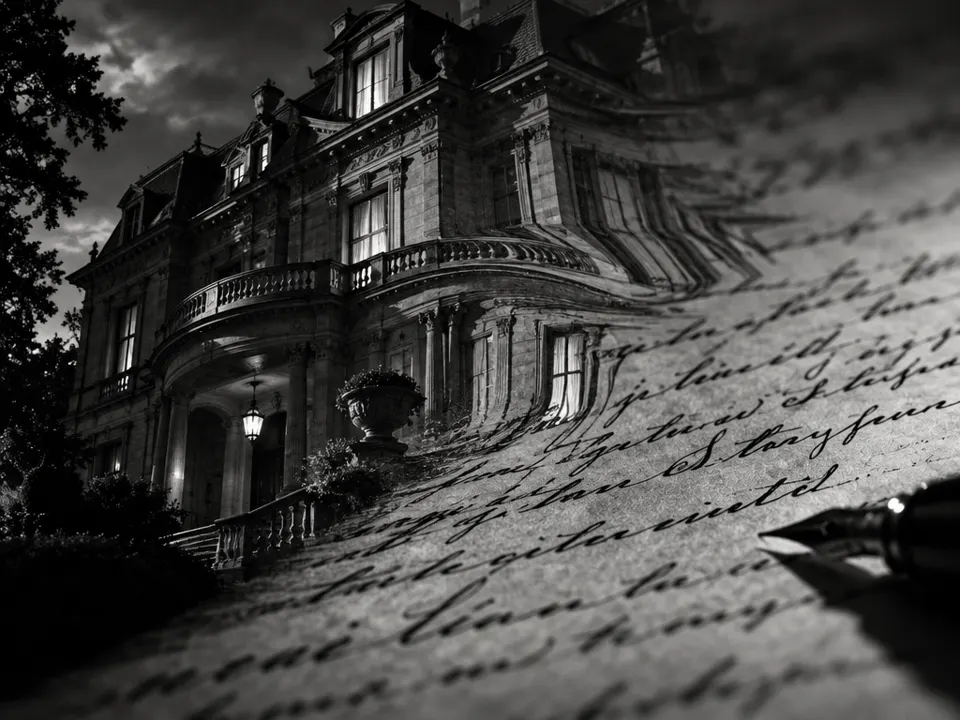
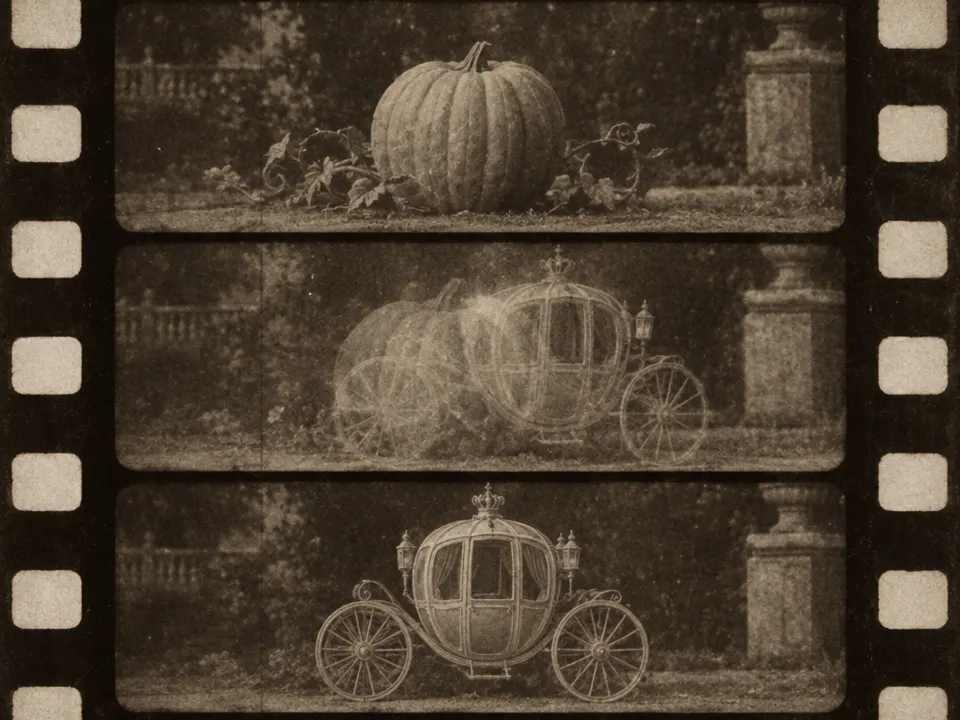
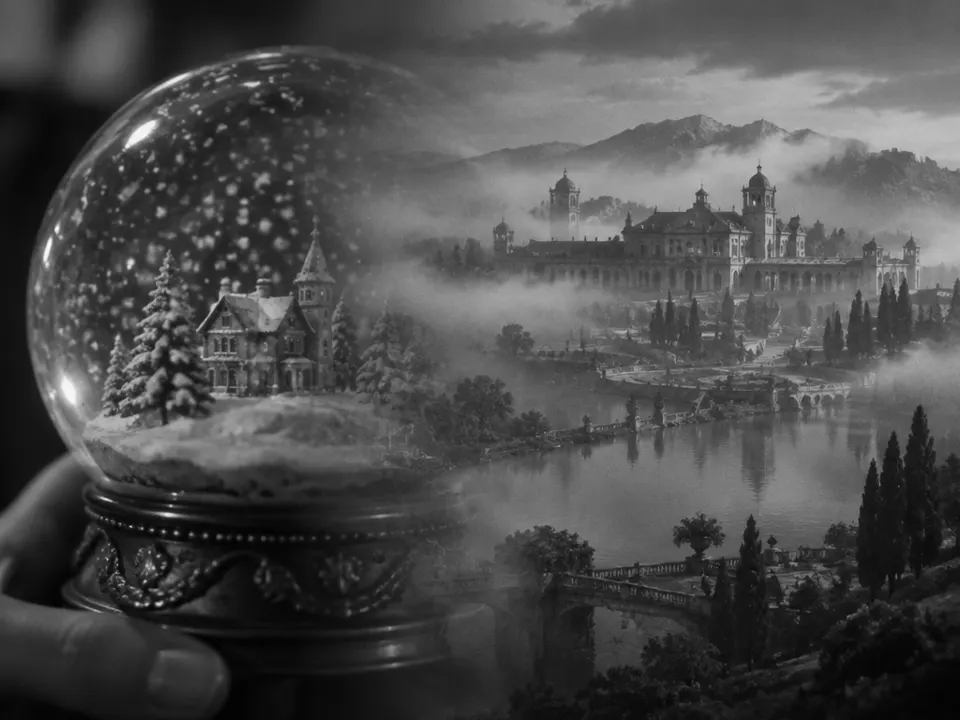
Apply a Dissolve effect, depicting the midpoint of a cinematic transition as the original scene fades into a softly illuminated alternative setting. Blend both environments at partial opacity, creating translucent overlapping contours, intermingled light, and gentle tonal merging without a hard dividing edge. Keep the original subject and composition.
Columbia cites Méliès's Cendrillon from 1899 as apossible early use and describes its creation through rewinding and re-exposure. In classic cinema, the dissolve effect was frequently used to signify achange of location, the passage of time, or memory. Citizen Kane also uses it to shift between narrative levels. The date indicates an early example; its priority is not presented as definitively established.
Distinction
Adissolve is atemporal transition, while adouble exposure can permanently combine several subjects. Its duration and the image content determine the effect.
Aftermath
Similar image overlays can have very different functions.
Further examples · 7 images
02AI illustration: A Victorian living room and a snowy forest are visible simultaneouslyA Victorian living room and a snowy forest are visible simultaneously. This illustrates the midpoint of a dissolve where two settings overlap through varying opacities.Illustration generated for the Atlas (AI)03AI illustration: A man's face is superimposed over a night city skylineA man's face is superimposed over a night city skyline. The transparent layering of these two distinct subjects demonstrates a dissolve used for narrative or psychological connection.Illustration generated for the Atlas (AI)04AI illustration: A grid of film frames shows a desert transitioning into an oasisA grid of film frames shows a desert transitioning into an oasis. The central frames display the gradual emergence of trees over sand dunes, capturing the temporal progression.Illustration generated for the Atlas (AI)05AI illustration: A large mansion is layered over handwritten textA large mansion is layered over handwritten text. The two images occupy the same space at different intensities, showing a transition between a physical location and documentation.Illustration generated for the Atlas (AI)06AI illustration: Three sequential film strips show a pumpkin turning into a carriageThree sequential film strips show a pumpkin turning into a carriage. The middle frame captures the transparent overlap required to execute a magical transformation via dissolve.Illustration generated for the Atlas (AI)07AI illustration: A snow globe and a distant estate are superimposed in a black-and-white fA snow globe and a distant estate are superimposed in a black-and-white frame. This illustrates the transition between a narrative object and a physical setting via overlapping exposures.Illustration generated for the Atlas (AI)
Question
Why does a five-second dissolve have a different effect than a short one?
Show possible answer +Hide answer −
The overlay preserves time as aseparate image and can emphasize dream, memory, or simultaneity.