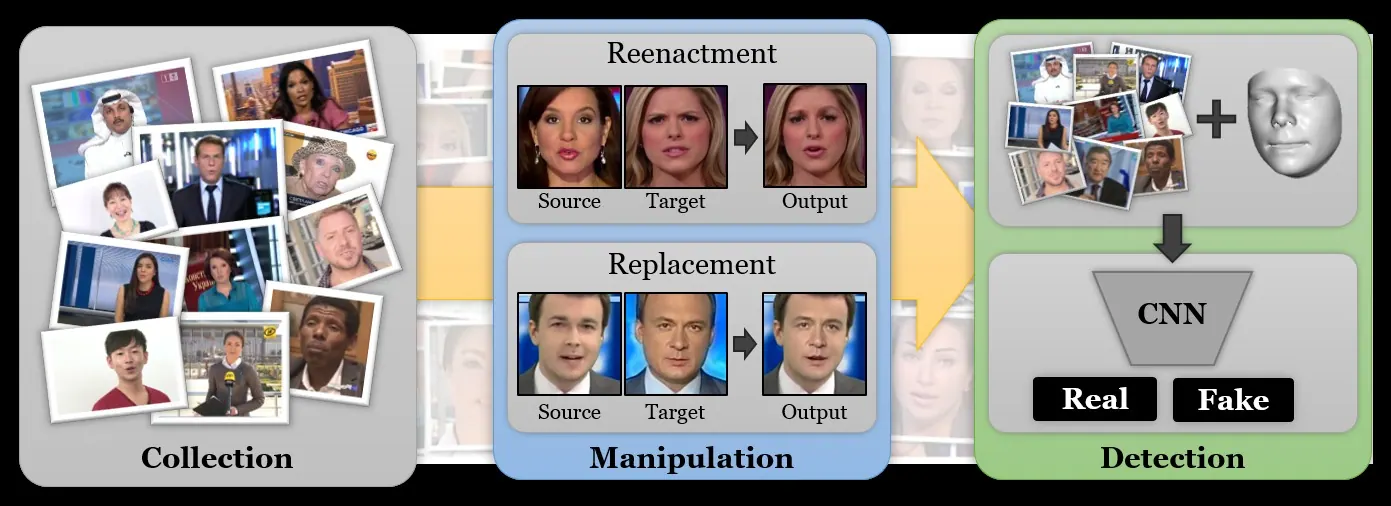
Deepfake / face swapping. 2010s: rapid visibility; FaceForensics++ benchmarked several methods in 2019
Typeface · Chakra Petch
FaceForensics++: Research illustration of various facial manipulations, 2019.Andreas Rössler, Davide Cozzolino, Luisa Verdoliva, Christian Riess, Justus Thies and Matthias Nießner.View source ↗
Prompt
Apply a Deepfake effect by subtly synthesizing a changed facial expression while retaining the person's identity. Use photorealistic facial texture, slightly over-smoothed skin, faint blending seams near the jawline, and minor inconsistencies in eye reflections, matching the surrounding light and color. Keep the original subject and composition.
Face swapping predates the term "deepfake." In the 2010s, neural approaches increased its public visibility; research responded with data and detection methods. FaceForensics++ from 2019 compares deepfakes, face-to-face, face swaps, and neural textures. This distinction is particularly helpful for learning: identity swapping, facial expression transfer, and neural rendering are not identical. The image is taken from the research presentation and shows several types of manipulation. Aplausible single image can still become unstable when moved. Therefore, pay attention to contours, occlusions, and the temporal relationship. However, visible artifacts alone are not reliable general proof for or against manipulation.
Distinction
Face swapping is aspecific task; deepfake is abroader term and not every method works the same way.
Further examples · 7 images
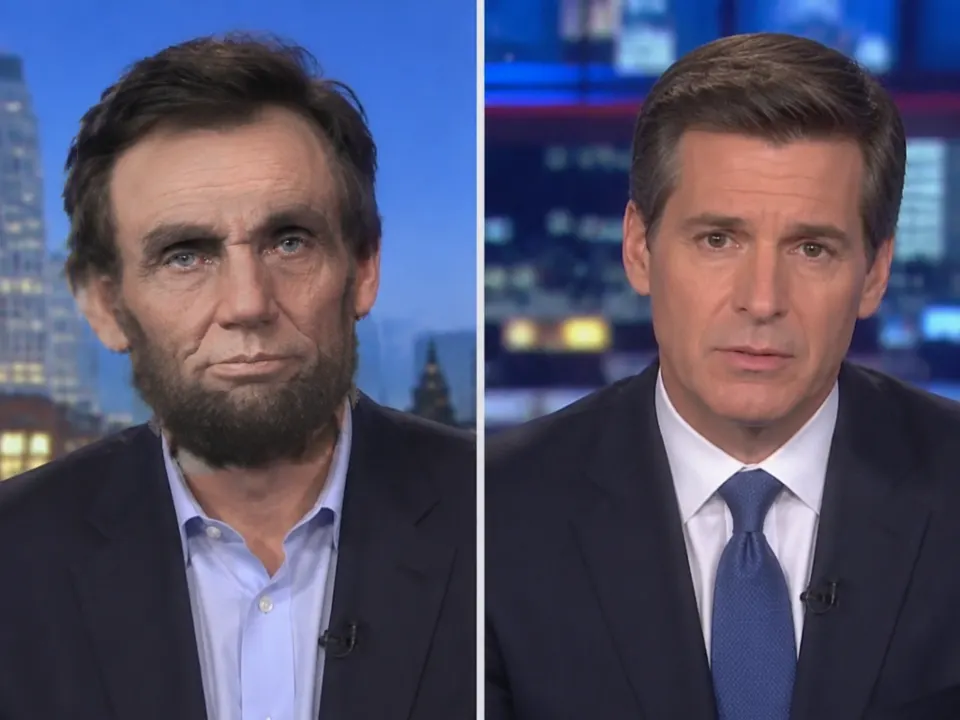
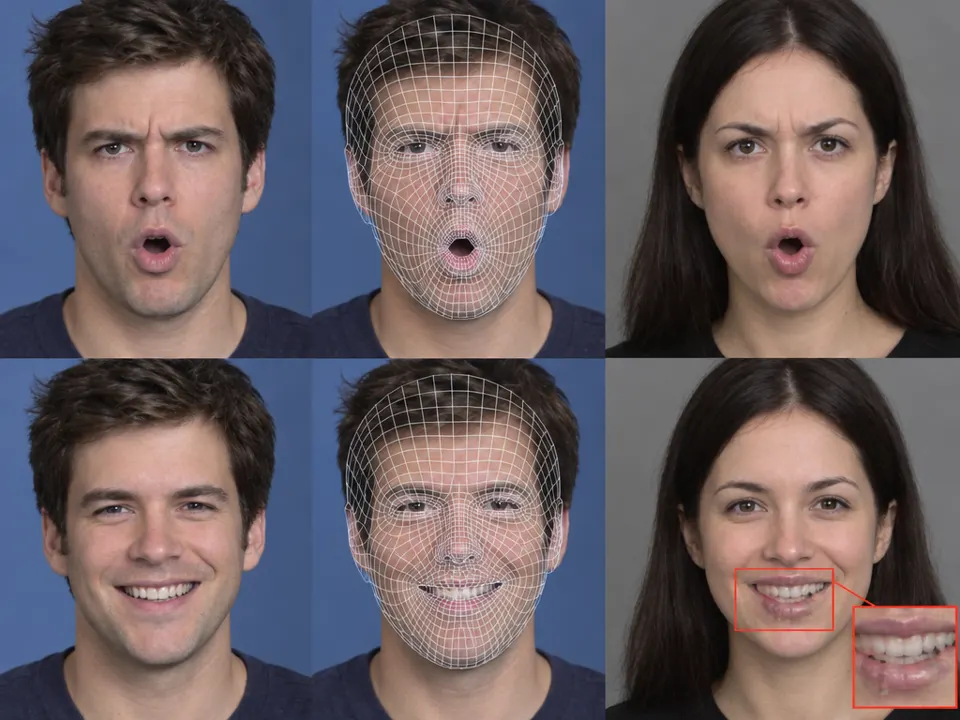
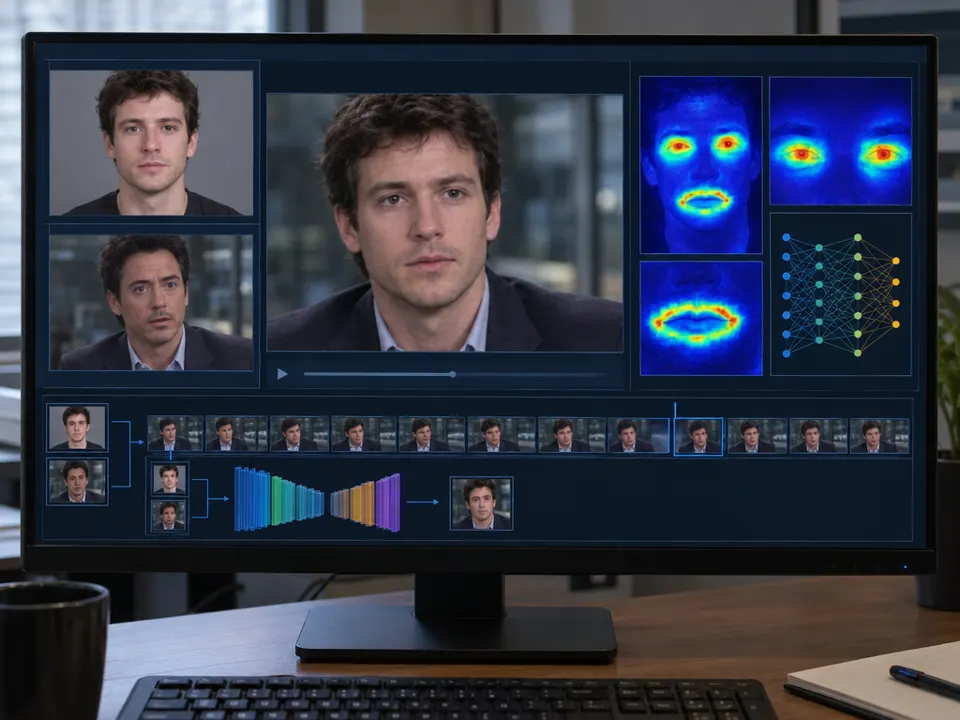
02DigiDoug DeepFake at TED2019A TED stage shows a speaker and a large screen displaying a monochromatic, high-detail digital face model. It demonstrates the live integration of neural facial models used to generate real-time deepfake performances.Steve Jurvetson · CC BY 2.0 · Wikimedia Commons03DeepfakeA presentation screen asks 'REAL OR FAKE?' while showing side-by-side images of a man in uniform. This illustrates the research into face swapping and detection methods aimed at identifying neural synthesis manipulations.Ministerie van Buitenlandse Zaken · CC BY-SA 2.0 · Wikimedia Commons04AI-generated virtual moviestar Ornella Muti, displayed on a phone screen, a detail of Joseph Ayerle's videoartwork "Un'emozione per sempre 2A smartphone displays an animated sequence of a virtual movie star generated through AI. This video artwork serves as an example of neural rendering and identity synthesis applied to creative media.Lasemainecomtoise · Public domain · Wikimedia Commons05AI illustration: A side-by-side comparison shows the source journalist next to a version wA side-by-side comparison shows the source journalist next to a version with Abraham Lincoln's identity mapped onto the face. The facial structure is synthetically altered while maintaining the source's pose and camera angle.Illustration generated for the Atlas (AI)06AI illustration: A grid displays facial expression transfer using a 3D mesh to track sourcA grid displays facial expression transfer using a 3D mesh to track source movements and apply them to a target face. The red inset highlights neural texture artifacts around the mouth, common in Deepfake synthesis.Illustration generated for the Atlas (AI)07AI illustration: A technical dashboard illustrates the neural synthesis process, showing hA technical dashboard illustrates the neural synthesis process, showing heatmaps for eye and mouth detection alongside a neural network diagram. It demonstrates the computational pipeline used to generate and analyze manipulated facial sequences.Illustration generated for the Atlas (AI)
Question
Why is the term "face swap" not an accurate technical description of an algorithm?
Show possible answer +Hide answer −
It names the goal of identity exchange; this can be implemented using different geometric or neural methods.