Hyperlapse
2012, term popularized by Shahab Gabriel Behzumi's videos
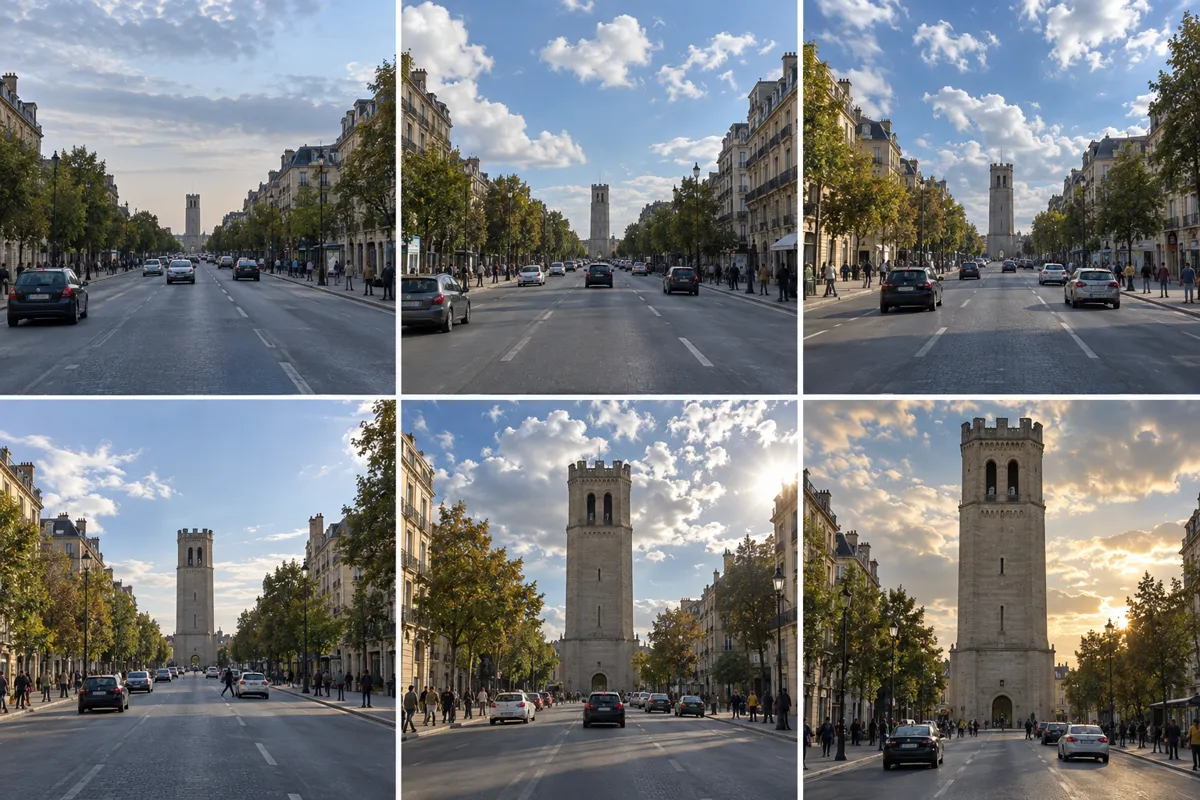
Prompt
Apply a Hyperlapse effect as a still-image impression of accelerated camera travel, keeping the main visual anchor stable while adding aligned peripheral motion streaks and faint stepped echoes of surrounding architecture. Combine directional perspective flow, compressed light trails, and crisp central detail. Keep the original subject and composition.
Identify
You see a fast-paced video moving smoothly across vast physical distances. The camera travels through a city while time accelerates rapidly.
Principle
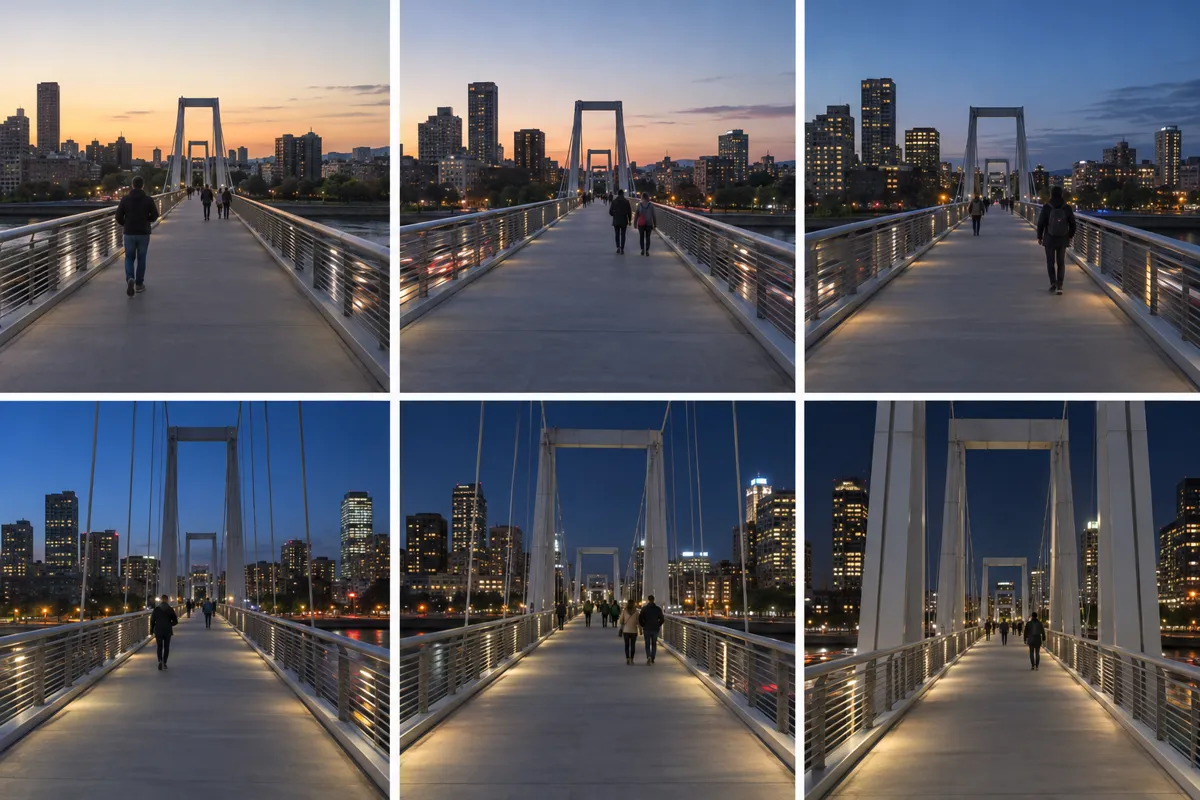
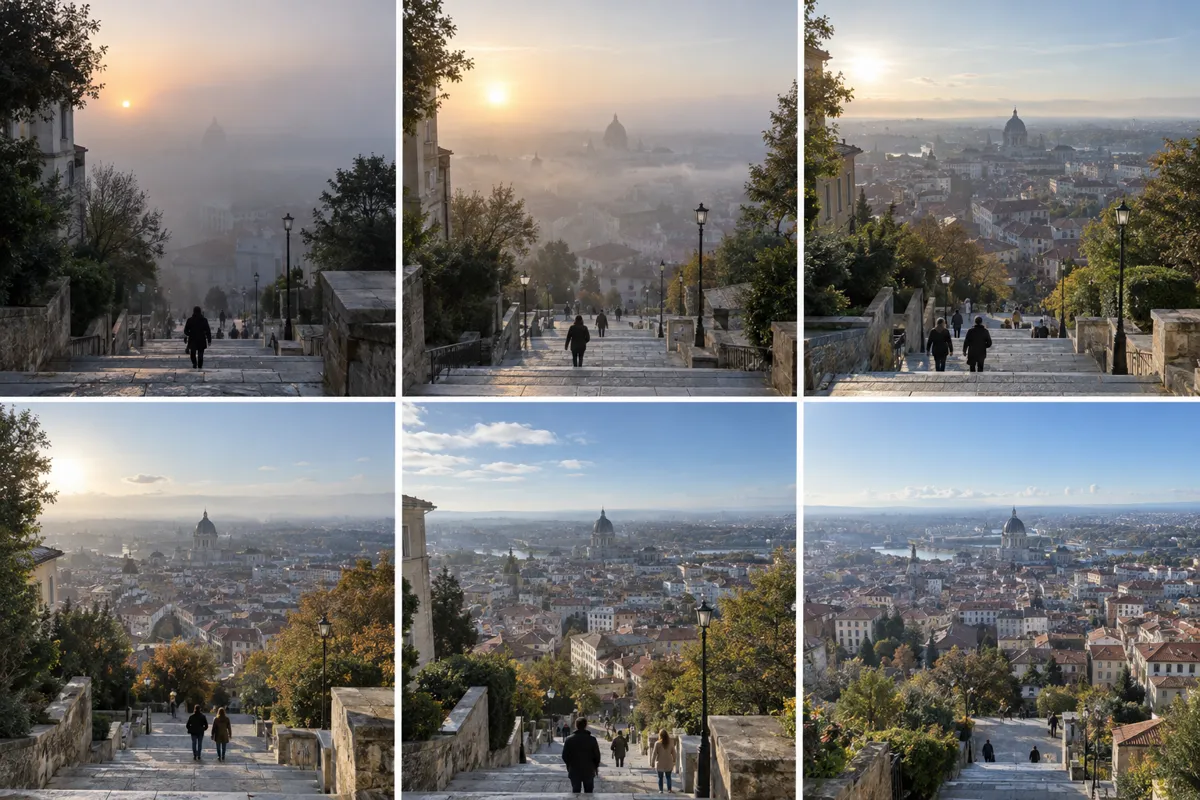
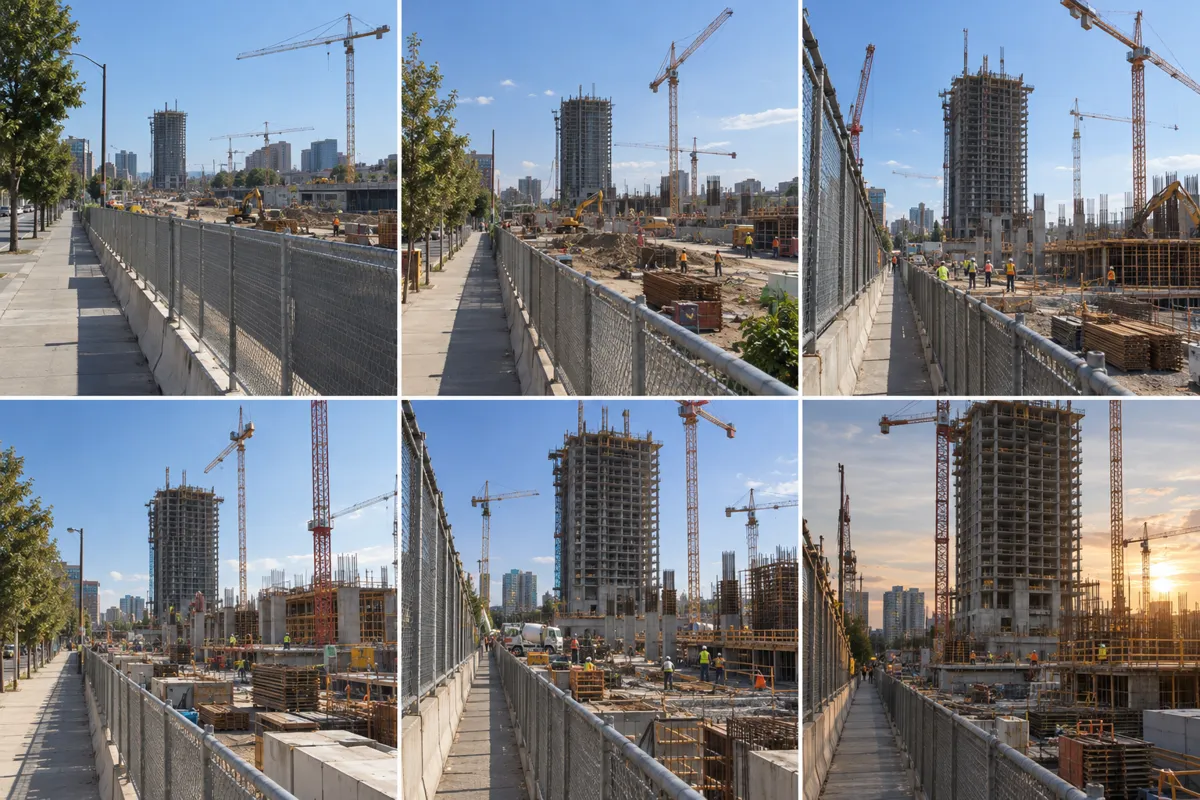
A camera captures still photos at set intervals1 while moving across space. Software then aligns these frames to create smooth continuous motion.
Example
Shahab Gabriel Behzumi: Berlin Hyper-Lapse, 2012.
Try it out
Walk down a street, stopping every three steps to take a photo of the same distant building, then flip through them.
Background
A traditional time-lapse keeps the camera strictly locked in one place. A hyperlapse breaks this rule by moving the camera over long distances. Photographers historically achieved this manually by shifting a tripod inches at a time. This manual method required intense precision to keep the target centered. In the 2010s, digital image stabilization2 software changed everything. Creators could walk with a camera, taking photos continuously. Algorithms then smoothed out the bumpy path by tracking fixed points3. This created a floating, cinematic journey through time and space.
Distinction
A standard time-lapse relies on a stationary camera watching a changing scene. A hyperlapse moves the camera significantly over large physical distances.
Aftermath
It demonstrates how combining spatial movement with compressed time creates an entirely new perspective on urban environments.
Further examples · 4 images
Question
Why does a hyperlapse require software stabilization to look good?
Show possible answer +Hide answer −
Human steps and manual tripod movements are naturally uneven. Software crops and aligns the frames to hide this bumpy human error.