Databending / incorrect editing. Glitch art and tutorials from the 2000s–2010s.
Typeface · Space Mono
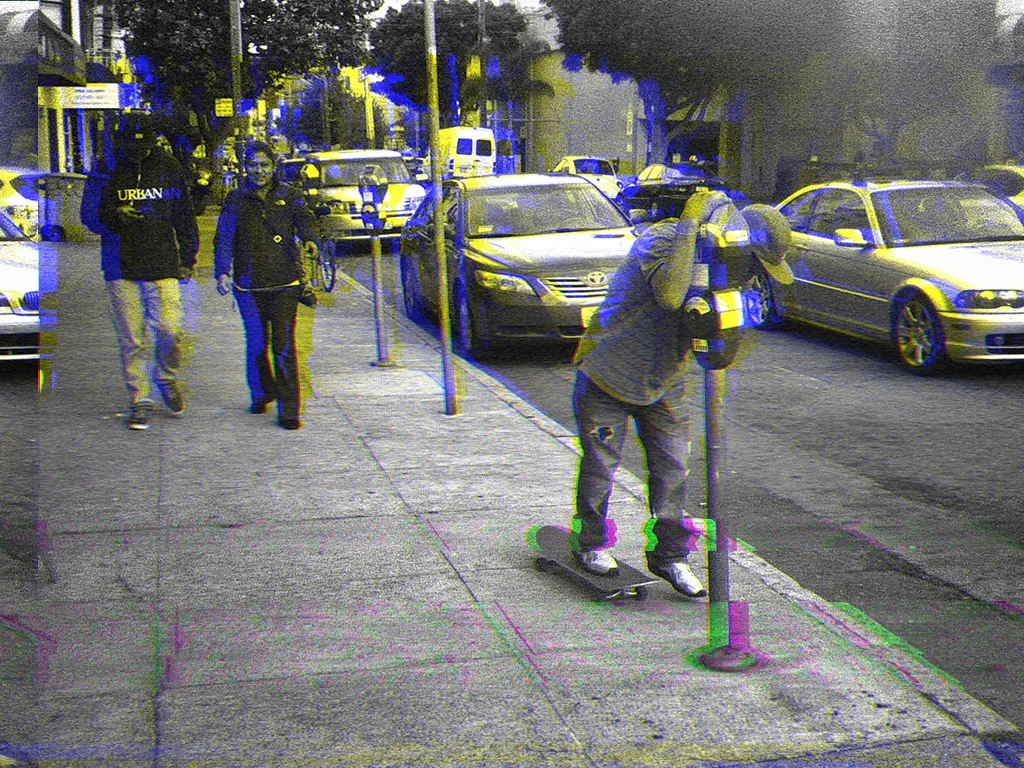
Doctor Popular: Skate_glitchedpsd, 2014. Actual modified PSD.Doctor Popular / docpop.org; Original image from his databending tutorial.View source ↗
Prompt
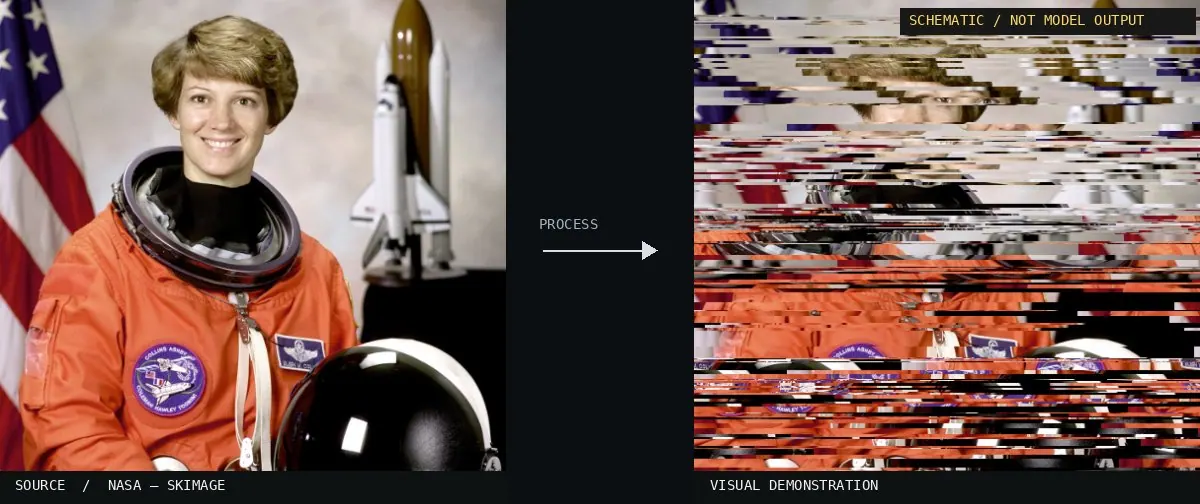
Apply a databending effect with abrupt horizontal offsets, displaced scanline bands, fractured color channels, and unexpected patches of corrupted pixel data. Mix intact photographic areas with jagged digital discontinuities, acidic color breaks, and sparse static, avoiding flowing motion trails or uniformly distributed distortion. Keep the original subject and composition.
Databending exploits the gap between data and its intended interpretation. For example, an image can be altered with ahex editor or processed as audio data. Nick Briz and Rosa Menkman document this practice and its cultural significance; Doctor Popular presents aconcrete PSD and JPEG comparison. The era refers to the documented glitch art scene, not the first discovery of intentional data errors. The file format influences the type of visible distortion that results.
Distinction
Databending refers to the general practice of processing data for purposes other than those intended. The slide "JPEG Glitch" isolates JPEG-specific codec errors. Corrupted critical file structures can render the entire image unreadable; work with copies.
Aftermath
The codec becomes the material itself, and not just an invisible means of transport.
Further examples · 12 images
02Databending Odia Wikipedia article raw imageA monochrome pattern of dense horizontal lines represents a raw data file visualized as an image. This illustrates databending by interpreting non-image data through a visual software lens.Subhashish Panigrahi · CC BY-SA 4.0 · Wikimedia Commons03Buch 1, Databending, Christopher WillardA historical portrait is cut off halfway by a large white void and blocky digital artifacts. This shows how corrupted image data causes the rendering engine to fail or misinterpret the remaining file.Christopher Willard · CC BY-SA 4.0 · Wikimedia Commons04Daala Rainbow Vomit TigerThe bottom half of a tiger photograph is replaced by bright, rainbow-colored pixel bands. This shows how a specific codec error or data corruption creates the 'rainbow vomit' effect.Luis Miguel Bugallo Sánchez (Lmbuga) · CC BY-SA 3.0 · Wikimedia Commons05Fu bar glitch art archive in Karlovac 2A computer monitor displays a corrupted interface with offset pixels and data breaks. This captures the typical visual output of databending where file interpretation fails due to manipulated raw data.Clubture Network · CC BY-SA 3.0 · Wikimedia Commons06Glitch Art ArgentinaThe image shows severe horizontal color bands and pixel misalignments over a central subject. These artifacts result from altering the file's internal data structure, causing the decoder to misinterpret color and position.Lucas Rafael Tenllado Gil · CC BY-SA 4.0 · Wikimedia Commons07Glitch Art en ArgentinaLarge black areas and scattered pixel fragments replace the original forest image. This demonstrates a terminal data error where a significant portion of the file's binary information has been corrupted or shifted.Lucas Rafael Tenllado Gil · CC BY-SA 4.0 · Wikimedia Commons08Databending — machine versionSchematic or classical approach — not a trained AI model output.Atlas of Visual Effects09Databending Christopher Willard, 2012, 2017A pattern of repeating red, pink, and orange geometric blocks fills the frame. The horizontal shifts and color distortions represent a systematic misinterpretation of binary image data.Christopher Willard · CC BY-SA 4.0 · Wikimedia Commons10Green.qt slippageA vintage computer desktop shows a media player window with fragmented, shifted terrain textures. The green and brown slippage indicates specific errors in the QuickTime video file format.jonCates · CC BY-SA 4.0 · Wikimedia Commons11Glitch Art by James Connolly and Eric PellegrinoFour CRT monitors display various horizontal bands of saturated colors and digital streaks. This illustrates databending applied to a physical installation by manipulating video signal data.jonCates · CC BY-SA 4.0 · Wikimedia Commons12Kodak Moment (2013) sample animationA portrait features blocks of misplaced pixels and jagged color artifacts across the subject. These errors suggest a corruption of the underlying data stream during playback or processing.Michaelbetancourt · CC BY-SA 3.0 · Wikimedia Commons
Question
Why is databending more than just an overlay of colorful error stripes?
Show possible answer +Hide answer −
It interferes with the stored data or its interpretation. The visible change therefore follows the file structure.