H 265 / 3212000s

Crowd Simulation

2001, The Lord of the Rings: The Fellowship of the Ring
Typeface · Saira

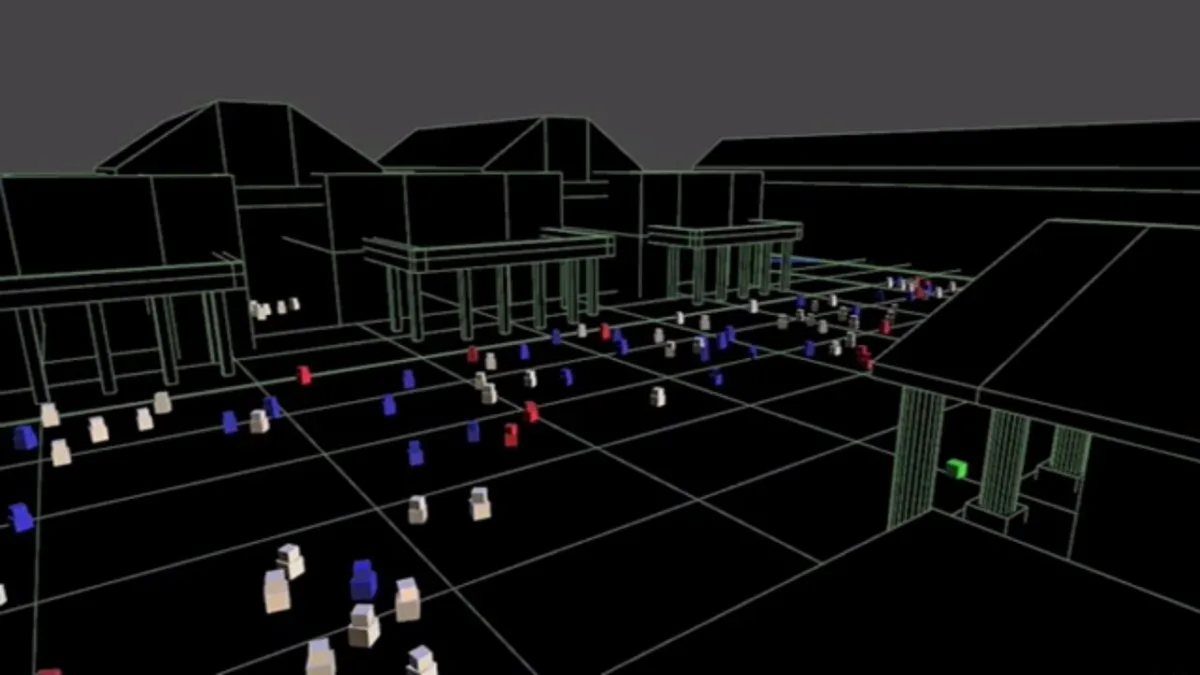
Crowd Agents in a Wireframe Town. Colored block-like agents populate streets between wireframe buildings in a simplified digital town.
Crowd Agents in a Wireframe Town. Colored block-like agents populate streets between wireframe buildings in a simplified digital town.Paul Donnellan · CC BY 3.0 · via Wikimedia CommonsView source ↗

Prompt

Apply a Crowd Simulation effect by populating available background space with dense groups of small, varied digital figures. Give individuals different poses, clothing colors, orientations, and spacing, with believable perspective, mutual occlusion, and shared environmental lighting. Avoid identical repeated formations or obscuring the focal subject. Keep the original subject and composition.

Identify

You see thousands of digital characters moving together in complex scenes like battles or cities. Instead of moving exactly alike, each individual acts uniquely, reacting to its surroundings.

Principle

Computers use rule-based artificial intelligence1 to guide digital agents2. Each agent responds to neighboring agents, terrain, and built-in logic independently.

Example

Stephen Regelous and Wētā Digital: The Lord of the Rings, 2001.

Try it out

Watch a modern CGI battle scene and track one background soldier to see if they react uniquely to obstacles.

Background

Before the 2000s, large film crowds were mostly live extras or copy-pasted digital clones. This changed when software like MASSIVE introduced agent-based simulation3. Programmers gave individual digital models basic senses like sight and hearing. They also provided a set of rules, like running toward enemies or avoiding cliffs. When the scene played, the computer calculated each agent's decisions in real time. This created highly realistic, chaotic motion without hand-animating every person. The technique revolutionized epic cinema, making massive, dynamic digital armies possible for the first time.

Distinction

It differs from simple digital compositing or crowd cloning. Cloned crowds repeat the exact same animation loops, while simulated crowds make independent choices.

Aftermath

It shows how programming logic can generate highly natural, unpredictable visual complexity.

Further examples · 7 images
AI illustration: AI-Driven Battlefield Crowd Simulation
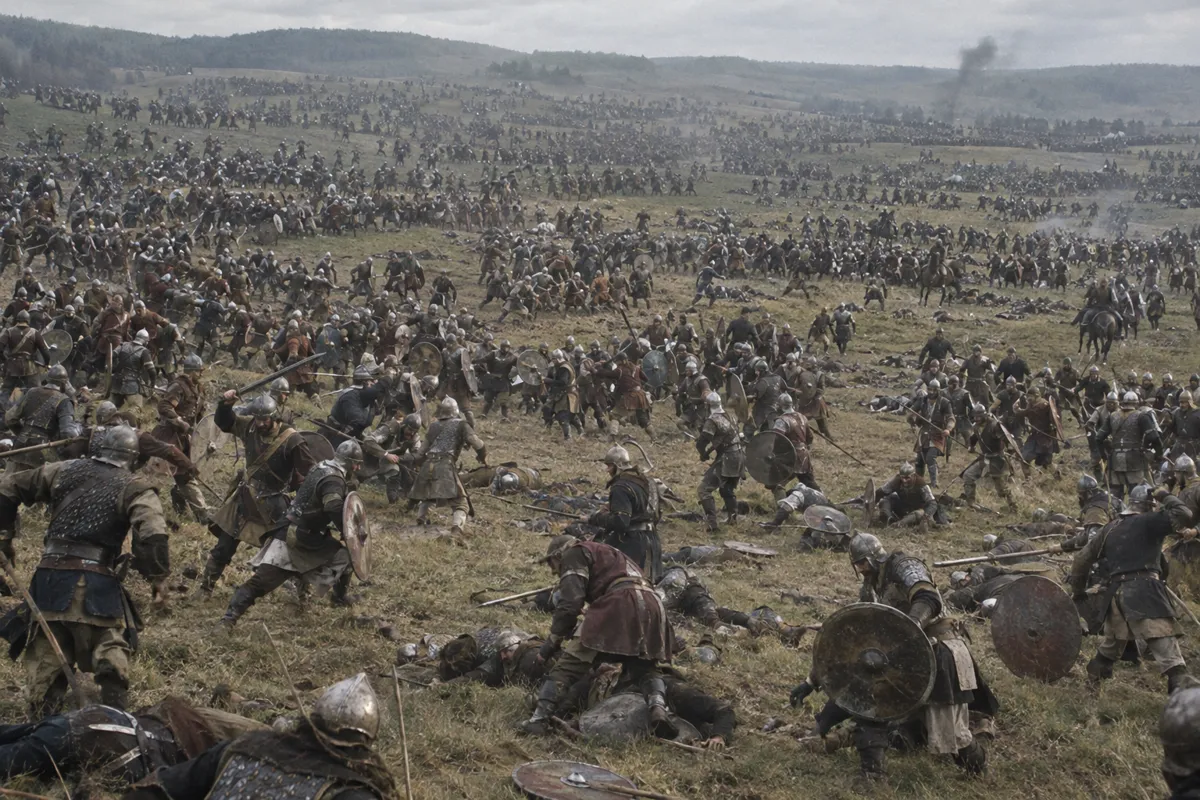
02 AI illustration: AI-Driven Battlefield Crowd SimulationThousands of individual medieval soldiers engage in chaotic combat across a sprawling, uneven battlefield. The sheer volume of unique, interacting agents demonstrates a complex rule-based simulation used to populate large-scale conflict scenes.Illustration generated for the Atlas (AI)
AI illustration: Pathfinding Logic in a Populated Bridge Scene
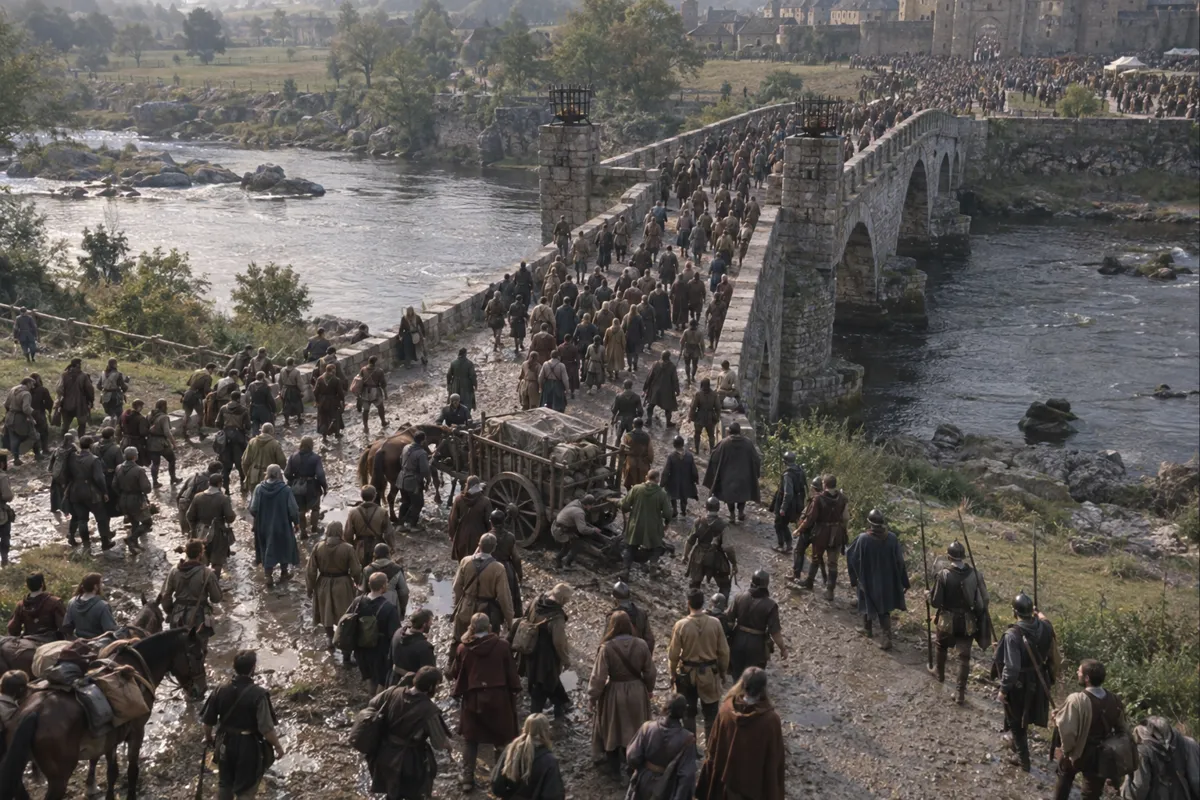
03 AI illustration: Pathfinding Logic in a Populated Bridge SceneA multitude of travelers and carts traverse a stone bridge, showing varied walking paths and speeds. The digital agents exhibit individual avoidance behaviors and logic to navigate the narrow passage without clipping through one another.Illustration generated for the Atlas (AI)
AI illustration: Autonomous Agent Interaction in a Marketplace
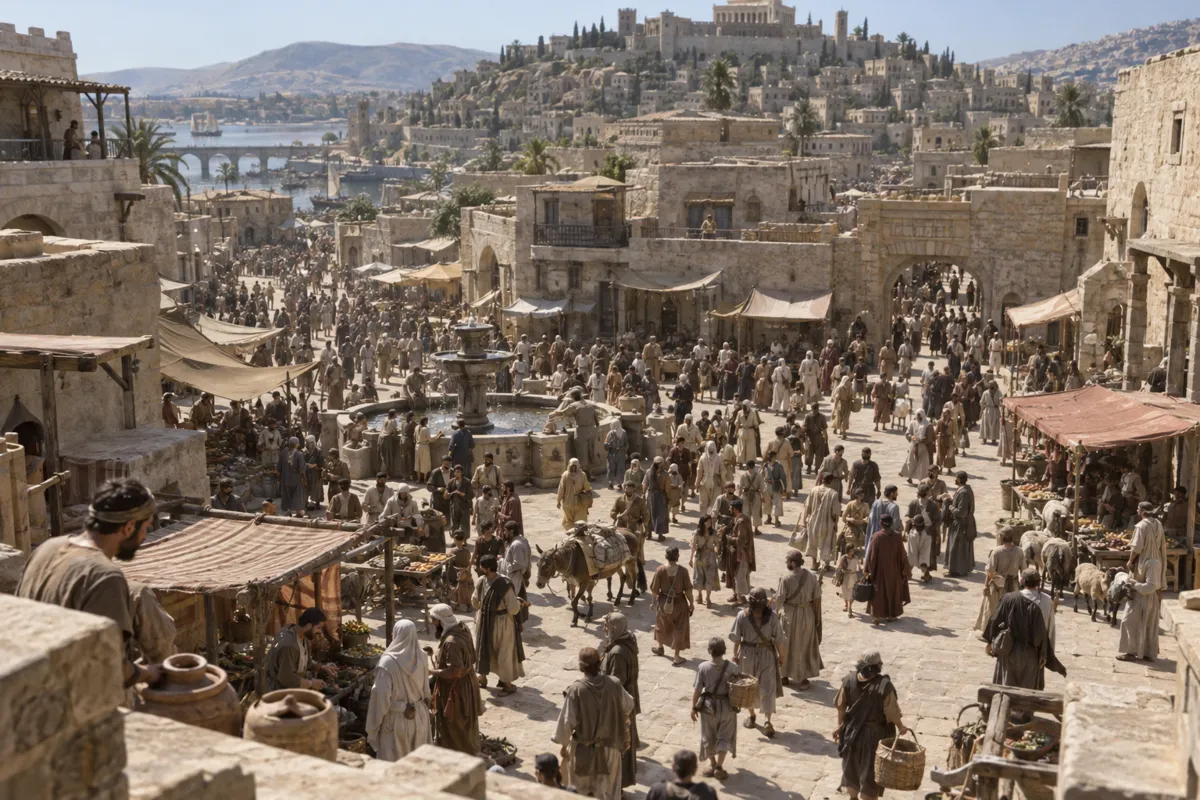
04 AI illustration: Autonomous Agent Interaction in a MarketplaceThis ancient marketplace is filled with dozens of independent characters performing distinct tasks like trading or walking. Each figure functions as an autonomous agent within the environment to create the illusion of a living, breathing city.Illustration generated for the Atlas (AI)
AI illustration: Terrain-Responsive Agent Simulation
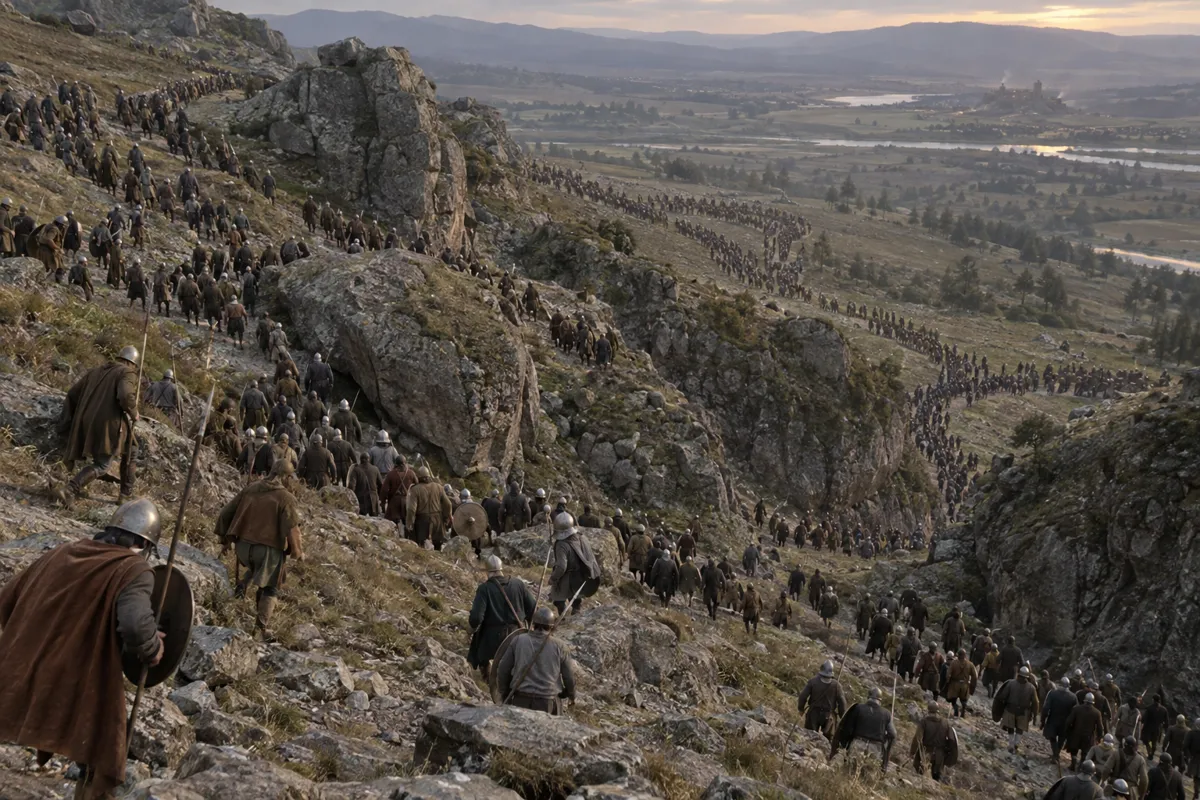
05 AI illustration: Terrain-Responsive Agent SimulationMasses of soldiers march and climb over rocky terrain, with each character adapting its posture to the steep incline. The simulation successfully manages group flow while maintaining individual responses to the complex topographical obstacles.Illustration generated for the Atlas (AI)
AI illustration: Large Scale Siege Combat Simulation
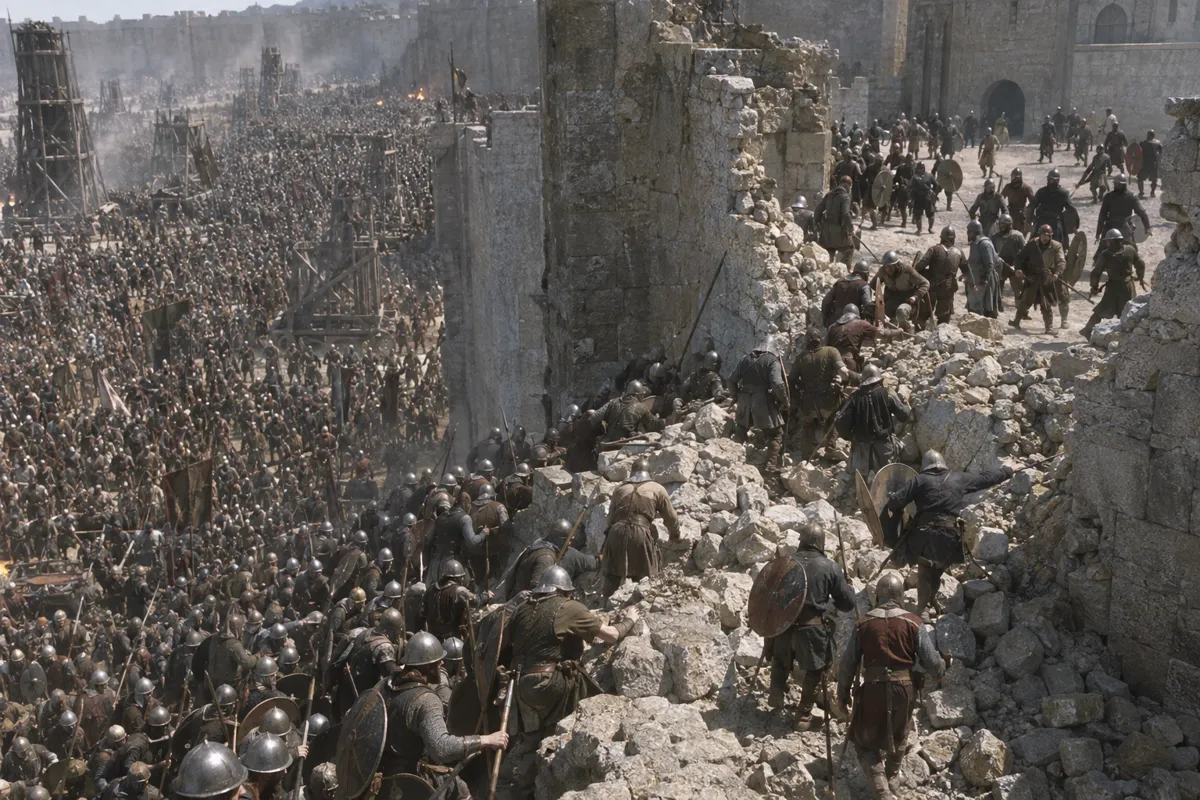
06 AI illustration: Large Scale Siege Combat SimulationAn overwhelming number of units storm a fortress, showing a massive disparity in density and individual action between the foreground and distant background. This image highlights the ability of the software to render thousands of logic-driven entities simultaneously.Illustration generated for the Atlas (AI)
AI illustration: Reactive Behavioral Logic in a Public Square
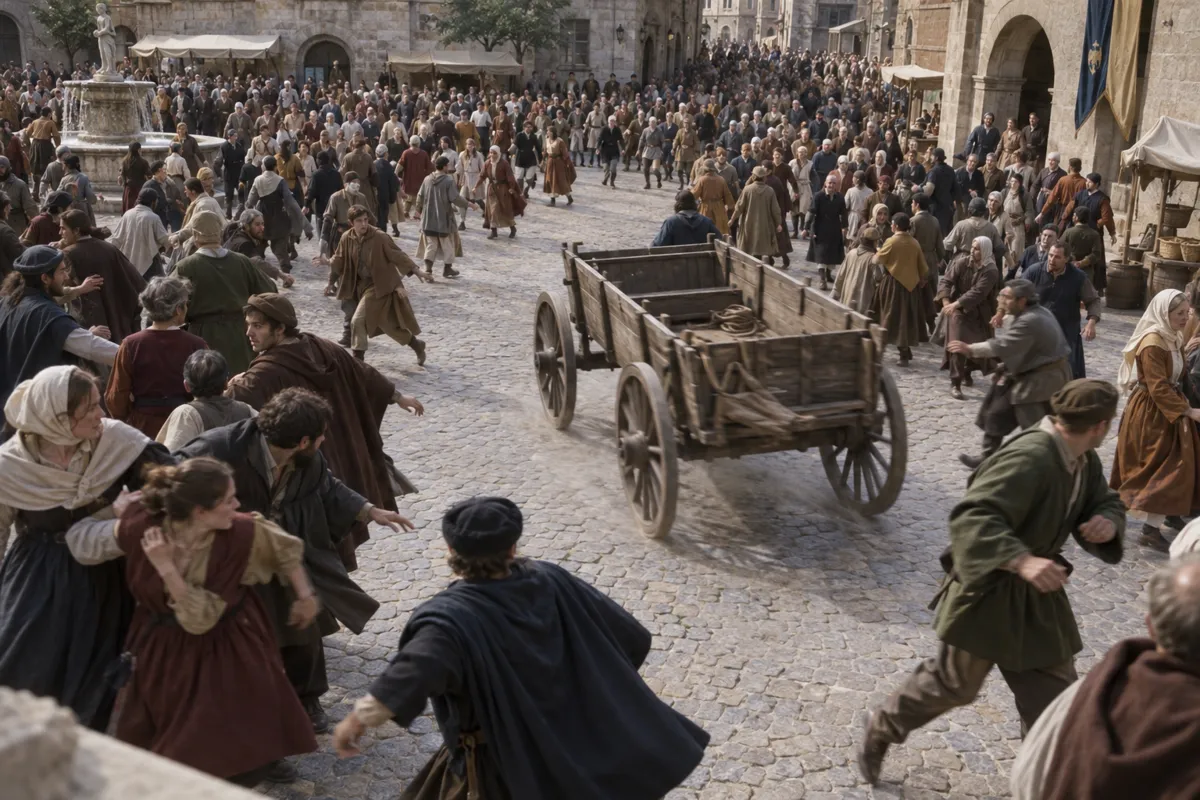
07 AI illustration: Reactive Behavioral Logic in a Public SquareA panicked crowd scatters through a town square, displaying reactive movement away from a central cart. The varying degrees of haste and direction among the digital characters exemplify basic behavioral rules in a dynamic crowd scenario.Illustration generated for the Atlas (AI)

Question

How do digital agents know where to walk?

Show possible answer +

They follow algorithms that mimic basic senses. The software checks for virtual terrain boundaries and the positions of nearby characters.

Sources