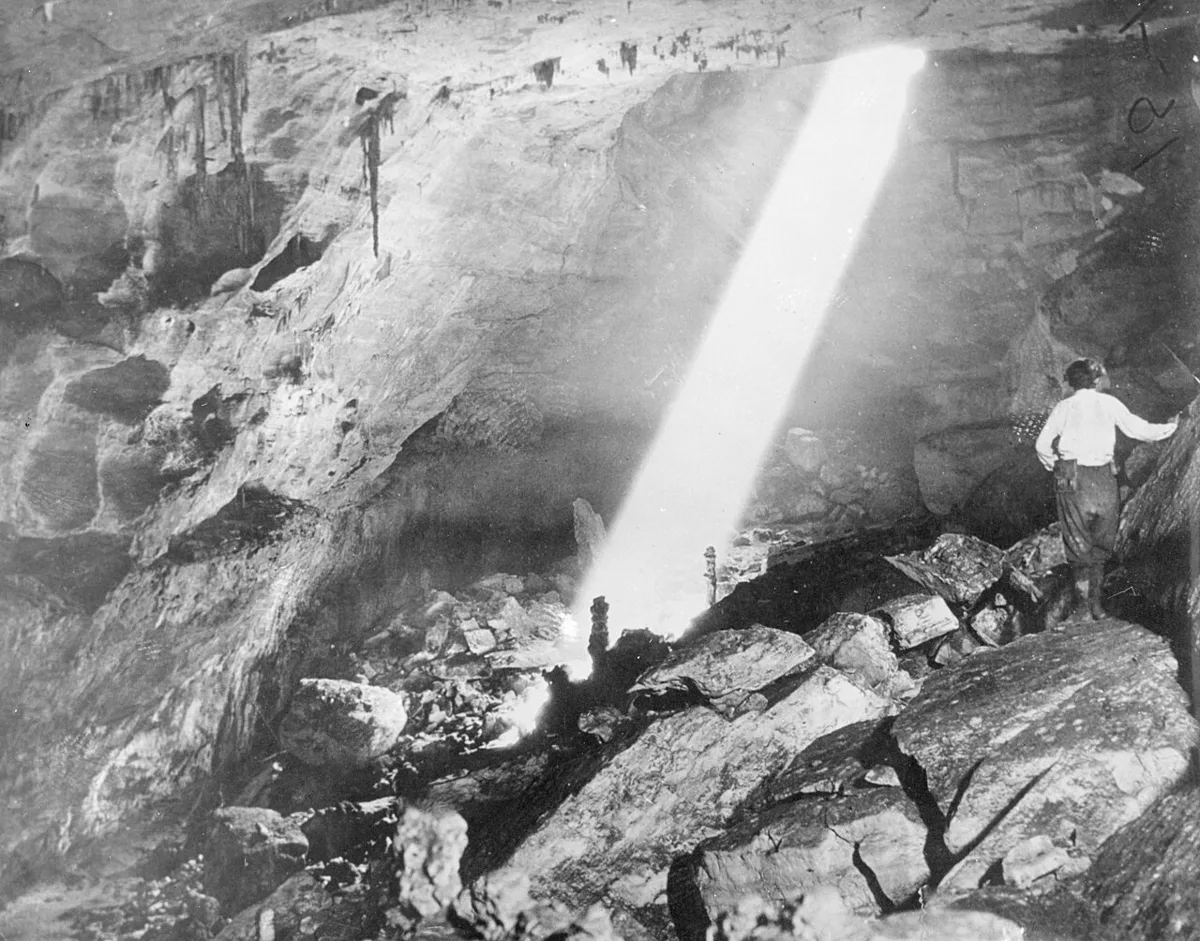
Sun Shaft Illuminating a Cave Interior. A massive, glowing shaft of sunlight pierces the darkness of a cave, illuminating the rocky interior and a standing figure.Unknown authorUnknown author · Public domain · via Wikimedia CommonsView source ↗
Prompt
Apply Volumetric Light with distinct shafts of warm illumination cutting through cool atmospheric haze. Show suspended dust glowing inside the beams, soft scattering around light sources, and darker occluded gaps behind solid objects. Maintain believable beam direction, depth, and gently fading edges. Keep the original subject and composition.
You see [distinct shafts of light]shining through an environment. Dust, fog, or smoke seems to glow within the bright beams.
Principle
Acomputer algorithm1simulates light [scattering through tiny particles]suspended in the air. It calculates which parts of the [3D atmosphere are illuminated].
Example
Crytek: Crysis, 2007.
Try it out
Look at awindow in adusty or smoky room when direct sunlight streams in.
Background
In the real world, light is invisible until it hits an object. "God rays" occur when sunlight reflects off atmospheric particles like dust or water vapor. In early 3D computer graphics, lights only illuminated solid surfaces. During the 2000s, developers created clever mathematical shortcuts to render glowing atmospheres in real time. Apopular technique called "screen-space sun shafts2" was adopted after the game Crysis released. It blurred bright light sources across the screen based on depth data. This created the illusion of complex 3D light shafts using very little processing power.
Distinction
Volumetric lighting simulates light scattering inside an atmosphere. Lens flares only simulate light bouncing inside acamera lens.
Aftermath
It shows how replicating atmospheric imperfections dramatically increases the realism of virtual spaces.
Further examples · 9 images
02Sunbeams Piercing Through a Foggy ForestBright sunlight filters through a dense canopy of trees, creating numerous defined rays in the foggy air. The dense mist scatters the illumination, making the individual beams of light clearly visible within the forest atmosphere.Jakub Hałun · CC BY 4.0 · Wikimedia Commons03Sun Rays Shining Over a Misty RoadDramatic shafts of sunlight stream through the dark branches of large trees lining a misty roadway. The dense fog acts as a scattering medium, brightly reflecting the light and creating highly defined, glowing rays.Brocken Inaglory · CC BY-SA 3.0 · Wikimedia Commons04Sunbeams Illuminating a Park Tree in MistA massive tree stands silhouetted in a park while intense sunlight pours in from the left, cutting through heavy mist. The thick atmospheric moisture makes the wide beams of light glow vividly as they stretch across the open space.Brocken Inaglory · CC BY-SA 3.0 · Wikimedia Commons05Silhouettes Against Volumetric Light RaysAn equestrian statue and large trees are completely silhouetted against a brilliant sunburst cutting through heavy fog. The thick mist intensely scatters the sunlight, producing sharp, glowing rays that radiate dramatically across the sky.Brocken Inaglory · CC BY-SA 3.0 · Wikimedia Commons06Sunburst and Light Rays Over a PondThe sun shines directly through a cluster of trees, casting a vibrant fan of light rays over a tranquil pond. Mist rising from the water vividly catches the illumination, making the individual shafts of light stand out as tangible forms.Brocken Inaglory · CC BY-SA 3.0 · Wikimedia Commons07Sunlight Shafts Piercing Mist Over a LakeShafts of sunlight pierce through morning mist over a calm lake dotted with ducks. The illuminated fog perfectly demonstrates volumetric light, where suspended particles scatter the sun's rays to create visible beams in the air.Brocken Inaglory · CC BY-SA 4.0 · Wikimedia Commons08Sun Rays Radiating Through Trees Over WaterSunbeams radiate through the dark silhouettes of trees and reflect upon the still surface of a pond. The atmospheric haze captures the light, showcasing the volumetric effect as distinct glowing shafts cutting through the shadows.Brocken Inaglory · CC BY-SA 4.0 · Wikimedia Commons09Misty Light Beams Over a Reflective PondLight rays filter downwards through intricate tree branches, illuminating the misty air above a reflective body of water. This natural scene exemplifies volumetric lighting as airborne moisture particles catch the sunlight, giving the beams a tangible, glowing presence.Brocken Inaglory · CC BY-SA 4.0 · Wikimedia Commons
Question
Why are these light beams often called "crepuscular rays"?
Show possible answer +Hide answer −
They frequently appear at dawn and dusk. The Latin word for twilight is "crepusculum."