Conway's Game of Life
1970, John Conway's cellular automaton
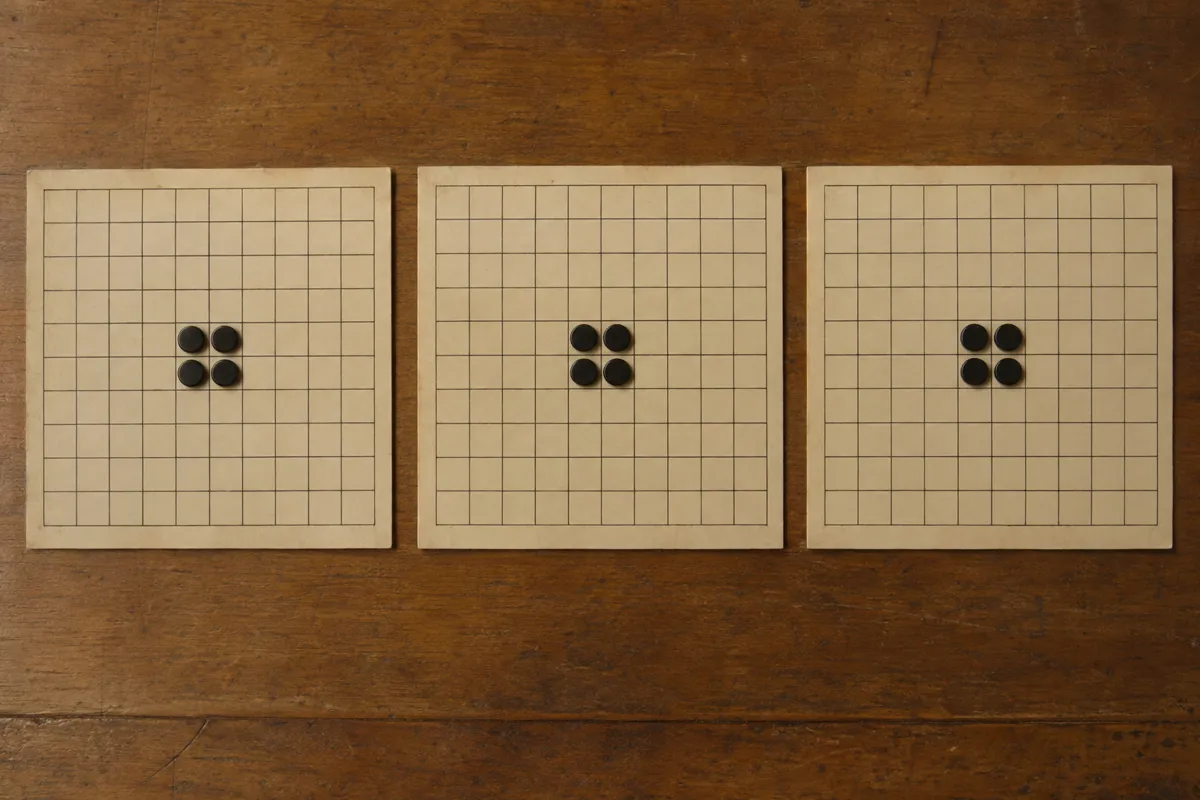
Prompt
Transform this image into a Conway's Game of Life grid snapshot, constructing recognizable forms from small white live cells on a black square lattice. Include characteristic four-cell blocks, three-cell blinker rows, and five-cell glider clusters along contours, with hard edges and no tonal gradients. Keep the original subject and composition.
Identify
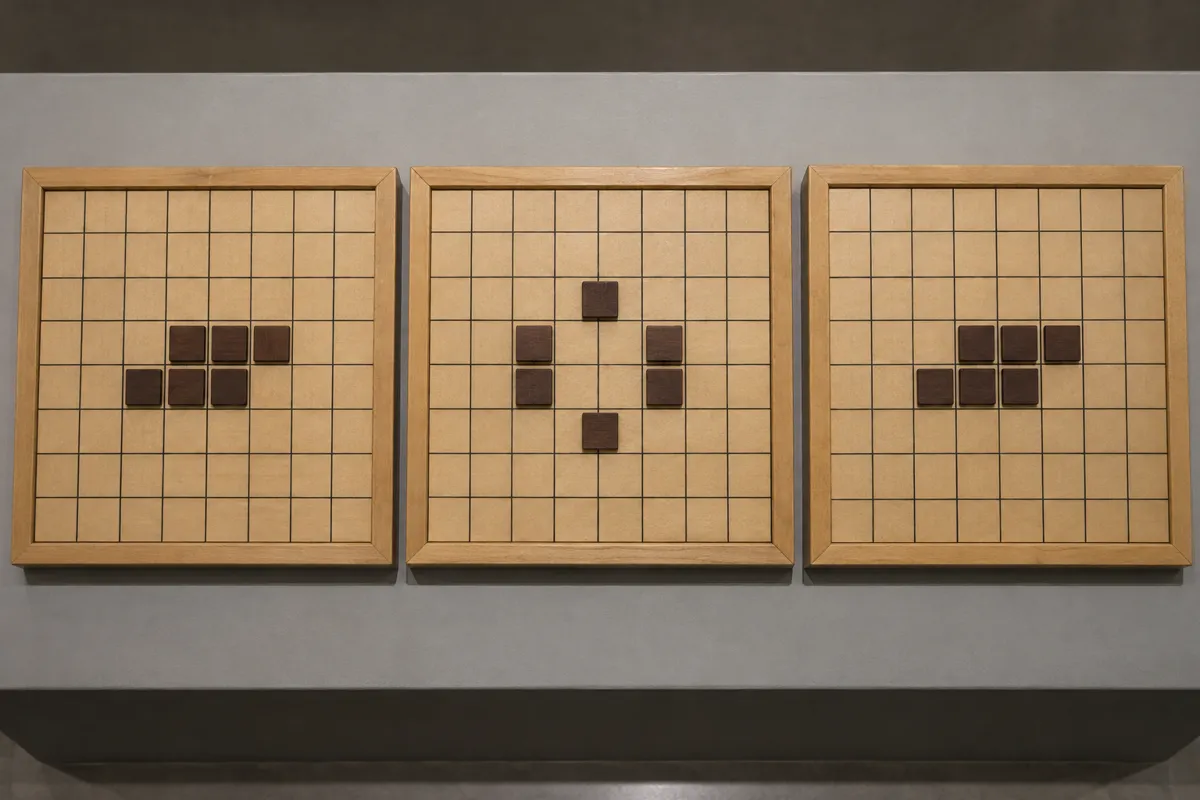
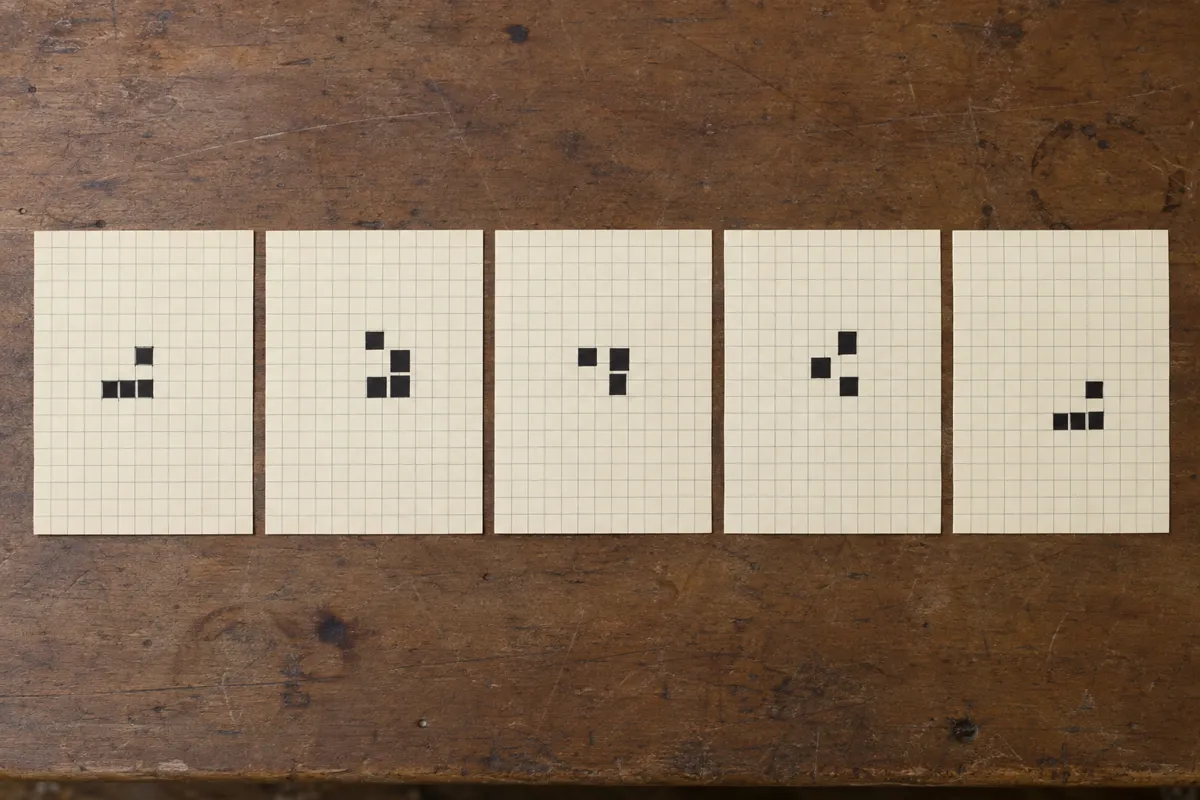
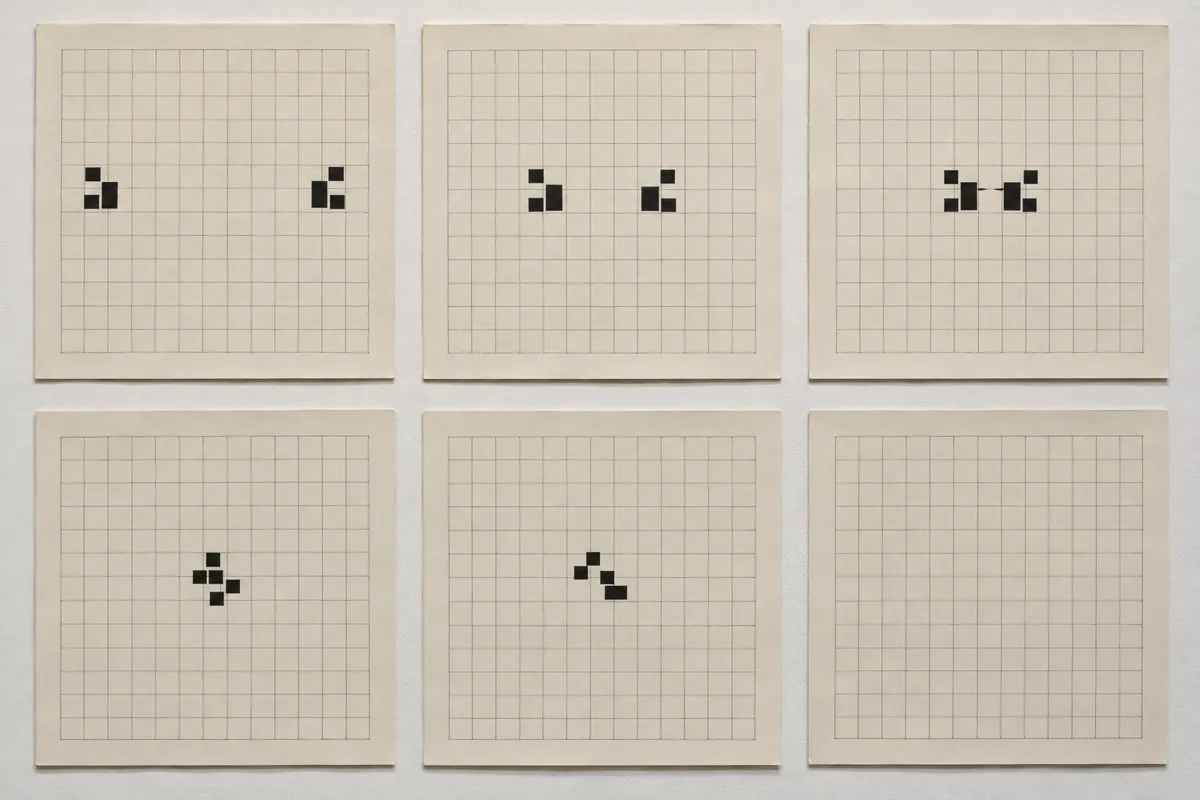
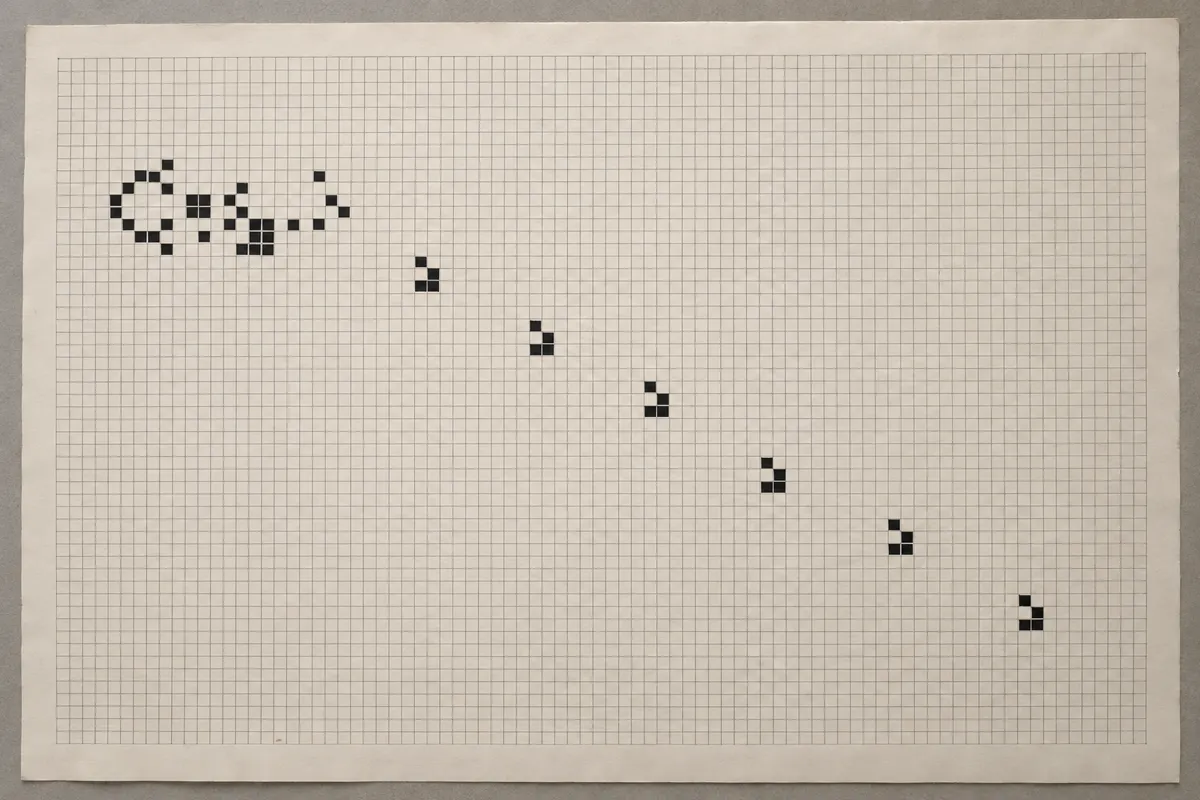
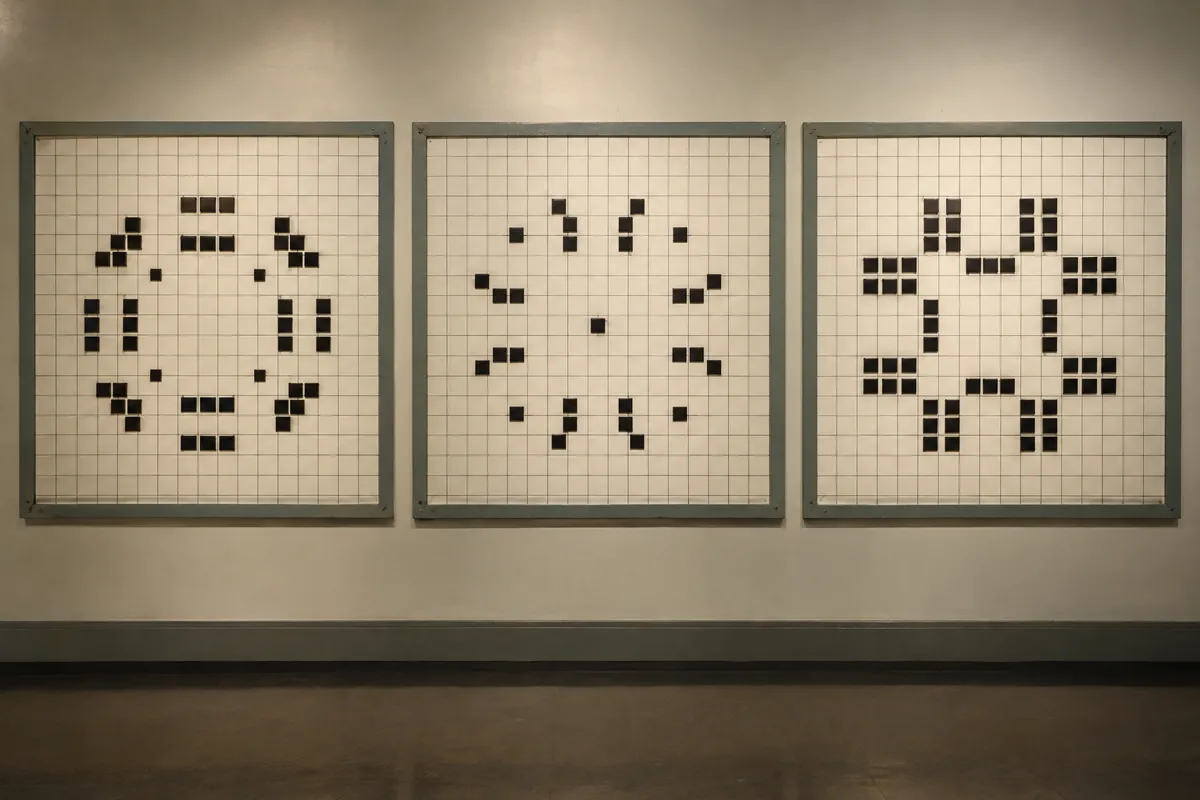
On a square grid, small clusters form blinking patterns, stationary blocks, and shapes that seem to crawl. These moving shapes can collide, disappear, or generate expanding streams.
Principle
This cellular automaton1 updates every cell simultaneously, using only its current state and its eight neighbors. Fixed rules determine which cells remain alive, die, or become alive; apparent motion comes from successive grid states.
Example
Bill Gosper: Gosper glider gun, 1970.
Try it out
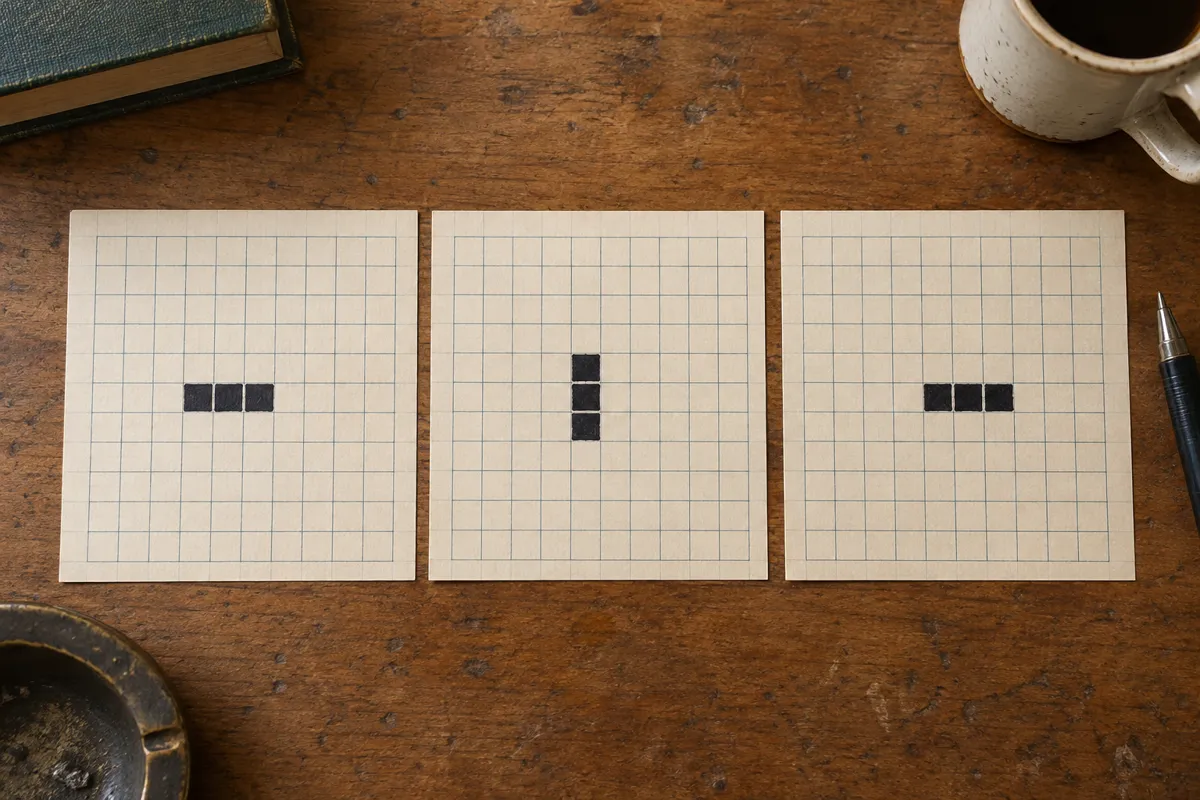
Mark three adjacent squares in a horizontal row on graph paper, leaving surrounding squares empty. Apply the rules twice and observe the alternation.
Background
John Conway devised Life in 1970. Martin Gardner introduced it to Scientific American readers that October. Its square grid contains cells labeled alive or dead. Each cell has eight neighbors, including diagonal ones. A live cell survives with two or three live neighbors; otherwise, it dies. A dead cell becomes alive with exactly three live neighbors. All changes happen simultaneously, based on the previous generation2. The standard model uses an infinite grid, though screens show finite regions. Simple starting arrangements can settle, oscillate3, travel, or keep producing new patterns.
Distinction
Unlike a randomly flickering pixel display, Life produces the same sequence whenever the starting arrangement and boundary conditions match. Its moving patterns are changing cell states, not objects sliding between squares.
Aftermath
Life shows how simple local rules can produce complex behavior without a central controller.
Further examples · 7 images
Question
Why must every cell update simultaneously?
Show possible answer +Hide answer −
Each new generation must depend only on the previous one. Updating cells in sequence would let earlier changes affect later decisions.