1970s film prominence; earlier Disney Audio-Animatronics
Typeface · Graduate
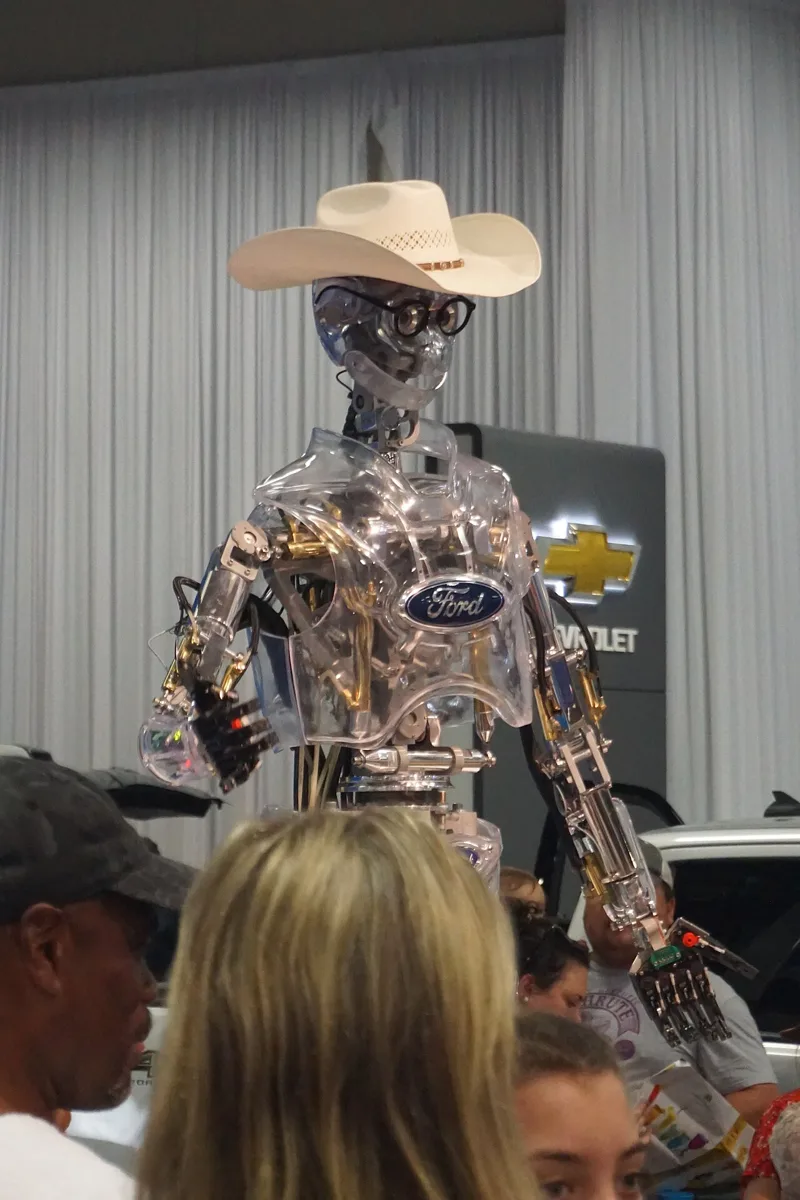
Transparent Cowboy Animatronic. A cowboy-hatted humanoid stands above a crowd, its transparent body revealing mechanical joints, wiring, and linkages.Michael Barera · CC BY-SA 4.0 · via Wikimedia CommonsView source ↗
Prompt
Apply an animatronics practical-effects treatment, rendering the subject as a tangible articulated replica with molded silicone skin, painted foam-latex textures, discreet panel seams, and joint divisions. Add glossy inset details, subtle mechanical fittings, and convincing contact shadows under cinematic set lighting. Keep the original subject and composition.
Physical creatures or figures move through [articulated joints1], with blinking eyes, turning heads, or opening jaws. Their [solid bodies]cast real shadows and interact with water, props, and performers.
Principle
[Hidden mechanisms]use motors, cables, or fluid pressure2to move aconstructed figure beneath its outer skin. Operators or programmed controls coordinate the movements during filming or live display.
Example
Steven Spielberg: Jaws, 1975.
Try it out
Watch amechanical shark shot from Jaws without sound; track the jaw movement, water displacement, and shadows.
Background
Animatronics combines puppet construction with controlled machinery to give physical figures lifelike movement. Disney developed Audio-Animatronics3for attractions before the technique gained particular visibility in 1970s cinema. These figures could synchronize movement with recorded sound. In Jaws, mechanical sharks brought adangerous animal into the same photographed space as actors and seawater. Flexible coverings concealed rigid frames, while powered mechanisms moved selected body parts. Operators coordinated actions rather than relying on an autonomous robot. The camera recorded an actual moving object, so lighting, splashes, and contact were physical rather than drawn.
Distinction
Unlike stop-motion, animatronics moves aphysical figure continuously while the camera records. Unlike computer-generated animation, its visible body exists on set.
Aftermath
Animatronics shows how coordinated mechanical movement and physical interaction can make aconstructed body appear alive.
Further examples · 10 images
02Human Figure with Exposed Animatronic MechanismsA humanlike figure combines a finished face and hands with a transparent torso and exposed limb mechanisms. Its visible actuators and articulated construction reveal the machinery beneath an animatronic character's outer skin.HarshLight from San Jose, CA, USA · CC BY 2.0 · Wikimedia Commons03Animatronic Animal BandA band of oversized animal characters occupies a stage with keyboards, a guitar, and drums. These animatronic musicians use articulated bodies and expressive faces to simulate a coordinated live performance.downing.amanda · CC BY 2.0 · Wikimedia Commons04Pirate Animatronic in a Treasure ChamberA pirate figure reclines in an ornate chair, holding a goblet within a dramatically lit treasure chamber. This staged attraction character exemplifies animatronics concealed beneath realistic skin and costume.HarshLight from San Jose, CA, USA · CC BY 2.0 · Wikimedia Commons05Western Cowboy Animatronic EnsembleThree caricatured cowboys pose before a painted Western landscape, one holding a metal pan. Their constructed faces, articulated hands, and theatrical grouping illustrate a character-based animatronic entertainment display.Funknendai · CC0 · Wikimedia Commons06Child Facing an Animatronic BearA child holding a microphone faces a large costumed bear with an extended arm and a small bird beside it. The bear is an animatronic stage character whose fur and clothing conceal the mechanisms used for performance.Ray or Jane Schumin · CC BY-SA 3.0 · Wikimedia Commons07Crescent-Moon Animatronic PianistA crescent-moon-headed character wearing sunglasses sits at a grand piano beside a microphone. The constructed pianist represents an animatronic musical performer, with its operating mechanisms concealed by the costume and instrument.Adam Lautenbach (Adaml212 at English Wikipedia) · CC BY-SA 3.0 · Wikimedia Commons08Laughing Amusement AutomatonA large laughing female figure wears a tilted hat, curled hair, and a patterned dress, with both hands extended. This recognizable amusement automaton uses a constructed body animated by concealed machinery.Schmiteye at English Wikipedia · Public domain · Wikimedia Commons09Laffing Sal DisplayA Laffing Sal figure stands inside a brightly painted, glass-fronted amusement display. This mechanical laughing attraction exemplifies concealed mechanisms animating a full-sized humanlike figure.Mliu92 · CC BY-SA 3.0 · Wikimedia Commons10Mechanical Musical RevueCostumed musician figures surround a central female performer on an ornate miniature stage. The staged mechanical ensemble illustrates animatronic entertainment through constructed figures posed to sing and play instruments.Lalviarez · CC BY-SA 4.0 · Wikimedia Commons
Question
Why does an animatronic creature naturally share the lighting of nearby actors?
Show possible answer +Hide answer −
Its physical body receives the same on-set light and casts actual shadows. Its surfaces also reflect light into the camera.