H 303 / 3212010s

Computational Night Mode

2010s; Google introduced Night Sight in 2018
Typeface · Kode Mono

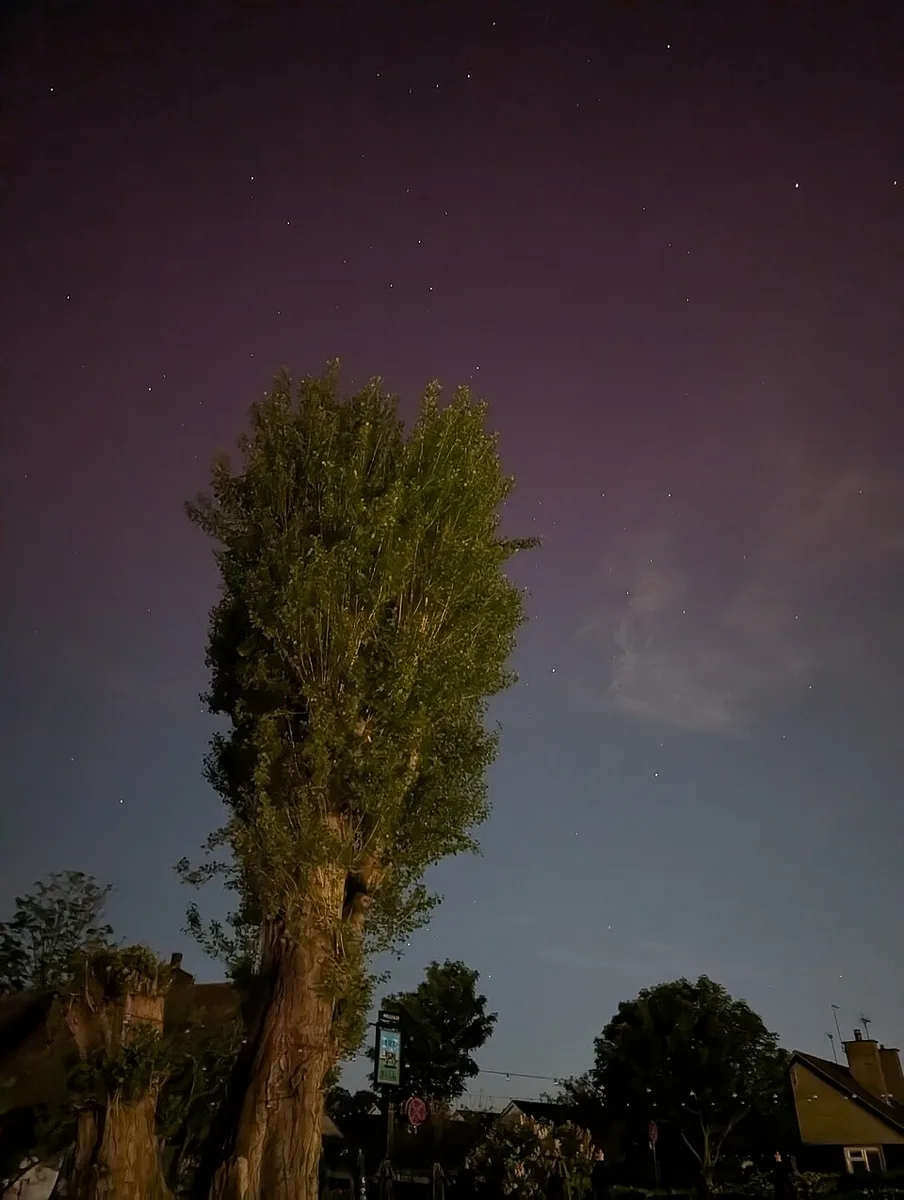
Tree Beneath a Brightened Night Sky. A tall tree rises above dark rooftops beneath a softly luminous, star-speckled sky.
Tree Beneath a Brightened Night Sky. A tall tree rises above dark rooftops beneath a softly luminous, star-speckled sky.The wub · CC BY-SA 4.0 · via Wikimedia CommonsView source ↗

Prompt

Apply a Computational Night Mode effect with readable shadow detail, clear low-light colors, restrained grain, and balanced bright lamps against deep evening tones. Retain natural surface detail rather than waxy smoothing, with faint motion ghosts only around already moving elements. Keep the original subject and composition.

Identify

Dark scenes show brighter shadows, clearer colors, and less visible grain than ordinary low-light snapshots. Moving people may look blurred or leave faint ghosts.

Principle

Software aligns and merges many short exposures1, reducing random noise2 while preserving shared scene detail. Tone mapping3 and color correction make the merged image easier to read.

Example

Google: Night Sight demonstration photographs, 2018.

Try it out

Photograph a dim room with night mode on and off; compare shadow detail, colored objects, and a moving hand.

Background

Combining exposures predates smartphones, notably in astronomical imaging. During the 2010s, mobile cameras made this approach practical for handheld photographs. Google introduced Night Sight in 2018, bringing it to Pixel phones. Instead of relying on one long exposure, it captures a sequence and aligns corresponding details before merging them. Random noise varies between frames, so combining measurements can reveal faint detail more reliably. Exposure choices depend on available light and detected motion. Color correction and tone mapping then shape the visible result. Moving subjects remain difficult because their positions change during capture.

Distinction

Unlike a single long exposure, computational night mode combines separate captures and can compensate for some camera movement. Simply brightening one photograph also amplifies its existing noise.

Aftermath

It shows that a photograph can represent measurements gathered across time, rather than one uninterrupted exposure.

Further examples · 7 images

Holiday Lights and Readable Nighttime Shadows
02 Holiday Lights and Readable Nighttime ShadowsMulticolored holiday lights cover a building, with signs, decorations, and pavement visible in the surrounding darkness. The readable shadow areas and clear colors alongside bright bulbs provide a good visual example of computational night mode's balanced low-light rendering.elisfkc2 · CC BY-SA 2.0 · Wikimedia Commons
Holiday Reflections With Readable Foreground
03 Holiday Reflections With Readable ForegroundMulticolored holiday lights reflect across a pond above a clearly visible wooden railing. Readable foreground shadows, distinct light colors, and relatively smooth dark areas show the characteristic appearance of computational night photography.elisfkc2 · CC BY-SA 2.0 · Wikimedia Commons
Double-Decker Bus After Dark
04 Double-Decker Bus After DarkA cream and red double-decker bus stands beside a brick wall beneath a dark sky. Clear foliage, readable shadow detail, and restrained grain alongside bright interior lights make this a strong visual example of computational night rendering.Fork99 · CC BY-SA 4.0 · Wikimedia Commons
Illuminated Church and Lifted Lawn Shadows
05 Illuminated Church and Lifted Lawn ShadowsAn illuminated church tower rises above a bright green lawn against a violet night sky. The lifted foreground, preserved architectural detail, and visible color throughout the dim scene illustrate the characteristic results of computational night mode.Eric Kilby · CC BY-SA 2.0 · Wikimedia Commons
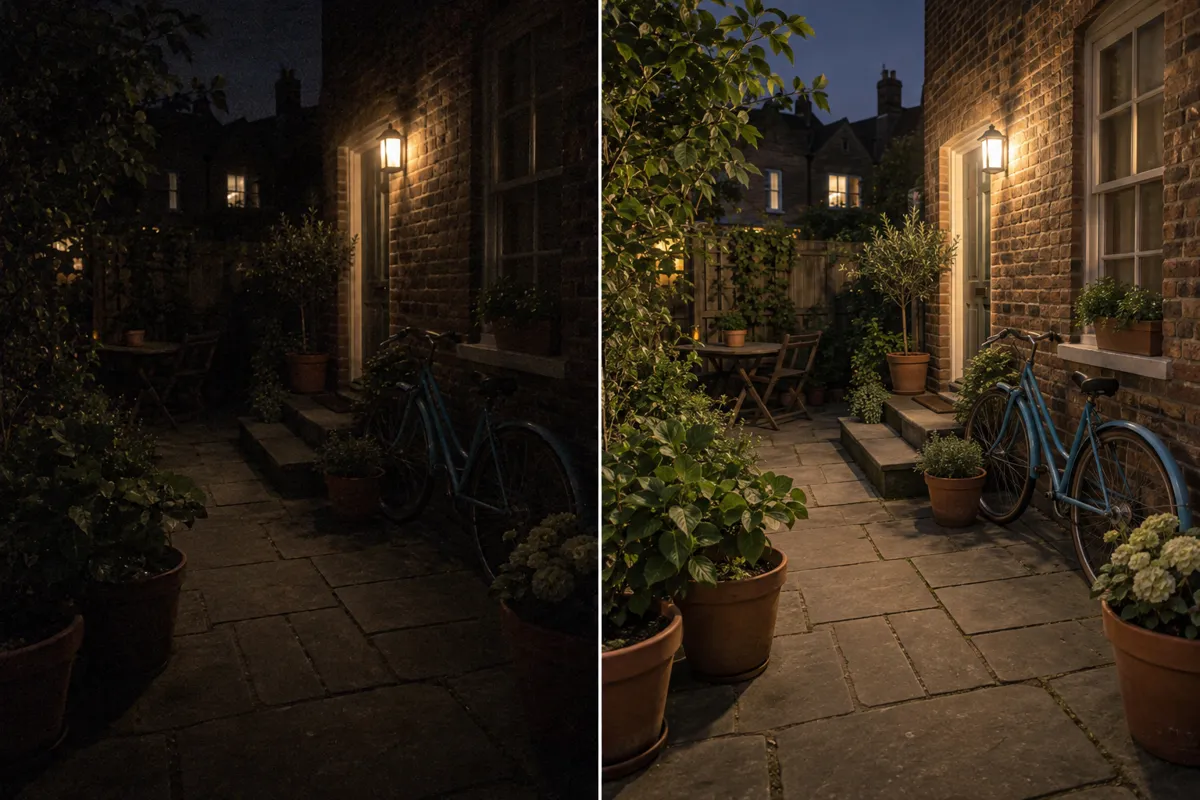
AI illustration: Side-by-side comparison of standard and night mode processing
06 AI illustration: Side-by-side comparison of standard and night mode processingThis side-by-side comparison displays a standard dark exposure next to an enhanced version with recovered shadow detail and vibrant colors. The right pane demonstrates how multi-frame alignment and tone mapping simulate a much larger sensor's light-gathering capabilities.Illustration generated for the Atlas (AI)
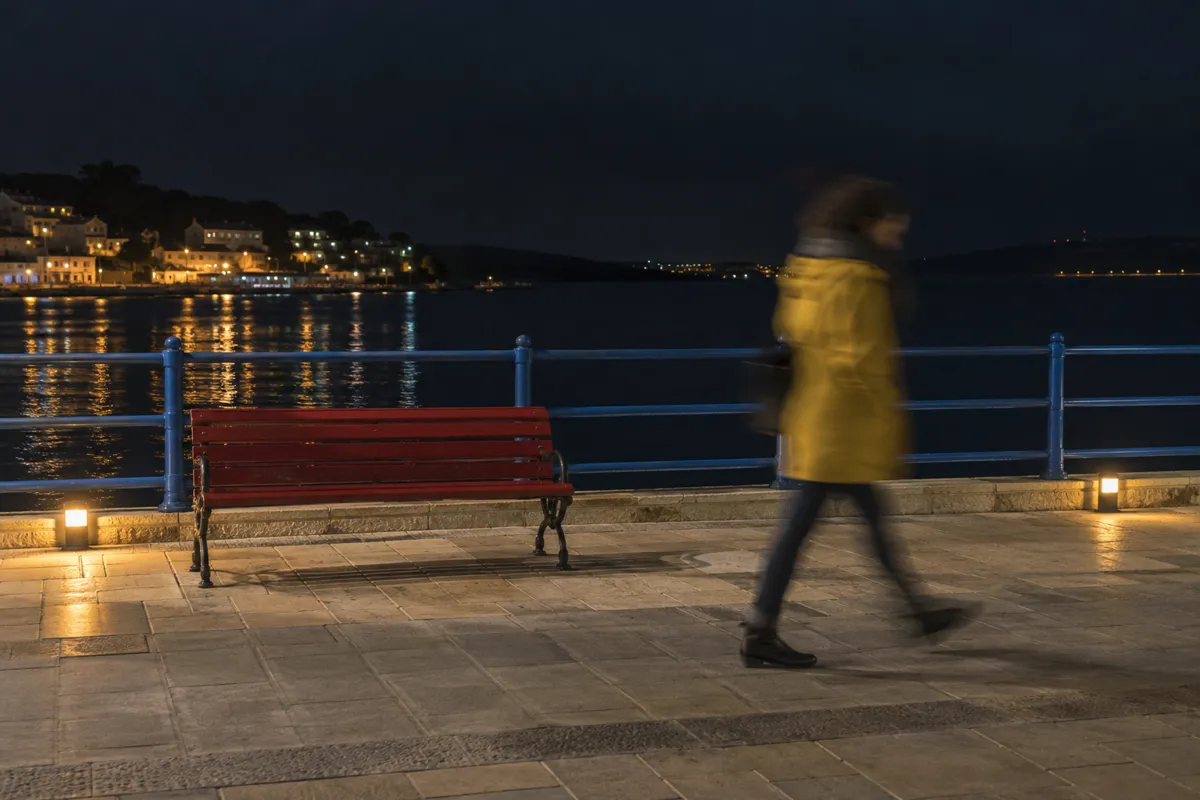
AI illustration: Motion blur artifacts in computational long exposure
07 AI illustration: Motion blur artifacts in computational long exposureA brightened waterfront scene features a stationary red bench and a blurred, ghostly figure of a walking person. The sharp static details combined with motion artifacts illustrate the result of merging multiple short exposures into a single high-dynamic-range image.Illustration generated for the Atlas (AI)

Question

Why can several short exposures reveal more detail than brightening one short exposure?

Show possible answer +

They provide additional measurements of the scene. Combining aligned measurements reduces random noise relative to consistent detail, while brightening alone adds no information.

Sources