Cinerama
1952, Fred Waller's widescreen process
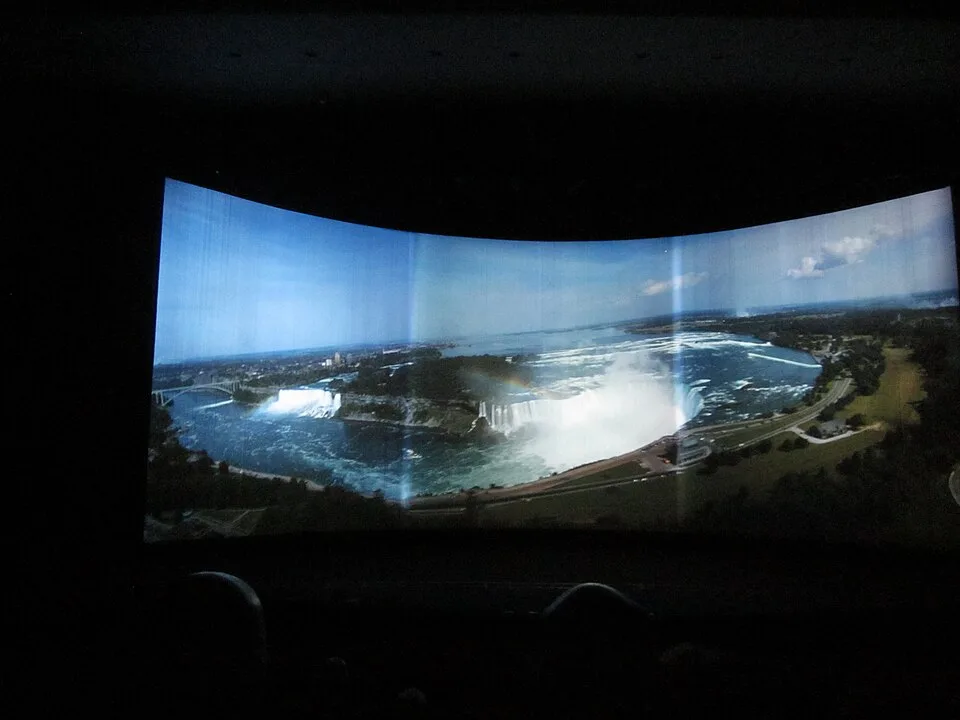
Prompt
Apply a three-panel panoramic cinema effect with a gently curved-screen appearance, subtle perspective differences between three equal vertical sections, and faint seams at their joins. Add slightly mismatched panel exposure, rich projected-film color, fine grain, and soft peripheral falloff without cropping. Keep the original subject and composition.
Identify
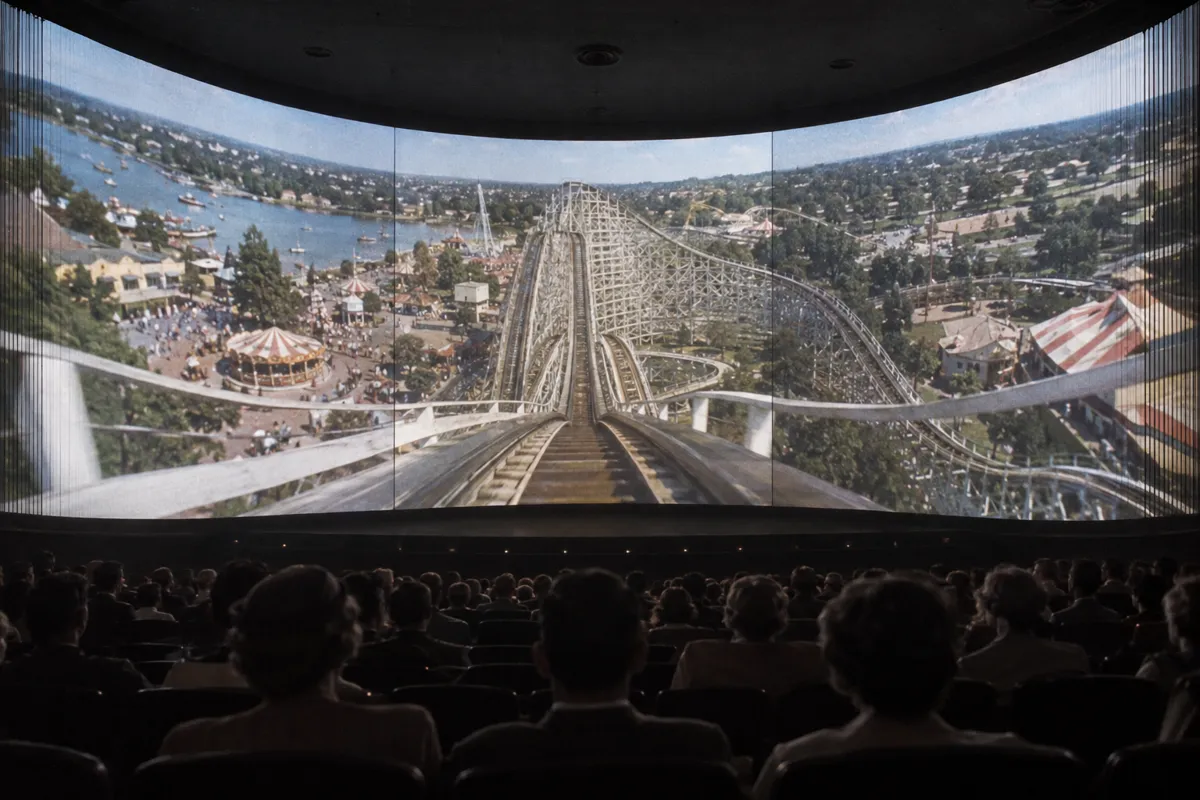
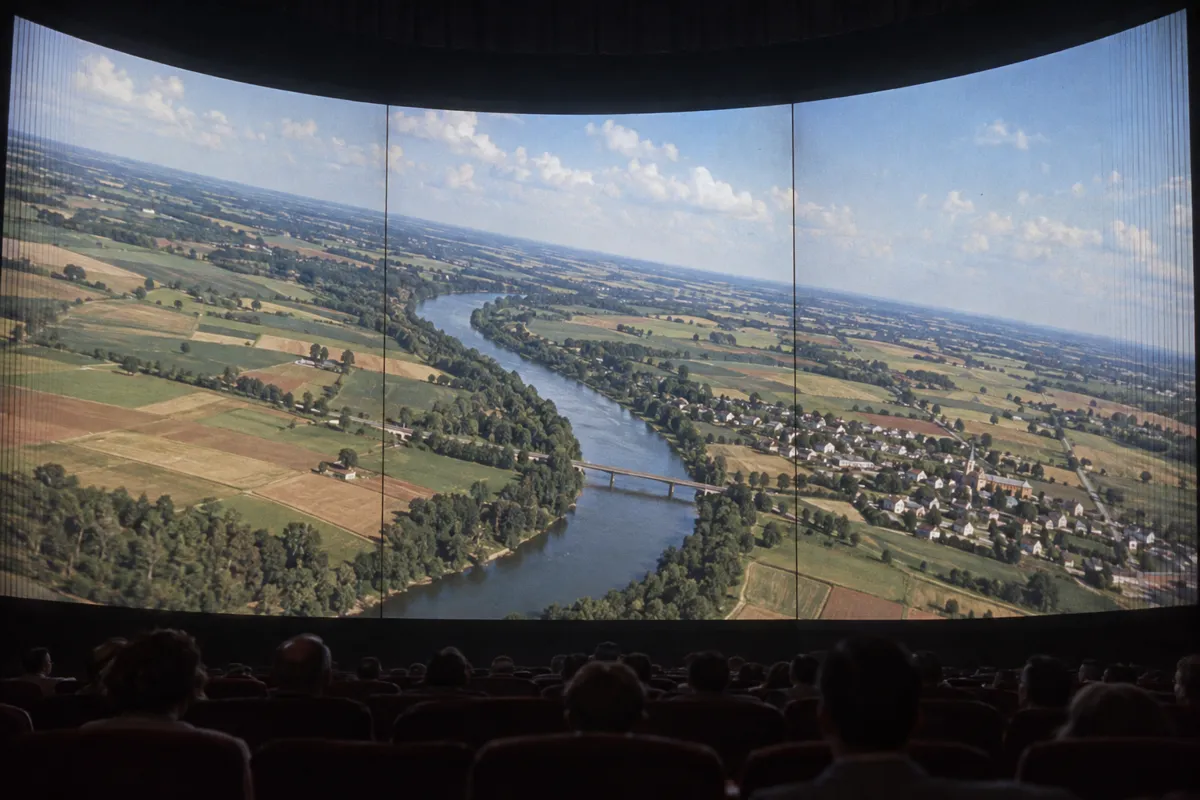
You see an extremely wide, immersive moving image wrapping around your peripheral vision. Faint vertical lines or seams often appear where the picture is divided into three equal panels.
Principle
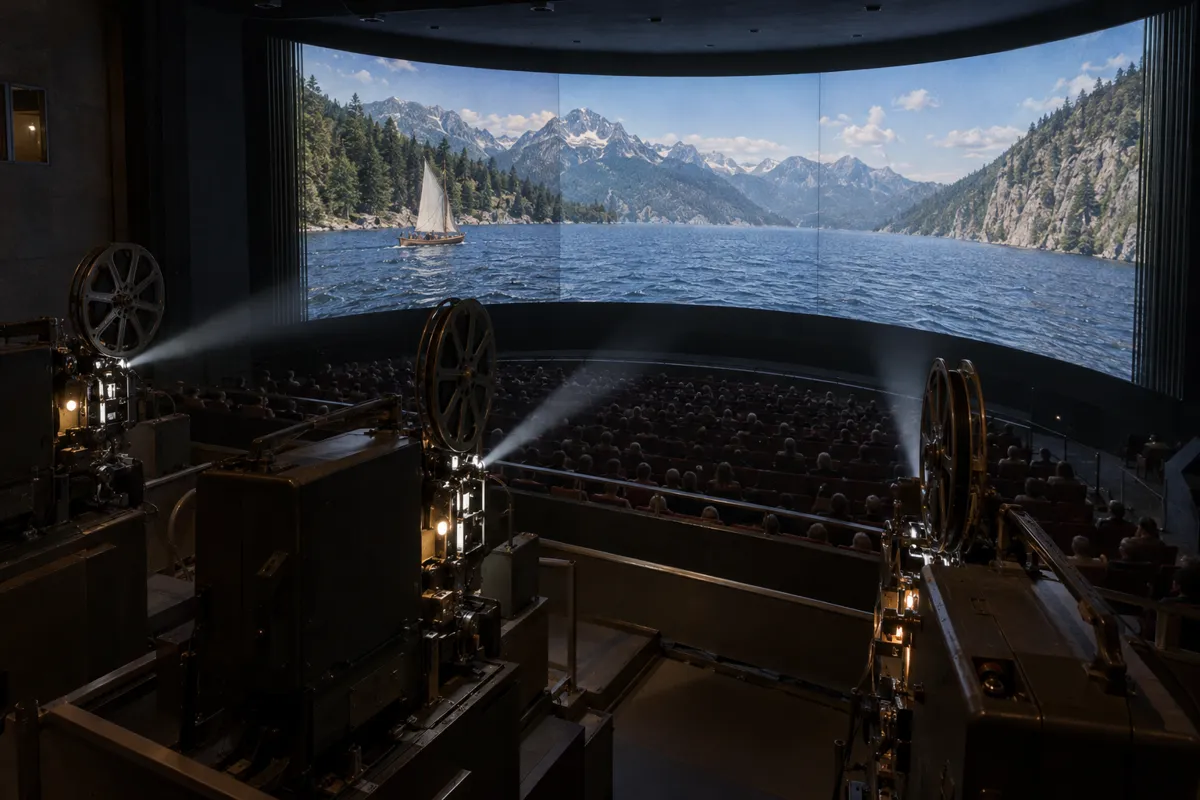
Three synchronized1 cameras film a scene from slightly different angles simultaneously. In theaters, three separate projectors cast these films onto a deeply curved louvered screen2.
Example
Merian C. Cooper and Robert L. Bendick: This Is Cinerama, 1952.
Try it out
Stand close to a large TV and notice how much of the room you still see. Cup your hands around your eyes to mimic a curved screen blocking the room.
Background
Cinerama debuted in 1952 to lure audiences away from early televisions. Fred Waller invented the system using three synchronized 35mm cameras with 27-millimeter lenses. Each camera captured one-third of a massive 146-degree field of view3. In special theaters, three projectors fired images crosswise onto a deeply curved screen made of hundreds of vertical strips. These overlapping projections created an illusion of deep space without 3D glasses. However, keeping the three projectors perfectly synchronized was difficult. The seams where the three images overlapped were nearly impossible to hide completely.
Distinction
Unlike CinemaScope, which squeezes a wide image onto one film strip, Cinerama uses three completely separate films projected side-by-side.
Aftermath
It shows how early mechanical complexity pushed the boundaries of immersive theater experiences before single-lens wide formats took over.
Further examples · 7 images


Question
Why did the deeply curved screen use vertical strips instead of a solid white canvas?
Show possible answer +Hide answer −
A solid curved screen would reflect light back across itself, washing out the image. Angled vertical strips bounced the light out toward the audience instead.