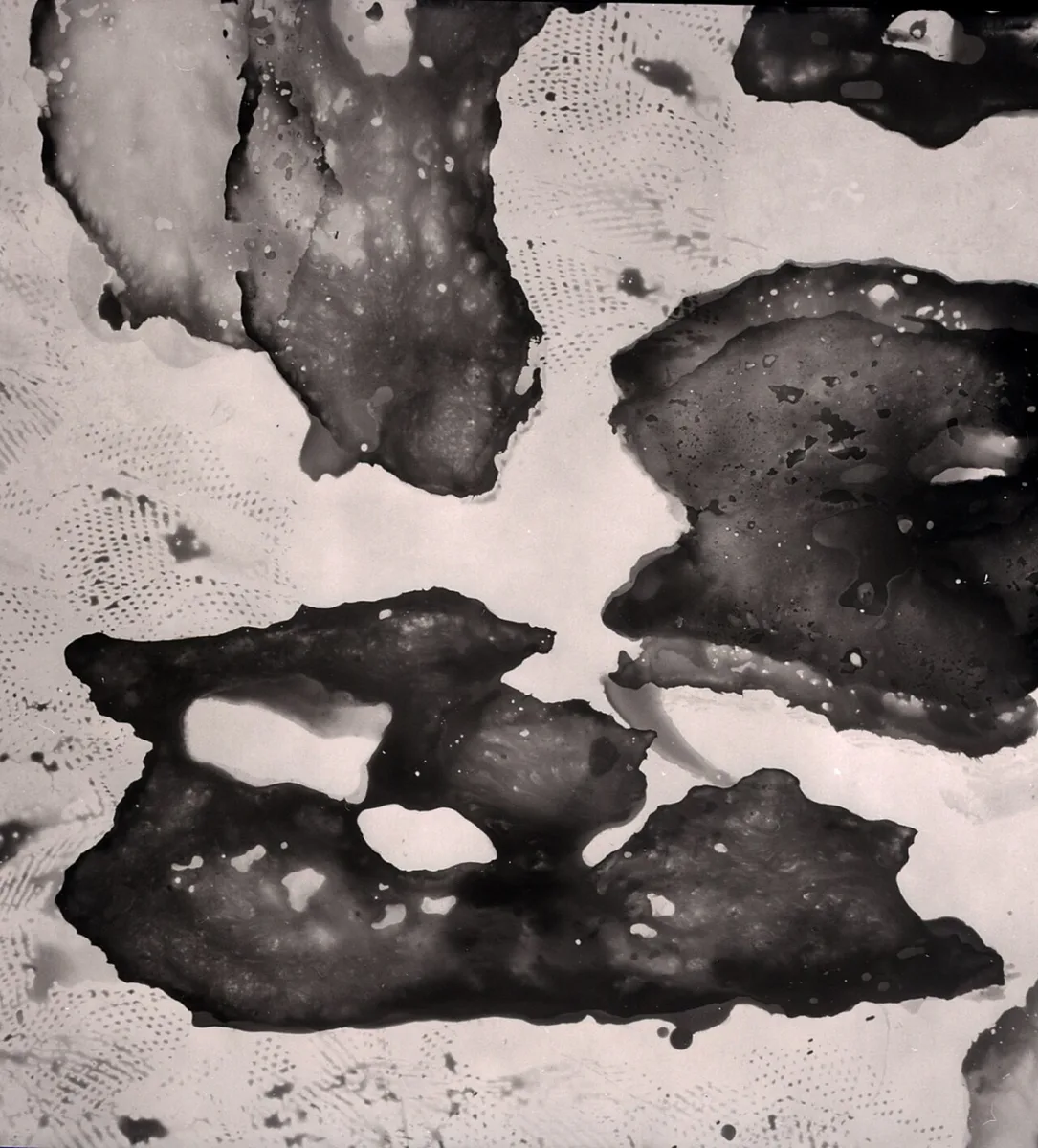
Abstract Chemigram With Mesh Resist. Abstract, high-contrast black blobs are scattered across a light background featuring a subtle, dotted mesh pattern.Paolo Monti · CC BY-SA 4.0 · via Wikimedia CommonsView source ↗
Prompt
Transform this image into a Chemigram-style photographic print with organic chemical blooms, wax-resist islands, sharp masked boundaries, and concentric reaction bands. Use warm paper whites, deep brown-black deposits, amber stains, and granular silver textures, translating existing forms into irregular developed regions. Keep the original subject and composition.
You see [abstract, painterly shapes and textures]on photographic paper. These images often feature organic blobs and sharp geometric lines.
Principle
Chemicals used to develop photographs are applied directly onto [light-sensitive paper]. Resists like wax or varnish control where the [chemicals react].
Example
Pierre Cordier: Chemigram 1/5/70 II, 1970.
Try it out
Look at achemigram and try to spot where the artist painted the chemical directly versus where aresist blocked it.
Background
Pierre Cordier invented the chemigram in 1956 while writing adedication with nail polish on photographic paper. Unlike traditional photography, this technique uses no camera, no lens, and no enlarger. It combines the physics of painting with the chemistry of photography. Artists apply darkroom chemicals directly onto the paper in full room light. Developer1creates black areas, and fixer2creates white areas. Artists also use resists3, such as wax or varnish, to block the chemicals. As these resists slowly lift or crack, the chemicals seep in. This creates unpredictable, intricate textures and organic patterns.
Distinction
Aphotogram uses objects to block light from hitting paper during an exposure. Achemigram applies chemicals directly to paper in broad daylight.
Aftermath
It reveals that photographic materials can be used purely as aphysical medium for abstract painting.
Further examples · 11 images
02Geometric Grid Chemigram With ResistsThick, black, paint-like lines form a rough, abstract geometric grid over a lighter, unevenly toned background. This perfectly demonstrates the use of physical resists to block chemicals, creating a striking, graphic chemigram.Paolo Monti · CC BY-SA 4.0 · Wikimedia Commons03Ghostly Organic Chemigram ShapesA symmetrical, ghostly tan and black abstract form features fluid, organic edges and open internal voids. The liquid-like interaction of photographic chemicals and resists on the paper creates a classic chemigram effect.Paolo Monti · CC BY-SA 4.0 · Wikimedia Commons04Dark Chemigram With Chemical PoolingA dark, moody abstract composition displays a distinct lighter, irregular border surrounding a textured, liquid-like center. The visible chemical washes and pooling effects on the photographic paper are classic hallmarks of the chemigram technique.Paolo Monti · CC BY-SA 4.0 · Wikimedia Commons05Painterly High-Contrast ChemigramHigh-contrast, sweeping black marks resembling thick brushstrokes frame lighter, abstract shapes on the paper surface. The painterly application of developer or fixer around masked areas perfectly illustrates the chemigram process.Paolo Monti · CC BY-SA 4.0 · Wikimedia Commons06Fluid Organic Sepia Chemigram BlobsFluid, organic blobs in varying shades of black, sepia, and white bleed and merge dynamically into one another. The distinct chemical reactions and warm tonal shifts from developer and fixer interactions make this a prime chemigram example.Paolo Monti · CC BY-SA 4.0 · Wikimedia Commons07Soft Hazy Chemigram WashA soft, hazy abstract figure is suspended within a roughly rectangular lighter wash, framed by dark, uneven edges. The smoky, fluid interplay of photographic chemicals on the paper surface unmistakably demonstrates the chemigram technique.Paolo Monti · CC BY-SA 4.0 · Wikimedia Commons08Black and white abstract chemigram with glowing centerSoft, glowing white areas are surrounded by dark, painterly chemical stains on paper. It perfectly demonstrates the abstract, fluid qualities of the chemigram process.Paolo Monti · CC BY-SA 4.0 · Wikimedia Commons09Sepia-toned organic chemigram with fluid shapesBrown, fluid-like shapes with varying opacity and sweeping strokes are visible on the paper. The organic blobs are characteristic of chemical and resist application in chemigrams.Paolo Monti · CC BY-SA 4.0 · Wikimedia Commons10Glossy green and brown abstract chemigramGlossy, swirling organic forms in greenish-brown tones dominate the composition. The fluid interaction of chemicals on the paper surface makes it a clear example of the technique.Paolo Monti · CC BY-SA 4.0 · Wikimedia Commons11Abstract chemigram with dark border and central shapeA dark, textured border surrounds a lighter area containing a central, organic blob. The varied, uncontrolled chemical reactions clearly indicate the chemigram process.Paolo Monti · CC BY-SA 4.0 · Wikimedia Commons
Question
Why do chemigrams sometimes have warm colors like brown or yellow?
Show possible answer +Hide answer −
Different resists and chemicals interact unevenly over time. This causes silver particles in the paper to oxidize and create earthy tones.