Calotype / paper negative. Patented in 1841, influential in the 1840s
Typeface · Cormorant Garamond
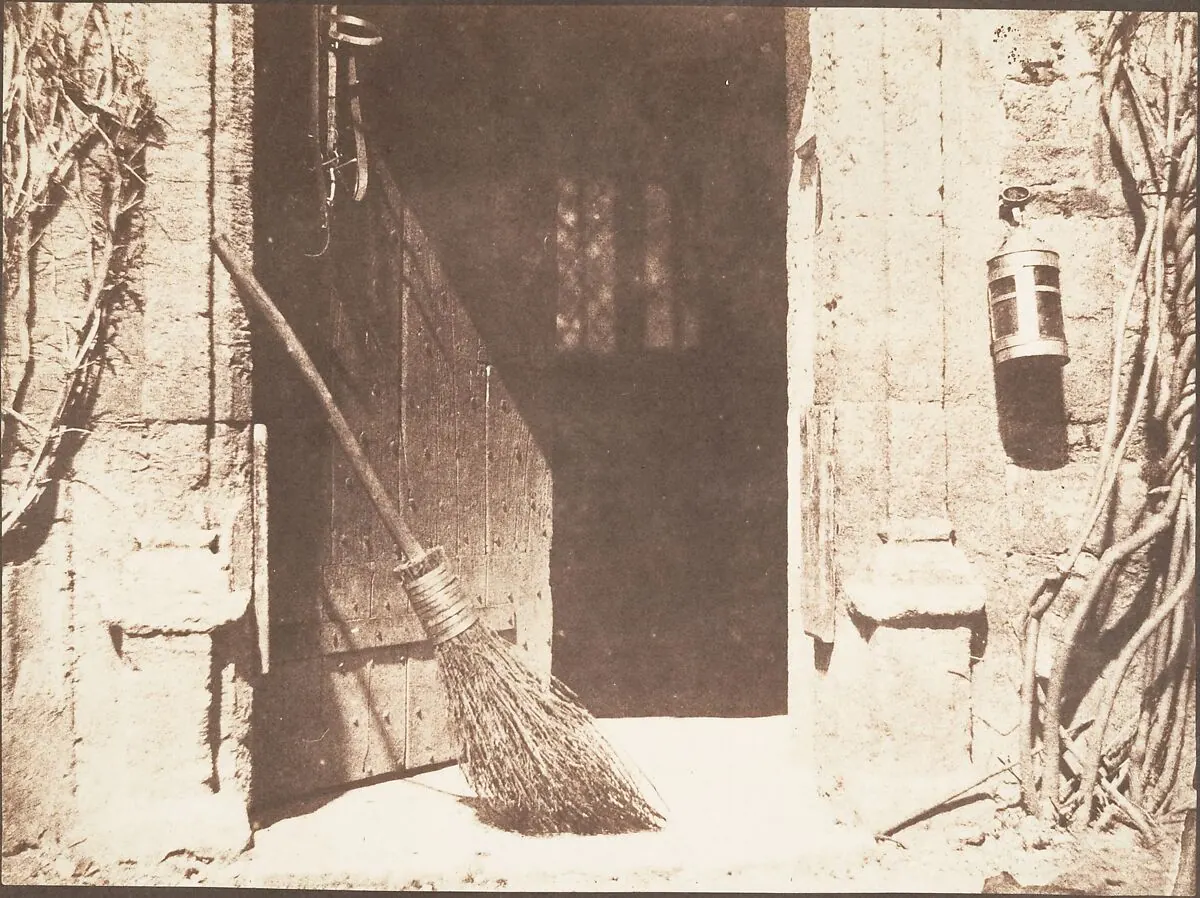
William Henry Fox Talbot: The Open Door, before May 1844. Salt print from paper negative.William Henry Fox Talbot / The Metropolitan Museum of Art. The Met Open Access / Public Domain.View source ↗
Prompt
Transform this image into a Calotype positive print with warm brown monochrome tones, soft contours, and broad, quiet tonal areas. Let visible paper fibers gently interrupt fine detail, adding matte texture, restrained contrast, slightly mottled shadows, and delicate fading toward the edges. Keep the original subject and composition.
[Soft contours], [matte paper texture], and calm tonal areas. The paper fibers can influence the image.
Principle
Adeveloped paper negative1serves as atemplate for [several positive contact prints]. The image information is contained within the paper.
Example
William Henry Fox Talbot: The Open Door, before May 1844.
Try it out
Compare the paper negative and positive. Digitally simulate paper texture and lower microcontrast2to approximate the look.
Background
Talbot patented the calotype in February 1841. 1840s–1850s; early negative-positive workflow. Detailed mechanism: The camera image is created as adeveloped paper negative. Several positive contact prints can be made from this; paper fibers affect the detail. One negative can produce many positive images: the early starting point of reproducible photography.
Distinction
One negative can provide many positive images: the early starting point of reproducible photography.
Aftermath
Paper texture and low microcontrast as design elements.
Further examples · 11 images
02Calotype-adamsonA seated man holds a small book against a dark backdrop. The soft contours and visible paper texture demonstrate the characteristic diffusion caused by the paper negative process.Hill & Adamson · Public domain · Wikimedia Commons03[Group of 17 Early Calotype Stereograph Views] (1)This stereograph shows a riverside view of a castle with a rocky foreground. The low microcontrast and fibrous appearance of the paper surface highlight the Calotype's unique aesthetic.Unknown authorUnknown author · Public domain · Wikimedia Commons04Rocky hillside calotype 110109A monochrome landscape features a rocky hillside under a pale sky. The grainy quality and softened details exemplify how paper fibers influence the final developed image.Obsltechhist · CC0 · Wikimedia Commons05[Group of 17 Early Calotype Stereograph Views] (2)Two side-by-side views depict a large historical building at the base of a hill. The calm tonal areas and matte finish are representative of early negative-positive contact prints.Unknown authorUnknown author · Public domain · Wikimedia Commons06[Group of 17 Early Calotype Stereograph Views] (3)A village landscape with several houses is presented in a stereoscopic format. The visible texture and lack of sharp precision illustrate the artistic softness of the paper-based medium.Unknown authorUnknown author · Public domain · Wikimedia Commons07Calotype image of David Milne-Home, President of the Edinburgh Geological Society. Held by the University of Edinburgh Heritage CollectionA side profile portrait shows a man in a dark coat holding a book. The deep, warm tones and soft edges reflect the successful reproduction of light through a paper negative.Hill, David Octavius · CC BY 3.0 · Wikimedia Commons08[Group of 17 Early Calotype Stereograph Views] (4)A river flows through a rocky canyon in this early stereoscopic landscape view. The image shows the characteristic speckling and muted details inherent in the Calotype development process.Unknown authorUnknown author · Public domain · Wikimedia Commons09[Group of 17 Early Calotype Stereograph Views] (5)A stone tower stands prominently behind a courtyard wall in this outdoor scene. The paper texture is clearly visible, contributing to the soft, painterly quality of the architectural detail.Unknown authorUnknown author · Public domain · Wikimedia Commons10Liebfrauenkirche OberweselA church with a tall spire is captured from a slightly elevated perspective. The faded tonal range and textured paper surface serve as classic indicators of a 19th-century talbotype.Unknown authorUnknown author · Public domain · Wikimedia Commons11William Henry Fox Talbot, The Haystack, 1844This salt print from a calotype negative shows the typical soft contours and matte finish. The fibrous texture of the paper negative is visible in the sky and shadow areas.William Henry Fox Talbot · Public domain · Wikimedia Commons