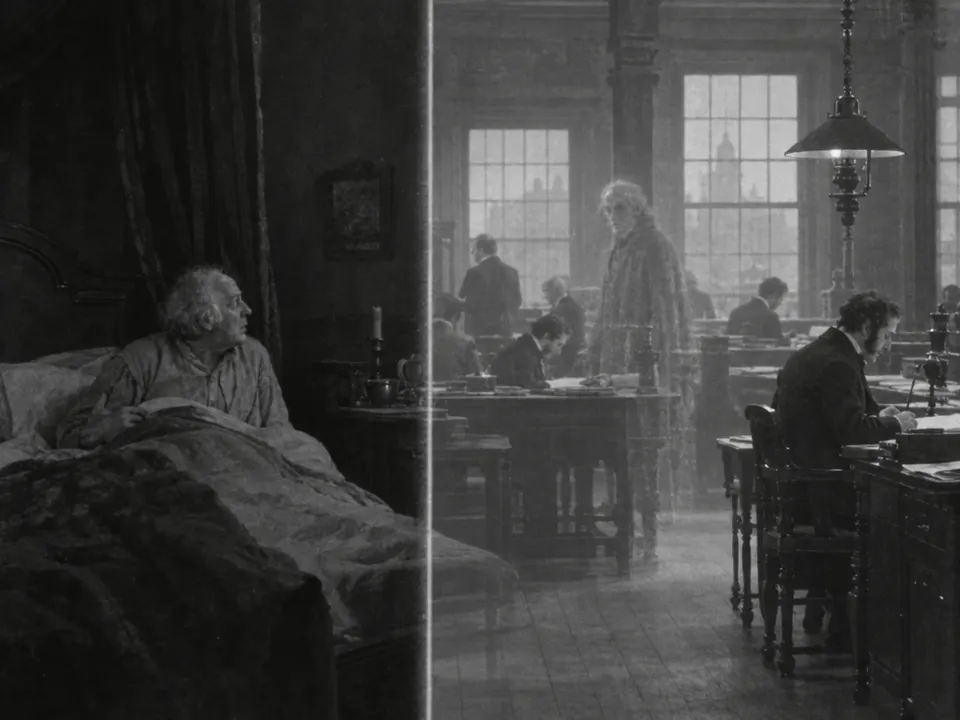
Apply a Wipe transition effect frozen halfway across the image, using a crisp vertical boundary between the original photograph and a warm monochrome version of the same scene. Keep spatial details precisely registered across the dividing edge, with subtle film grain throughout. Keep the original subject and composition.
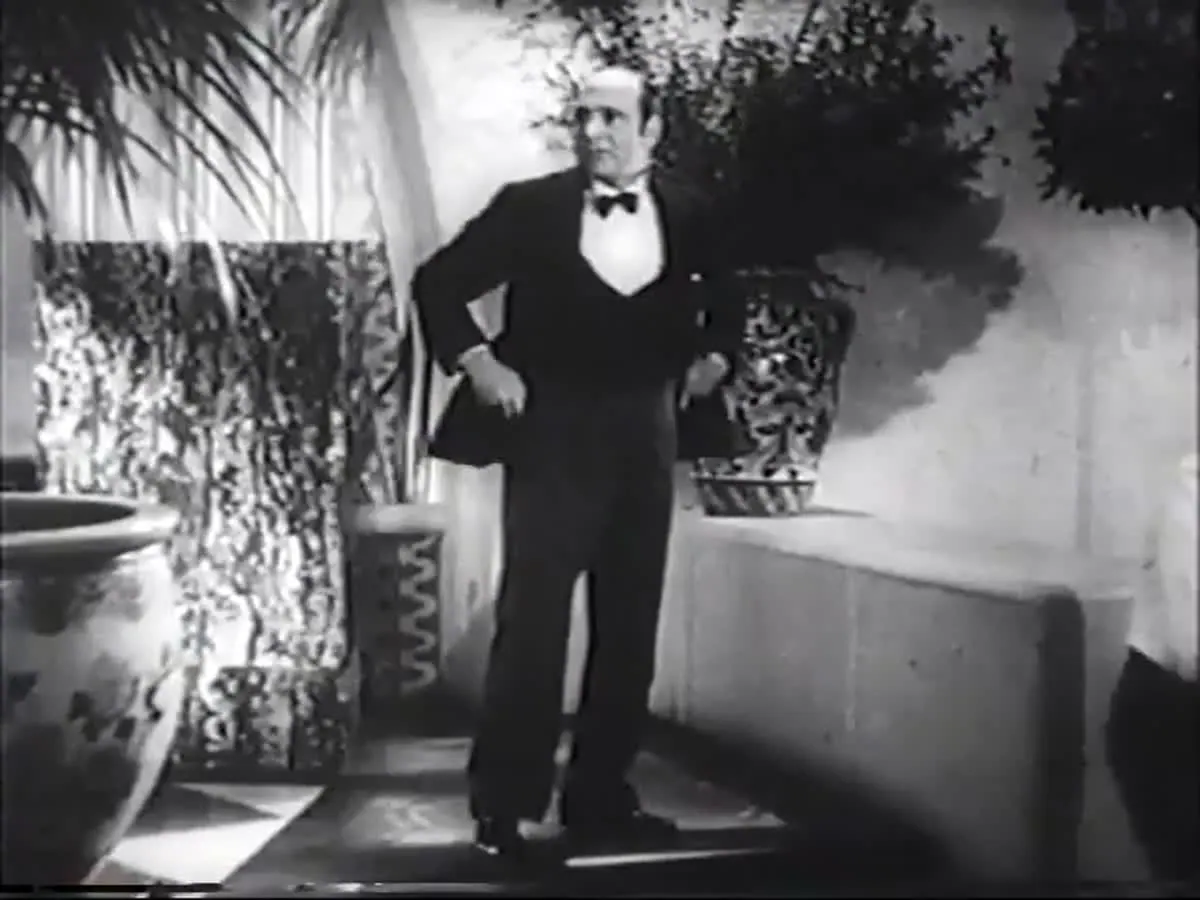
Columbia references Robert Paul's 1901 film Scrooge and atransition resembling afalling theater curtain. Early wipes often required complex laboratory production. Studios were able to use them more easily in the 1930s with the advent of their own optical printers. Later films also used them deliberately for nostalgic effect, such as The Sting. The direction and shape of the boundary influence the tempo and rhythm.
Distinction
The moving edge is part of the effect; it is not an additional decorative line. Awipe indicates achange in the image space and is much more noticeable than ahard cut.
Aftermath
Aboundary in the image can itself become anarrative event.
Further examples · 7 images
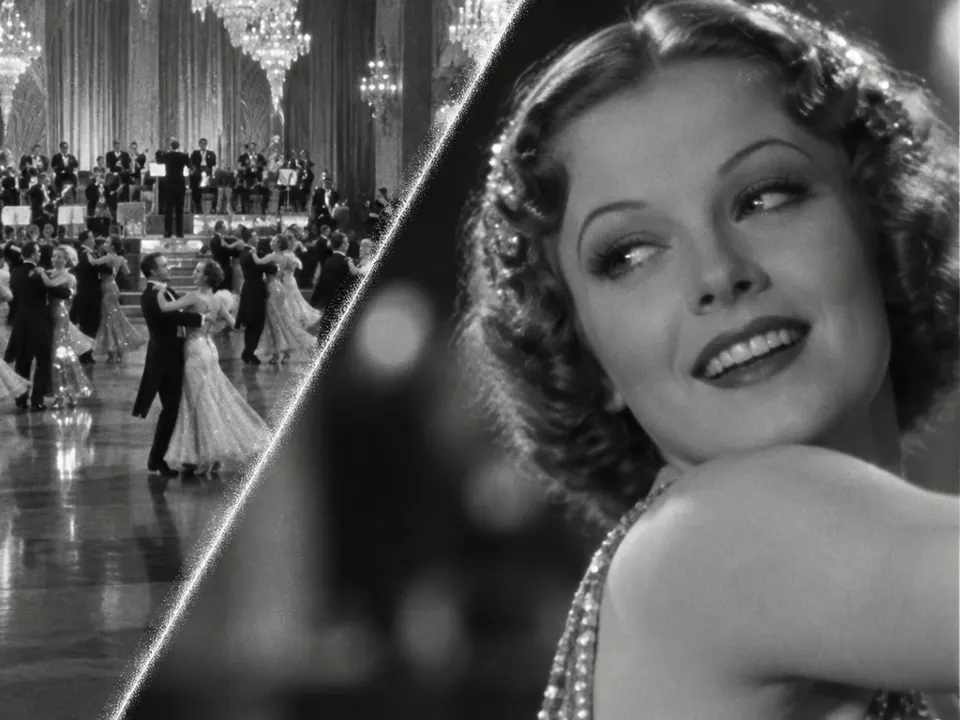
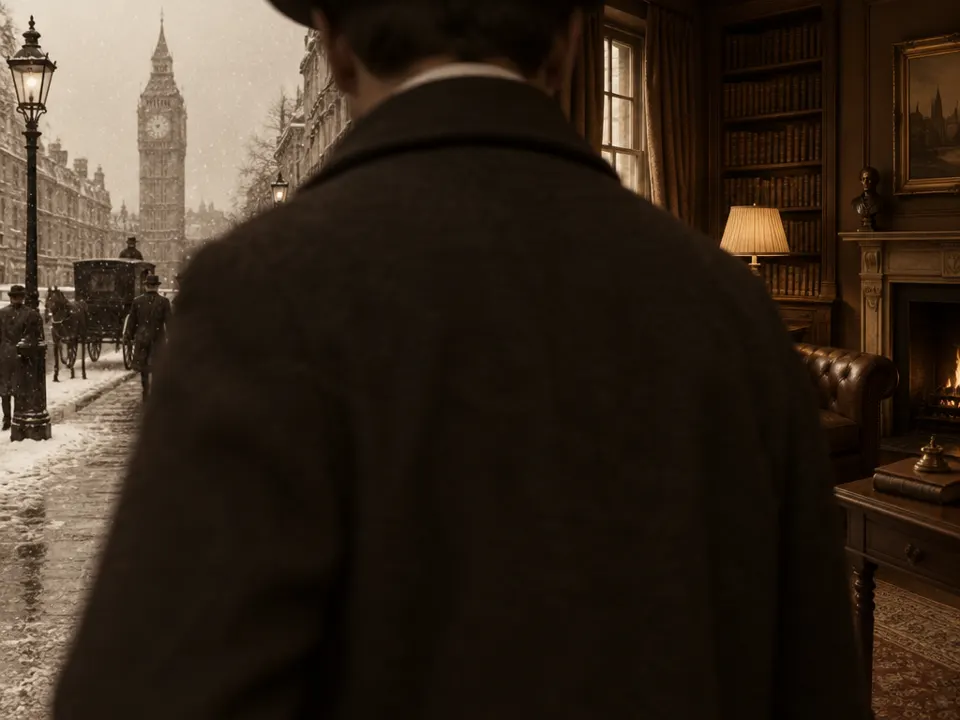
02Wipe left to rightA video editing interface displays a horizontal wipe transition between two clips. The preview window illustrates a vertical boundary moving across the frame to reveal the subsequent image.JonOomph · GPL · Wikimedia Commons03Optical printer for old and shrunken films, designed by Carl Louis Gregory, 1940A technical diagram shows an optical printer designed by Carl Louis Gregory. This apparatus was essential for creating precise transitions like wipes by re-photographing film strips with moving masks.Carl Louis Gregory (1882-1951), images taken and published in his professional capacity as NARA staff · Public domain · Wikimedia Commons04Optical printer by Carl Louis Gregory, rear side, March 1943The rear view of the Gregory optical printer shows the mechanical complexity of the device. Precise synchronization between the film transport and shutter was necessary to achieve clean wipe transitions.Carl Louis Gregory (1882-1951), images taken and published in his professional capacity as NARA staff · Public domain · Wikimedia Commons05AI illustration: A vertical line divides the frame into two distinct scenesA vertical line divides the frame into two distinct scenes. This illustrates a mid-transition wipe where one image replaces another along a shifting boundary.Illustration generated for the Atlas (AI)06AI illustration: A diagonal edge separates a close-up of a woman from a ballroom sceneA diagonal edge separates a close-up of a woman from a ballroom scene. The angled boundary demonstrates a stylized wipe transition common in 1930s cinema.Illustration generated for the Atlas (AI)07AI illustration: The back of a passing person acts as a moving mask between an outdoor strThe back of a passing person acts as a moving mask between an outdoor street and an interior room. This creates a natural wipe transition within the frame.Illustration generated for the Atlas (AI)
Question
How do you distinguish between Wipe and Dissolve?
Show possible answer +Hide answer −
In awipe, aspatial boundary moves; in adissolve, transparencies change across the surface.