Ultraviolet Photography
1910s, Robert W. Wood's UV landscape and floral images
Prompt
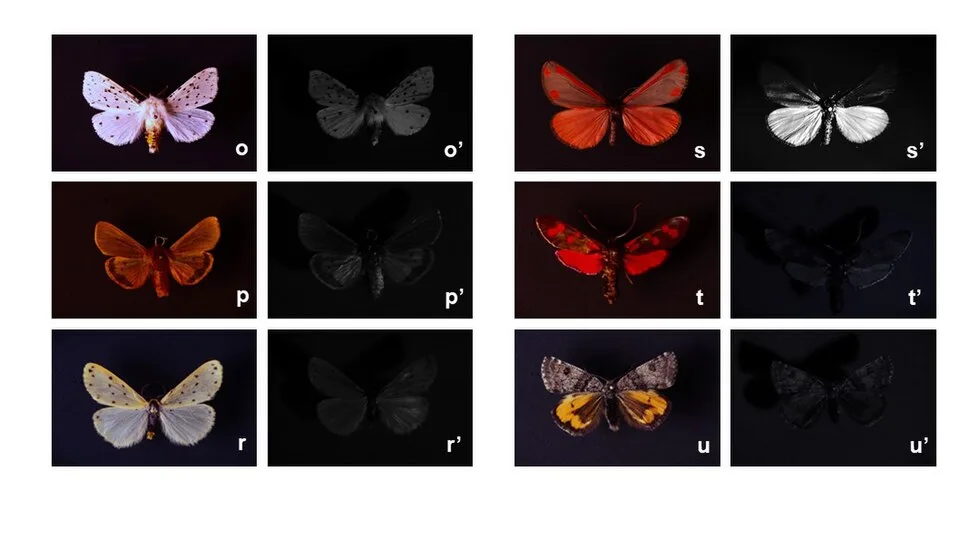
Transform this image into reflected Ultraviolet Photography with stark monochrome tonal shifts, unnaturally dark foliage, and dark nectar-guide patterns on any visible flower petals. Emphasize skin pigmentation where present, subdued glass transmission, fine photographic grain, and crisp surface detail without neon fluorescence. Keep the original subject and composition.
Identify
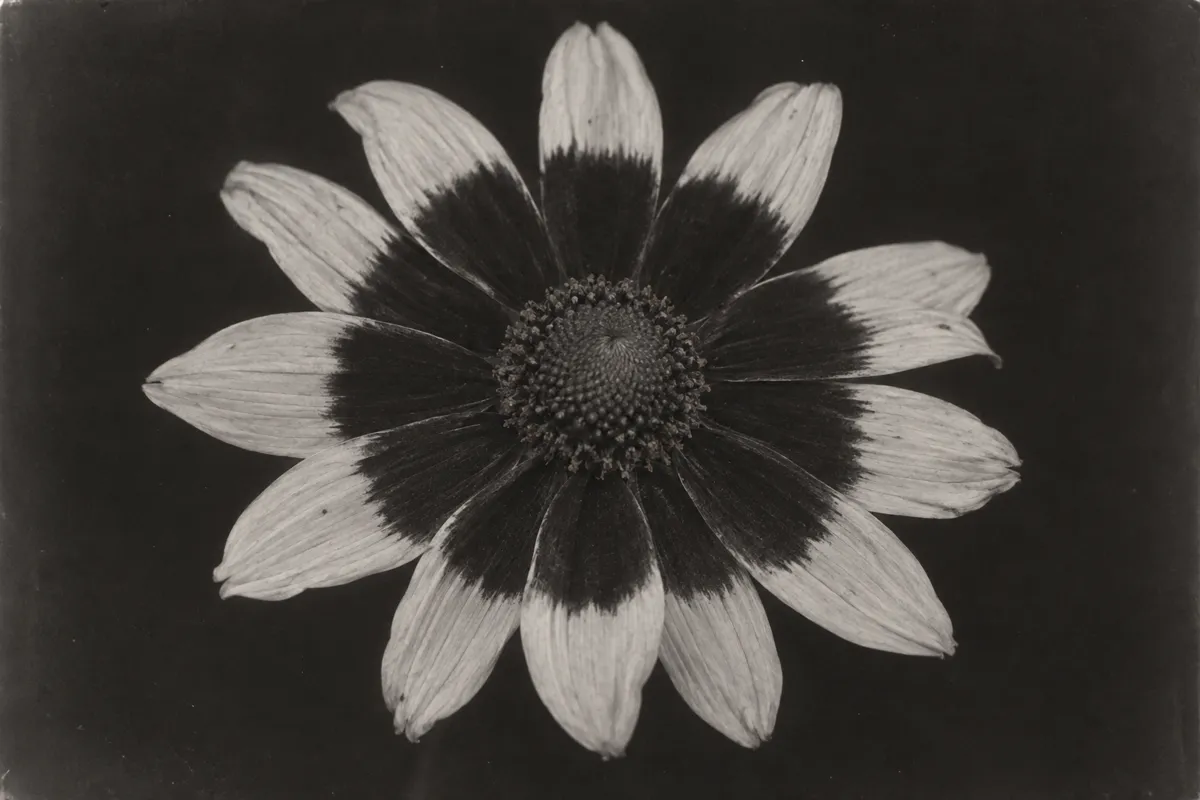
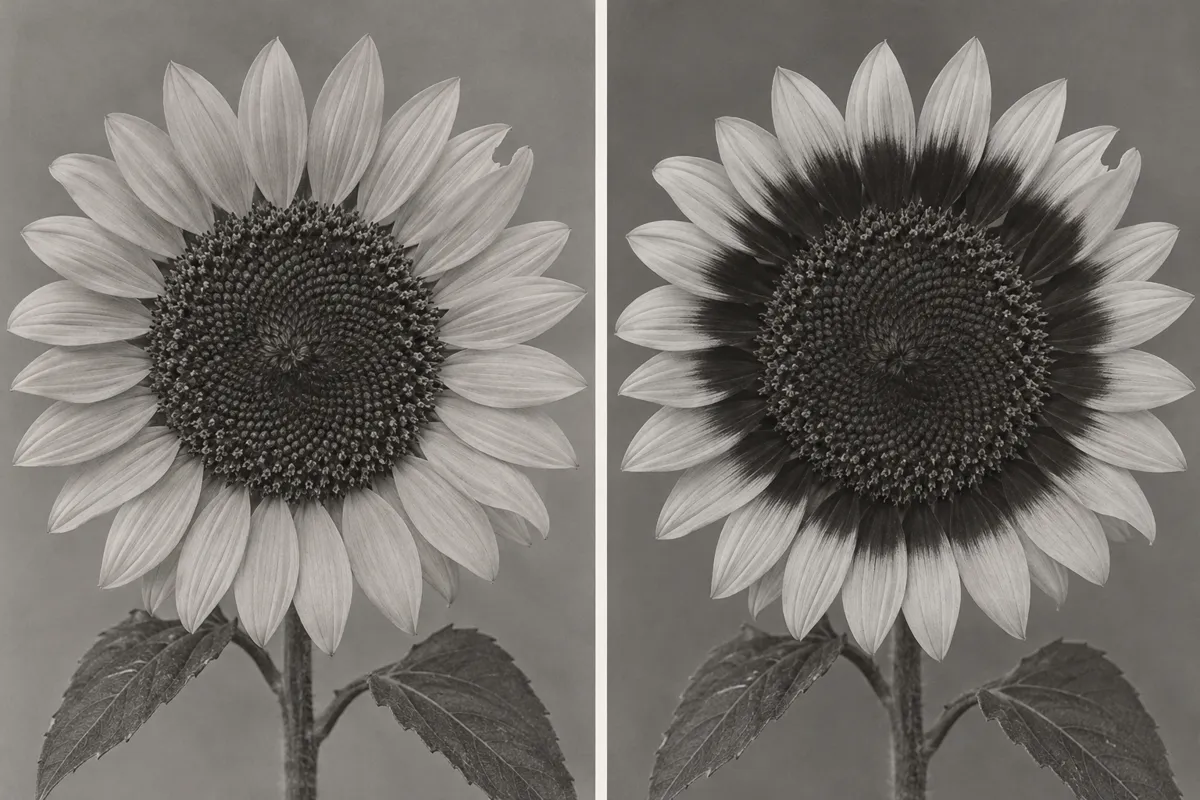
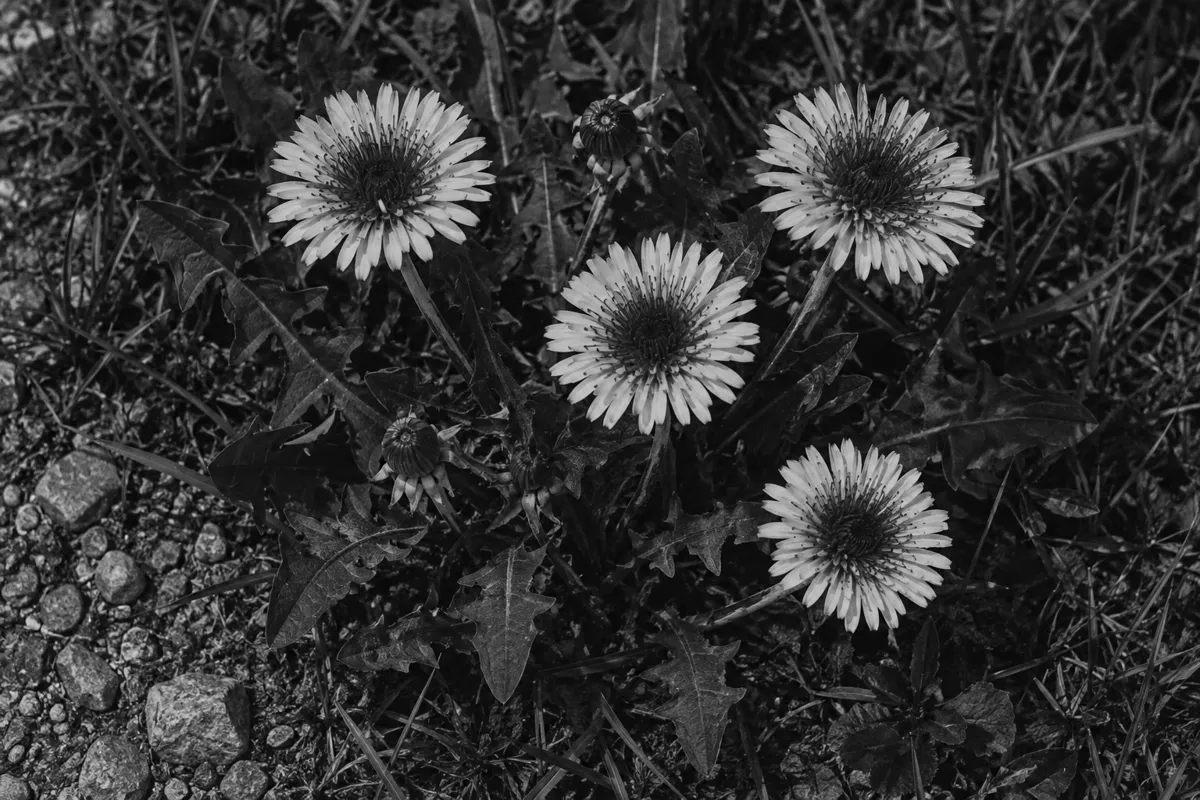
Familiar flowers or landscapes appear starkly different. Dark patches emerge on flower petals, and foliage looks unnervingly dark.
Principle
A special filter blocks visible light but lets invisible ultraviolet rays1 pass through. The photographic emulsion2 records these normally unseen wavelengths.
Example
Robert W. Wood: 'Ultraviolet photograph of a Potentilla flower', 1910.
Try it out
Use an inexpensive blacklight in a dark room to reveal invisible fluorescent security features on modern currency or passports.
Background
Robert W. Wood pioneered this technique around 1910 by inventing a special barium-sodium-silicate filter. This material, later called Wood's glass3, blocked visible light entirely. It only allowed invisible ultraviolet light to reach the photographic plate. By photographing common plants, Wood revealed a completely hidden visual world. He discovered that many flower petals have intricate UV-absorbing patterns. These unseen markings act as landing guides for pollinating insects. Bees and other insects can naturally see these ultraviolet wavelengths. His experiments laid the groundwork for modern forensic science and astronomy.
Distinction
Unlike infrared photography, which often makes foliage appear snowy white, ultraviolet photography renders leaves very dark. It captures shorter, highly energetic wavelengths.
Aftermath
It visually proves that human eyes perceive only a tiny fraction of the broader electromagnetic spectrum.
Further examples · 4 images
Question
Why do some bright flowers look entirely dark in ultraviolet photographs?
Show possible answer +Hide answer −
Their petals contain specific chemical pigments that absorb ultraviolet light. This creates dark contrast patterns that guide insects toward nectar.