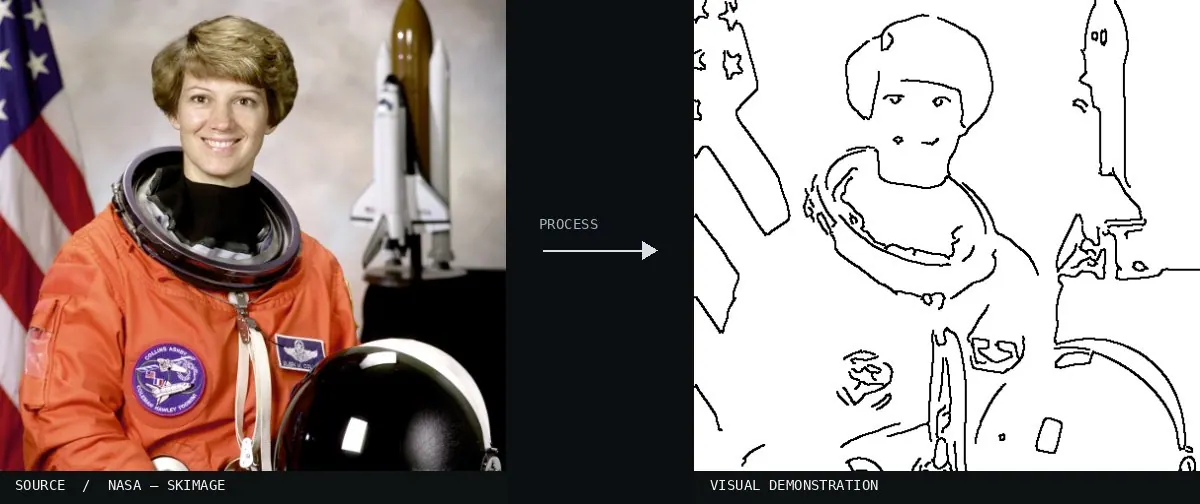
Real-world algorithm demonstration, applied to a NASA portrait.Image: NASA / Eileen Collins · scikit-image (public domain)View source ↗
Prompt
Transform this image into a Scribble Control sketch, using sparse, rough black strokes on a clean white background to indicate major silhouettes, gestures, and a few essential interior features. Make lines uneven and loosely hand-drawn, omitting shading, color, grain, and fine detail. Keep the original subject and composition.
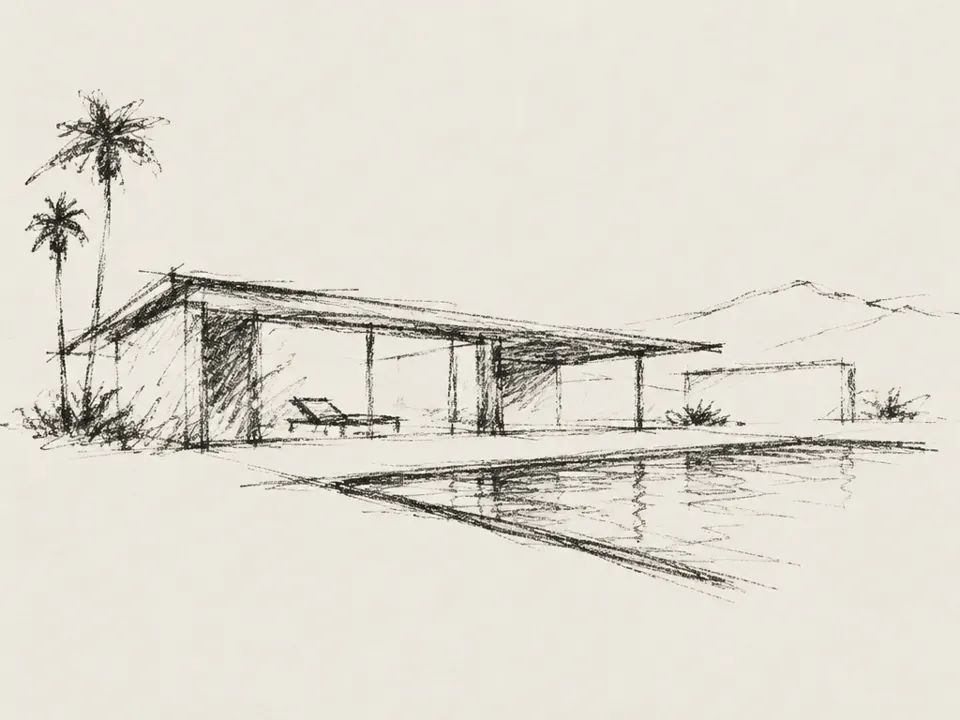
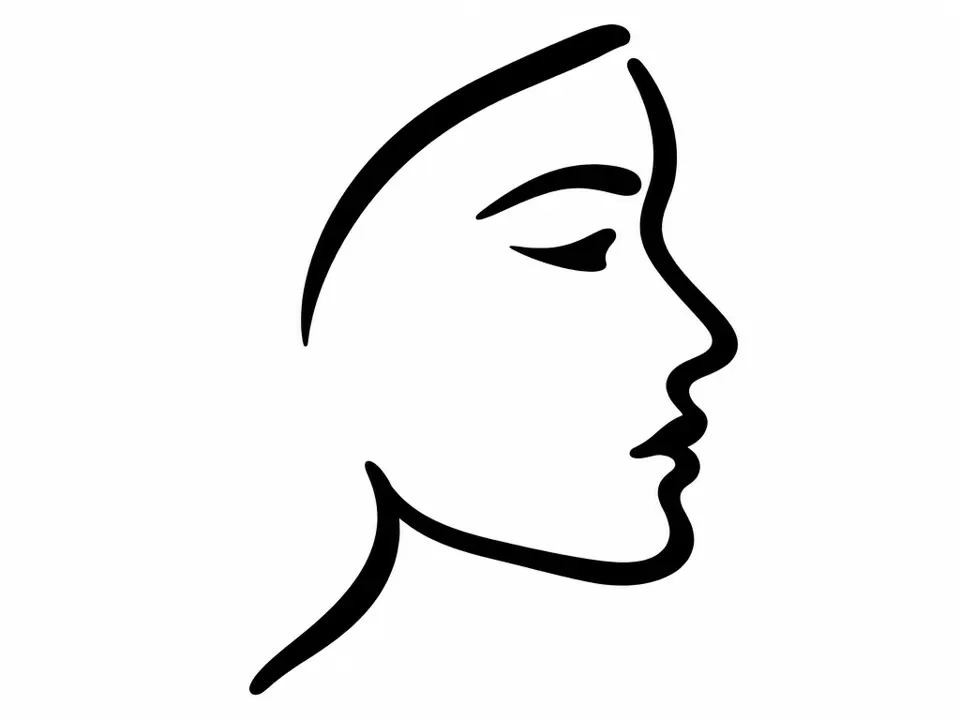
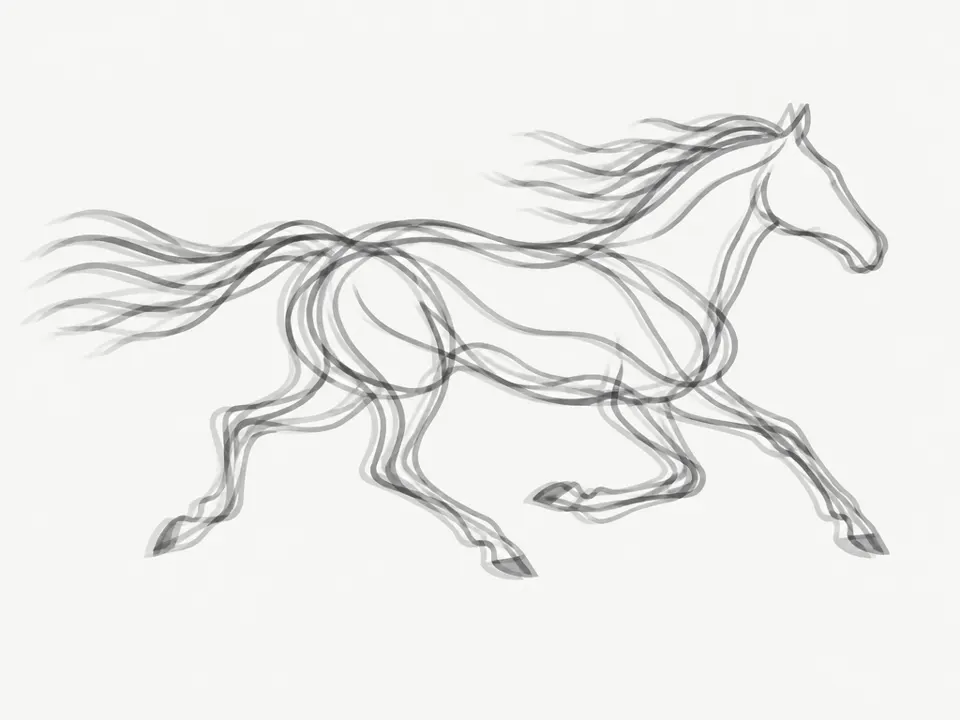
02Scribble Control, applied to “Moscow 05-2012 Tsaritsyno 10”The bridge and palace architecture are reduced to essential geometric outlines against a white background. This sketch conditioning allows the landmark composition to be read through a few simplified, rough lines.A.Savin (photo); processed for the Atlas · CC BY-SA 3.0 · Wikimedia Commons03Scribble Control, applied to “Hochries, Alpes del Chiemgau, Alemania, 2024-10-19, DD 28-30 HDR”The summit cross and mountain ridge are defined by a few continuous, jagged strokes. The processing successfully reduces the landscape to a minimalist, legible graphic representation using very few lines.Diego Delso (photo); processed for the Atlas · CC BY-SA 4.0 · Wikimedia Commons04AI illustration: A poolside structure is depicted through loose, foundational charcoal strA poolside structure is depicted through loose, foundational charcoal strokes. These few rough lines determine the entire perspective and architectural composition, demonstrating sketch conditioning.Illustration generated for the Atlas (AI)05AI illustration: A profile of a human face is created with fewer than ten minimalist brushA profile of a human face is created with fewer than ten minimalist brushstrokes. The design is immediately readable through extremely simplified line conditioning on a white background.Illustration generated for the Atlas (AI)06AI illustration: A running horse is formed by a series of overlapping, gestural sketch linA running horse is formed by a series of overlapping, gestural sketch lines. The rough input determines the motion and anatomy, reducing the subject to simplified digital strokes.Illustration generated for the Atlas (AI)07AI illustration: A city street scene is rendered with loose, charcoal-style strokesA city street scene is rendered with loose, charcoal-style strokes. Simple gestural lines determine the complex composition of cars and buildings.Illustration generated for the Atlas (AI)