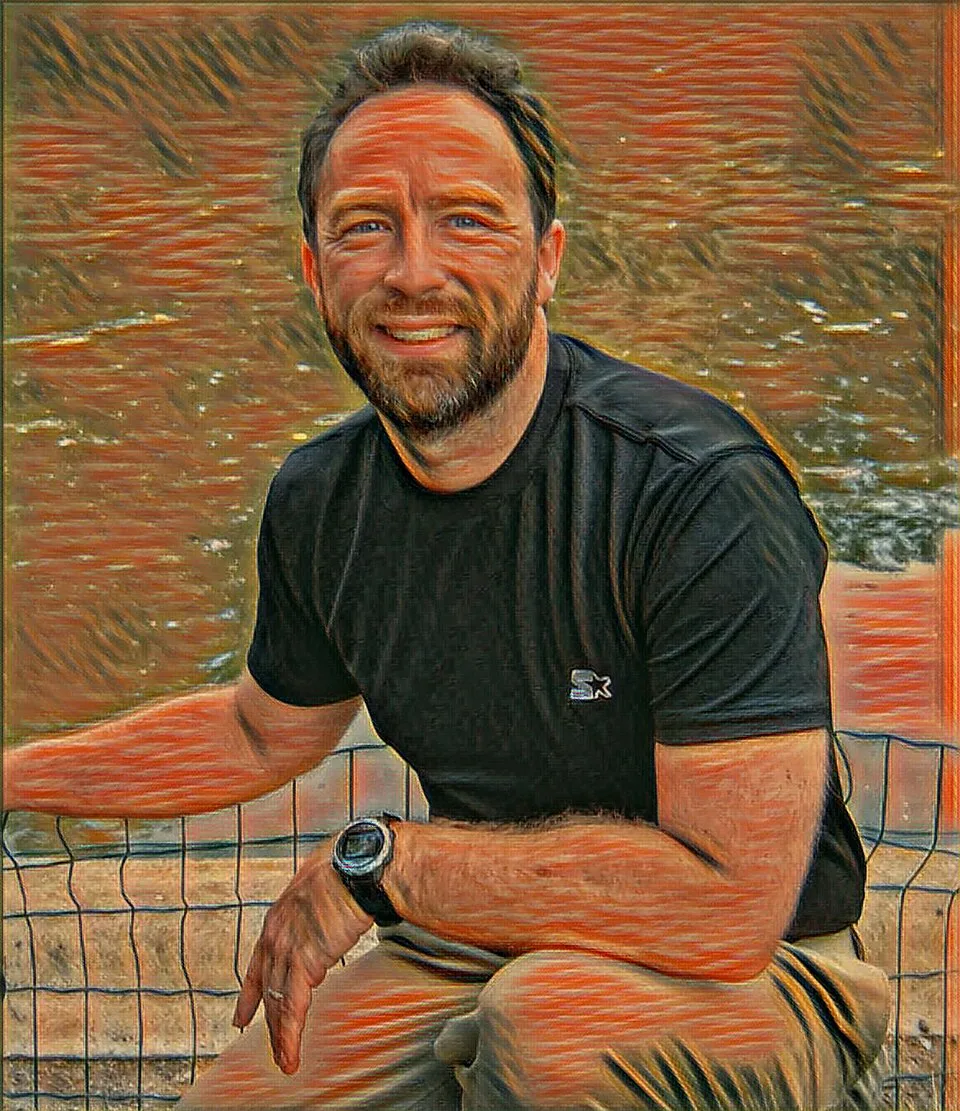
Seated Portrait with Transferred Brushstrokes. A seated man's recognizable photographic portrait is overlaid with orange, gold, and green directional brushstrokes.Kira Wales · CC BY-SA 3.0 · via Wikimedia CommonsView source ↗
Prompt
Apply a Neural Style Transfer effect, translating photographic surfaces into layered painterly brushstrokes, swirling pigment textures, and harmonized teal, ochre, and crimson tones. Let repeated stroke patterns follow major forms, preserving recognizable contours while replacing fine photographic detail with expressive painted texture. Keep the original subject and composition.
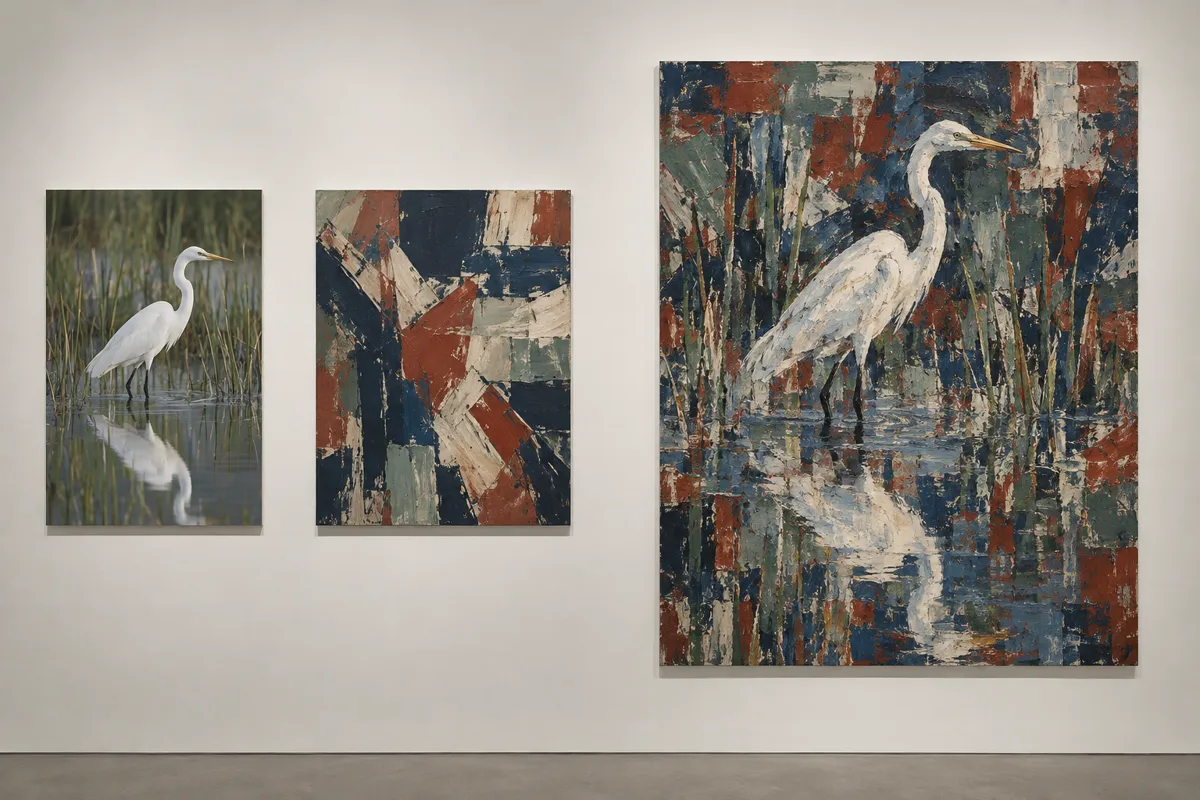
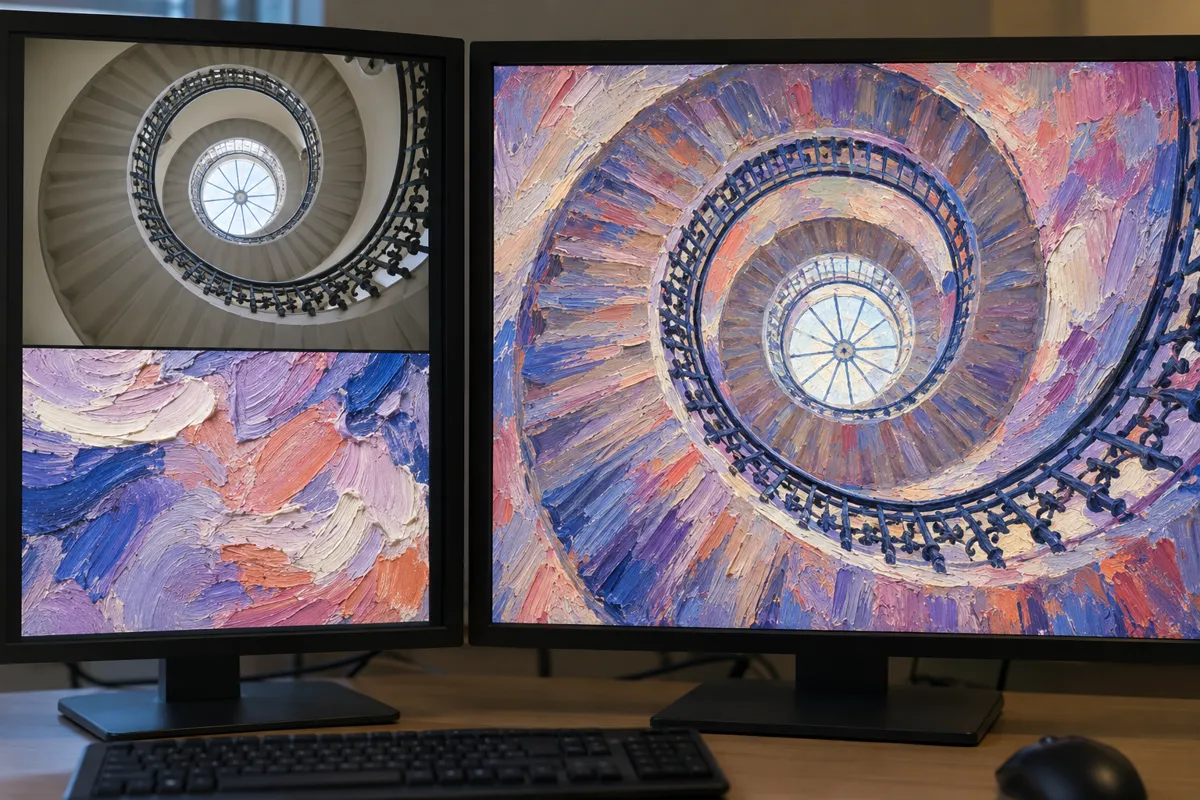
You see aphoto altered to look like apainting. It [keeps the original shapes]but adopts another image's colors and brushstrokes.
Principle
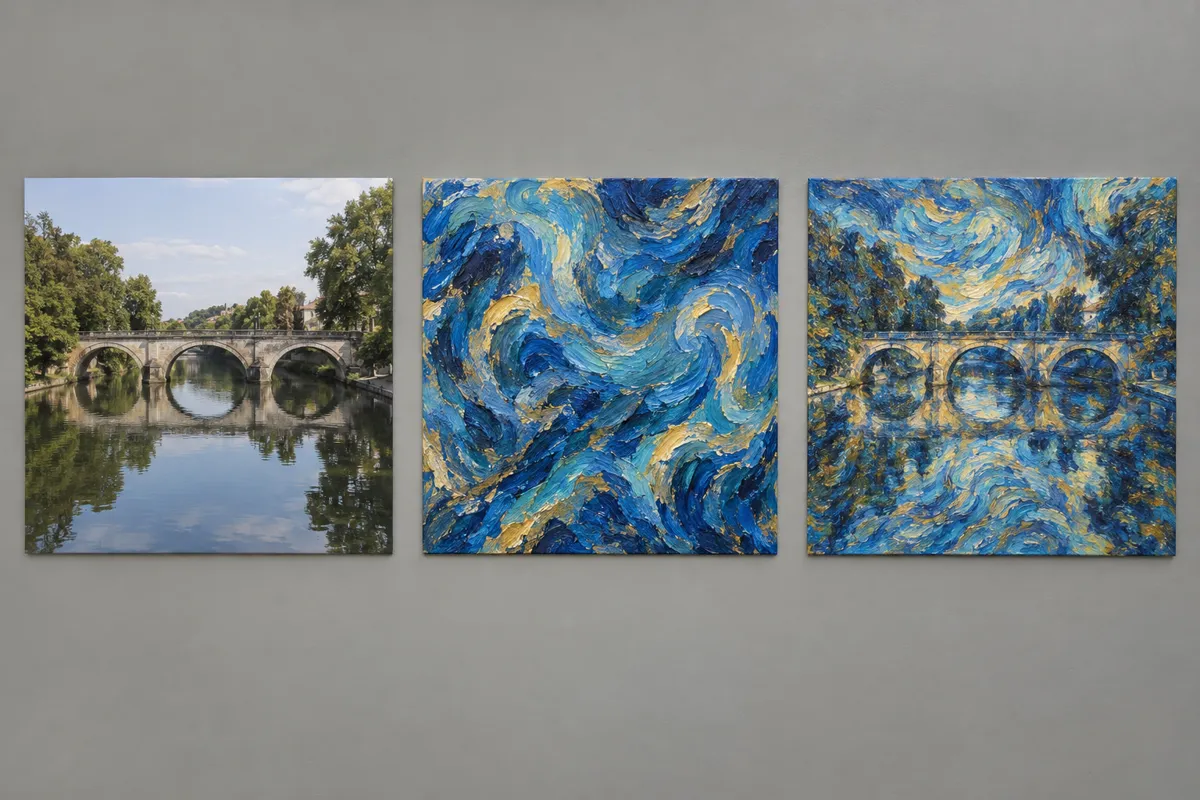
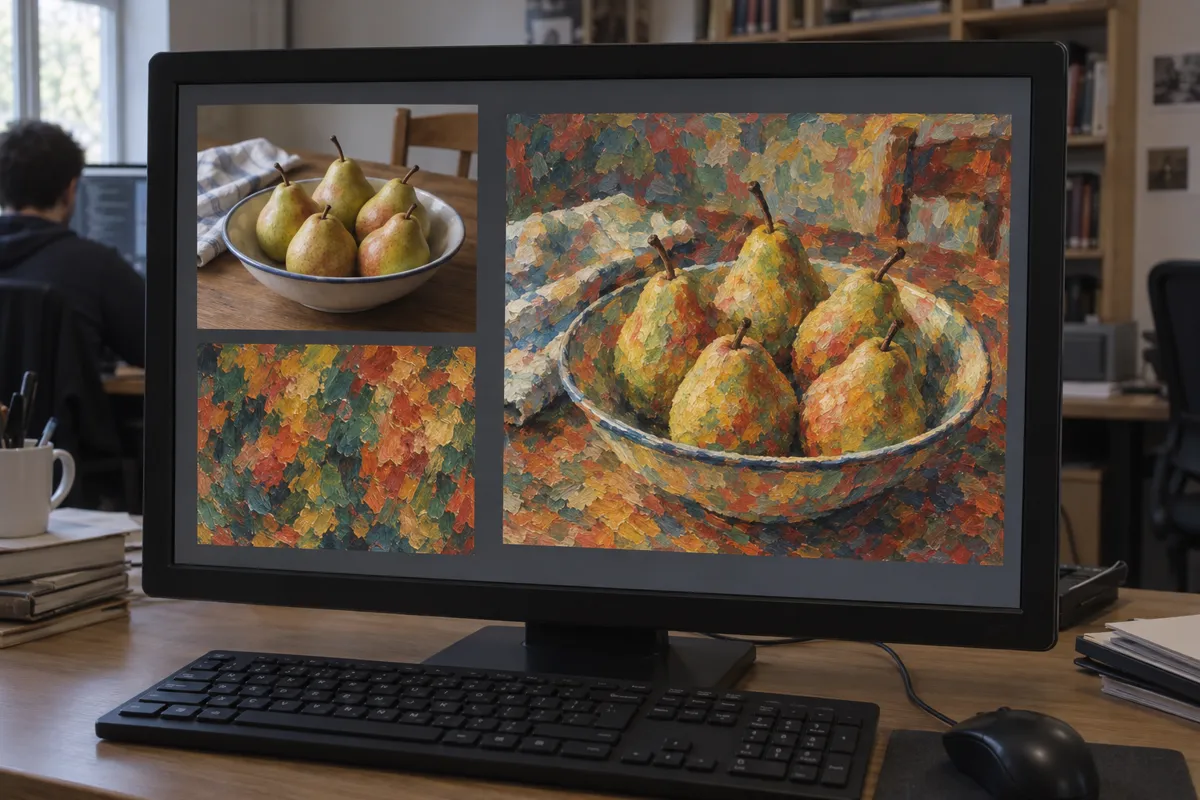
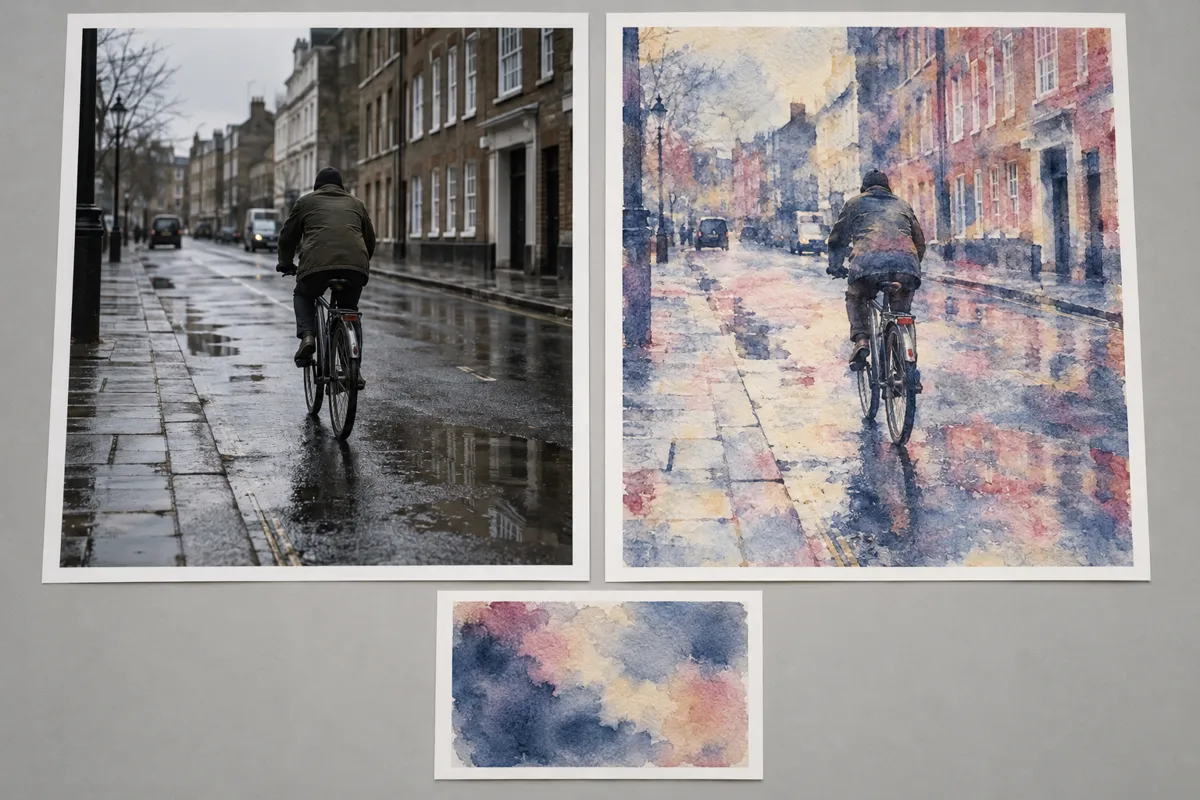
An [artificial neural network1]separates an image's content from its style. It then [combines the content mathematically]with anew style.
Example
Leon Gatys, Alexander Ecker, and Matthias Bethge: ANeural Algorithm of Artistic Style, 2015.
Try it out
Squint at astyle-transferred image. Notice how the broad structural outlines remain recognizable, but the surface texture completely changes.
Background
In 2015, researchers led by Leon Gatys published abreakthrough paper on image processing. They used convolutional neural networks2, originally built to recognize objects in photos. The team discovered that different layers of the network process different image traits. Deep layers capture the spatial layout3, or content. Shallow layers capture texture, color, and patterns, defining the style. By running aphoto and apainting through the network, they extracted these elements. An algorithm then merged the photo's content with the painting's style. This digital technique sparked amassive wave of artificial intelligence art.
Distinction
Unlike simple digital photo filters, it does not just overlay acolor tint or blur. It completely reconstructs the image using mathematically learned textures.
Aftermath
It reveals that artificial intelligence can mathematically isolate and manipulate the abstract concept of artistic style.
Further examples · 7 images
02Profile Portrait with Flowing Color PatternsA woman in profile wears glasses and a tall headwrap, with multicolored, flowing textures extending across her face, clothing, and background. The preserved portrait structure beneath a pervasive painterly pattern clearly illustrates the visual combination of photographic content and transferred style.Nettrice Gaskins · CC BY-SA 4.0 · Wikimedia Commons03AI illustration: Triptych of bridge photograph and Van Gogh style transferA triptych shows a photograph of a bridge, a swirling blue pattern, and a final image combining both. This sequence demonstrates how a neural network maps the brushwork of one source onto the geometry of another.Illustration generated for the Atlas (AI)04AI illustration: Monitor showing neural style transfer of fruit bowlA computer monitor displays a bowl of pears alongside a thick impasto painting and the resulting stylized output. The output retains the photographic placement of the fruit while adopting the color palette of the painting.Illustration generated for the Atlas (AI)05AI illustration: Watercolor neural style transfer of a city streetA series of prints displays a cyclist in London transformed into a soft watercolor composition. The process successfully extracts the textures and hues of the watercolor swatch to redefine the photographic scene.Illustration generated for the Atlas (AI)06AI illustration: Gallery display of egret image style transferThree canvases on a gallery wall show a white egret, an abstract blocky pattern, and a synthesis of the two. The final large-scale piece illustrates the algorithmic reinterpretation of a wildlife photo into abstract geometric forms.Illustration generated for the Atlas (AI)07AI illustration: Spiral staircase transformed via neural style transferA dual-monitor setup shows a spiral staircase transformed into a textured work of pink and blue oil paint. The intricate architectural lines of the staircase are preserved through the application of heavy digital brushstrokes.Illustration generated for the Atlas (AI)
Question
Why do some style transfers look messy or unrecognizable?
Show possible answer +Hide answer −
The algorithm might weigh the style too heavily. This causes the painting's textures to overwhelm the original photo's structural content.