H 137 / 3211950s

Limited Animation

1950s, especially UPA's stylised theatrical cartoons
Typeface · McLaren

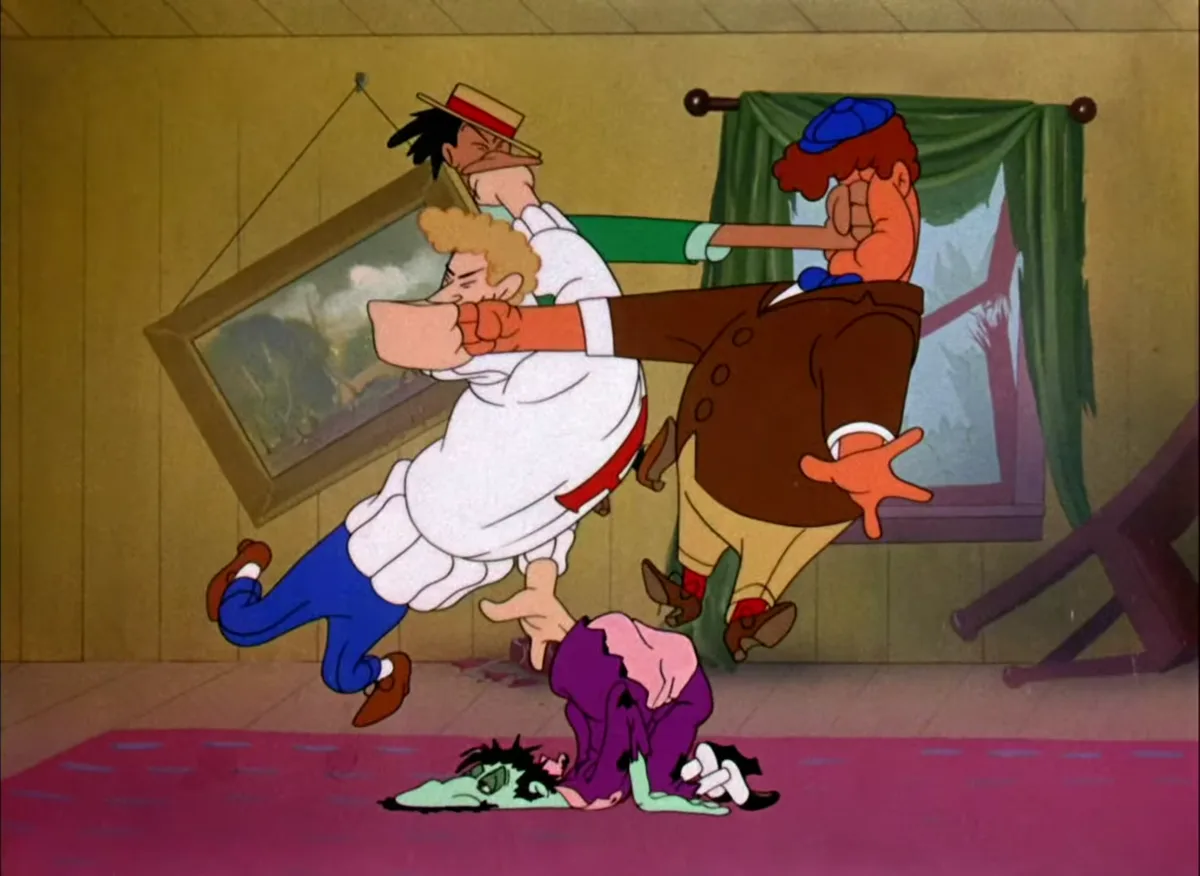
Stylised Action in The Dover Boys. Angular cartoon figures collide in an exaggerated grouping inside a wooden room in The Dover Boys.
Stylised Action in The Dover Boys. Angular cartoon figures collide in an exaggerated grouping inside a wooden room in The Dover Boys.Chuck Jones · Public domain · via Wikimedia CommonsView source ↗

Prompt

Transform this image into Limited Animation with flat stylized shapes, bold clean outlines, simplified anatomy, and broad blocks of muted color. Use a static painted-background appearance, held-pose stiffness, and subtle cel-layer boundaries around articulated details, minimizing gradients and realistic surface texture. Keep the original subject and composition.

Identify

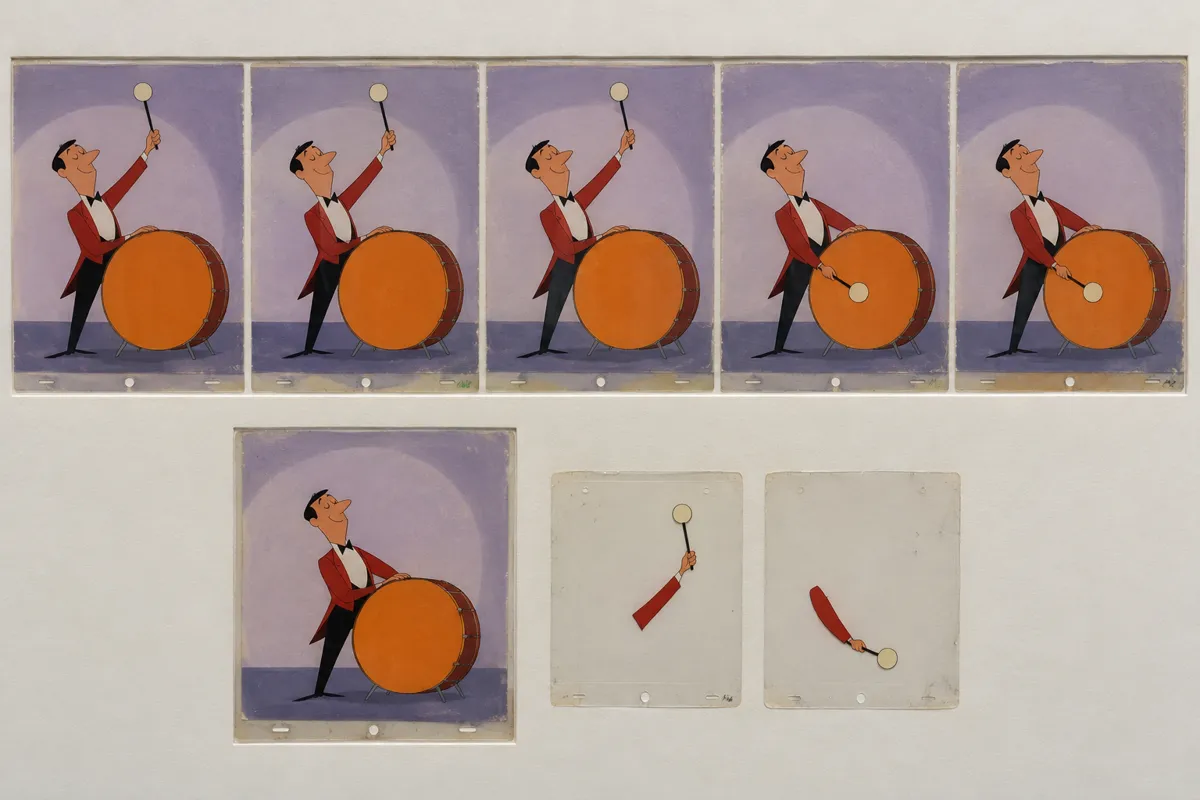
Flat stylised shapes and held poses give scenes a graphic, poster-like appearance. Often, only a mouth, arm, or other isolated part moves.

Principle

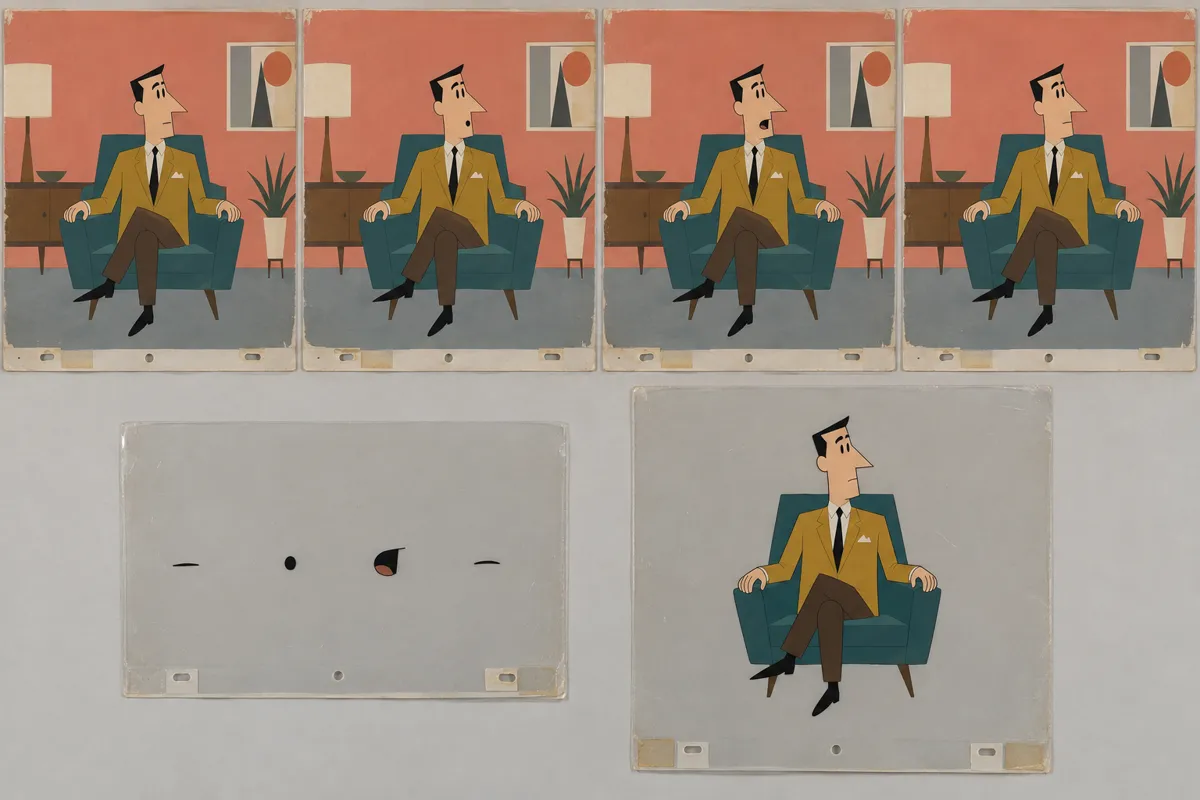
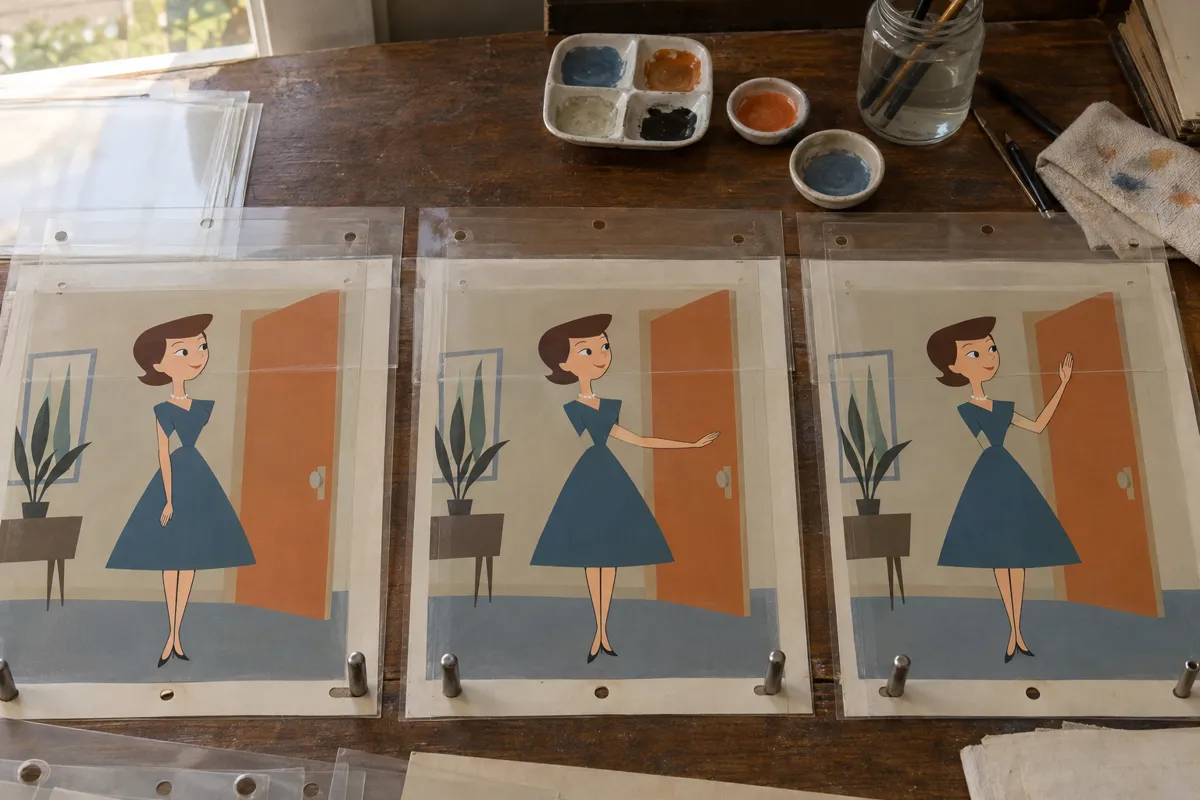
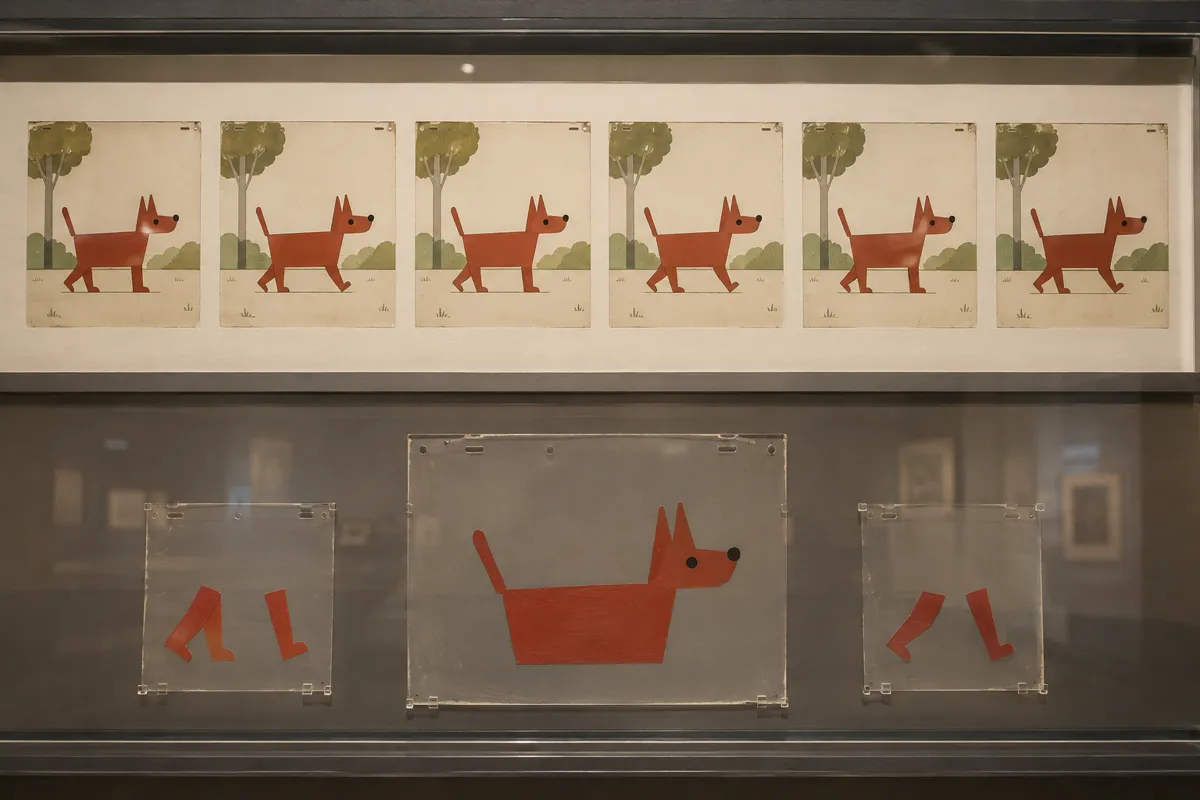
Fewer unique drawings are needed because images are held across frames, movement cycles1 repeat, or separate layers isolate moving parts. Timing, editing, and sound help these selective movements communicate action.

Example

Robert Cannon: Gerald McBoing-Boing, 1950.

Try it out

Watch a short cartoon passage without sound. Count how long a body stays still while its mouth or eyes change.

Background

Limited animation existed before the 1950s, but UPA made selective movement central to a distinctive modern graphic style. Its artists favoured simplified shapes, expressive poses, and backgrounds that did not need convincing depth. In cel animation2, separate transparent sheets allowed a moving mouth to change while the body drawing remained unchanged. Holding drawings reduced drawing work without requiring a slower projection speed3. Television studios later expanded these economies to meet tight budgets and schedules. However, UPA's approach also showed that fewer drawings could support deliberate artistic choices.

Distinction

Unlike full animation, limited animation concentrates changes in selected poses, parts, and moments rather than continuously redrawing movement. Flat design alone does not make animation limited.

Aftermath

It teaches that expressive motion depends on selecting meaningful changes, not simply increasing the number of drawings.

Further examples · 7 images

Held Action Pose in The Dover Boys
02 Held Action Pose in The Dover BoysA woman in a long blue dress pins a purple-clad villain against a door in The Dover Boys. The sharply defined silhouettes and emphatic pose belong to the film's pioneering use of held drawings punctuated by rapid movement.Warner Bros. Pictures; copyrighted by the Vitaphone Corporation. Produced by Leon Schle… · Public domain · Wikimedia Commons
AI illustration: Mouth cels for a stationary character
03 AI illustration: Mouth cels for a stationary characterThis production sheet shows four composite frames alongside an isolated cel containing only the character's mouth movements. By keeping the body and background stationary, the studio could reuse drawings while only updating the small, expressive facial details.Illustration generated for the Atlas (AI)
AI illustration: Selective arm movement on peg-bars
04 AI illustration: Selective arm movement on peg-barsMultiple animation cels on a peg-bar desk depict a stylized woman with a static body and varying arm positions. This selective movement allows for a sense of motion while minimizing the total number of full-body drawings required.Illustration generated for the Atlas (AI)
AI illustration: Deconstructed walk cycle layers
05 AI illustration: Deconstructed walk cycle layersA series of walk-cycle frames are displayed alongside the individual layers used to composite the final image. Separating the legs from the static body demonstrates the efficient layering process central to the limited animation aesthetic.Illustration generated for the Atlas (AI)
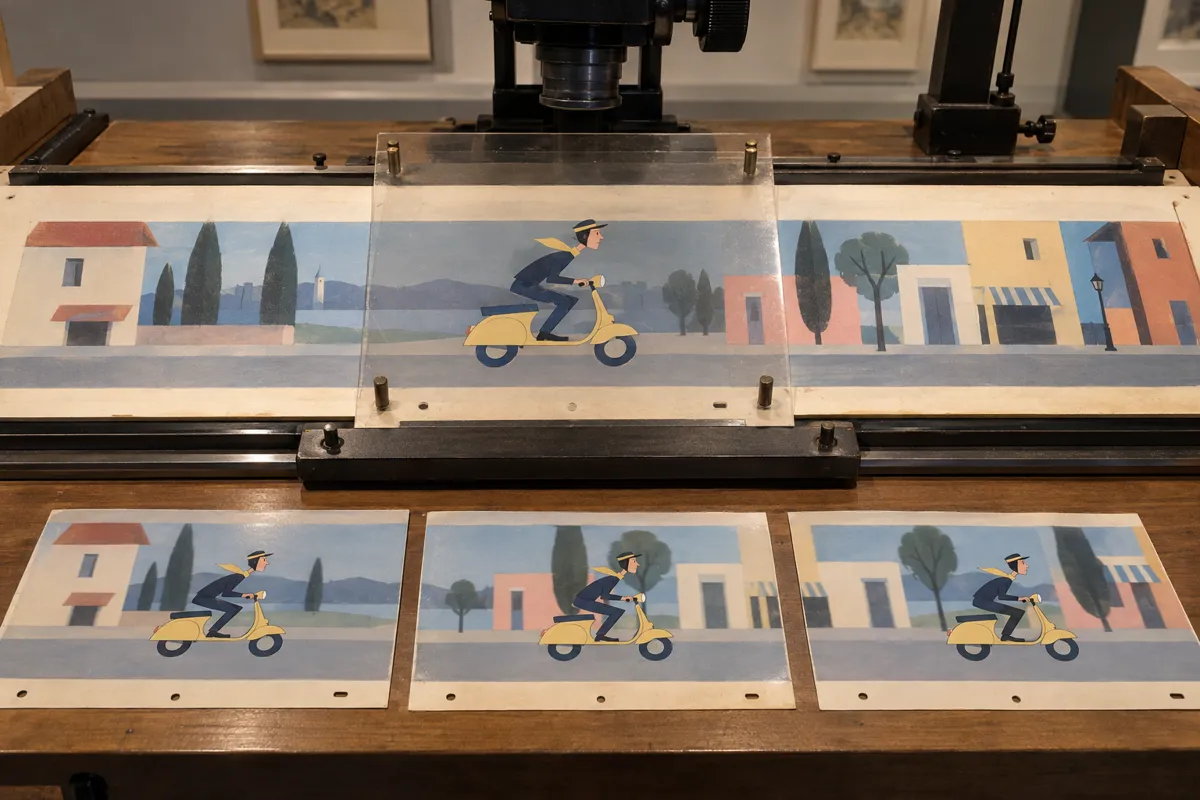
AI illustration: Character cel over panoramic sliding background
06 AI illustration: Character cel over panoramic sliding backgroundA long, panoramic background sits beneath a character cel, illustrating how a single figure can be moved across a static environment. This technique reduces labor by utilizing a wide painted scroll rather than individual unique background drawings.Illustration generated for the Atlas (AI)
AI illustration: Isolated limb cels for repetitive action
07 AI illustration: Isolated limb cels for repetitive actionA sequence of a drummer is shown with individual cels that isolate only the movement of the striking arm. This breakdown highlights how economic motion can be achieved by swapping single limbs over a held body pose.Illustration generated for the Atlas (AI)

Question

Does using fewer drawings mean the film must run at a lower frame rate?

Show possible answer +

No. The same drawing can occupy several successive frames while the film runs at its normal speed.

Sources