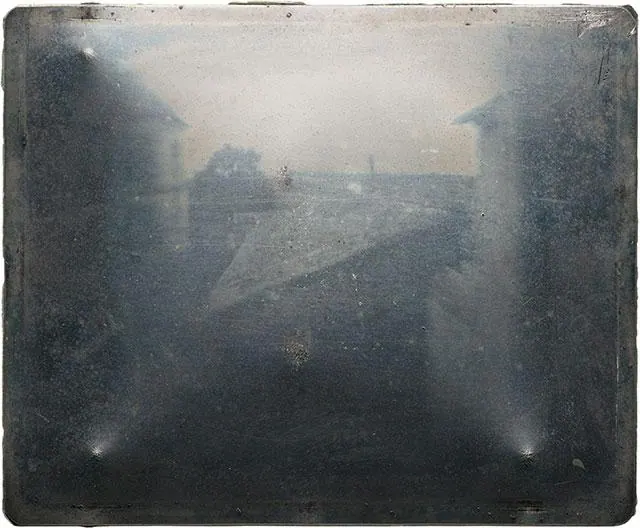
Niépce: View from the window of Le Gras, 1827. Original plate, today a museum photograph.Joseph Nicéphore Niépce / Harry Ransom Center. Historical work in the public domain; digital recording by the Harry Ransom Center, source attribution retained.View source ↗
Prompt
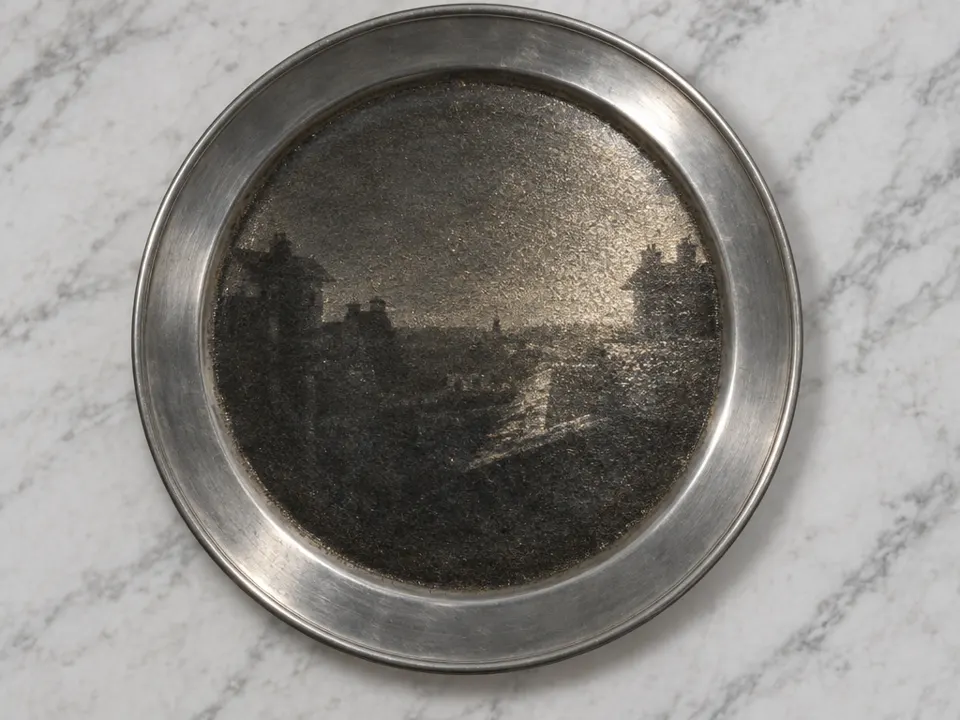
Transform this image into a Heliography on a pewter plate, with extremely low contrast, smoky gray shapes, muted metallic shimmer, and uneven bitumen residue. Simulate grazing illumination that makes faint details emerge from the reflective surface, with softened edges and subdued highlights. Keep the original subject and composition.
[Metallic shimmering], [very low-contrast shapes]that only become clearly visible from afavorable viewing angle.
Principle
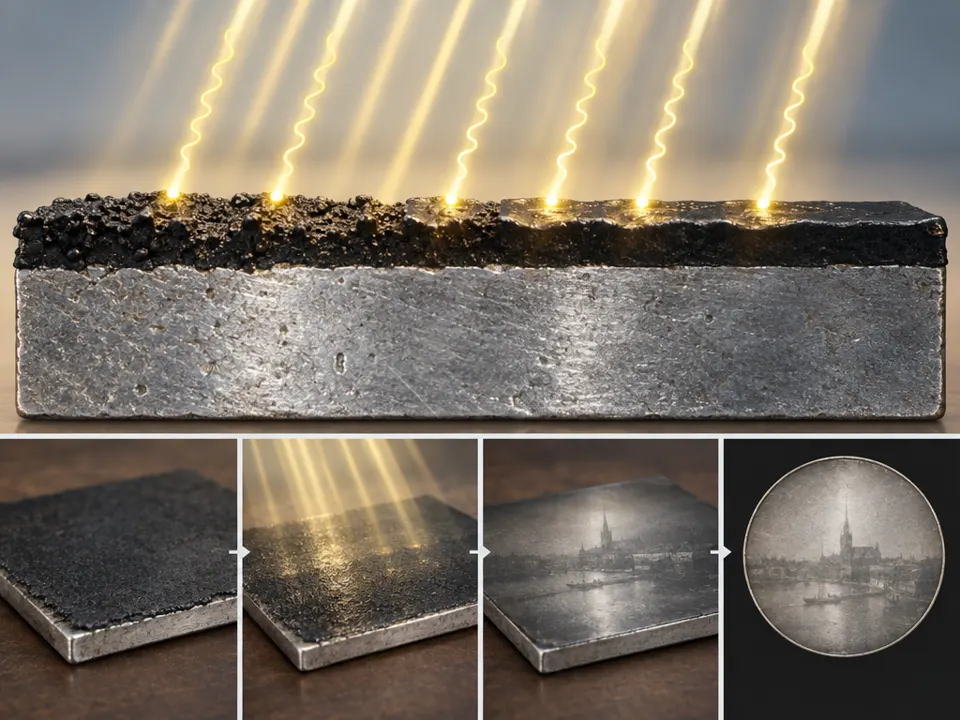
[Light hardens alayer of bitumen1]on metal. An extremely long exposure2records the camera image.
Example
Niépce: View from the window of Le Gras, 1827.
Try it out
Compare the original plate and the enhanced reproduction. Identify what information the material surface conceals.
Background
Niépce's experiments began in the 1810s; the first surviving camera photograph dates from 1827. This is ahistorical starting point, not amass-produced look of the time. The detailed mechanism: Light hardens athin layer of bitumen on atin plate. The coated plate records the camera image over avery long period. Before every filter, the question arises: What is image information, and what is the inherent property of the material?
Distinction
Before every filter, the question arises: What is image information, what is the nature of the material?
Aftermath
Distinguish between materiality, exposure time, and subsequent contrast enhancement.
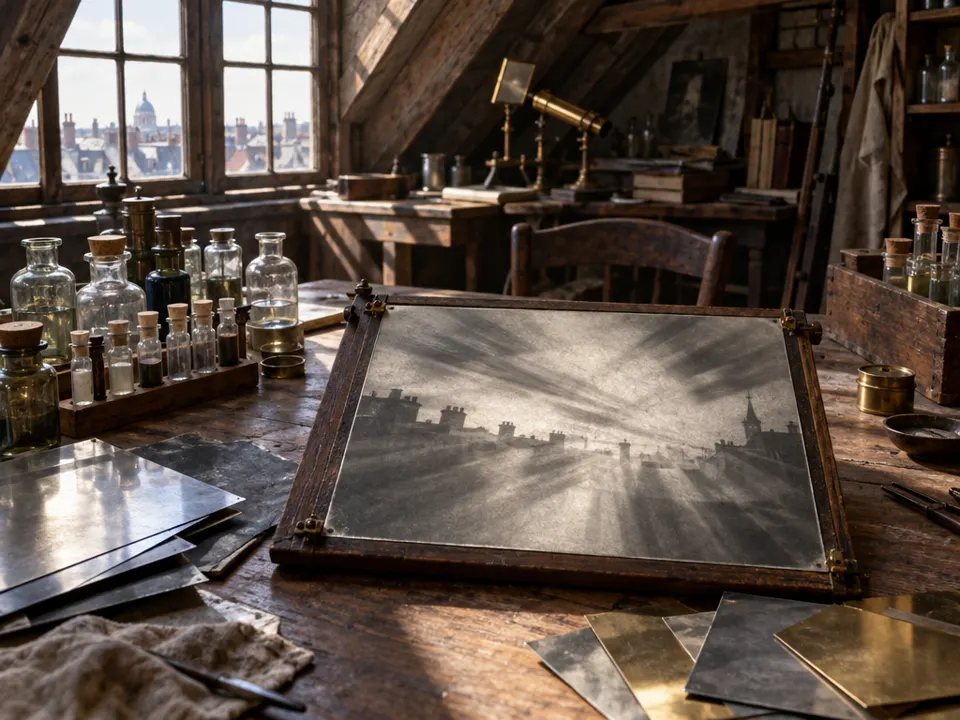
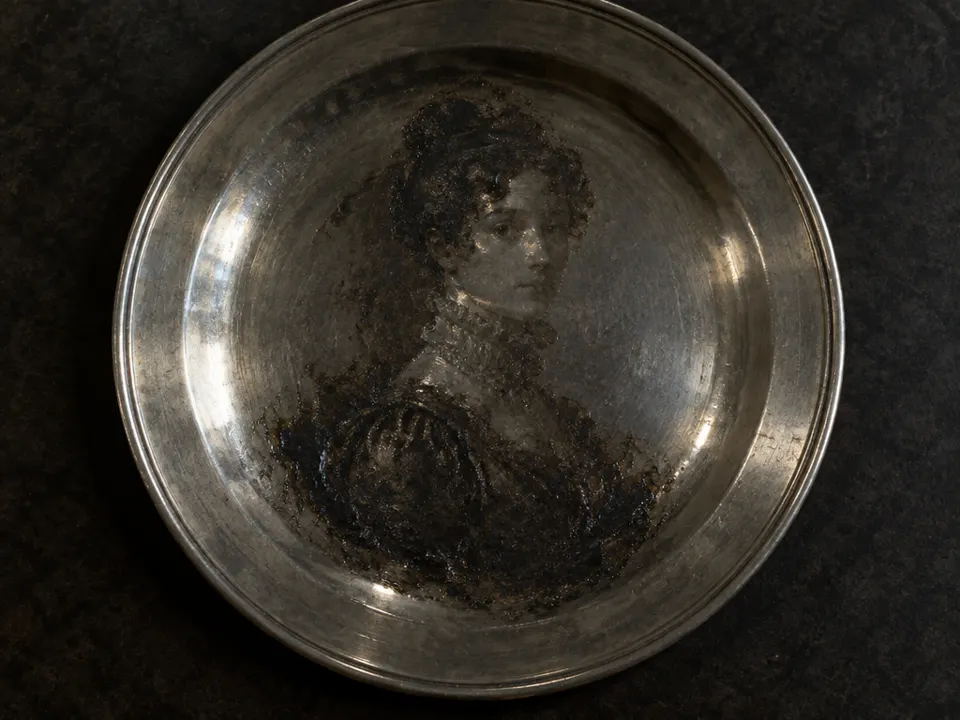
Further examples · 7 images
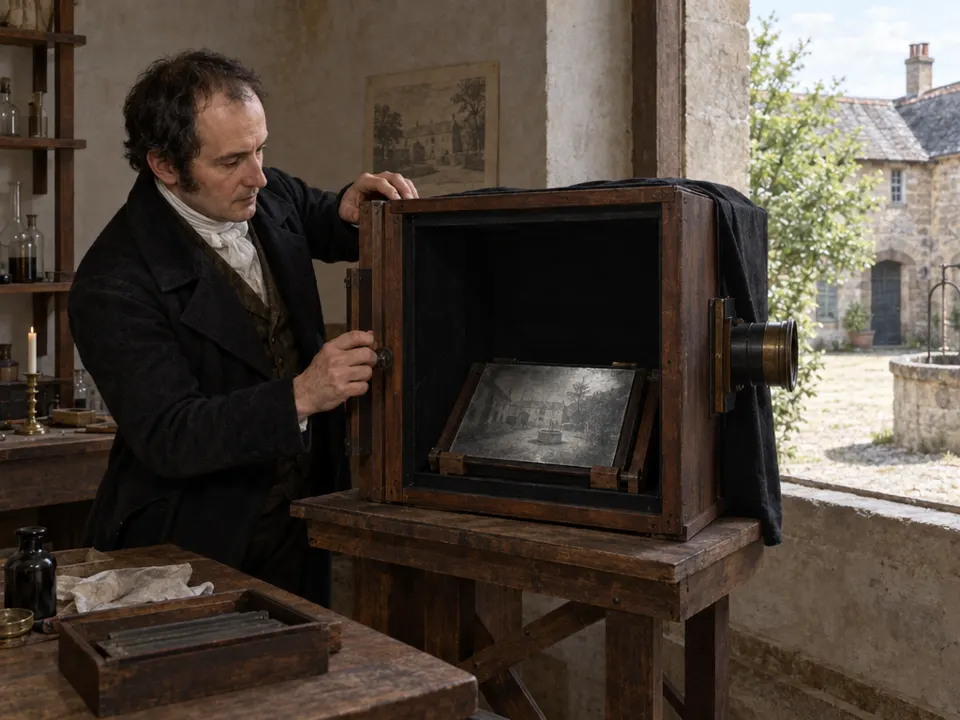
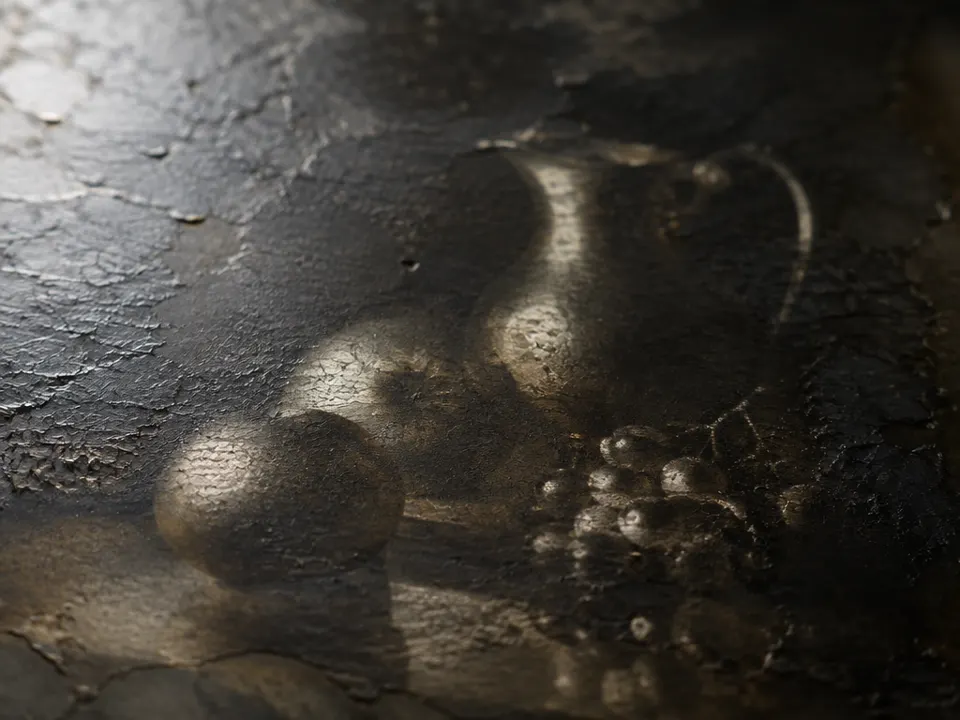
02AI illustration: A grainy, low-contrast landscape on a circular metal plate mimics Niépce'A grainy, low-contrast landscape on a circular metal plate mimics Niépce's view from Le Gras. The shimmering, indistinct shapes captured on the metallic surface represent the long-exposure bitumen process.Illustration generated for the Atlas (AI)03AI illustration: A historical workshop scene shows a plate inside a camera obscuraA historical workshop scene shows a plate inside a camera obscura. The plate displays the typical hazy, low-contrast appearance of early heliographic experiments during exposure.Illustration generated for the Atlas (AI)04AI illustration: A still life on a dark, textured surface illustrates the angle-dependent A still life on a dark, textured surface illustrates the angle-dependent visibility of heliography. The metallic sheen and hardened, crusty texture of the bitumen layer are accurately depicted.Illustration generated for the Atlas (AI)05AI illustration: The angled plate on the table shows how light interacts with the materialThe angled plate on the table shows how light interacts with the material surface. The shimmering highlights and faint, ghostly image details represent the inherent properties of the bitumen process.Illustration generated for the Atlas (AI)06AI illustration: This diagram illustrates the hardening of bitumen by light raysThis diagram illustrates the hardening of bitumen by light rays. The progression from a dark coating to a faint metallic image correctly explains the technical mechanism of the heliographic process.Illustration generated for the Atlas (AI)07AI illustration: A female portrait is rendered on a metallic plate with low-contrast, shimA female portrait is rendered on a metallic plate with low-contrast, shimmering highlights. The image demonstrates how bitumen on metal creates a faint, angle-dependent representation characteristic of early heliographic experiments.Illustration generated for the Atlas (AI)