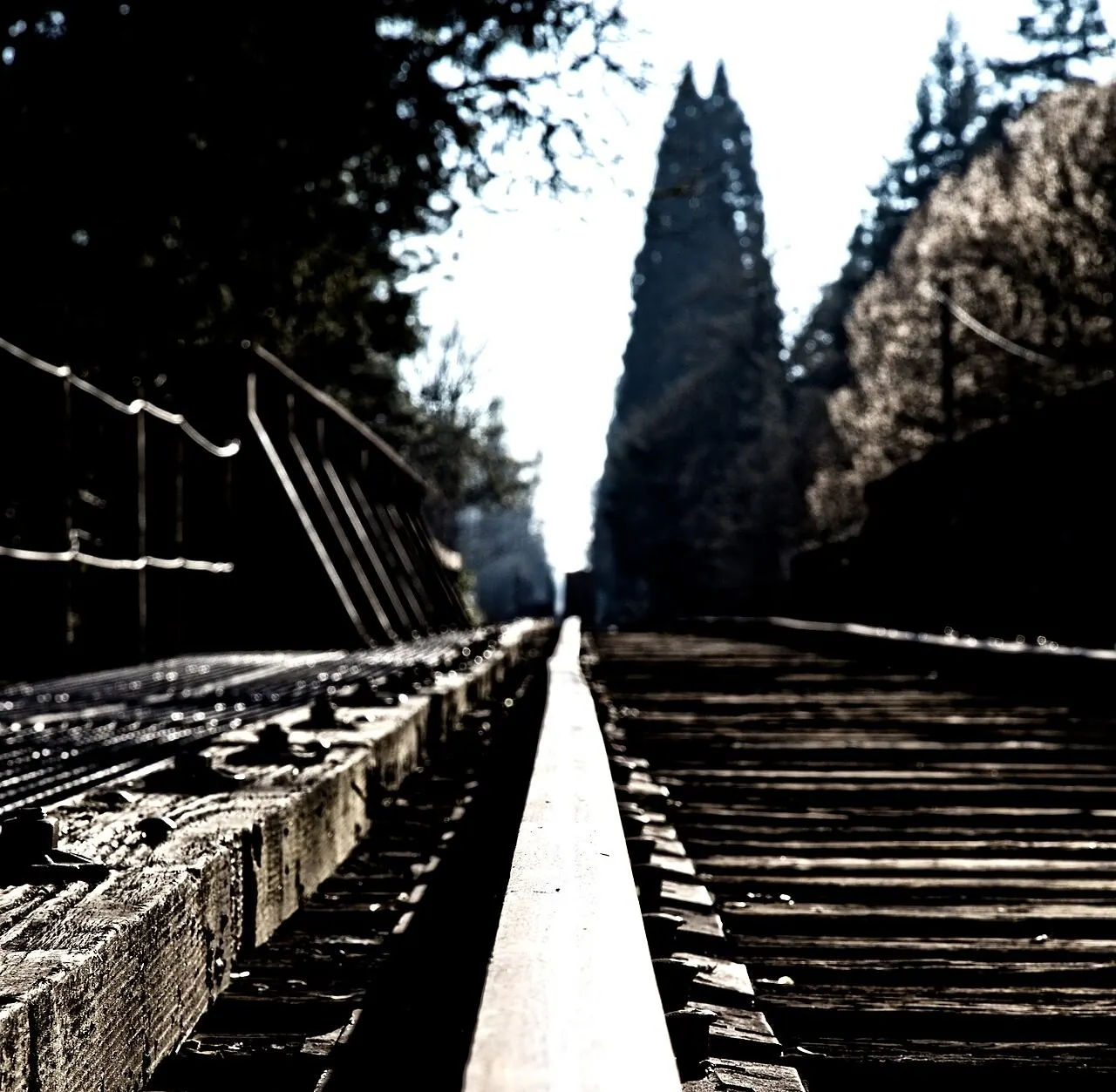
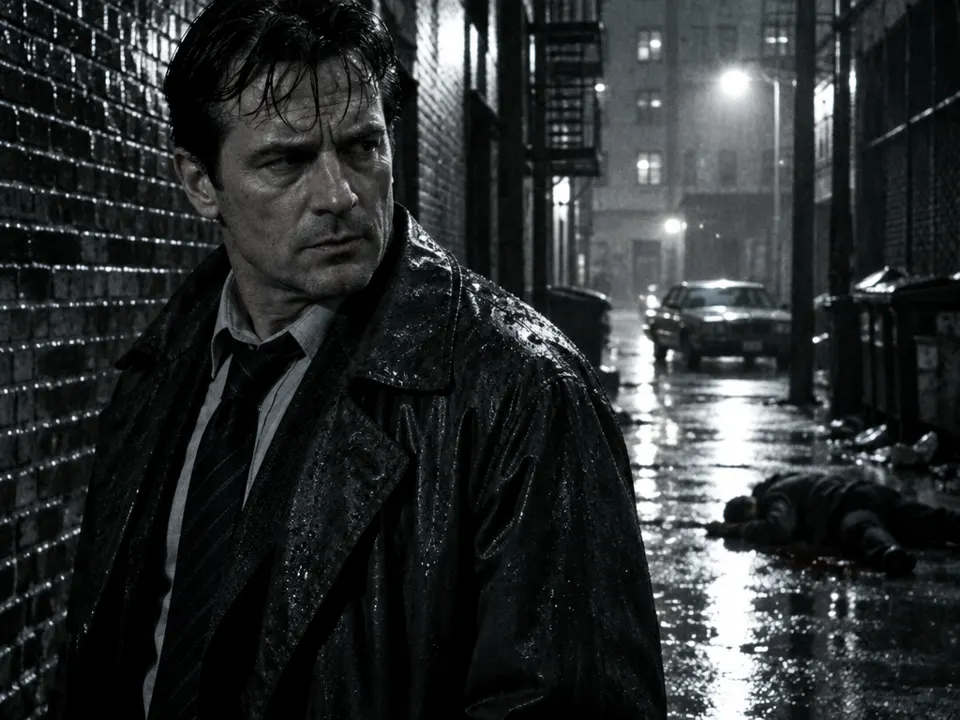
Apply a Bleach Bypass effect with strongly reduced color saturation, dense charcoal shadows, hard tonal contrast, and bright metallic-looking highlights. Overlay pronounced silver-like photographic grain while retaining tactile surface detail and a faint residue of the original hues. Avoid a completely monochrome result. Keep the original subject and composition.
[Less color, stronger contrast], often [dense shadows].
Principle
Some of the [silver1remains in the film]in addition to the dyes.
Example
Demonstration of the desaturate2dskip bleach look.
Try it out
Slightly desaturate an image and increase the contrast. Check skin tones and shadows.
Background
Bleach bypass encompasses several laboratory techniques in which silver is partially or completely retained. The added silver alters density, contrast, and color saturation. Kodak describes distinct differences between its application on camera negatives and projection prints. The approach is part of historical cinema and later became acommon digital style term. Crucially, it involves the ratio of color to black, not simply agray filter.
Distinction
Adigital look is an approximation. Chemical bleaching has different effects depending on whether the negative, intermediate, or positive is affected. Therefore, black shadows are not auniversal rule for every variant.
Aftermath
Silver and dyes can simultaneously form acolored image.
Further examples · 7 images
02Vasiliy Peskov - MIBF 2011 - 3 (bleach bypass)This portrait of Vasiliy Peskov shows a close-up of a man with glasses and a cap. The effect reduces skin tone saturation while emphasizing fine facial textures through increased contrast.Dmitry Rozhkov · CC BY-SA 3.0 · Wikimedia Commons03The Rock at LACMA bleach bypassThe Levitated Mass rock sculpture is shown at LACMA amidst palm trees and buildings. The process creates a muted color palette that shifts the image toward a more industrial, silver-heavy appearance.Downtowngal · CC BY-SA 3.0 · Wikimedia Commons04Andean Man bleach bypassA man in traditional Andean clothing stands before a rocky background. The bleach bypass style preserves the red of the hat while desaturating the complex patterns and deepening shadows.Andean_Man.jpg: Cacophony derivative work: Éclusette (talk) · CC BY-SA 3.0 · Wikimedia Commons05Consono 8An outdoor pathway leads past a pavilion toward a minaret-style tower. The technique results in a stark, gloomy atmosphere with very low color vibrancy in the foliage and sky.Andrea Zanoni · CC BY-SA 3.0 · Wikimedia Commons06Consonno 10A large abandoned structure with a tall tower stands against a bright, hazy sky. The extreme contrast between the white architecture and dark, dense shadows highlights the silver-dye ratio.Andrea Zanoni · CC BY-SA 3.0 · Wikimedia Commons07AI illustration: A rainy alleyway scene is shown with high contrast and dense blacksA rainy alleyway scene is shown with high contrast and dense blacks. The image demonstrates the retention of silver which increases grain and gives the shadows a deep, heavy texture while desaturating remaining colors.Illustration generated for the Atlas (AI)
Question
What remains in the material during bleach bypass that would otherwise be removed?