Apply a Motion-Control Photography aesthetic, giving existing forms the tangible finish of carefully lit miniatures combined through precisely registered exposure passes. Use crisp model details, layered depth, luminous practical highlights, restrained directional motion blur, fine film grain, and subtle optical matte traces. Keep the original subject and composition.
Dynamic flights of miniature spaceships appear as asingle recording, even though [multiple layers are combined].
Principle
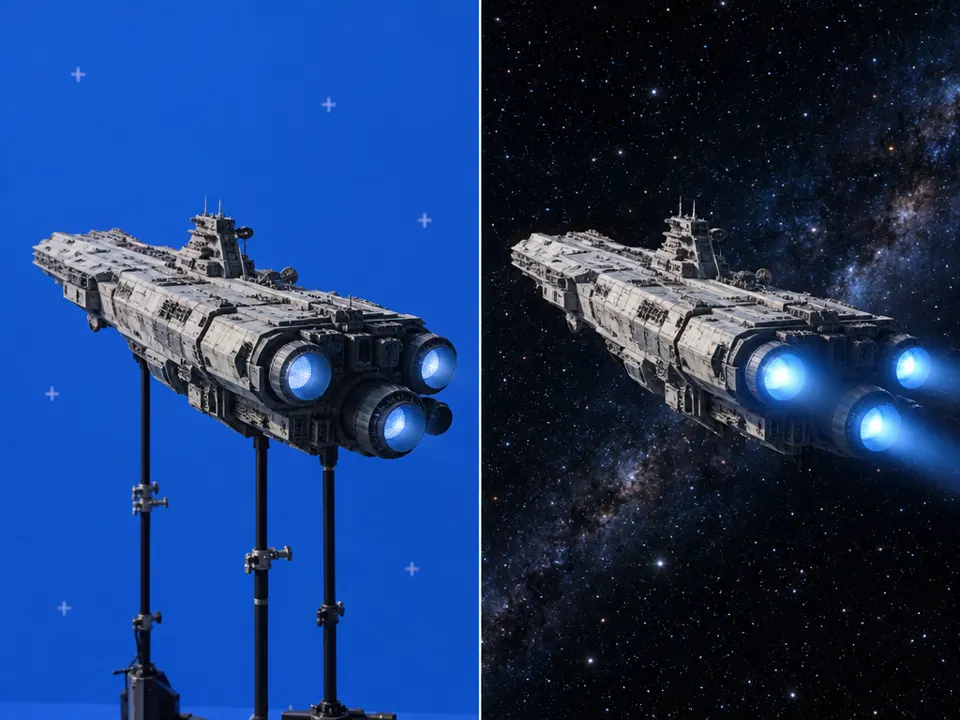
[Motors precisely repeat acamera path]. This allows the model, light, and background to be [captured separately and combined perfectly].
Example
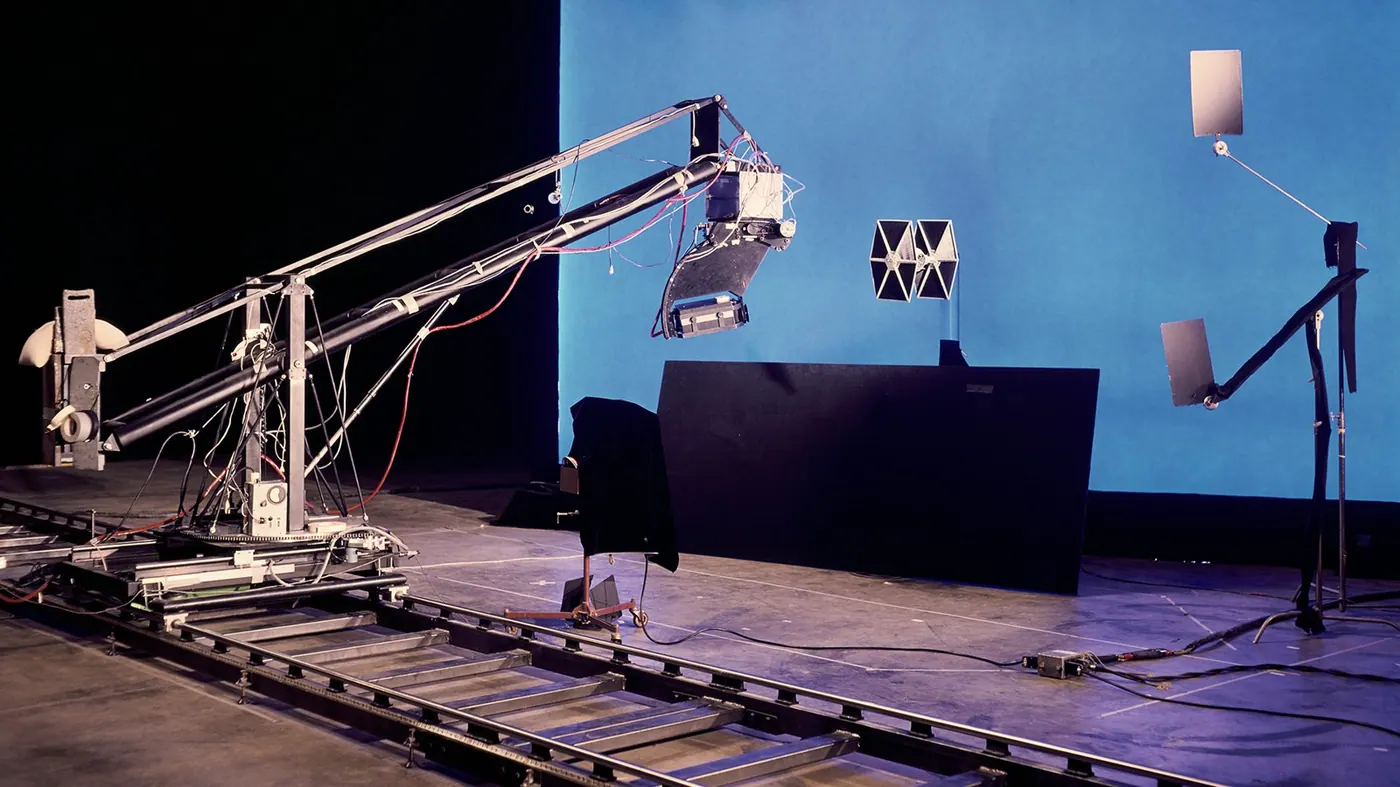
ILM's Dykstraflex1: Space battles and flybys in Star Wars (1977).
Try it out
Compare image planes2with identical and differing movements. When does the spatial illusion break down?
Background
Particularly consequential: Star Wars (1977), Dykstraflex.
Motors and computers store acamera path and repeatedly follow it identically. Model, light pass, background, and other elements can thus be captured separately and later perfectly aligned.
ILMs Dykstraflex for the space battles and flybys in Star Wars: ANew Hope (1977).
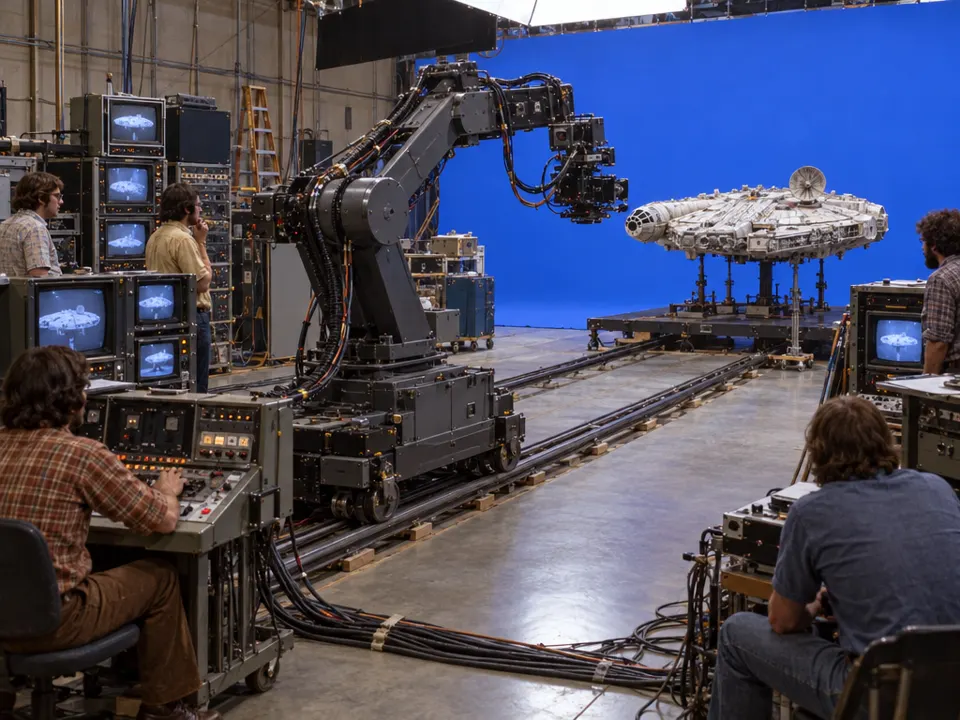
Image: Historical original / source image. Acamera robot films aTIE fighter model in front of ablue screen. The photo shows the production process; the composite light and model passes are created through precise repetition.
Distinction
Motion control moves the camera in acontrolled manner; motion capture records the movement of aperson or object as data. This is not an invention of every automatic camera. The milestone is the precise, repeatable camera movement for multiple effect layers.
Aftermath
Special effects shots gained the energy of amoving documentary camera; miniatures could be credibly combined with space and speed.
Further examples · 7 images
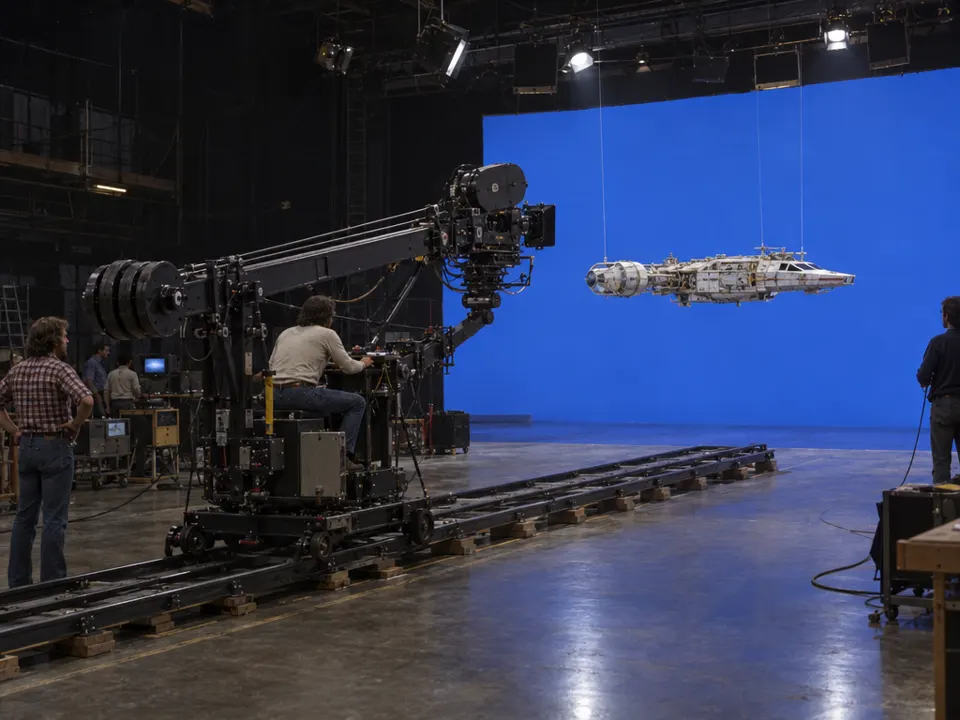
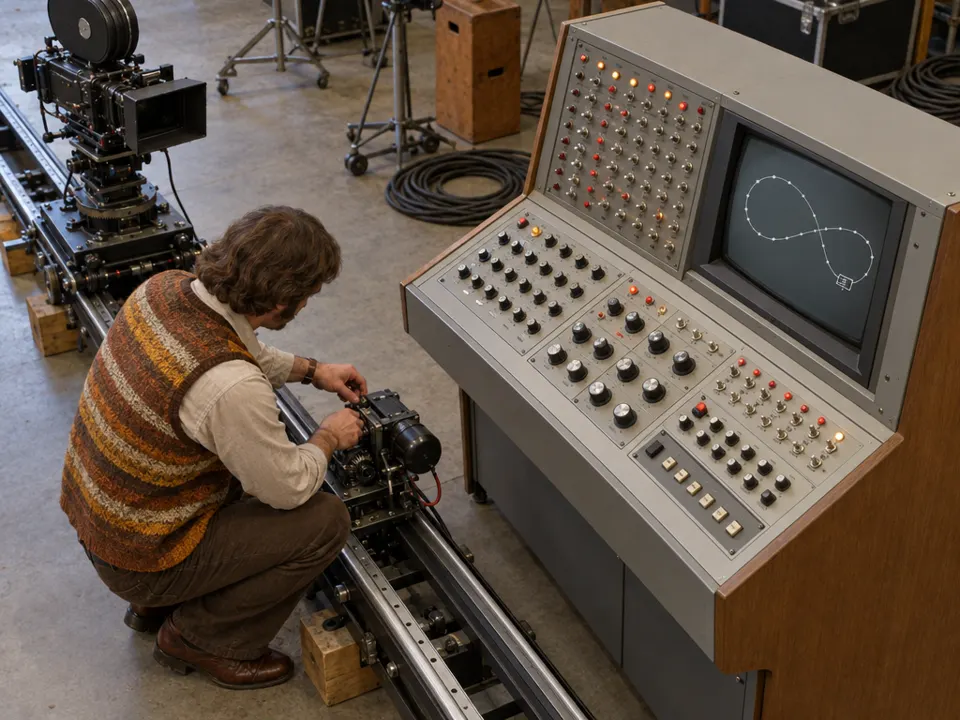
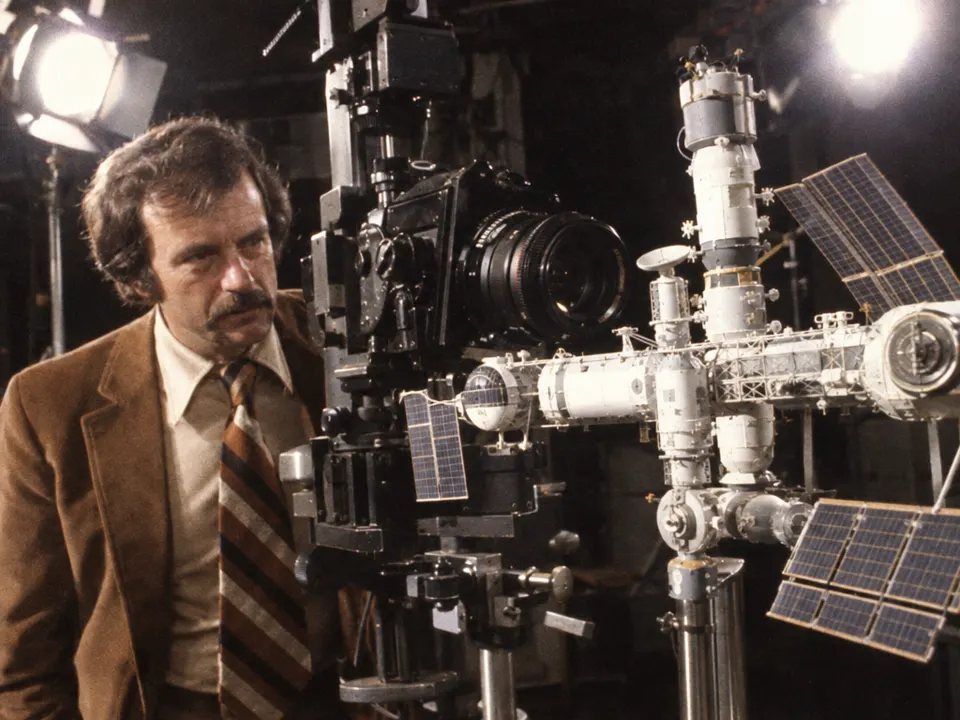
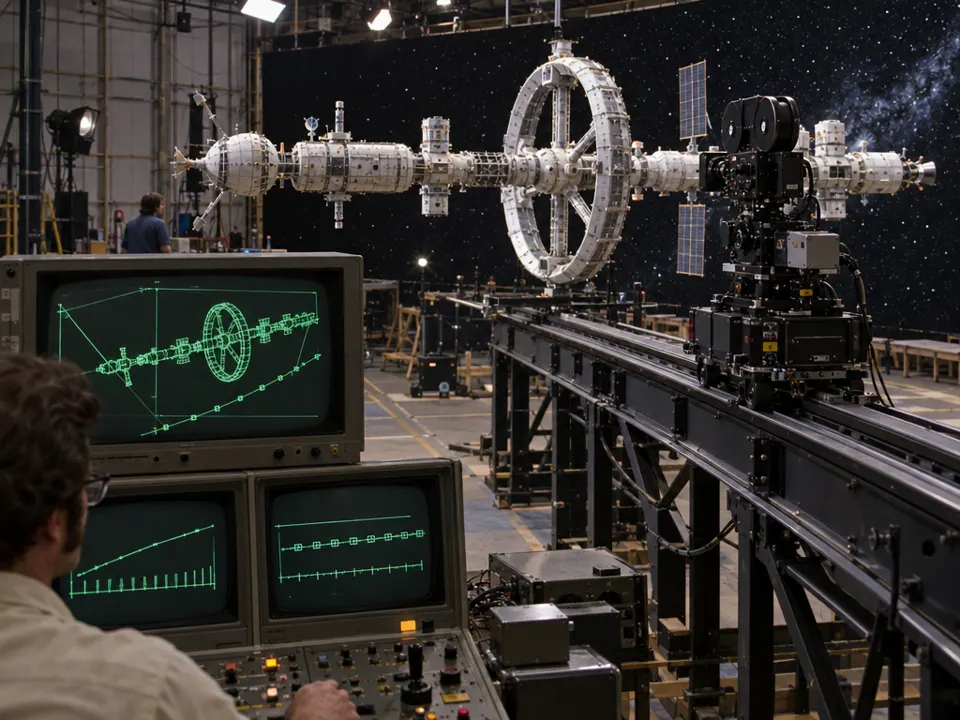
02AI illustration: A camera rig on a track faces a suspended spaceship model against a blue A camera rig on a track faces a suspended spaceship model against a blue screen. The setup shows the physical track and motorized arm needed to repeat precise movements for multi-pass photography.Illustration generated for the Atlas (AI)03AI illustration: A technician operates a computer console displaying a programmed camera pA technician operates a computer console displaying a programmed camera path next to a tracked camera. This highlights the digital recording and repetition of movement central to the Dykstraflex system.Illustration generated for the Atlas (AI)04AI illustration: A specialized camera is positioned close to a complex space station modelA specialized camera is positioned close to a complex space station model. The vertical motorized mounting system demonstrates the hardware used to achieve precise, repeatable flyby shots for layering.Illustration generated for the Atlas (AI)05AI illustration: A robotic camera arm on tracks is shown filming a spaceship model againstA robotic camera arm on tracks is shown filming a spaceship model against a blue screen. The setup illustrates the Dykstraflex system, used for precisely repeating camera movements to allow for composited film layers.Illustration generated for the Atlas (AI)06AI illustration: A camera on a specialized track system is shown filming a large spacecrafA camera on a specialized track system is shown filming a large spacecraft miniature with computer monitors displaying flight paths. This demonstrates the integration of hardware and software used to automate precise, repeatable camera arcs.Illustration generated for the Atlas (AI)07AI illustration: A side-by-side comparison shows a model on a rig against a blue screen anA side-by-side comparison shows a model on a rig against a blue screen and its final space composite. This illustrates how motion control allows for the perfect alignment of model and background across multiple passes.Illustration generated for the Atlas (AI)