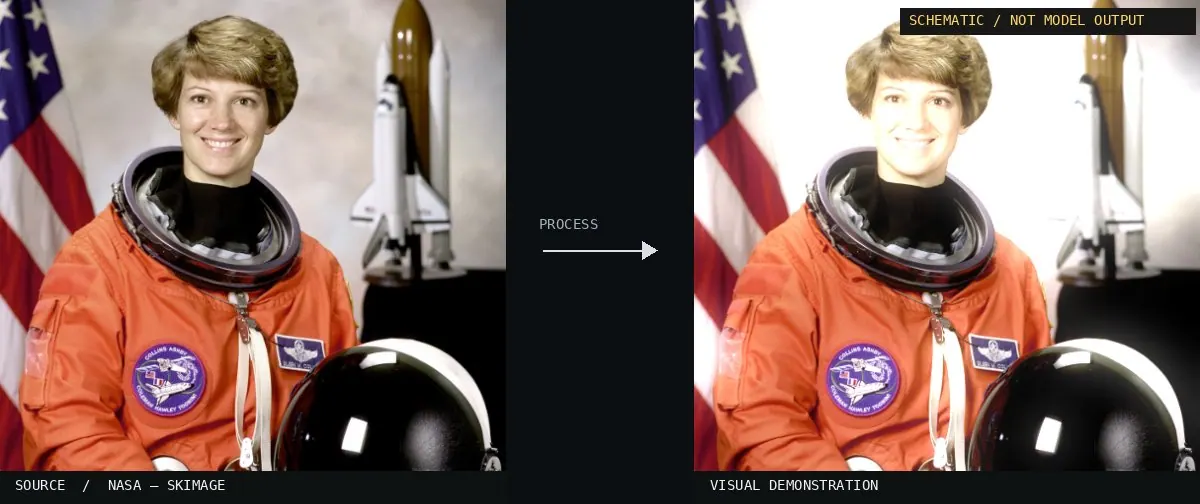
Schematic or classical approach — not a trained AI model output.Image: NASA / Eileen Collins · scikit-image (public domain)View source ↗
Prompt
Apply Bloom to make the brightest highlights radiate soft, luminous halos into neighboring areas. Spread warm whites and existing highlight colors gently beyond their edges, with smooth falloff and additive brightness. Keep shadows comparatively crisp and avoid uniform fog. Preserve the original subject and composition.
02Cone Nebula (NGC 2264) Star-Forming Pillar of Gas and DustBright stars in the nebula exhibit a soft glow that extends into dark regions. This demonstrates the additive blending of a blurred highlight threshold into the base image.NASA, H. Ford (JHU), G. Illingworth (UCSC/LO), M.Clampin (STScI), G. Hartig (STScI), the ACS Science Team, and ESA
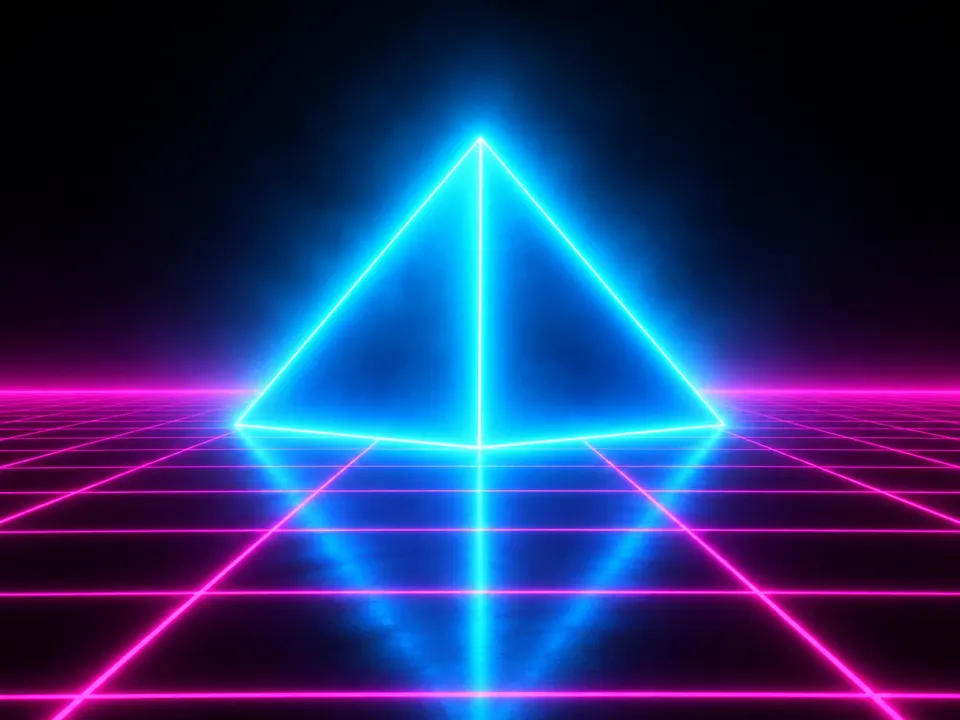
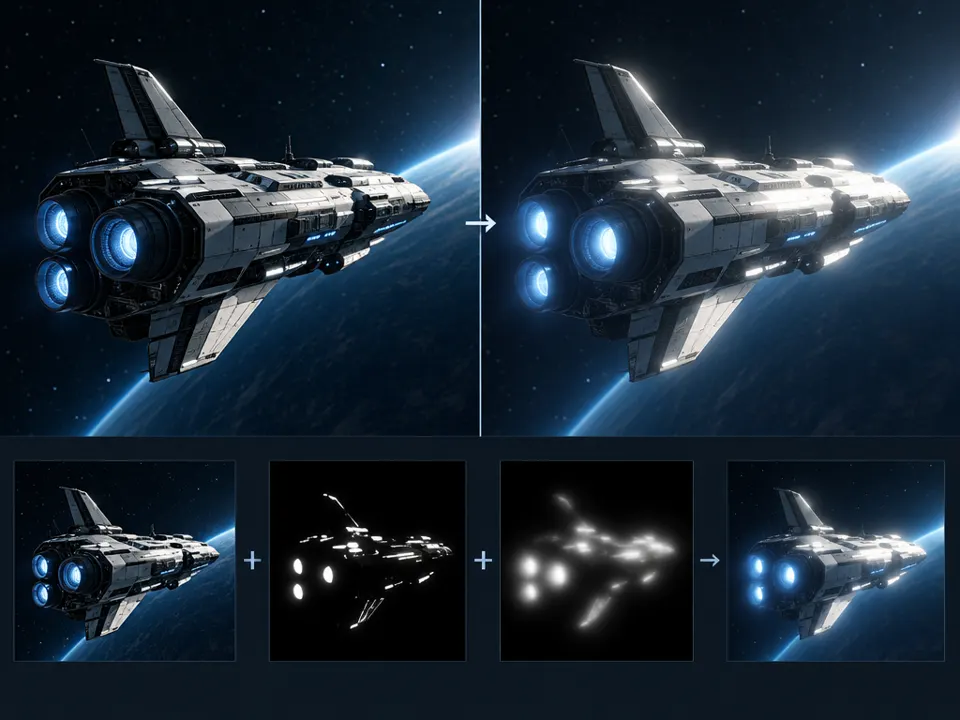
The · CC BY 4.0 · Wikimedia Commons03Jupiter Showcases Auroras, Hazes (NIRCam Closeup)The bright aurora at the poles and the Great Red Spot display halo-like artifacts. These light leaks illustrate how digital sensors or post-processing simulate bloom by spreading intense luminance.NASA's James Webb Space Telescope. Image processing by Judy Schmidt. · Public domain · Wikimedia Commons04Jupiter in Extended Spectrum (30645476957)The small moon to the right shows a distinct red glow radiating outward. This is a clear instance of a threshold-based glow applied to a bright point light.geckzilla · CC BY 2.0 · Wikimedia Commons05Solar eclipse taken from Artemis II - April 2026A bright light source appears behind a dark celestial body. The intensity of the light overflows its edges, creating a soft glow that bleeds into the dark silhouette, demonstrating the characteristic light bleeding of digital bloom.NASA · Public domain · Wikimedia Commons06AI illustration: A glowing cyan pyramid is shown on a gridA glowing cyan pyramid is shown on a grid. The bright edges radiate a soft haze into the dark surroundings, demonstrating basic light bleed.Illustration generated for the Atlas (AI)07AI illustration: A schematic shows a spaceship with its highlights isolated, blurred, and A schematic shows a spaceship with its highlights isolated, blurred, and recombined. This visualization accurately depicts the technical additive threshold process described.Illustration generated for the Atlas (AI)