Apply an anamorphic lens flare effect with thin horizontal blue-cyan light streaks extending from existing bright sources, faint colored reflection ghosts, and localized veiling glare. Add gentle highlight bloom and reduced contrast near intense lights while retaining crisp detail elsewhere. Keep the original subject and composition.
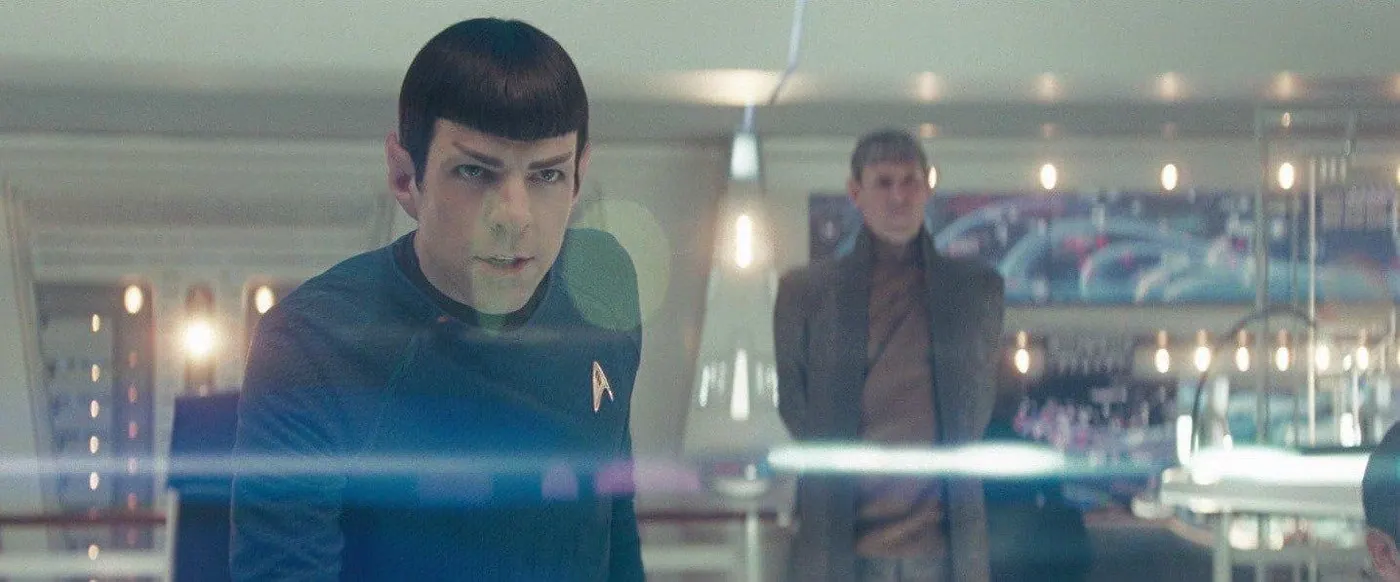
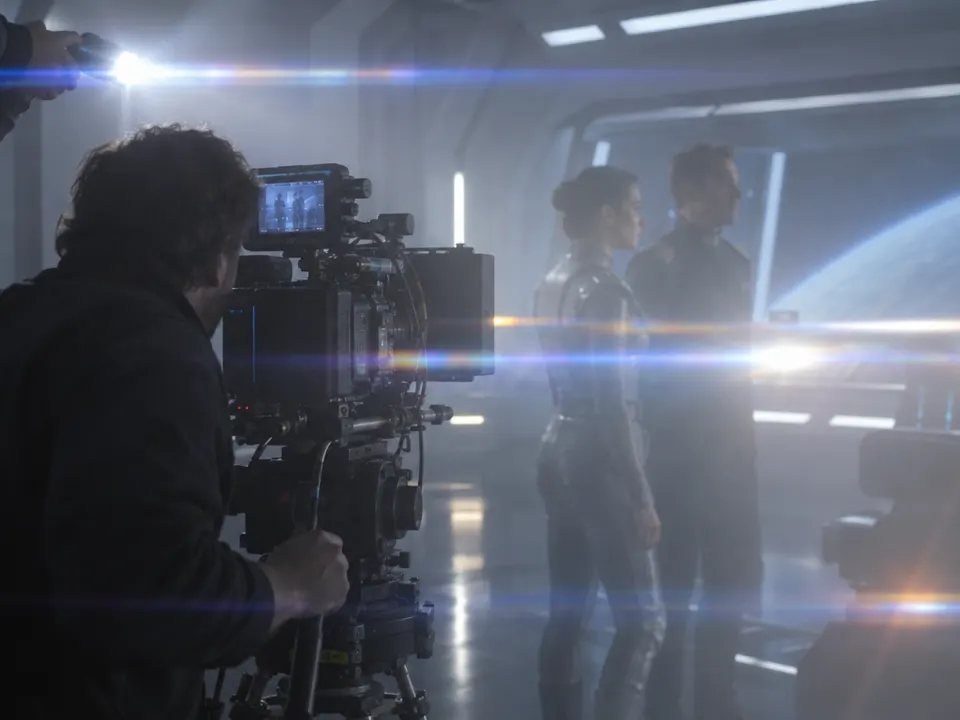
[Horizontal light streaks], colored reflections and washed-out contrasts make the reaction to bright light sources visible.
Principle
Light is [reflected or scattered in the lens]. [Anamorphic lenses1produce characteristic bands]. Digital effects imitate them.
Example
Star Trek (2009): Abrams and Mindel create flares on set.
Try it out
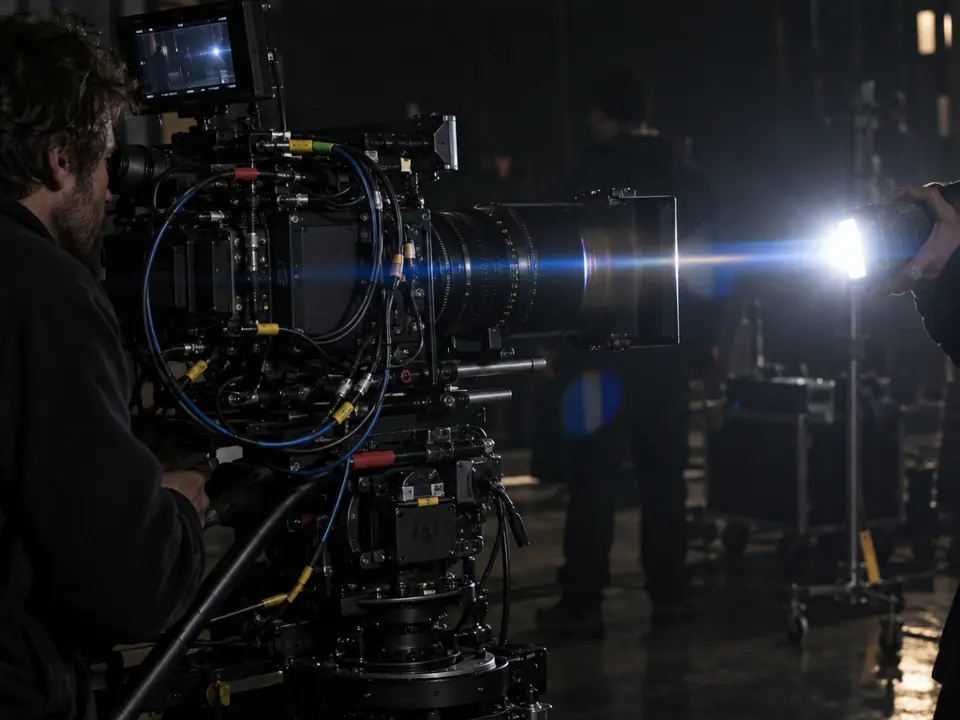
Move alight source to the edge of the image. Do real flares and digital overlays2react differently?
Background
Optical origin much older; strong, deliberate stylistic wave around Star Trek (2009).
Bright light is reflected or scattered within alens. Anamorphic lenses can create striking horizontal light bands and other reflection patterns. The effect can be triggered on set or added digitally.
Star Trek (2009), J. J. Abrams and cinematographer Dan Mindel: deliberately created anamorphic flares.
Regarding the illustration: Historical original / source image. Bright light sources reflect in the lens. Anamorphic optics stretch the reflections into characteristic horizontal stripes.
Distinction
Ahalo around abright object is glow/bloom; ahorizontal streak can mimic lens flare, but doesn't necessarily have to be optically generated. Not invented in 2009. This case shows how along-known lens aberration is being repurposed as asign of the future and authenticity.
Aftermath
The visible reaction of the camera makes even an artificial future world physical and unpredictable; the optics become part of the visual language.
Further examples · 7 images
02Lake Point Tower Flare (Anamorphic) (14929131291)A bright sun shines through bare trees near a building facade. The image displays a long horizontal blue streak and circular bokeh typical of light scattering in anamorphic optics.Chad Kainz from Monterey, CA, USA · CC BY 2.0 · Wikimedia Commons03Anamorphic Lens Flare, applied to “Bydgoszcz, Przystań Bydgoszcz, okna”A wooden building facade features multiple horizontal blue light streaks crossing the frame. These bands simulate the characteristic anamorphic distortion and internal lens reflections triggered by light sources at the image edge.1bumer (photo); processed for the Atlas · CC BY-SA 4.0 · Wikimedia Commons04Anamorphic Lens Flare, applied to “Silek Lanyah 2020 - Two men performing martial art in a stream”Two men performing martial arts in water are obscured by thin, horizontal blue streaks. These bands correctly imitate the anamorphic flare effect, appearing as linear light leaks across the center and lower thirds.Dody Guci (photo); processed for the Atlas · CC BY-SA 4.0 · Wikimedia Commons05AI illustration: A light source pointed at the camera lens creates a distinct horizontal fA light source pointed at the camera lens creates a distinct horizontal flare. This demonstrates how a flare is physically generated on set by moving light sources to the edge of the lens.Illustration generated for the Atlas (AI)06AI illustration: Bright horizontal blue streaks across the bridge crew members illustrate Bright horizontal blue streaks across the bridge crew members illustrate the anamorphic effect. The flares obscure details and mimic the high-contrast aesthetic of 2000s sci-fi cinema.Illustration generated for the Atlas (AI)07AI illustration: A camera set shows actors with distinct horizontal light bands passing thA camera set shows actors with distinct horizontal light bands passing through them. The image demonstrates how off-camera light sources create artificial flares to add texture to the scene.Illustration generated for the Atlas (AI)